
Peanuts: How to Safely Offer Peanuts for Baby-Led Weaning
- HOW OLD your baby should be when you first introduce peanut protein
- WHAT types of foods that offer peanut protein are safe for babies to eat
- WHY we need to offer peanut protein early and often to prevent food allergy
LISTEN TO THIS EPISODE
Episode Description
Babies should be offered peanut protein early and often to help reduce the risk of peanut allergy later in life. But if thick globs of peanut butter are a choking hazard for early eaters, how do we safely feed babies peanuts? In this episode we’re going to look at a variety of preparation methods for making peanut foods safe for babies to eat.
Links from this Episode
- “Eat the 8” book by Ron Sunog, MD is one of my favorite food allergy books and you can get that on Amazon here (this is an affiliate link)
- Baby-Led Weaning with Katie Ferraro program with the 100 First Foods™ Daily Meal Plan, join here: https://babyledweaning.co/program
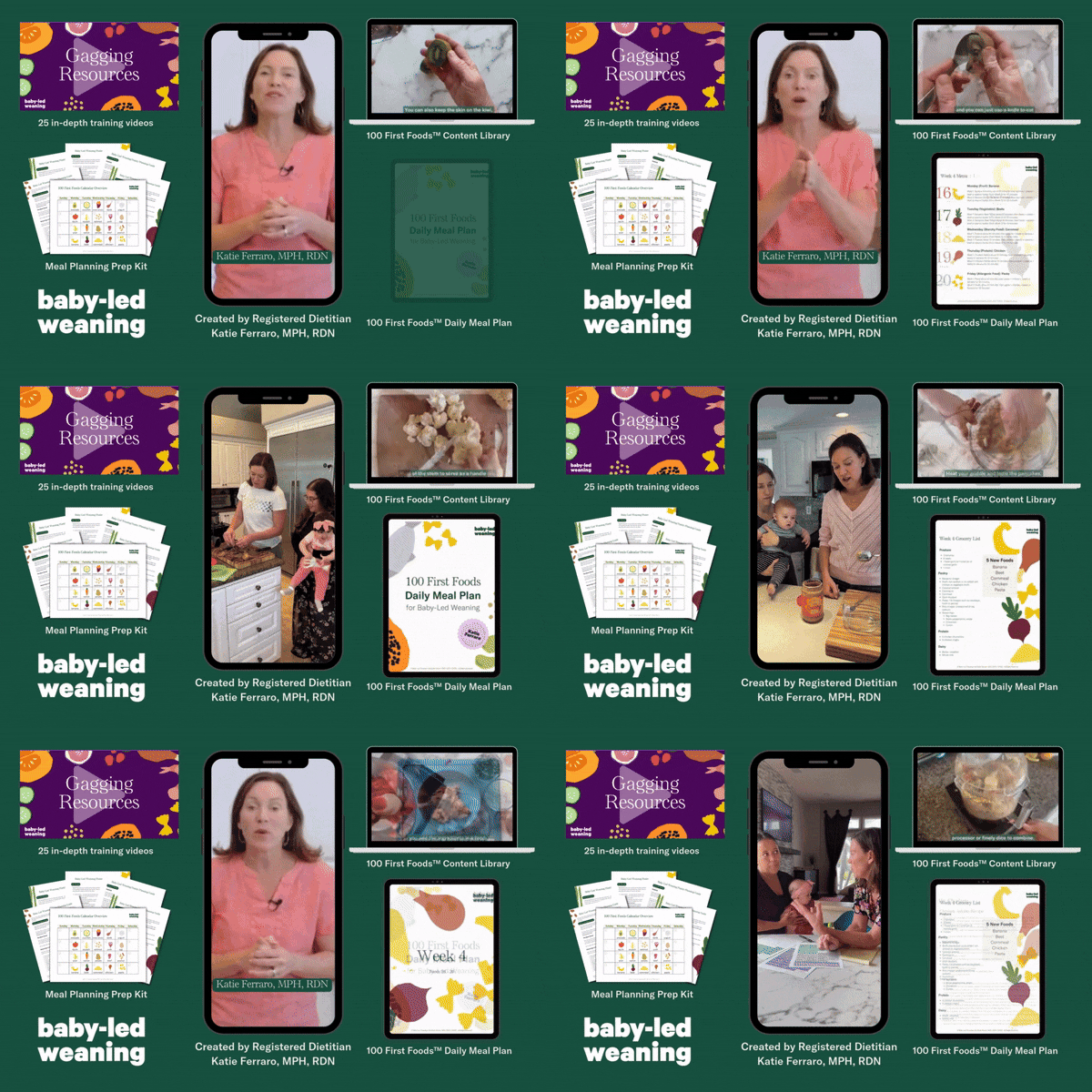
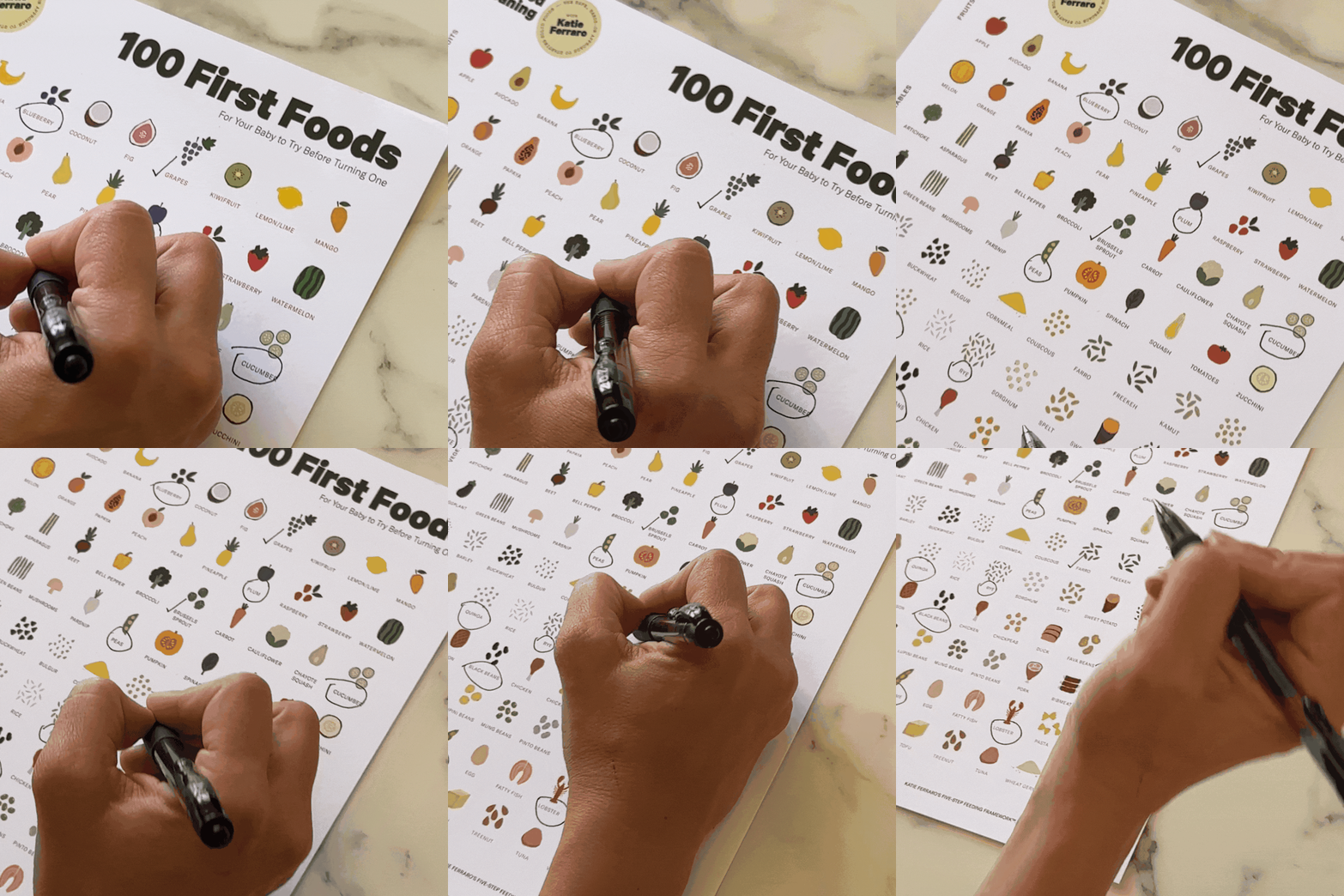
- Baby-Led Weaning for Beginners free online workshop with 100 First Foods™ list to all attendees, register here: https://babyledweaning.co/baby-led-weaning-for-beginners
Other Episodes Related to this Topic

Latest Episodes




Katie Ferraro (0s):
If you're getting guidance or information about delaying the introduction of allergenic foods, because you've been told that will prevent food allergy. I want you to know that that is not true. We have great research about peanuts and why we need to introduce them early. Hey, there I'm Katie Ferraro, registered dietitian, college nutrition professor and mom of seven specializing in baby led weaning here on the baby led weaning made easy podcast. I help you strip out all of the noise and nonsense about feeding, leaving you with the competence and knowledge you need to give your baby a safe start to solid foods using baby led weaning.
Katie Ferraro (41s):
Hey guys, and welcome back today. We're talking about peanuts and how to safely offer peanuts for baby led weaning. And if the thought of feeding your baby peanuts makes you panic. I want you to hang tight because I'm going to tell you a few ways that you can safely offer peanuts. Even if you don't like peanut butter. I personally am not a huge peanut butter fan, but there are some work arounds, but we do want to get that peanut protein into your baby early and often, because there's actually quite good data from a study called the leap study, which we'll talk about in today's episode, that indicates that early introduction of peanut protein helps protect against peanut allergy. And that's really amazing because if you think about even as recent as 20 years ago, I know when I was studying to be a dietitian, all of the guidance from the American academy of pediatrics and based on the research at the time was always to advise parents to hold on, introducing a lot of the allergenic foods until after the baby is one.
Katie Ferraro (1m 40s):
Now with some of the new research that's come out in the updated guidelines, we've really shifted towards much earlier in infancy at or around the six month mark. For most of the allergenic foods. We're going to talk about when peanut might need to be fed a little bit earlier in a second, but if you're getting guidance or information about delaying the introduction of allergenic foods, because you've been told that will prevent food allergy, I want you to know that that is not true. That's old data. And I oftentimes will encounter parents who say things like, oh, my doctor told me not to feed those foods until after the baby turned one. And I say, you know, that's a recommendation from over 20 years ago. It's really important that we stay current on research and we have great research about peanuts and why we need to introduce them early.
Katie Ferraro (2m 23s):
I'll be sharing a few ways that you can do peanuts. If you don't love peanut butter, I'm also going to be sharing some ways that you can make peanut butter safe, but we do not feed thick globs of peanut butter to babies. That's a huge choking hazard, but we do want to get it in early and often. So let's dive in all about peanuts and how to safely feed peanuts before baby led weaning. All right. So what's the deal with peanut allergy, even though you hear a lot about peanut allergy and peanut allergy and all food allergies are certainly on the rise, there's still a very low relative risk that your baby is going to have a reaction to any of the allergenic foods or peanut in particular, but it could happen. Okay. Peanut allergy is one of the most common pediatric food allergies.
Katie Ferraro (3m 3s):
That's why I recommend starting peanut milk and egg within the first three weeks of doing baby led weaning. And if you follow my five step feeding framework, I show you how to introduce five new foods a week. We always do the new allergenic food of the week on Friday. And I teach about that. Five-step feeding framework in my free online workshop called baby led weaning for beginners, a link to this week's workshop times on the show notes page for this episode at blwpodcast.com. If you want to get more info about giving your baby a safe start to solid foods now for the pediatric peanut allergy, about a quarter of kids who get peanut allergies will outgrow them. And then of those who do outgrow it most will have done so by eight years of age, however, there certainly are some cases that progress beyond that.
Katie Ferraro (3m 47s):
When we talk about peanut allergy, as I mentioned, we have very good data about it. So we know that children who are at higher risk of developing peanut allergy, we kind of have a different set of guidelines for the introduction for them. But I want to clarify what high risk is and for you to think about your baby and think, does this mean my baby's at high risk? And even if your baby's at high risk, we're going to talk about what you do. But a lot of parents think their babies are at high risk when they're really not. So just that we're all on the same page. Children are considered to be at high risk for developing peanut allergy. If they have severe eczema, if they have egg allergy or if they have both. And I'll say that again, because I think you might've missed a key word. Parents hear eczema, and they're like, yeah, that's my baby severe eczema.
Katie Ferraro (4m 28s):
So if your baby has had severe eczema as diagnosed by your pediatric dermatologist or a pediatric allergist, or if the baby has an egg allergy already, or both of those things, and that puts the baby at high risk for peanut allergy, the great majority of you listening don't have babies that fall in either or both of those categories. And so you need to be introducing peanuts at, or around the six month mark. There's also a crossover between peanut allergy and tree nut allergy. If you're allergic to one type of food, you are at higher risk for being allergic to another category of foods, but it doesn't necessarily mean you're at high risk. So children with peanut allergy have somewhere between a 25 and 40% risk of being allergic to tree nuts.
Katie Ferraro (5m 8s):
So if the baby is diagnosed with a peanut allergy, it's always a good idea to test for tree nut allergy. There's certainly people who have allergies to both or one or the other, but tree nut and peanut. It is important to note are two separate food allergy categories. Now, why do we feed peanuts to babies? Well, a lot of this has to do from the leap study. Leap stands for learning early about peanuts. And this was a study that was designed to introduce peanuts early to high risk infants. And what this study showed was that early introduction to peanut protein reduced the child's risk of developing peanut allergy by an astonishing 86%. So again, that's very good data to support this idea that we introduce babies and expose them to peanuts early and often.
Katie Ferraro (5m 55s):
So when should we start offering peanuts generally around the six month mark, based on the leap results, the national institutes of health made an official recommendation. And they said that infants who were at high risk, remember those are the ones with severe eczema or egg allergy or both that group. The high risk group should start peanut between four and six months of age. One thing I'd like to point out is that it has not been determined if starting at four or five months provides any greater protection than if you start at six months. And because babies should not have anything except breast milk or formula up until the six month mark many families in the high-risk category are perfectly fine to be starting peanut at six months of age, when they're introducing other solid foods.
Katie Ferraro (6m 40s):
We just have to be cognizant that if the baby is at high risk, if you had clearance from the practitioner, that when you start solid foods, you're including peanut. If that's part of your protocol, now infants are considered to be at medium risk. If they have mild to moderate eczema and no egg allergy, and those babies should start at six months and then low-risk infants, no eczema, no egg allergy. They can start peanuts. The guidance says if their parents want them to, and if you are a parent listening with the baby at low risk, you should want to introduce peanut because we know that early introduction helps prevent peanut allergy down the road. So how do we safely introduce peanuts for babies? As I mentioned, thick gloves of peanut butters and any nut butters can be a choking hazard for babies.
Katie Ferraro (7m 25s):
They can easily become lodged on the roof of the mouth. Very challenging for the infant to clear that from their airway safely because of the sticky nature of it. So peanut butter in the form that you or I might eat it off a spoon right out of the jar is not ideal. Now we can make peanut butters safer for babies, and we do that by thinning out the peanut butter. So first let's talk about what type of peanut butter we select. We want to look for it unsweetened and unsalted, right? We never give babies anything with added sugar, and we want to minimize added salt to the greatest extent possible. So you might have to do a little bit of sleuthing because many of the peanut butter options at your standard grocery store would have a lot of sugar and a lot of salt, but you can certainly find a number of different brands of peanut butter that has no salt and has no sugar.
Katie Ferraro (8m 9s):
Now you also want to avoid crunchy peanut butter. We don't feed any crunchy or crispy foods to babies as that could also be a choking hazard. So you take your peanut butter with no salt and no sugar. And if it's the natural kind, you're gonna have to stir it to get the protein and the fat mixed together again. And then we're gonna mix it with another agent or ingredient that can thin it out. A few ideas for you. I like yogurt. Now yogurt is a milk product though. You have to make sure your baby's already been exposed to cows, milk protein, a number of times without reaction. So you might do yogurt in week one, a baby led weaning and then peanuts in week two. And because your baby's already had yogurt, a number of times without reaction in week one, it's perfectly fine to mix that with the peanut butter. However, we don't do two new allergenic foods for the first time at the same time, because if baby reacted, how would you know which one they're reacting to?
Katie Ferraro (8m 54s):
So back to the, you stir it, I generally start with a one-to-one ratio, but then I will usually have to add more yogurt. Depends how thick yogurt is. Depends on how thick your peanut butter is. But what you like to see it do is slide easily off of the back of your spoon. So take a big gulp of it. Turn the spoon upside down. It should slide right off of there. If it sticks at all, you can stick to the roof of your baby's mouth. So you might have to get it quite thin. You could also do this thinned out approach of mixing peanut butter with breast milk or with formula or with unsweetened applesauce. But basically the key is to make it very thin so that it doesn't stick to the roof of the baby's mouth. Now, parents will always ask after that, well, how much peanut should I be offering? Because sometimes they'll see things as they go. You need to offer X number of grams a week. And I want you guys to know that there are no guidelines about exactly how much of the allergenic food protein we should be offering.
Katie Ferraro (9m 41s):
If you look at the leap study in that study, they offered six grams of peanut protein fed over the course of one week. So equivalent to about three teaspoons of peanut butter. And sometimes parents will say, well, I saw on the leap study that they did six grams of peanut protein in a week. So that's what I'm going to aim for. You can do that if you want to, if you're that organized and care that much, but I want you to know that it's not based on any hard and fast guideline. We don't say this is exactly how much you have to feed, because there's also nothing to say that if the researchers had included more or less than six grams of peanut protein per week in that trial, that it would have been any more or less effective at preventing peanut allergy. The guideline for the introduction of all of the allergenic foods is to do these foods early and often.
Katie Ferraro (10m 22s):
And sometimes parents will get frustrated. Like, can you just tell me how many times and tell me how many grams I was like, I'm not going to make something up the answers early and often. And so what that means is we don't just offer it once, right? A baby could react and they generally tend to react on the second or subsequent exposure. If you're living in a house that has peanuts in it, your baby's been exposed to peanuts from environmental exposures. There's very interesting studies that measure the amount of peanut dust in a typical household or on an infant or on an infant's crib sheet. And then that sometimes counts as the first exposure. So just because it's the first time it's going in your baby's mouth doesn't mean it's the first time the baby has been exposed to it, but your baby could react on the second or the third. So I generally do five or six times to introduce that allergenic food over the course of a weekend.
Katie Ferraro (11m 3s):
I'll do it twice on Friday. I'll do peanut butter twice on Saturday and twice on Sunday. And then you've done it six times with no other new foods in there. Of course, you're welcome to incorporate previous or familiar foods from earlier days that the baby's already tried, but give your baby that early exposure. Do it a number of times, and then start working that food into your repertoire of foods that your baby can eat, because we don't just offer the food once and say, oh, check it off the list. We did it. We want to be incorporating that food, including the allergenic foods like peanuts back into the diet early and often. Now, what if you don't want to do the thinned out peanut butter approach, some other ideas are that you can use peanut flour. Sometimes parents will ask about peanut butter powder. And I don't know if you're familiar with those, but it's kind of like this diet thing that was developed for adults to make defatted peanut flour.
Katie Ferraro (11m 45s):
And one of the most fabulous things about peanuts is that they're full of fat babies need fat for their brain development. And a lot of the peanut butter powder products will have either added sugar or artificial sweeteners, which both of those things maybe should not have. So don't go get a defatted peanut product. I mean, you could, because technically all that's left is the peanut protein, but they tend to be really expensive. And again, they tend to be like an adult diet product. So I prefer peanut flour. So if your baby has had a few of the other ingredients in typical baked goods, you can make no added sugar, peanut flour, pancakes, you can stir it into oatmeal. You can take regular peanut butter and stirred into oatmeal, but you have to do a lot of oatmeal in order to make it thin enough, but there are other ways to incorporate peanut protein.
Katie Ferraro (12m 26s):
Another option, if you really want to go low stress and low meth is to do a baby peanut butter puff. Now I like the peanut butter puffs from a company called puff works. They make a product called Puff Works Baby. And these are fabulous. They've been out for a few years now and I love them because in that leap trial, they actually looked at a peanut product. It's called Bomba and Bomba is a food. It's an Israeli food product. And the original researchers were looking at peanut allergy incidents and prevalence in populations of children in Israel compared to some in the United States. And in Israel, Bomba is a peanut butter puff that children and babies eat all the time. And they found the much lower rates of peanut allergy in the Israeli population, because those were the kids who are eating Bomba very early.
Katie Ferraro (13m 11s):
And that's when the researchers were like, oh, the early introduction. That's the only thing that's different here. That's, what's protecting them against the peanut allergy down the road. So Bomba is a brand. If you guys shop at trader Joe's, it's just branded Trader Joe's and it's at that's Bomba. You can find it in regular grocery stores. You can find it online. I don't love Bomba because they tend to be quite crispy and we don't normally feed crispy or crunchy foods to babies. Plus they have added sugar in some of the types that you can find, and they also have too much salt for babies. So they're not an ideal baby food, but the concept of getting the baby's peanut protein, okay, that's good puff works, took this concept and improved upon it by making a product that doesn't have any added sugar. That's the softest peanut butter puff on the market. So it dissolves easily on the baby's tongue.
Katie Ferraro (13m 52s):
And it only has a smidge of sodium for a preservative. So I don't really advocate for the inclusion of homeless, any packaged foods for baby led weaning. But I really like puff works, baby, because again, softest one out there it's also perfect size. There. They look like Cheetos at, I love the people at puffers, but I don't feel bad saying that puff works. Peanut butter POS kind of tastes like stale, peanut butter Cheetos. Again, I'm not a huge peanut butter fan. So, but I love the size of them because they're shaped like a Cheeto about the size of your adult pinky finger, which is the perfect size for a baby to pick up and feed themselves. So I think this is a good brand or product because it helps take the stress and the mess out of starting peanuts with your baby. And I am an affiliate for puff works.
Katie Ferraro (14m 32s):
I love their company. I love supporting small businesses. I love their founder. He was on the podcast at a previous episode and he is a hoot. He's actually a food allergy. Dad. I'll link to that episode in the show notes for this one blwpodcast.com. But if you want to check out, puff works. My code BABYLED works for 10% off. I recommend getting a case of puff works, peanut to start it's I think 12 bags and usually use like a third of a bag. So you might use like three bags over the course of three days, and then you'll have three other feeding, three other weeks worth of peanut. And that's a great way to get your baby started. And then you're a month or two into baby led weaning, and you can move on to some of the other peanut foods. They also have almond. Now they just released an Allmand baby puff works product.
Katie Ferraro (15m 15s):
That almond product has peanut in it because it was processed in the facility where the peanut also is. So the peanut one doesn't have tree nut added to it, but the tree at one does a peanut in it. And basically you want to do the tree nut or the almond puff after that. So if you're online, shopping at puffworks.com a case of peanut, a case of almond is good to get started. And again, that code is BABYLED. So to wrap it up, don't forget, we want to do peanut early and often. We don't know exactly how much and we don't know exactly how often most babies should start around six months of age. If your baby is at high risk for peanut allergy, of course consult with your pediatrician or your pediatric allergist, who will give you your proper course and have tons of other information about food allergies, as well as food allergy prevention and what to do.
Katie Ferraro (15m 60s):
If your baby does have an allergic reaction to food, you can find all of those episodes lined up on the website for this podcast, which is blwpodcast.com. We're over 160 episodes into the podcast. There's tons of great content on there. If you go on the website or you're looking on your phone, you can actually save the episodes that you want to listen to. But peanut is certainly one of the first allergenic foods that I recommend feeding your baby. And if you've started solid foods with your baby, but you haven't done peanut yet, put it on the calendar for this week and make it this week's allergenic food. Cause it's a really important one to do early and often.
The Program Baby-Led Weaning with Katie Ferraro
A step-by-step digital program for starting solid foods safely and navigating the original 100 FIRST FOODS™ meal plan with baby-led weaning.
 EXPERT-LED, PROVEN APPROACH TO EATING REAL FOOD
 CONCISE VIDEO TRAININGS TO MASTER BABY-LED WEANING
 100 FIRST FOODS DAILY MEAL PLAN WITH FOOD PREP VIDEOS
Baby-Led Weaning for Beginners Free Workshop
Is your baby ready to start solid foods, but you’re not sure where to start? Get ready to give your baby a solid foundation to a lifetime of loving real food…even if you’re feeling overwhelmed or confused about this next stage of infant feeding.
Get baby-led weaning recipes and tips delivered to your email inbox.