
The Future of Baby-Led Weaning with its Founding Philosopher Gill Rapley, PhD (Part 2)
- How parents can step back from controlling feeding and start trusting your baby’s natural ability to self-feed from 6 months on
- Why Gill Rapley challenges the idea of repeatedly pushing foods until a baby “accepts” them, and how that changes the way we think about starting solid foods
- What role social media has played in shaping the future of baby-led weaning, for better and for worse, and why Gill chooses not to police online baby-led weaning conversations
LISTEN TO THIS EPISODE
Episode Description
In Part 2 of this conversation with Gill Rapley, PhD, the founding philosopher of the baby-led weaning approach, we look ahead at the future of baby-led weaning. Gill shares where she hopes the research will go, how social media has both helped and complicated the conversation around baby-led weaning, and why trust, respect, and shared family meals remain at the heart of the philosophy. We also explore how healthcare providers, therapists, and parents can better support your baby’s ability to self-feed, while rethinking outdated ideas about spoon-feeding, oral skill development, and how babies learn to eat.
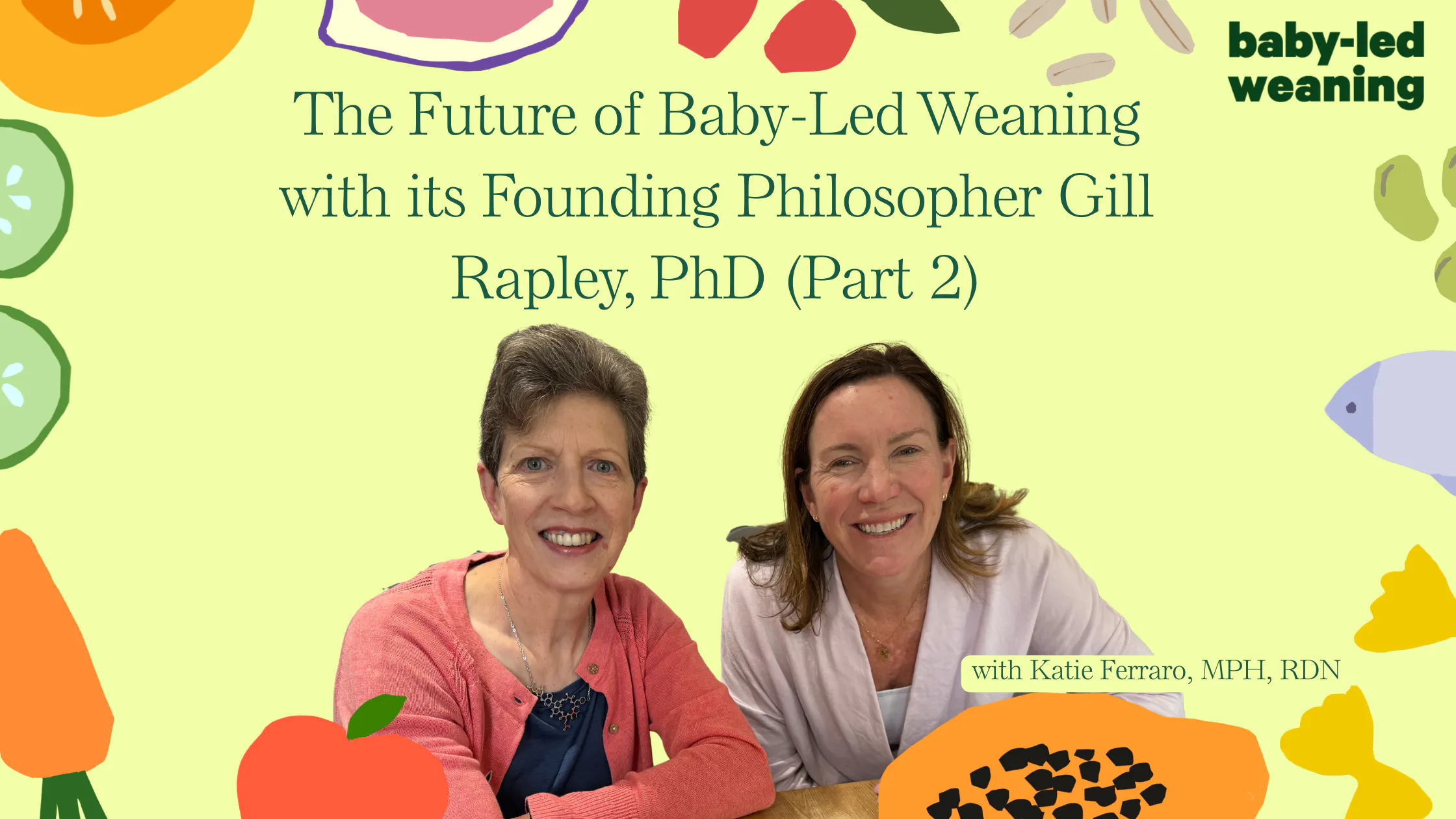
About the Guest
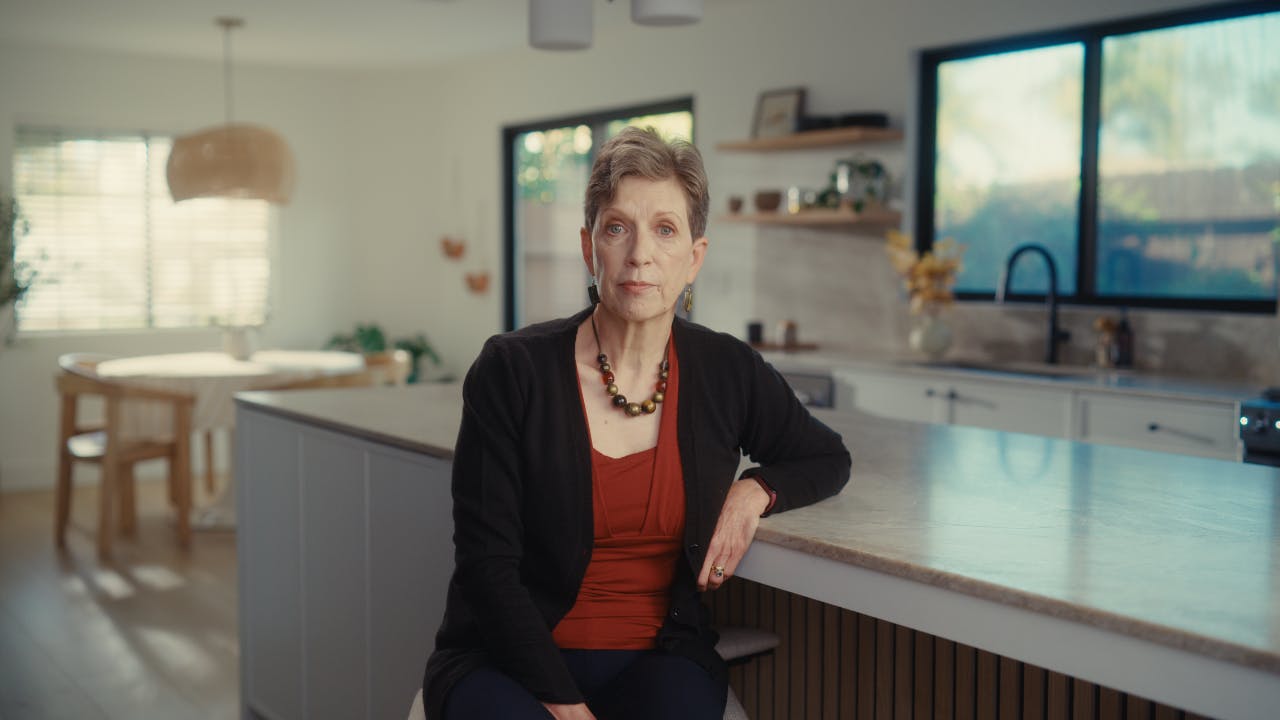
- Gill Rapley is the founding philosopher of the baby-led weaning movement and co-author of the original baby-led weaning book
- She is a former UK Health Visitor who observed that babies do not dislike food, they dislike the feeding being done to them
- Gill Rapley champions the trusting of your baby’s inborn ability and desire to self-feed
Links from this Episode
- Listen to part 1 of this interview with Gill Rapley in episode 100 “The History of Baby-Led Weaning with its Founding Philosopher Gill Rapley, PhD” (Part 1) here.
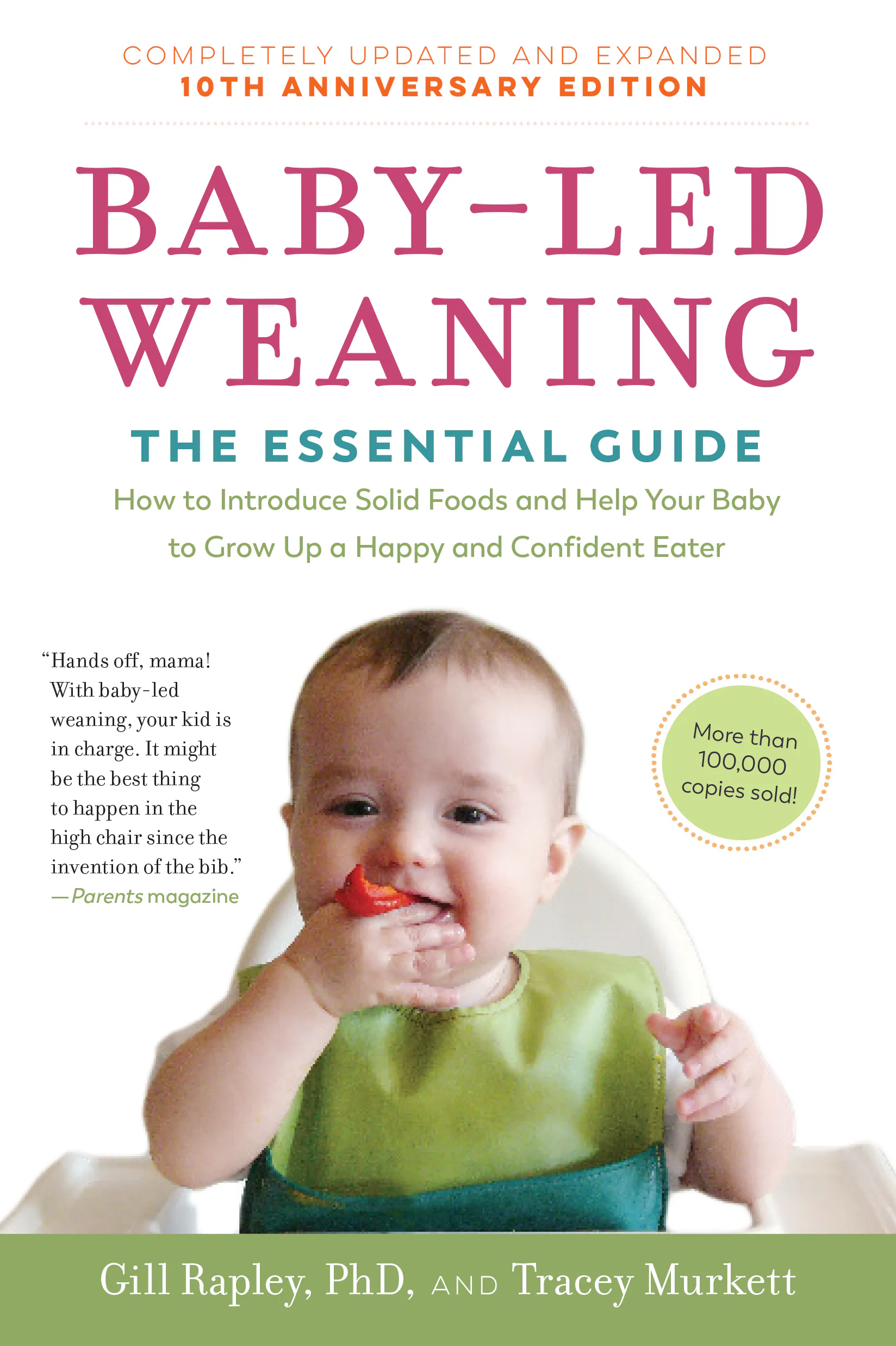
- The original BLW book “Baby-Led Weaning: The Essential Guide” that Gill Rapley co-authored has been completely overhauled and updated for its 10th anniversary edition and is available here
- Gill Rapley’s website is rapleyweaning.com.
- Rapley spoke at length about the importance of Amy Brown’s research on baby-led weaning. My podcast interview with her “The Evidence Behind Baby-Led Weaning with Amy Brown, PhD” is available here.
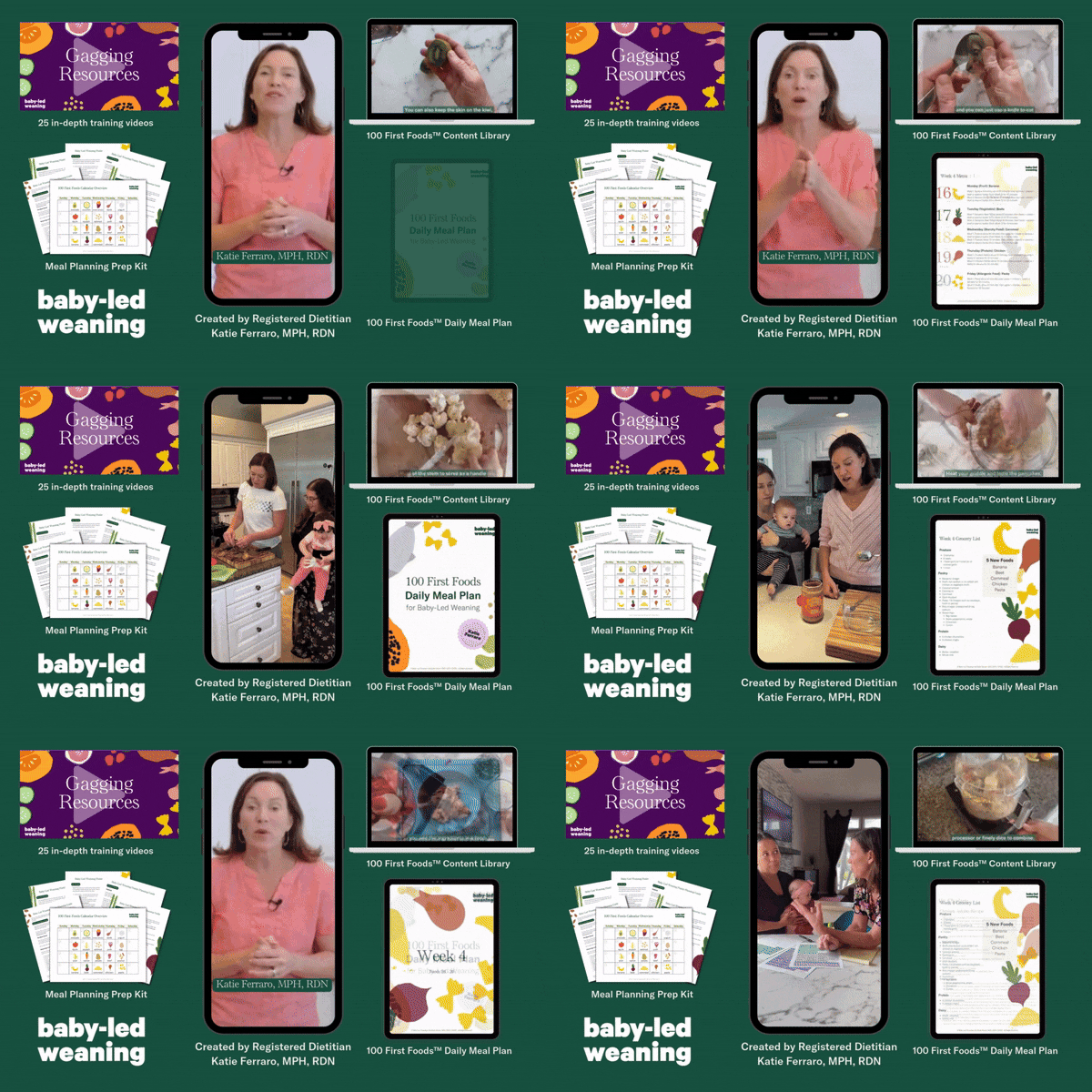
- Baby-Led Weaning with Katie Ferraro program with the 100 First Foods™ Daily Meal Plan, join here: https://babyledweaning.co/program and save $50 when you sign up using the code BLWPOD50
JOIN NOW AT $50 OFF CODE: BLWPOD50
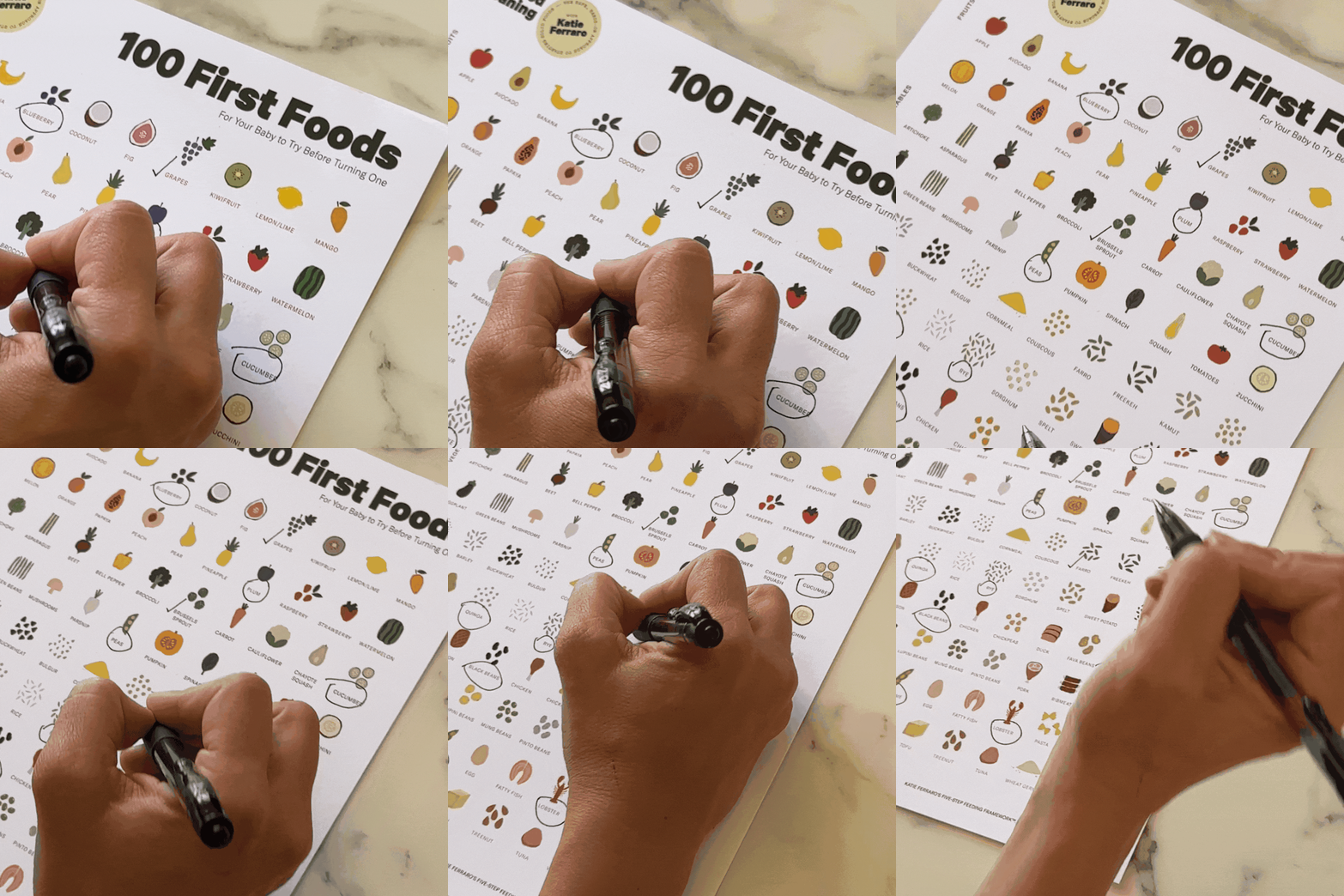
- Baby-Led Weaning for Beginners free online workshop with 100 First Foods™ list to all attendees, register here: https://babyledweaning.co/baby-led-weaning-for-beginners

Latest Episodes

Sierra (0s):
Sierra has all the best active and outdoor brands you need from athletic stuff like a full court pickup game, swish to athletic ish stuff, like a half mile stroll, get those steps in and for morning hikes up the mountain trail, good pace to nighttime, ghost race from the camping chair. What a twist. Whatever level of active Sierra loves it all, head to Sierra or sierra.com for the brands you want at the prices that let you do it all from athletic to athletic ish Sierra's. Got it.
Gill Rapley, PhD (30s):
It's also about the shared meal times, the healthy food, the respect for the baby, allowing the baby to decide how quickly to eat, how much to eat, and so on. It embraces so much more than just a method of feeding.
Katie Ferraro (45s):
Hey there, I'm Katie Ferraro, registered dietitian, college nutrition professor and mom of seven specializing in baby led weaning. Here on the baby-led weaning with Katie Ferraro podcast. I help you strip out all of the noise and nonsense about feeding, giving you the confidence and knowledge You need to give your baby a safe start to solid foods using baby led weaning. Today I've got a great conversation with Gill Rapley, The founding philosopher of the baby led weaning movement, co-author of the Baby led Weaning Essential Guidebook. That's the original baby led weaning book. And this is part two of my interview with Gill.
Katie Ferraro (1m 26s):
So In episode 100 we talked about The History of Baby led weaning. Today we're talking about the future. Now I recorded this interview a few years back to celebrate the hundredth episode of this podcast. It's now over 500 episodes, rich. But the issues and the ideas that Gill Rapley talked about are still so salient today. She's gonna be talking about where she sees this whole movement going with regards to how it's adapting and changing how parenting and media and access to technology and food changes too. So at the end of the day, what I hope you'll take away from this interview with gill is how important it is to not focus on how much your baby is eating. Don't talk about what they can't do or what they can't eat.
Katie Ferraro (2m 8s):
Instead, she wants you to reframe the conversation and your approach to starting solids so that you are zoning in on all of the things your baby can do in order to successfully be able to feed themselves. So with no further ado, I wanna bring Jill Rapley back on to talk about The Future of Baby led weaning.
Gill Rapley, PhD (2m 33s):
I am really delighted to be back. Thank you.
Katie Ferraro (2m 34s):
Now There are many inaccurate perceptions of baby Led Weaning. I don't need to tell you that a lot of times there are individuals or even groups who of course don't entirely understand childhood growth and development and nutrition. And I was just curious, how do you think that credentialed practitioners can be more involved in responsibly promoting Baby Led Weaning in today's current feeding environment?
Gill Rapley, PhD (2m 55s):
Well, I think they themselves need to be open-minded and willing to perhaps unlearn some of the kind of givens that they've grown up with. So for example, the idea that you have to start by introducing a spoon when actually maybe that could be a bit later. If they themselves learn about brave led weaning and see it in action and get it, then they're gonna be much more able to share that with parents and move things forward. They also need to listen to parents who are doing it and understand what actually is happening. There are many people, many professionals as well as parents, but particularly professionals who are under the impression that baby dead winning is something a bit new.
Gill Rapley, PhD (3m 35s):
And actually, if they would just ask some of their clients who are parents of say three or more children, they would find that actually it's been going on forever. But it hasn't been talked about. As I think I mentioned in our previous discussion, it didn't have a name before. The other thing that I think is really important for professionals is to check the influence over their work and their thinking from the baby food industry. The baby food industry has a big interest in dismissing baby Led Weaning effectively, because if parents are not gonna buy jars and pouches of pureed foods, then that's gonna impact on the whole commercial aspect of their work.
Gill Rapley, PhD (4m 15s):
We know from work around breastfeeding that sadly many professionals are influenced by industry and it it affects the way they understand things and the suggestions and advice that they give to parents. So we really do need to take stock of what our relationship is with the manufacturers and distributors of baby foods.
Katie Ferraro (4m 36s):
And that's such a wonderful point because we get our information from so many different sources from our families, from books that we read from social media as well as credential professionals. But you make such an important point that we also are influenced by the baby food industry. And I know in many parts of the world it's similar, but you go to the store and there's an aisle full of foods that are essentially, well, A, they weren't around a hundred years ago. B, they're entirely fabricated. No one would describe them as natural with added sugars and added salts. And the one that kills me in the baby food aisle in the US at least, are the shelf stable yogurt products. Like think about that, you buy yogurt out of a refrigerated section of a grocery store if it has live active cultures in it.
Katie Ferraro (5m 18s):
The other day I was at a store, a small four ounce portion had six grams, so a teaspoon and a half of added sugar in a product that was marketed as a baby yogurt sitting on the shelf like it was the farthest removed thing from real food. And yet as you point out, there are billions of dollars surrounding the influence and trying to make us think that this is a product that's needed.
Gill Rapley, PhD (5m 39s):
Yes, we could do with much tighter legislation around these things as well, but that's gonna be a while coming. I fear. Well,
Katie Ferraro (5m 44s):
One thing that I love personally about working in the field of infant feeding is all of the different disciplines that I get to interact with who all play important roles in helping our kids get a safe start to solid food. So I'm talking about pediatricians and speech language pathologists, occupational therapists, we have other dietitians and child development specialists. I wanted to know if you might share your thoughts when we were talking about the different healthcare disciplines, like who currently are involved in baby Led Weaning. But any thoughts on who you'd like to see more involved in baby led weaning moving forward?
Gill Rapley, PhD (6m 14s):
Well, as you say, there are already quite a lot of disciplines that are interested in this. I guess the kind of first adopters were the breastfeeding community, lactation consultants, breastfeeding counselors and professionals who knew a lot about breastfeeding. But it's exciting to me to discover how many disciplines have something in common in terms of feeding babies. Babies. I wish I had understood that much earlier, but I don't think I realized that so many other professionals might be interested. Before I even came up with baby led weaning, I mean I was particularly thrilled when I was approached by orthodontists 'cause they see I relevance for babies chewing from earlier than they would if they were started on pureed foods.
Gill Rapley, PhD (6m 55s):
And that really helping to influence the way the jaw develops, the shape of the face and how well the teeth fit later, especially those orthodontists who practice orthotropics, which is quite a, a new part of that discipline. So to get a a email out the blue from an orthodontist was amazing to me. It's so relevant, so important. So as well as the professionals that you mentioned, it extends to health visitors, midwives, public health nurses, pediatric nurses should have an interest. Child psychologists, even physiotherapists, there are just so many that may be involved. We don't have orofacial biologists much in the uk but they've contacted me from other countries and awful lot to offer and to understand.
Gill Rapley, PhD (7m 40s):
And I think an awful lot of the research to date has been around the food itself. So it's tended to sit in the region of pediatrics and dietetics for nutrition, but it's so much broader than that any health professional ever discusses the feeding of babies or toddlers could do with engaging with baby led weaning. And I find that for so many therapists, unfortunately therapy often seems to start from a position of what the baby can't do. But I'm finding an increasing interest among, let's say for example, speech and language therapists who are excited by baby led weaning because it starts from a position of what the baby can do and then builds on that. In the past, people have said to me, surely baby led weaning is contraindicated for some children.
Gill Rapley, PhD (8m 23s):
Babies with developmental delay for example, and I hate that word contraindicated. Absolutely not. It just needs to be adapted. It's not appropriate to just offer a child food and leave them to get on with it if they clearly aren't capable of fitting themselves. I wouldn't ever suggest that. But if we start from what they can do and build on that, then the world can open up to them so much more. I have a, a good friend colleague who is the speech and language therapist who uses baby led weaning a lot with babies with Down syndrome and she find it amazing. She said it helps with so many areas of their development. It brings the emotion themselves, gets them to engage, it helps with their core strength, it it helps with their dexterity.
Gill Rapley, PhD (9m 3s):
It's not just about getting them to eat, it's about the all of the aspects of their development.
Katie Ferraro (9m 8s):
And you mentioned that oftentimes it's not all, but there are certainly a subset of the therapy world that does start at the position of what a baby can't do. And I would say that from my side as a dietician in nutrition, so many dieticians are trained to think about all the things that a baby can't eat. But instead if we can look at if all the many foods out there that babies can eat, it kind of dovetails on what you were saying that that is opens up a world of possibilities for babies of all different abilities. And I myself have moved away from using any language about contraindication or who is baby led weaning. Not for, to be honest at this point, I'm hard pressed to find a population that it doesn't work for. It's more often than not the parents or the pediatricians that it doesn't work for. But the baby themselves certainly has the ability to learn how to do this.
Katie Ferraro (9m 49s):
But you're right, it does need to be adapted at times.
Gill Rapley, PhD (9m 52s):
I think that's a really interesting point that it's often the parents or or or the health professional for whom it doesn't work. But for babies it works. Yes, parents and professionals have to be prepared to let go and give that control to the baby and to show that baby respect and then the baby can take it from there. But that's the tricky bit. So parents who struggle with baby led weaning, it's nearly always difficult for them for whatever reason, not actually for their baby.
Katie Ferraro (10m 18s):
And you mentioned the role of dietetics and nutrition and so often the focus is on the food. Like parents go to that six month appointment and they start talking about iron maybe. But I know personally when I was studying to be a dietician over 20 years ago, there was no talk of infants knowing how to self feed or parents and caregivers like that. They even needed to be involved in the baby learning how to self feed. And to be honest now as a college nutrition professor myself, I'm still disheartened by the outdated and really narrow minded approach to traditional infant feeding curriculum that we teach our future providers. So I wanted to ask you how we can help current and future practitioners understand that baby led weaning is a safe and viable alternative to traditional spoonfeeding 'cause they're not getting it in medical or nutrition education.
Katie Ferraro (10m 59s):
And more importantly though, how did like the practitioners talk to their parents and their patients, like how can we give them the confidence that babies can do this? Because if they don't hear it from their practitioners and they don't hear it from you, they might never hear this message.
Gill Rapley, PhD (11m 11s):
I don't really have an easy answer to that, but I think we need to be sure if we are teachers that, and I do do some university lecturing myself, make sure that the curriculum covers it. Make sure that the curriculum is broad enough to look at all aspects of feeding and perhaps encourage students to deconstruct feeding and eating and try and see it from the baby's point of view. My doctoral research was very much about examining what the feeding experience is like for the baby as far as I possibly could without being able to interview babies of course, but seeing how they respond to food presented to them for them to explore as opposed to presented on a spoon.
Gill Rapley, PhD (11m 51s):
There were differences. This was just massive and it immediately made me wonder, we, we have an awful lot of research about how babies develop food preferences and depending on what study you read, they'll tell you you have to introduce new food to a baby eight times or 15 times or whatever before he'll accept it. I really struggle with that word accept. Where's the enjoyment in that? It's still so much of the language in the research is around getting babies to comply with what the adults want and assuming that babies don't want to eat. I mentioned before when we were talking in our previous interview about the idea that we have to make eating fun, we have to just stop making it miserable.
Gill Rapley, PhD (12m 37s):
Babies will eat, they wanna, but we also have to understand that their motivation for starting with solid food is probably nothing to do with hunger. It's to do with exploring their world and testing things out with their mouth and with all of their senses and they discover by chance that this stuff tastes good, fills their tummy, whatever. But that's not their initial motivation and all the time we make it about food itself. And then I think we're missing part of the way that we can understand babies.
KiwiCo (13m 7s):
Hey, we're gonna take a quick break, but I'll be right back. I was up way too late last night listening to podcasts and cleaning out our toy closet. So I have a weird obsession with just giving away, purging a lot of the toys. Okay, I love to gift them to other families when we've outgrown stuff. But I realized the very few things that we actually keep are our KiwiCo crates. I'm a huge fan of KiwiCo, specifically the KiwiCo panda crates. These are always all over our house and I have to help our kids pick them up and encourage them to pick, pick 'em up and put 'em away. But what I love about KiwiCo is these aren't just toys that sit on a shelf. These are hands-on fun and educational. When you give a KiwiCo crate, you're not just giving a toy, right? You're giving your kids the tools to create their own fun. I remember when our kids were babies and I actually started ordering KiwiCo, the first thing I noticed was how intentional everything felt. Like their products are not loud or flashy, they're just thoughtful. Like I remember watching one of the quads just like lock in on the toys and focus on it, turning it over, testing it, figuring it out And that you know, kind of quiet, serious baby way. And I just like remember, I don't have to entertain them like I don't have to second guess myself. These are child led play and I'm a huge fan of anything baby led. So I do appreciate the trust factor with KiwiCo Panda Crate. Their products are designed by child development experts. They're designed in partnership with experts at Seattle Children's Hospital. The materials are made with care. They're free of BPA phthalates and lead. Everything is non-toxic water-based paints and finishes. If you want to unlock brain building play in your children without the overwhelm, I highly suggest you check out kiwi code's panda crate. You can get 20% off your first panda crate with the code weaning@kiwicode.com/panda. That's 20% off your first crate at KIWICO.com/panda code weaning.
Katie Ferraro (15m 25s):
As someone who really struggled myself with traditional spoonfeeding, with my oldest, I have to admit I was super skeptical about a baby's ability to self-feed when I went to start solids with my next babies who happened to be quadruplets. But for me at least, and I know a lot of other parents, it's true seeing really was believing. And I think that visual aspect is so important for getting people on board with baby led weaning and a lot of the visual ability to see this has happened through social media. So I was interested in your opinions on how you think social media has helped advance the baby led weaning movement.
Gill Rapley, PhD (15m 58s):
Well, it has helped enormously and partly as you say, because it's allowed people to upload videos and images of food and images of their babies eating and enjoying food that has inspired others and helped them to understand it. I'm still not sure there's really a substitute for seeing it in real life with a baby. But a video is a very close second. But also from very early on, the forums that built up around baby dead weaning and Facebook groups for example, have supported parents in being brave enough to do something which other people were skeptical about and to stick their neck out and do something that that wasn't seen as the normal thing to do.
Gill Rapley, PhD (16m 37s):
So I think that has been another huge impact of social media. So it's also been meant parents can share discussions about, for example, how do I deal with my mother or my mother-in-law who is uncertain about this and give each other suggestions and ways to handle it. And certainly the rapid spread of baby led winning would not have been possible without social media. That's how it's spread by just like wildfire. Yeah, it's been amazing.
Katie Ferraro (17m 2s):
And I think especially that notion of support and community, I see that so much in my own audience. We're recording this nine months into a global pandemic. So many parents feeling very isolated. I feel like I'm the only one doing this. And then to have this community in a Facebook group or on an Instagram live or in a private course where you have the opportunity to interact with other like-minded parents who believe it's possible, but also just a place to kind of bounce ideas back and forth, Hey, I'm struggling with this to not feel like you're the only one doing that. I think social media has been so wonderful for that. But I know while we're on the topic of social media, I wonder if you could just speak to the unfortunate reality that baby led weaning has gotten to some degree a reputation as being judgmental or a clicky movement.
Katie Ferraro (17m 46s):
How has social media played into that negative side of promoting or bringing attention to baby led weaning?
Gill Rapley, PhD (17m 52s):
Well, I guess you have to have some bad with some good. So there's bound to be a, a downside to social media. I think baby led weaning because it's something that appeared to be new and it's a bit radical. It's become a bit niche in some places. So it's a bit like baby wearing and co-sleeping. It's kind of seen as something rather extreme, but at least we can have a dialogue now. And that's really important because we can discuss it. What saddens me is when parents are slapped down for not being purist, for example, about baby Led Weaning for not obeying it to the letter if you like. If you ever give a spoon, you can't be a member of our group. That's very sad to me.
Gill Rapley, PhD (18m 33s):
But I often get asked about how I feel about how purist one should be. And I think it's tricky for me to answer that. 'cause if I'm not purist, then who on earth is going to be? I have to be, because I first wrote about this thing and it's very important to me that we do have a clear definition of what baby dead weaning is because if we don't, then someone will hear it from someone who heard it from someone else and it becomes distorted. In fact, that was the first, the main reason that I got together with Tracy to write our first book was to document what actually this phenomenon, this philosophy was, if you like, because it was already becoming distorted. And if somebody thinks they're doing baby dead weaning but they're not, then they will miss out on the benefits of it potentially.
Gill Rapley, PhD (19m 17s):
Plus, when it comes to research, and we do want to have more research into this, the definition is, is hugely important. It's just as important as, for example, defining what exclusive breastfeeding means in terms of research. If you don't define these things, then you can't be sure that the outcomes you're seeing are true and and a lot of the outcomes will be masked if we're not actually observing the thing in its purest form. So it's really important to me to have that distinction, but that is completely different from saying what an individual parent should or shouldn't do with their own baby. In other words, I suppose if you break it down into its simplest form, it's it's not about what you do that is entirely up to you, but it's what you call it.
Gill Rapley, PhD (19m 57s):
I'd really prefer if it wasn't called baby Led Weaning, if it isn't quite baby led weaning. A lot of parents, for example, nowadays talk about doing a bit of both and a lot of writers in the field of infant feeding who previously didn't talk about baby led weaning and perhaps now embracing it as often talk about doing a bit of both, but you can't do a bit of both because you mentioned, you introduced me as the philosopher of baby lo green, if you like. I certainly think of it as a yeah, philosophy. Why not? It's not a method of feeding. Certainly a method of feeding would be spoon feeding or self-feeding encompasses that, But it's also about the shared meal times, the healthy food, the respect for the baby, the allowing the baby to decide how quickly to eat, how much to eat and so on.
Gill Rapley, PhD (20m 44s):
So it embraces so much more than just a method of feeding. And so to do a bit of both, yes, you can do a bit of spoon feeding and a bit of self-feeding, but that is not baby led weaning because it's missing out all the other elements. Put it another way, you can't combine two approaches. You can't combine trusting your baby with not trusting your baby, can't trust them at the beginning of the meal and then give them some spoonfuls at the end to make sure they've had enough because they're not then actually believing that they know their own appetite. You can't trust them one day and not the next day. An approach which involves respect and trust for the baby is very different from one in which the parent controls what's going on.
Gill Rapley, PhD (21m 24s):
So yes, by all means do a combination of methods, but you can't do a combination of approaches. The other thing to say about the internet, I'm often asked why I don't intervene on Facebook groups and other forums when things are being discussed that perhaps are not appropriate or that I wouldn't agree with. And the simple answer is I can't possibly police all of those groups even if I wanted to. I don't speak enough languages, it's all over the world now. It's quite out hand. I can't keep up with it. But also, I don't wanna stifle debate and discussion even if I could. I don't want to try and own it all and stamp down any useful dialogue so I don't see it as my place.
Gill Rapley, PhD (22m 5s):
Instead, I try to make sure that what I say is clear And that what is put out from me in presentations and on my websites is plain to understand and easy to grasp so that people can come back to fact check things with me if they're uncertain.
Katie Ferraro (22m 21s):
If Gill Rapley of 20 years ago was talking to Gill Rapley of today, what do you think would surprise you the most about how the baby led weaning movement and philosophy has evolved?
Gill Rapley, PhD (22m 31s):
I think I would be amazed at the huge spread and uptake there's been, I never really stopped to think about where I hope, well, I kind, I guess I hoped it would revolutionize the world, but in practical terms, what that means about people talking about baby led weaning, people who've never heard of me, and that's really exciting. I never would've imagined that the books that Tracy and I have written would be translated into over 20 languages already. I wouldn't have believed that baby led weaning would be accepted into the Oxford English dictionary, which happened a couple of years ago. And for myself, I wouldn't have imagined having this wonderful friendship and working relationship with Tracy Mer, which has just been so liberating and I wouldn't have imagined the travel possibilities that would open for me personally.
Gill Rapley, PhD (23m 21s):
I'm so blessed and so lucky to have been invited to speak in so many different countries. I've been well to loads, but for example, as half as Canada, the US, south America, Australia, New Zealand, Japan, European countries, Romania, Slovenia, just been incredible. And I feel so very lucky to just come up with something at the right, right time when it resonated with enough people to take off on its own. It's almost like it's my baby and it's out into the world. In fact, it's now actually 19 years old, I guess, since I first spoke about it. So it really has come of age and it seems to be here to stay and I'm absolutely thrilled by that.
Katie Ferraro (24m 3s):
Hey, we're gonna take a quick break, but I'll be right back.
Walt Disney World Resort (24m 10s):
We are leaving today and entering a world of Mickey Mouse waving princess meeting and greetings, lightsaber clashing the Twilight Zone, tower of Terror, dropping Bhe, flying Space Mountain, launching Galaxy, rewinding. What's the one network? Galaxy rewinding fireworks igniting world of other worlds for whatever you love. Infinite worlds await at the most magical place on earth, Walt Disney World Resort.
Katie Ferraro (24m 45s):
What are your hopes for the baby led weaning approach to feeding in the next 10 or 20 years? Like what would you like to see happen in the future as far as BLW is concerned for healthcare providers, researchers, parents? What's your hope for the next decades?
Gill Rapley, PhD (24m 59s):
I'd like to see more research properly conducted into the potential outcomes of baby load weaning. We do need to know what it might signify for babies because I think there's a possibility that it could have huge ramifications. So for example, as I mentioned in our understanding of the development of food preferences, we have all this research about how many times you have to offer food to a baby before they will accept it. But that's when you offer it pureed on a spoon. That's what all that research seems to relate to. It can be a completely different matter if you offer that food as a piece for the baby to pick up and explore. Certainly my PhD work showed that babies had a completely different response if it was offered to them in a different way.
Gill Rapley, PhD (25m 44s):
So I, what we think of as our knowledge about how babies engage with food needs to be thrown up in the air and and looked at again because we've done it all with a backdrop of spoonfeeding. If we take that outta the equation, how different might it be? This goes back to my very early thoughts as a health visitor was that when babies were refusing food, it wasn't the food, it was the feeding they didn't like And, and I think we need to look at all of the literature that we have in the light of that and perhaps redo some of that research. We need to know, it would be great to know if babies can actually choose the right nutrients to eat. There was a very old piece of research by Dr. Clara Davis, which has really been the only thing that has looked at that and it, it needs repeating because it was flawed.
Gill Rapley, PhD (26m 29s):
But there is every reason to believe that it may be the case that when presented with an array of foods, babies can decide what they need in terms of what nutrients. For example, many parents tell me that their babies naturally gravitate towards meat and eggs when they first start solid feeding of around six months. And that fits entirely with the first nutrients they're likely to need being sink and iron. It would be good to know if the LED weaning really does have a role to play in the reduction of obesity and in developing dexterity, hand-eye coordination, speech and language maybe that's important. And then the facial growth and the development of teeth and the possible need or not for orthodontics later it may have a role there.
Gill Rapley, PhD (27m 13s):
I think we need to know more about choking and to really understand how handling food is important in the prevention of choking because it, it tells the baby how the food's gonna behave in his mouth. I've also heard anecdotally from parents that when they follow baby Led Weaning as a toddler, their baby, their child doesn't seem interested in putting stones and marbles and Lego bricks in his or her mouth. It's almost as if they've been there done that. And we have to recognize that choking happens often on toys and, and little things like that. So I think there's more we need to understand about the mechanisms of choking and how much actually the practice that babies get with baby led weaning is beneficial.
Gill Rapley, PhD (27m 53s):
Another point that we perhaps overlook is what a slow start so many babies make with baby led weaning. This is absolutely ideal for them developing the oral skills they need. Very different to having something put in your mouth for you and then having to deal with it. Similarly, I think we could do a lot more understanding about how allergies develop. One of the things that's clear from baby led weaning is again this slow start that a baby will start by picking food up, looking at it, sniffing it, tasting it before they ever ingest it. And I again had anecdotal stories from parents about babies who consistently refused certain foods only to discover later that they were allergic to them.
Gill Rapley, PhD (28m 34s):
Probably the most amazing story in that category was one given to me by a mom in the States when I was speaking over there. Her 15-year-old son had a anaphylactic reaction to tree nuts, which in fact it turned out he'd been allergic to all his life, But it wasn't discovered until he was age 15. And he commented after he was recovered from the episode that he really shouldn't have eaten the cookie that was offered to him because it didn't smell right. And his mom reflected that he'd actually always sniffed his food before eating it since he was really tiny. And it seems that he was detecting something in the food. He didn't know what it was.
Gill Rapley, PhD (29m 14s):
His parents had no idea what was going on, but he was keeping himself safe from this thing that he was clearly allergic to. And his mom was amazed that actually his ability to keep himself safe for all those years. And as I said to her, But it wasn't just him, was it. You never forced him to eat anything that he didn't. And that should to see re-looked at is how baby oral skills develop and in what order is it normal for learning to clear a spoon with your lips to happen early and before a baby's really gotta grips with chewing.
Gill Rapley, PhD (29m 55s):
I suspect these things might happen in an opposite order. We have this idea too that purees are easy to eat and yet I know of some research which is suggesting that may not be the case at all. Certainly if you or I were to try and chew a puree, we would actually find that really quite difficult. It would sort of splurge all over the inside of our mouth and be very difficult to gather together. But we have this idea that babies must move through very liquid purees to gradually thicker purees and so on to food with, with a, a more recognizable texture in order to be able to cope with it. But actually drinking and chewing are very different mechanisms. Babies are born knowing how to drink and then they become able to chew from around about six months.
Gill Rapley, PhD (30m 38s):
But they're using very different muscles and different skills to do that. It's quite possible, I think that puring is actually muddying the waters and causing more problems than it solves by making it difficult for babies to adapt the skill to find the skills that they really need for each texture. So for example, when we first start feeling quite runny purees to babies, essentially they're just swallowing it much like a liquid. And way back when I was first health visiting, I found that a lot of babies ran into problems at around about eight months old when their mothers started to introduce purees with lumps in instead actually what we call back then second stage dinners because they were trying to, or it seemed to me they were trying to swallow them like a liquid and the lumps were catching in their throat often compared how we would swallow a thick tomato soup as adults.
Gill Rapley, PhD (31m 29s):
How we would sort of slurp it in with how we would tackle a bowl full of muley. You wouldn't use the same technique. And I think possibly purees have been encouraging babies to use a technique that is not appropriate for more solid foods and that's why they've been getting into trouble. If we could separate the liquids from the solids more obviously, And that babies tackle them differently, perhaps they would get on better and perhaps the skills that we observe would appear in a different order or at a different rate. I guess what I'm trying to say is that the textbooks around the development of oral skills, again, have been written with a backdrop of spoonfeeding. And we need to take that outta the equation and look at how those, how skills develop without that there and see really what babies are capable of.
Katie Ferraro (32m 12s):
And I would argue that the textbooks and nutrition have also been written certainly with the backdrop of spoonfeeding, with the assumption that everything needs to be iron fortified, which assumes essentially that babies cannot learn how to eat foods that are naturally good sources of iron and zinc and other important nutrients, which by the way, they've been doing for millennia prior to the advent of commercial baby food. So I can echo what you're saying from the developmental side that nutrition certainly needs those same updates.
Gill Rapley, PhD (32m 38s):
Yep. I think we're on the same page there.
Katie Ferraro (32m 42s):
Well, I hope you enjoyed that Second of two part interview with Gill Rapley. We did The History of Baby led weaning In episode a hundred, and that's The Future of Baby Led Weaning there. In episode 102, I'll put everything that Gill mentioned in the show notes@bwpodcast.com/102. A special thank you to our partners at AirWave Media. If you guys like podcasts that feature food and science in using your brain, check out some of the podcasts from AirWave Media. We're online@blwpodcast.com. Thank you so much for listening and I'll see you next time. Bye
Blinds.com (33m 22s):
Now@blinds.com. It's not just about window treatments, it's about you, your style, your space, your way, whether you DIY or want the pros to handle it all, you'll have the confidence of knowing it's done right from free expert design help to our 100% satisfaction guarantee. Everything we do is made to fit your life and your windows. because@blinds.com, the only thing we treat better than Windows is you visit blinds.com now for up to 45% offsite wide, plus a professional measure at no cost rules and restrictions apply.
The Program Baby-Led Weaning with Katie Ferraro
A step-by-step digital program for starting solid foods safely and navigating the original 100 FIRST FOODS™ meal plan with baby-led weaning.
 EXPERT-LED, PROVEN APPROACH TO EATING REAL FOOD
 CONCISE VIDEO TRAININGS TO MASTER BABY-LED WEANING
 100 FIRST FOODS DAILY MEAL PLAN WITH FOOD PREP VIDEOS
Baby-Led Weaning for Beginners Free Workshop
Is your baby ready to start solid foods, but you’re not sure where to start? Get ready to give your baby a solid foundation to a lifetime of loving real food…even if you’re feeling overwhelmed or confused about this next stage of infant feeding.
Get baby-led weaning recipes and tips delivered to your email inbox.