
The History of Baby-Led Weaning with its Founding Philosopher Gill Rapley, PhD (Part 1)
- How Gill’s work as a UK health visitor led her to a simple insight: many babies aren’t refusing food, they’re resisting being fed
- Why baby-led weaning challenged the “normal” approach to starting solid foods, and what Gill says to the skeptics
- How she and Tracey Murkett turned parent questions and real-life feeding observations into Baby-Led Weaning: The Essential Guide
LISTEN TO THIS EPISODE
Episode Description
Gill Rapley, PhD helped give baby-led weaning its name, and more importantly, its philosophy: feeding led by your baby, not done to your baby. In Part 1 of our interview, Gill shares how baby-led weaning took shape, why waiting until babies are truly ready matters, and what she says to the skeptics who still doubt a baby’s ability to self-feed.
About the Guest
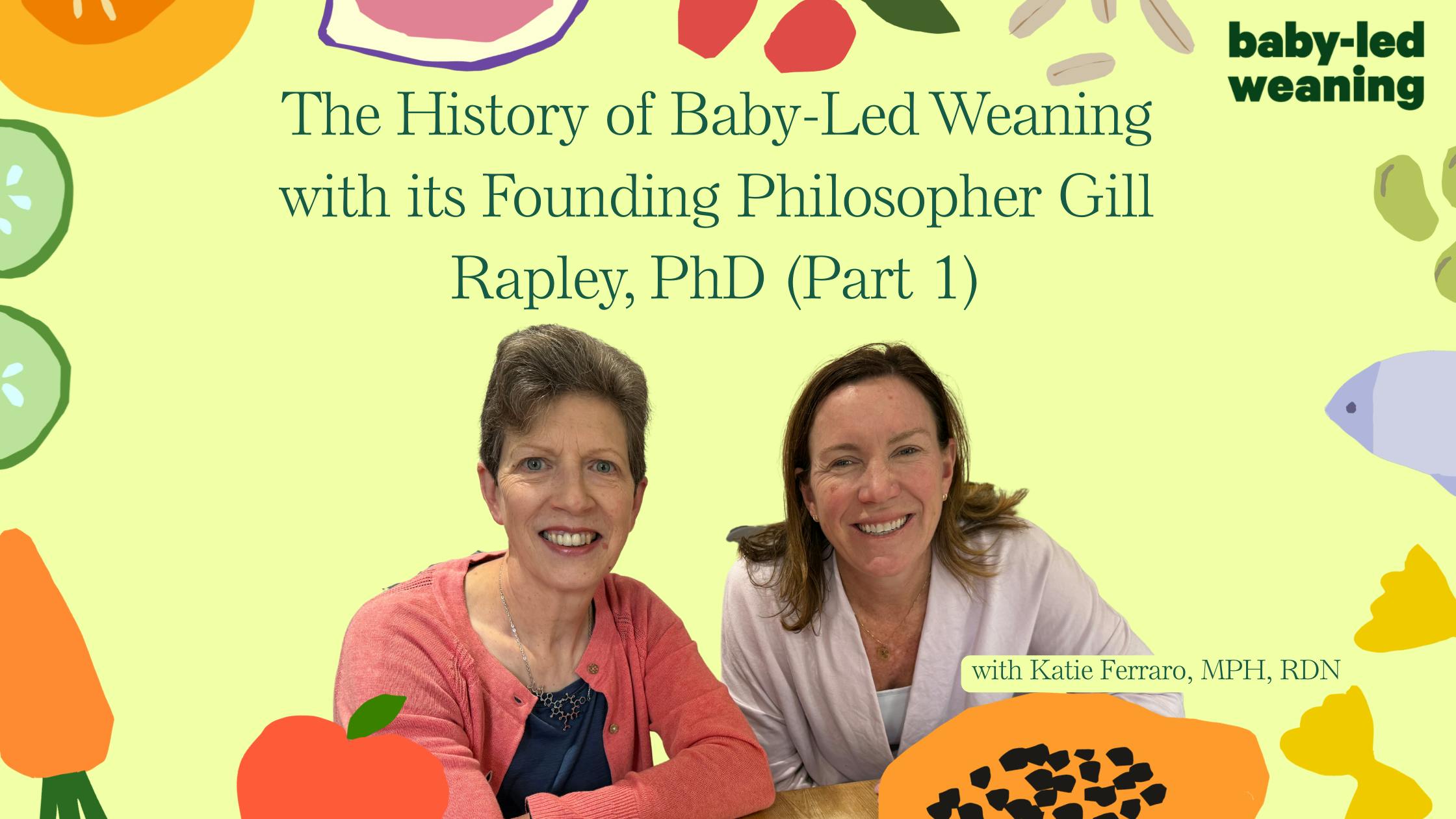
- Gill Rapley is the founding philosopher of the baby-led weaning movement and co-author of the original baby-led weaning book
- She is a former UK Health Visitor who observed that babies do not dislike food, they dislike the feeding being done to them
- Gill Rapley champions the trusting of your baby’s inborn ability and desire to self-feed
Links from this Episode
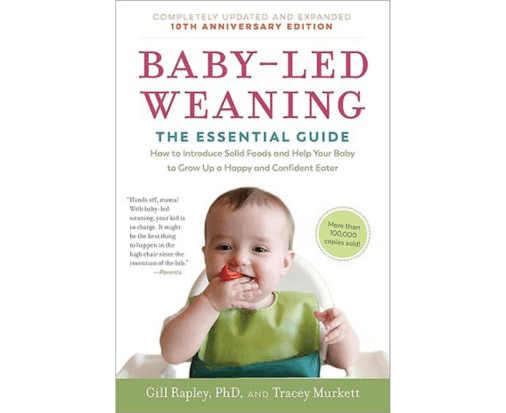
- Rapley’s book “Baby-Led Weaning: Completely Updated and Expanded Tenth Anniversary” edition available on Amazon here (this is an affiliate link).
- Gill Rapley’s website is rapleyweaning.com.
- Rapley spoke at length about the importance of Amy Brown’s research on baby-led weaning. My podcast interview with her “The Evidence Behind Baby-Led Weaning with Amy Brown, PhD” is available here.
- Listen to part 2 of this interview with Gill Rapley in episode 102, “The Future of BLW with its Founding Philosopher Gill Rapley, PhD (Part 2)” here.
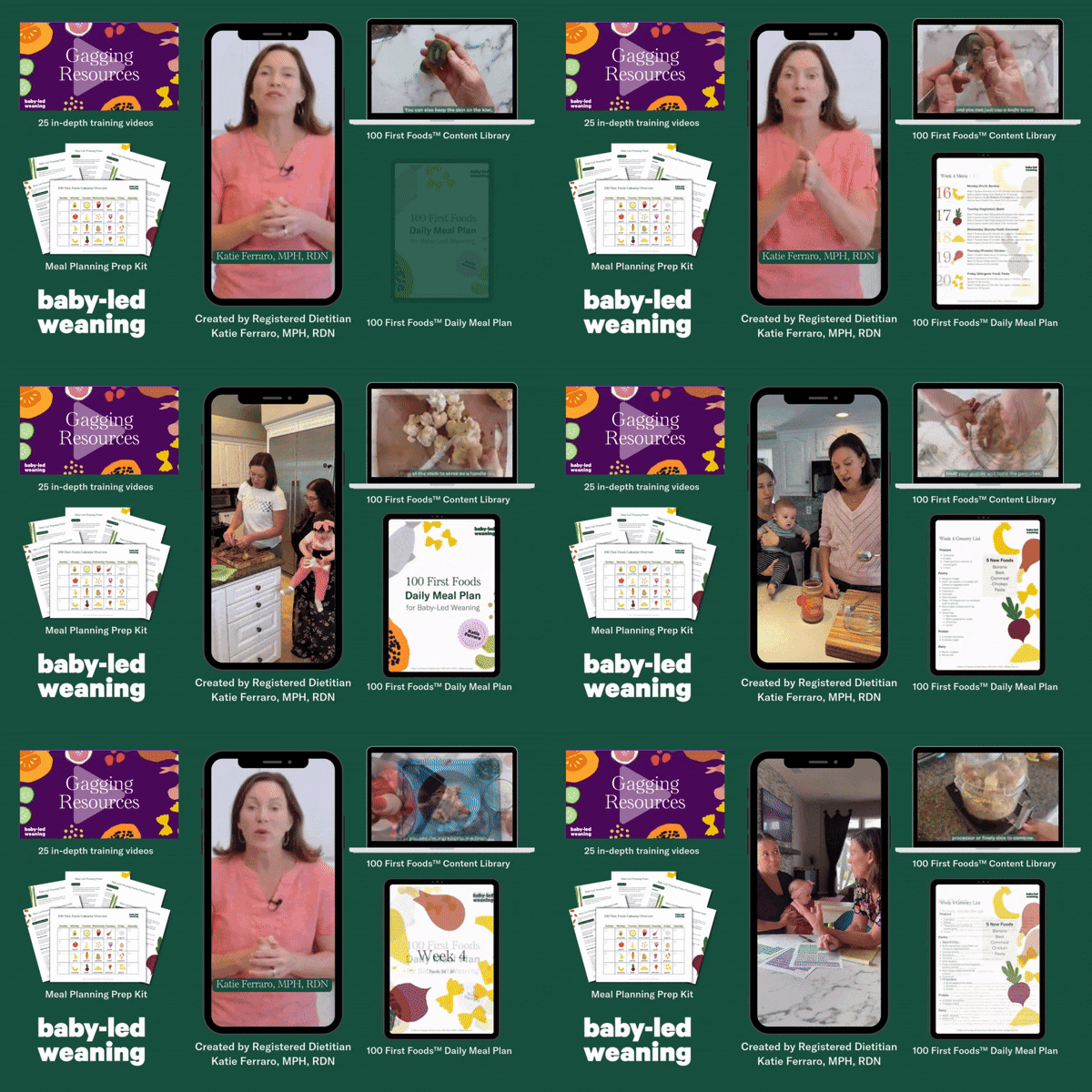
- Baby-Led Weaning with Katie Ferraro program with the 100 First Foods™ Daily Meal Plan, join here: https://babyledweaning.co/program and save $50 when you sign up using the code BLWPOD50
JOIN NOW AT $50 OFF CODE: BLWPOD50
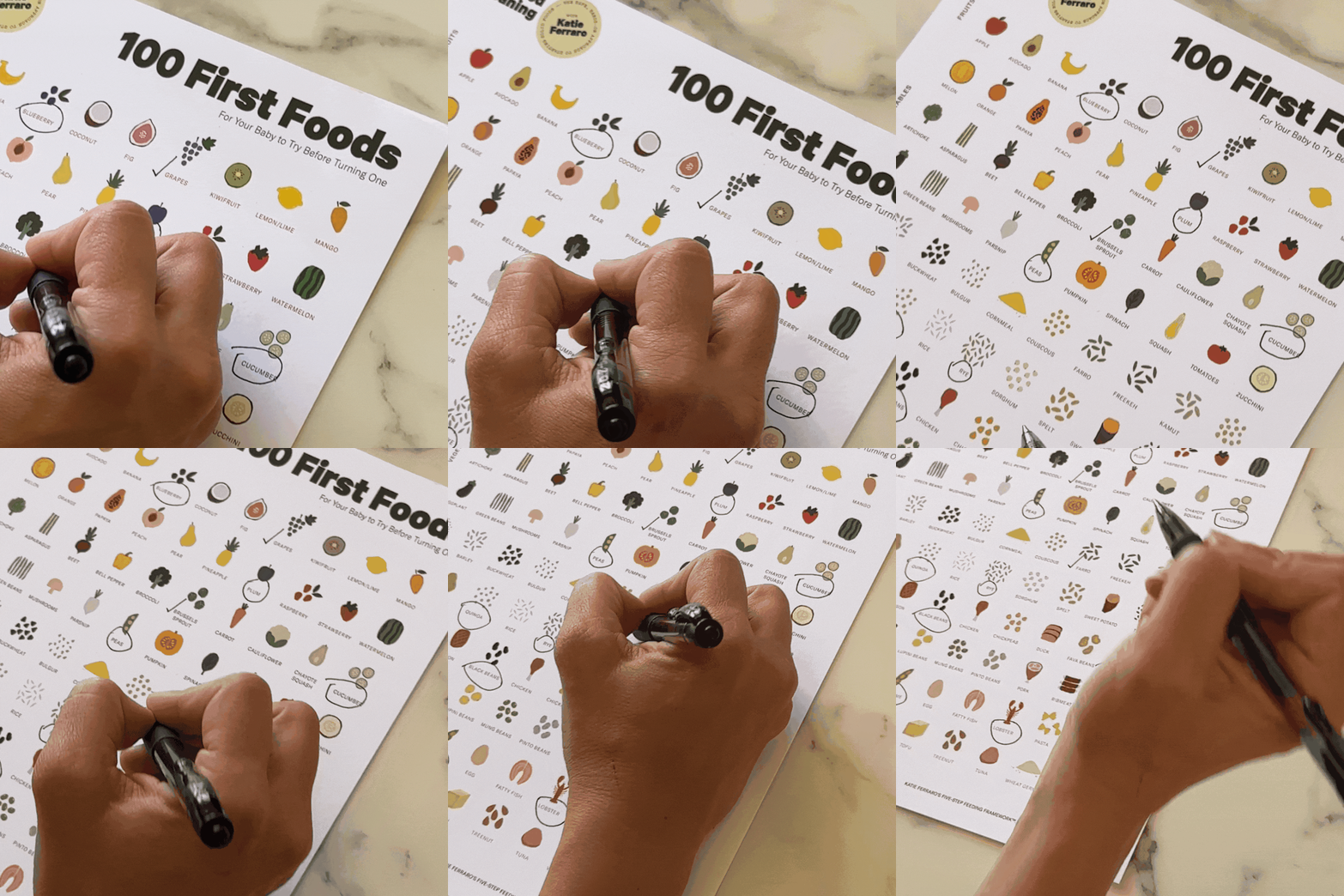
- Baby-Led Weaning for Beginners free online workshop with 100 First Foods™ list to all attendees, register here: https://babyledweaning.co/baby-led-weaning-for-beginners
Resources & Research
- Baby-Led Weaning: The Evidence to Date abstract here Brown, A., Jones, S. W., & Rowan, H. (2017). Baby-led weaning: the evidence to date. Current nutrition reports, 6(2), 148-156.

Latest Episodes

Audi (0s):
Picture this, a curve in the road, A change in plans. Well, what do you say with the all new Audi Q3? The answer is always yes. Yes to adventure. Yes to escape, yes to performance. Yes to comfort, yes to right now because saying yes without hesitation, that's real luxury. The all new Audi Q3 made for the yes life.
Gill Rapley, PhD (30s):
It was about feeding, being done by the baby, not to the baby. What most people saw was no spoons or no purees because that was what it looked like in practice. But it's always been more than that. It's about trust between parent and child.
Katie Ferraro (45s):
Hey there. I'm Katie Ferraro, registered dietitian, college nutrition professor and mom of seven specializing in baby Led Weaning. Here on the baby Led Weaning with Katie Ferraro podcast. I help you strip out all of the noise and nonsense about feeding, giving you the confidence and knowledge you need to give your baby a safe start to solid foods using baby led weaning. Today's episode is a special re-release. This is an interview that I recorded a few years ago To celebrate the hundredth episode of this podcast. When it first aired, we're now at more than 500 episodes, but this was the first time I interviewed Jill Rapley, the founding philosopher of baby led weaning, the co-author of the original baby led weaning book.
Katie Ferraro (1m 30s):
Since that time, I've had the good fortune to get to know Gill Rapley a little bit better. We've done some in-person projects, numerous interviews. We've in a documentary together, she's a senior advisor to another big project that I'm working on. I really value Gill's insight as the person who put baby Led Weaning on the map and Gill Rapley will be the first one to tell you she didn't invent baby led weaning, but she did something just as powerful. She gave it a name, a framework, a way to understand what babies are capable of when we step back and trust and let them lead the way. So as Gill is going to share in today's interview, while she did not invent baby led weaning And she doesn't claim to, she gave it that name, right?
Katie Ferraro (2m 12s):
She opened our eyes to the reality that when it comes to feeding and starting solid foods, babies can eat and do so much more than we give them credit for. So in the interview that you're about to hear, this is certainly the most compelling conversation I feel for baby led weaning that you'll probably ever hear because it's literally coming directly from the mouth of Gill Rapley, the founder of this movement. I always like tell parents this one, like if, if you've never heard Gill Rapley speak, listen to this one. Take notes. I know you're multitasking. You're probably driving or doing laundry, but like this interview, it is just dripping with valuable insight about what your baby can and was born to do. Like there's so many valuable nuggets in here because I know that you're gonna get frustrated as your baby starts solid foods and when you're worried they're not eating enough or you're unsure if you're doing this right.
Katie Ferraro (2m 57s):
I want you to remember Gill's words from this interview and her assurance that allowing your baby to drive the feeding experience, that's what your baby was designed to do. So I split the interview with Gill up into two separate interviews and gone a little along 'cause I couldn't stop talking to her. The first one that you're gonna hear today is about The History of Baby Led Weaning and how Gill Rapley kind of made it into a thing. And if you're, I mean, I really feel like those who do not study history are doomed to repeat its mistakes. So I love to hear about the early days of Baby Led Weaning as a movement. And in part two we're gonna be chatting about the future of baby led weaning and where Gill sees things going in the future. So with no further ado, I am beyond honored to welcome Gill Rapley, the founding philosopher of the Baby led weaning movement to this episode, The History of Baby led weaning with Gill Rapley.
Gill Rapley, PhD (3m 54s):
I'm absolutely delighted to be here and and I think the honor's mine actually,
Katie Ferraro (3m 58s):
Well, Gill, every parent and caregiver who stumbles upon or intentionally learns about baby led weaning, they immediately come to know your name as being synonymous and responsible for the entire philosophy of baby led weaning. However, I was wondering If you could tell us what you did before you came to be known as the founding philosopher of baby led weaning. Essentially, how did you get into this line of work?
Gill Rapley, PhD (4m 20s):
Well, I started off as a nurse right out of school and then I qualified as a health visitor and a health visitor as a little like a public health nurse in the uk, a health visitor undertakes the kind of work that in many countries is done by a pediatrician. So the health visitor is involved with immunizations, with child developmental checks and surveillance and an awful lot to do with feeding. So I was seeing many, many families throughout their feeding experience and introducing solids presented quite a challenge for many of them. Then I became a mom myself and while I did all the usual things that that I was expected to do and fed my kids purees by the time I got to the third one, I really don't remember bothering with all that with her.
Gill Rapley, PhD (5m 8s):
And of course that's how many parents come to baby led weaning. I also became particularly interested in breastfeeding as a result of my experiences as a mom. And I qualified as a breastfeeding counselor and later as a lactation consultant. And I was struck by how clever babies are, how much they're able to do from the moment they're born, particularly in relation to finding the breast and feeding themselves. And I quite quickly decided that if I was gonna be where the action was in terms of helping moms with breastfeeding, then I really should become a midwife. So I trained as a midwife but wasn't able to pursue that for very long because the working hours really weren't conducive to a young family.
Gill Rapley, PhD (5m 50s):
So I then went back to, I started with unicef. The UNICEF baby friendly initiative relates to standards for breastfeeding in hospitals and community facilities to support breastfeeding moms and babies. And I learned a lot more about breastfeeding during those years. And in particular at that time, the thing that was still quite new in the UK when I first began that work was skin to skin contact at birth. And when I saw how much that impacted on the breastfeeding experience and, and again how much babies knew what to do and their biological drive to find their mother's breasts, I really began to be impressed by that.
Gill Rapley, PhD (6m 30s):
And it made me ask the question, well, if babies are born and I'm talking about babies who are born on time and don't have any medical issues or whatever, but if they're born able to access the breast and feed themselves essentially, then why do they suddenly lose that ability so that from whenever we introduce solids onwards, we have to do it to them? And it was becoming clear to me that it might be to do with the fact that we were introducing the solids too early. Because by about six months, as I knew from my health visiting experience, babies could reach and grab things and take them to their mouth. And that seemed to be a logical time to, for them to move on to solid foods.
Gill Rapley, PhD (7m 11s):
I was also struck by how much they needed to use all their senses to feed well at the breath and thought about how that might impact on their learning about solid foods and their strong instinct for survival, which as the baby grows, becomes apparent in the way in which they want to explore their environment and how they use all their senses to do that. So I gradually built a greater and greater admiration for babies and belief in their ability.
Katie Ferraro (7m 40s):
Can I ask, in your health visiting, were the guidelines at the time prior to the World Health Organization saying six months, was it commonplace to introduce solids at four and five months? Or what was happening in that era as far as the timeline for introduction of solids for babies?
Gill Rapley, PhD (7m 53s):
Yeah, since the mid seventies it had really been four to six months. And that's interesting in itself because the implication was that as long as you picked a time between four and six months, everything would be fine. So in general, we were encouraging parents to start at four months. I mean, why not? You know, you get the the the go ahead, why not go for it? But in fact, what that meant was, and we now know it was slightly mistaken, but what it was intended to imply was that at some point between four and six months, your baby will be ready. Now for some babies that would've been nearer four months, but of course, as we now know, for the vast majority, it wouldn't have been till six months or even later. But the idea that there was this window and yet you could pick any time in there and it would all be fine, really didn't take into account how babies developed differently.
Katie Ferraro (8m 40s):
The baby led weaning book that you co-authored, it is a must read and without sounding dramatic, it's certainly considered to be like the Bible of the baby led weaning movement. And I was wondering If you could tell us a little bit about the process of turning your research into a book a little bit more maybe about what the environment in infant feeding was like back when you wrote the first edition.
Gill Rapley, PhD (8m 59s):
Well, I guess the first thing to say is that really my research was very minimal up to that point, it depends how we define research. I hadn't done any formal research except a very small piece for my master's degree, which was around the time that the six months kind of rule was coming in 2001, two and so on. I qualified my master's, I think it was 2005, But it was a very small part of that. What I had done was accumulating awful lot of of information and anecdotal stories and reports from parents and my observations of babies. But as you've said, the environment at the time was very much, we were starting at four months and so we weren't thinking of six months as being anything other than a step along the way.
Gill Rapley, PhD (9m 45s):
And the book wasn't actually the start of things. It may appear that in kind of other countries that that was the case, but actually it was already spreading in the uk and in fact in the Netherlands, interestingly from late 2001 and 2002 onwards by word of mouth, by internet and so on, the book was actually something that came a bit later. By that time I had a lot of parents emailing me with questions that I was answering individually. They were also telling me that they were struggling because what happened when the, the recommended age changed, the guidelines for how to go about it didn't change accordingly. So as one mom put it to me, I've been given this leaflet by my health visitor I think, And she said it's all about how to introduce solid food, but I swear they've just gone through it with a word search and wherever it said, four to six months, they've changed it to six months.
Gill Rapley, PhD (10m 38s):
But most of what's written doesn't refer to my six month old. She doesn't want to be spoonfed, she's pushing it aside. She wants to grab the food. And sure enough, that seemed to have been the case. So there was this mismatch between the guidelines and what parents were discovering if they waited till six months, which had never really been addressed before. Those six months had always been there as an option. Nobody had really looked at how things might be different If you waited till the baby was that old because after six months their time and a half the age, they're at four months and babies mature incredibly quickly as we all know. So I was getting these questions and queries from parents and several of them were saying, you really should write a book about this thought. Well, maybe.
Gill Rapley, PhD (11m 18s):
And I kind of had a half-hearted attempt with another collaborator. I, I knew I couldn't do it on my own. Then somebody actually said to me, If you don't write this book, I will. So I thought, well, I'd probably better get on with it then. Then I had a, a phone call outta the blue from a journalist called Tracy Mer And she had learned about baby Led Weaning while she was on maternity leave with her own baby and thought it was absolutely the best thing and was feeling pretty much evangelical about sharing the information with other people. She thought she'd start by pitching a, she was an independent journalist, she'd pitch a piece to a magazine or newspaper about baby led weaning And she thought she'd better interview the person at the heart of it all, which was me.
Gill Rapley, PhD (11m 59s):
And she asked me, are you writing a book about this? And I paused for a bit and said, well no. And then there was a kind of felt like several seconds of silence and then I said, you wouldn't want to write a book with me, would you, Tracy? And she said, well, You know, I might. And basically that was it. We'd never met, we didn't know each other. We then met a few times kind of tentatively to sound each other out and kind of the rest is history. It was an amazing one of just one of those moments that you either grab as it's passing or or it's gone. I
Katie Ferraro (12m 30s):
Love that story. I've never heard it and I love that you described Tracy Burquette as being evangelical about sharing the message that you started. And I can completely identify with that. Like once you have that confidence and you see your child doing what they were designed to do, you just kind of wanna shout it from the rooftop. So I'm so glad that she connected with you
Gill Rapley, PhD (12m 51s):
When it came to actually how to write the book, I didn't really know where to start, although I'm quite good with words. I've not hadn't tackled anything that big before. So we started off with me just sending her lots of the emails that I'd had and the answers that I'd given to parents and then we expanded that to come up with all the questions we could think of that anybody might wanna ask. And I would write a one paragraph answer to each question And she then assembled it into something resembling a coherent book. And then we worked to and fro on that on it after that. And in fact we still, whenever we write together, we are very picky and detailed about it. We have to agree the very last comma and we to andro it. So it's absolutely a collaboration between the two of us and we both play a completely equal part in it.
Gill Rapley, PhD (13m 36s):
So without Tracy, there wouldn't be any books. I'm absolutely certain,
KiwiCo (13m 39s):
Hey, we're gonna take a quick break, but I'll be right back. I was up way too late last night listening to podcasts and cleaning out our toy closet. So I have a weird obsession with just giving away, purging a lot of the toys. Okay, I love to gift them to other families when we've outgrown stuff. But I realized the very few things that we actually keep are our KiwiCo crates. I'm a huge fan of KiwiCo, specifically the KiwiCo panda crates. These are always all over our house and I have to help our kids pick them up and encourage them to pick, pick 'em up and put 'em away. But what I love about KiwiCo is these aren't just toys that sit on a shelf. These are hands-on fun and educational. When you give a KiwiCo crate, you're not just giving a toy, right? You're giving your kids the tools to create their own fun. I remember when our kids were babies and I actually started ordering KiwiCo, the first thing I noticed was how intentional everything felt. Like their products are not loud or flashy, they're just thoughtful. Like I remember watching one of the quads just like lock in on the toys and focus on it, turning it over, testing it, figuring it out in that, You know, kind of quiet, serious baby way. And it's just like, remember, I don't have to entertain them. Like I don't have to second guess myself. These are child led play and I'm a huge fan of anything baby led. So I do appreciate the trust factor with KiwiCo Panda Crate. Their products are designed by child development experts. They're designed in partnership with experts at Seattle Children's Hospital. The materials are made with care. They're free of BPA phthalates and lead. Everything is non-toxic water-based paints and finishes. If you want to unlock brain building play in your children without the overwhelm, I highly suggest you check out Kiwi CO's Panda crate. You can get 20% off your first panda crate with the code weaning@kiwico.com/panda. That's 20% off your first crate at K-I-W-I-C o.com/panda code weaning.
Katie Ferraro (15m 57s):
Well, when you first wrote the book and it started to pick up traction, what do you think was the biggest divergence in your approach to starting solids compared to what had been happening in the mainstream infant feeding world prior to the publication of your book?
Gill Rapley, PhD (16m 12s):
I guess the biggest diversion was the difference between trusting babies and not trusting babies. It was believing in babies' autonomy and their capabilities and the need for them to explore food and come to it in their own time using all of their senses. It was about feeding being done by the baby, not to the baby. And that I think was quite a big shift. It was in line with what we were learning about breastfeeding, But it hadn't kind of permeated into the, the later aspects of feeding. Of course What most people saw was no spoons or no purees because that was what it looked like in practice. But it's always been more than that. It's about trust between parent and child.
Gill Rapley, PhD (16m 55s):
And the other thing is what I mentioned before, I don't think there have been any recognition that we were often making eating so miserable for babies and then having to try and undo that. Quite a lot of the literature I looked at in the early days was around toddlers and older children, picky eating and food refusal and so on and time. And again, I came across this golden rule, which was give the control back to the child. That's the way forward. And I just thought, why ever did we take it away in the first place? Maybe we just, rather than self-feeding being an answer to the sort of problems I saw as a health visitor, maybe it could be the way to start. And clearly I'd already had that thought before I wrote the book. Sorry, I'm kind of jumping backwards and forwards.
Gill Rapley, PhD (17m 35s):
But this idea that the control rested with adults was still very dominant when that book came out.
Katie Ferraro (17m 41s):
I remember the first time I read the original version of your baby led weaning book and I was so struck by the anecdotes, like as a new mom, I loved the stories of other parents, which were real life stories, I can tell you did not make them up. And there were stories about how these families were making self-feeding work in normal families. Like I could see myself in those stories. And I was just curious If you keep in touch with some of the original babies who are now full-blown adults that you featured in the first edition of the book.
Gill Rapley, PhD (18m 7s):
A lovely thought. There's one or two, we have several of them. Were friends of Tracy's for example. But bearing in mind that I was already a fair bit older than the age group of most of the moms, they were more likely to be friends of Tracy's than they were of mine. But I think again, what I would come back to is that they were not the early adopters necessarily. They were people, some of them, the stories were taken with permission from the people who had been emailing me over the years. But they were just a selection of an awful lot of parents at the time. It's not quite the same as those being the first few, in which case we might have felt more of cohesion within that group. It was already huge before the book came out.
Gill Rapley, PhD (18m 47s):
And so those folks are just a smattering of of those who were already engaged with
Katie Ferraro (18m 51s):
It. Can I ask about the baby on the cover? Yeah. I'm noticed it's the same baby on the original version and then you did the updated version for the 10th anniversary. Is there a story behind that baby or is it just a stock photo
Gill Rapley, PhD (19m 2s):
It'ss not a stock photo? No, we asked for the first book. We actually asked parents to send us their photos. All of those photos came from parents. We had a, a terrible job choosing between them of course because they were all adorable. But we very carefully selected photos that we thought exemplified and displayed the key points that we were trying to make. And Felix the baby on the cover, his photo was sent to us. Now I'm just struggling to remember where he's from but it's not the UK anyway. And his mom submitted the photo and we just chose him for our cover because it just seemed to exemplify what we were trying to be, what we were about.
Gill Rapley, PhD (19m 42s):
There is an interesting anecdote actually concerning the photos And that is that when we whittled down to a shortlist, we had stuck them all up on the wall in Tracy's house where there was a blank wall and we just pasted all these photos up and and mulled them over and whittled it down. And when we got to the, what we thought were the final few that we would use for the book, we invited Tracy's partner to come and and give his opinion. And he said, well it's wonderful but none of the babies are smiling. And we thought, oh no. Oh that's awful. Oh my gosh, what have we done? And then we realized, of course they're not smiling, they're focused, they're focused on the food. You don't smile at food, you smile at people. All the images we have of babies smiling is while they're BEING FED or in between mouthfuls, of course if they're feeding themselves but not while they're actually engaged with the food.
Gill Rapley, PhD (20m 30s):
I don't smile at my food and I wouldn't actually expect a baby to. And so that was a huge moment for us to realize just how different this was and how different it looked because no longer is this about make eye contact with your baby smile. So s for a baby exploring something and being engaged with it and not interrupting him. So that was a huge moment.
Katie Ferraro (20m 53s):
And Felix the baby on the cover, it's hard to describe a picture on a podcast, but so many of you listening have this book, he's bringing a strawberries to his mouth and as you say, he's not necessarily smiling but he's certainly concentrating on engaged in learning about food. But I love just the autonomy. He is the one bringing the food to his mouth and it really is. I think, You know, the picture that launched for many parents, like, oh that's what it is. A picture really does paint a thousand words. So the information in the book is so helpful, but the picture on the front really drives it home.
Gill Rapley, PhD (21m 24s):
Yeah, I mean for the front cover we really, it, it was nice to have a baby who's looking at the camera and smiling that engages people and makes 'em wanna buy the book. But yeah, he's clearly enjoying what he's doing. I think it's actually a red pepper now I remember.
Katie Ferraro (21m 37s):
Oh it is a red pepper. You're right. Will it
Gill Rapley, PhD (21m 38s):
Be a strawberries? But yeah.
Katie Ferraro (21m 39s):
Oops, sorry. It is a red bell pepper that looks nice and soft and safe for babies to eat.
Gill Rapley, PhD (21m 44s):
The majority of the other pictures in the book, I'm just looking at it now, most of the babies are not looking at the camera and they're not particularly smiling and, and so that was an interesting learning thing for us.
Katie Ferraro (21m 53s):
Now Gill, as someone myself who relies heavily on evidence and research to guide my work in infant feeding, it's actually now a super exciting time to be working in this field because there is this real incredible body of research that does support a baby's ability to self-feed. But I'm wondering If you can take us back to the year of the first publication of your baby led weaning book. Like back before everyone was interested in comparing traditional spoonfeeding with the baby led approach, how did the lack of peer reviewed publications in like the specific area of baby led weaning at the time? How did that shape your career? Like how did you support these ideas? Theoretically when you had a lot of anecdotal evidence, but there wasn't a lot of specific research done. I mean you really stuck your neck out there and for that we're grateful, but I can't imagine that it was not easy.
Gill Rapley, PhD (22m 36s):
You are right, there were difficult moments. In fact, I'm, I'm kind of almost glad that social media wasn't really a thing or it wasn't in my life back then because now I see just how Twitter can get quite nasty. I I'm almost glad that I wasn't engaging with it back then because I didn't have the confidence, If you like, I felt quite vulnerable. But it's interesting that we talk about a credible body of research. There was, and there still is a credible body of research to support baby Led Weaning, not actually for baby led weaning. So I think the buzz phrase nowadays is evidence informed rather than evidence based. So we knew for example, that babies of six months could bring things to their mouths.
Gill Rapley, PhD (23m 16s):
We knew they were beginning to chew from that age. We knew from fossil evidence that babies thousands of years ago were probably chewing quite tough things from around six months. We had already evidence that shared meal times and modeling of eating behaviors and showing what foods are good, encouraged young children to eat more. There was some evidence that playing with food helped children to eat more. We knew the importance of offering a variety of foods And that sometimes baby foods didn't have that. We were beginning to talk about responsive feeding. We knew that prolonged mouth time, in other words, time spent chewing food rather than just swallowing it immediately meant that we tend to eat less, we have a more awareness of our, when we're feeling full satiety appetite control.
Gill Rapley, PhD (24m 6s):
And the other biggie was that finger foods were always encouraged from around six months. The only thing that was different with baby led weaning was that there wasn't a preparatory phase of puree foods. I often wonder if we just could get rid of our legacy and the history of the whole four to six months thing and younger still in years gone by of course and record started from now. Okay, when a baby's ready for solid foods from around six months. And then we looked at what babies can do at that age. Why would we ever dream of mushing foods up and shoveling them in on a spoon? There's, we wouldn't, we would see what babies can do and we would go along with that. So there always was a body of evidence that supported the theory.
Gill Rapley, PhD (24m 48s):
It just hadn't been tested in the way that is so revered by science nowadays. Having said that, of course, and again, I I began to realize after being challenged many, many times, where is your evidence and sort of meekly saying, well I haven't really got a lot. I then thought, hang on a minute, where on earth is the evidence for spoonfeeding? And so I would turn the question around on people and say, where's your evidence? You know, we've been doing spoonfeeding and curious for so long that it had just become custom and practice, but it's never been tested. And I think kind of an analogy that's perhaps worth may seem bit extreme, but imagine that we routinely put all babies into a, a baby walker, You know, a thing with wheels when they're about six months old so that they could start to propel themselves around.
Gill Rapley, PhD (25m 35s):
And then we kind of, every waking moment more or less, they were in these little baby walker and then we finally took them out at about, I don't know, 12 months, 18 months or something so that they could walk on their own. We would completely bypass crawling. And if somebody then suggested that you could get babies to walk without using one of those walkers, it would be seen as as really odd 'cause we would be so used to doing it that way. And that's the way I felt really about the whole spoonfeeding thing. We had just become accustomed to it and to have to justify doing it a different way, a more natural way, a way that a baby would surely do by himself anyway seems so strange. It's just as ridiculous to have to prove that breastfeeding is superior to formula feeding.
Gill Rapley, PhD (26m 18s):
That's not, not formula feeding. We need it for the occasions when breastfeeding is not appropriate or, or not wanted or or for whatever reason can't happen. But the idea that it, we have to prove that it's superior, it's just a nonsense. We're looking at something that a baby would normally naturally do. We only have to look at other mammals to see that there aren't any others that put things in a blender and then spoonfeed it to their infant. They take their infant with them to where the food is. They demonstrate by feeding themselves what can happen and the infant copies, no reason why that shouldn't apply to human mammals. So once I started to gain the confidence to turn the question around to people and say, well where's your evidence for what you are doing?
Gill Rapley, PhD (27m 1s):
I found that it quietened down a little bit. But the other thing that thinks important was important for me was that parents got it. They understood what this was about, those who tried it immediately saw how it worked. There are not many who've tried baby led weaning who don't find it amazing far more who have tried spoonfeeding and then gone the other way much like yourself. But once you've seen it and you believe it, it's just huge. So I focused my energies on speaking to parents on writing for parents because they were the best advocates at the time. Professionals were a little bit slower to get on board. I could talk a bit more about that.
Gill Rapley, PhD (27m 41s):
I'm always grateful to the fewer academic folk who did get it. So a prime example would be Professor Amy Brown, who has self did baby Led Weaning with her babies and has since taken up the gauntlet and conducted a lot of excellent research around it. But it, it was in that order, it was parent led first and they, it was the parents who kind of pushed the professionals into taking notice and recognizing that this wasn't just a fad that was gonna go away. But I have often felt, especially in the early days on the one hand, slightly vulnerable, but also I have found it amazing that people couldn't see what I could see. If you like, that sounds a bit arrogant, but actually I felt like the little boy who is trying to say, hang on a minute, the emperor hasn't got any clothes on because to me it was so obvious that there was something fundamentally wrong with what we were trying to do to babies.
Gill Rapley, PhD (28m 30s):
But I was staggered that other people couldn't see it. I think I hoped that when I started talking about it, everyone would say, oh yes. Oh gosh, you're right. Okay, let's do it that way then. That was very naive of course. But yeah, there was some scary times.
Katie Ferraro (28m 43s):
And you mentioned Professor Amy Brown, she was on the podcast talking about The Evidence Behind Baby led weaning for echoing of course many of the same things that you're saying. And what really struck me was her passion when she said, it's just asinine that we have to even be defending the idea of why should we even be researching this? Like the people that make the baby foods should have to be doing the research to show that putting it on a spoon and shoving it in the baby's mouth is good for baby development. That's never been done. It's just the assumption because it's the generally recognized practice.
Gill Rapley, PhD (29m 14s):
Yes. And I've heard some academic folk describe baby dead weaning as an intervention, which needs to be proven. And I'm thinking, how can that be an intervention? Surely picking up an implement and using it to put something into baby's mouth. That's the intervention And that has never been tested. And it's lovely that someone like Amy come out and say that so strongly. She very rightly has the respect of of academic and professional communities. And so she's a, a wonderful person to speak for baby led weaning in that area.
Katie Ferraro (29m 47s):
She does And she makes such a nice point of, she does all the important research so that everyone can understand the evidence-informed, evidence-based. But she says it is kind of ridiculous at the end of the day that we even have to do this. But she's doing the work, so. So back when you began first speaking and presenting and writing about baby Led Weaning, you touched briefly on this in addition to the, well, where are the evidence sort of people, what were some of the hesitations maybe outside of the academic, but inside of the medical and parenting communities that you ran into? Well,
Gill Rapley, PhD (30m 15s):
There were worries about would babies eat enough eat, would they eat the right things? I remember being quite challenged as well by colleagues who felt that for families whose own diets were really quite poor, I don't mean poor in terms of monetary things but not good choices about what to eat and not eating a balanced diet, perhaps relying heavily on processed foods. They felt that actually those babies would be safer having a commercial jarred purees. And I could see that point, but I said, the thing that worries me is when is it gonna be okay for the baby And that family to eat with the rest of the family and eat whatever it might be, burgers and pizzas for every meal.
Gill Rapley, PhD (30m 58s):
If it's not okay at six months, is it gonna be okay when the baby is a year or maybe 18 months or two years old or three years old or eight years old? At some point we have to address that problem and have a discussion with that family about their diet and we may or may not be able to improve it. But the introduction of solids is a brilliant moment at which to start that discussion. And I've certainly come across many, many parents who've said the introduction of solid foods to our baby gave us a springboard to really look at our own diet as well because we wanted to be able to share our meals with our baby, but we wanted it to be good food. So yes, there are always gonna be people whose diets are, are less than ideal and and even quite inadequate, but children in those families are eating those diets.
Gill Rapley, PhD (31m 45s):
And yes, for a small proportion, maybe during baby infancy, it might be safer for the baby to have pureed foods, but it's not a long-term answer. And whereas I think baby led weaning, if parents engage with that, it can be a long-term answer to the diet of the whole family.
Katie Ferraro (32m 1s):
Like what about pediatricians perhaps who are still problematic sometimes? I guess
Gill Rapley, PhD (32m 6s):
I have to say I haven't had a huge problem with pediatricians in the uk, mainly because they don't undertake the same role as they do in so many other countries. So for example, the regular discussions about feeding and when to start introducing solids and so on, those happen with a health visitor in the uk usually you only see a pediatrician if your child has an illness or, or or some problem. So those discussions were, I kind of didn't need to have in the, in the uk, but they have happened elsewhere in the world and sure enough, pediatricians can be a gateway to baby Weaning or a barrier to it. I think that's the case for all of those whose work focuses really on young children. Baby led weaning tends to divide opinion.
Gill Rapley, PhD (32m 48s):
And so what I have tended to do is work with people who are keen and interested to learn and are basically on board with the concept rather than just beat up myself or other people in a fight with those who disagree because in the end the proof is in the pudding and when you see it working and you get it, then you can be converted. And so comes back to the whole working with parents thing because it's parents who have persuaded their pediatricians, their health visitors, not me, because they've demonstrated what it can do. I guess the other big issue that has got people worried, whether they be parents or health professionals is the issue of choking, the risk of choking.
Gill Rapley, PhD (33m 31s):
Now we do have research which is showing us that there's no greater risk with baby led weaning than with conventional feeding. But that wasn't a big one to tackle. I think we have a big fear about babies and choking. I'm not suggesting it doesn't have a basis, in fact of course it does, but I think we've perhaps assumed that things work differently from the way they actually do. I see babies choking and gagging on purees as well as on solid foods. Now that might not be so life-threatening to choke on a, a mouthful of purees on say a grate. And we do need to be careful to avoid foods that are known to be choking risks. But the assumption that if we start with purees babies are gonna be fine, is not born out.
Gill Rapley, PhD (34m 14s):
And as I say, finger foods were always being recommended from around six months onwards. Even when we were starting Pures at four months and yet people weren't panicking about babies choking. That panic seemed to come along with baby led weaning. And I'm not entirely clear why I think I sort of shook the ground underneath a lot of health professionals, the people who straight away understood what I was saying, tended to be the breastfeeding community, the breastfeeding counselors, the lactation consultants and the health midwives who were well versed in in breastfeeding and pediatricians and and any others who if they were really understood breastfeeding, they understood the concept of a baby feeding him or herself.
Gill Rapley, PhD (34m 54s):
But for others, whose whole approach, especially a lot of therapists whose whole approach revolved around the use of purees and spoons, I think it rattled them a lot because it pulled the rug from their understanding of the way things had to work. Plus a lot of professionals were actually reacting to the change to six months rather than to baby dad weaning itself. Because the two things kind of happened around the same time. I got a lot of the flack which was actually directed at the change in age. So I learned quite quickly to differentiate that when people would tackle me about baby led weaning, I could steer the conversation to try and clarify what actually was their problem.
Gill Rapley, PhD (35m 37s):
Was it it babies feeding themselves or was it actually starting solids at six months? And very often it the latter, but they had taken baby led weaning as a kind of symbol of that And that inappropriately,
Hilton (35m 49s):
Hey, we're gonna take a quick break, but I'll be right back When you want your spring break to feel like and your kids' pool day to feel like and your hotel bed to feel like, ooh and room service to feel like, because at Hilton Hospitality feels like your cab command is ready. Would you like fresh towels? It matters where you stay. Book now@hilton.com Hilton for this day.
Katie Ferraro (36m 31s):
When you mentioned the research, I think some of the most compelling of Amy Brown's research is that data that shows that infants who are most likely to choke are actually the ones who are given finger foods least frequently. I see parents' eyes light up when we talk about those studies in students in my courses when they learn about them because they think, gosh, that does make sense. We don't say practice makes perfect, but practice makes progress. And if the children are never even allowed to experiment with other textures on their own outside of purees, that's where the choking risk may actually come in. And that is kind of what makes it click for parents. And you make such an important point that once the parents get it, they oftentimes then become the conduit of the message to the pediatricians. But I also think the grandparents are a huge group.
Katie Ferraro (37m 12s):
When you can convert the grandparents, who at first, I mean my own mother is a registered dietitian and I'm the oldest of six kids, and when I was doing baby led weaning with my quadruplets, she would say, this is all fine and good, but I spoonfed all six of you and you guys are fine. And then I caught her on the phone one time bragging to her friend, oh, one of the quadruplets Claire, I was there today And she was eating sardines And she was eating beets and even she was converted And she had originally kind of scoffed at the idea. So converting the pediatricians is one thing, but converting the grandparents, that's a real win.
Gill Rapley, PhD (37m 41s):
Absolutely. As you say, what those who are the kind of born again baby led weaning advocates that are just great and they're so proud and so amazed at what their babies can do. And so many of them say, I do wish I'd known this before. Go back another generation though, and actually kind of those who are great grandparents now would often say, well actually this is what I did. You
Katie Ferraro (38m 0s):
Just call it something different. That's what they always say.
Gill Rapley, PhD (38m 3s):
Absolutely. And people like yourselves with several children have often discovered it for themselves and, and that's still going on today. So, and another challenge I got in the early days was you didn't invent this, You know, and I, no, no, I don't claim to have, all I really did was give it a name and develop a theoretical base for it so that it could be talked about. One of the the lovely things now is that we can actually have a debate. Are you and parents will ask each other, are you doing spoonfeeding or are you doing baby weaning? Before they'd have a name. There wasn't that discussion. You either did spoonfeeding or you did something that you didn't really tell anybody about because it wasn't official and it didn't, wasn't recognized.
Gill Rapley, PhD (38m 43s):
So I love the fact that we can have a debate now.
Katie Ferraro (38m 45s):
Well, Jill, you have been so gracious to share your time with us today, and I know my audience literally is going to eat up every single word you just said. We're actually going to be recording a second part two interview where we'll be talking more about the future of baby Led Weaning as you see it and where it's going. But before we end today, could I just ask you about the role of spoons in baby Led Weaning and perhaps how your outlook on spoons in infant feeding has maybe changed or evolved since the original publication of your book?
Gill Rapley, PhD (39m 14s):
It's a nice question. I don't think my outlook has changed, actually. Probably the way I articulate things has changed, But it was never really about the spoons. It was about doing feeding to babies or babies feeding themselves. And the spoon is the obvious practical difference between the two. I, I don't have a problem with spoons and I don't have a problem with purees and they kind of belong together anyway. I'm not sure which came first. Was it the desire to feed babies actively, in which case a spoon is quite a good implement to use, in which case a puree is the right sort of texture to use? Or is it we thought babies needed purees because they couldn't chew and actually to scoop up a puree, you really need a spoon.
Gill Rapley, PhD (39m 56s):
I dunno. But none of that, as I've said, really applies at six months anyway. It's not necessary. The thing with spoons is that they're perfectly appropriate, and I have no problem with babies using spoons themselves, but what we don't need to do is poke the spoon in the baby's mouth for him, which is why I love some of the spoons that are around now that are actually baby size so that it's for the baby to use. But so much of what we understand about how baby's eating develops revolves around the spoon. And there doesn't need to be the spoon. I use spoon for certain foods. It's all about the consistency of the food. So if we're offering a baby pureed foods and why not? Because they can have those consistencies as well, then it's reasonable to offer them a spoon to use with it, either just to dip if they're very new to it or to have preloaded.
Gill Rapley, PhD (40m 44s):
And then quite quickly they learn how to scoop effectively themselves, probably much younger than we used to think they could, of course. So a spoon is appropriate for certain types of food and that's the end of it. That's true for adults and for babies. But the other interesting thing is, again, people imagine that I think it's not appropriate to offer babies any pureed food, and that's far from the truth as well. All of us eat some foods purees or is a sort of semi-solid consistency, except that as somebody pointed out to me, there isn't any naturally occurring food that is in puree form. Even something like a yogurt has actually been created from milk. Naturally occurring foods are all I think I've yet to be persuaded.
Gill Rapley, PhD (41m 28s):
Otherwise, they're all either liquid or solid. They might be quite soft like a raspberry, but effectively they're pickable. So there isn't a naturally growing food that would require the use of a spoon. Fingers were made before forks, but they were certainly made before spoons. So I simply don't see the need for a spoon or the need to offer babies pureed foods, but if we wanna, then that's fine, but let's give the baby the spoon to fold. What I have found as I've explored this more is that spoons do seem to have a big place in the sort of treatment or therapy of babies with eating or feeding problems, whether that be anatomical or developmental.
Gill Rapley, PhD (42m 10s):
And so therapists, speech language therapist or a facial biologists, occupational therapists do talk a lot about using spoons and enabling babies to learn to clear the spoon with their lip and so on. And I think unfortunately, it's assumed that that's part of normal development of oral skills And that babies need the experience of a spoon in order to be able to develop normally. But I really struggle to see how that can be the case for a neurotypical child because spoons are a manmade invention. They're not something that occurs naturally. I find it hard to believe that babies won't learn to close their lips to make sounds like Bubba and Mama if they don't have experience of being spoonfed.
Gill Rapley, PhD (42m 54s):
And certainly there's nothing in the reports I hear from parents to suggest that babies are in any way compromised by not having the experience of being spoonfed when they're very young. So I think we need to reassess what the place of spoons is and how important they are in a baby's development and and general experience of eating. The other thing I suppose that's interests me is that when it does come to introducing tools for babies to eat with, many, many of them manage more quickly and easily with a fork than with a spoon. Because again, if you're following baby led weaning and you're not really offering puree consistency foods, but are offering pieces of food, then logically a spoon is not the thing with that you would use to pick up that type of presentation, you would use a fork to spear it with.
Gill Rapley, PhD (43m 41s):
That's much easier than scooping certainly for something that's a solid little piece. So I think we need to rethink how essential spoons are in infant feeding, but that's not to say that, that they aren't ever appropriate because they can be.
Katie Ferraro (43m 56s):
Well, Gill, thank you so much. This was wonderful and I am ecstatic that we had the opportunity to have this conversation. I am grateful to you for obviously setting the stage for this wonderful field of work and for us as parents to be able to have the opportunity to allow our babies to do what they were designed to do essentially. And I'm so excited to speak with you in part two of our interview a little bit later about the future of baby led weaning.
Gill Rapley, PhD (44m 20s):
Well, thank you very much, Katie. It's been a pleasure.
Katie Ferraro (44m 23s):
Well, I hope you guys enjoyed that interview with Gill Rapley. She has so many amazing nuggets of information. I'm gonna put all of the links that she mentioned as well as a link to all of the other interviews that we've done together. If you wanna hear more and learn more from her, she has been on this podcast probably I think after Dawn Winkelmann. She's probably the most interviewed guest. And Dawn just keeps coming on the podcast more than Gill Rapley because she keeps inventing new baby led weaning gear that's like making all of our lives easier. I'm gonna put those all up on the show notes@blwpodcast.com/100. I also wanna say a special thank you to our partners at Airwave Media. If you like podcasts that feature food and science and using your brain, check out some of the podcasts from Airwave Media.
Katie Ferraro (45m 6s):
We're online@blwpodcast.com. Thank you so much for listening. I'll see you next time
Ross Dress For Less (45m 19s):
Spring just slid into your dms. Grab that boho look for that rooftop dinner, those sandals that can keep up with you and hang some string lights to give your patio a glow up. Spring's calling Ross, work your magic.
The Program Baby-Led Weaning with Katie Ferraro
A step-by-step digital program for starting solid foods safely and navigating the original 100 FIRST FOODS™ meal plan with baby-led weaning.
 EXPERT-LED, PROVEN APPROACH TO EATING REAL FOOD
 CONCISE VIDEO TRAININGS TO MASTER BABY-LED WEANING
 100 FIRST FOODS DAILY MEAL PLAN WITH FOOD PREP VIDEOS
Baby-Led Weaning for Beginners Free Workshop
Is your baby ready to start solid foods, but you’re not sure where to start? Get ready to give your baby a solid foundation to a lifetime of loving real food…even if you’re feeling overwhelmed or confused about this next stage of infant feeding.
Get baby-led weaning recipes and tips delivered to your email inbox.