
10 Reasons to Go All-In on Baby-Led Weaning
In this episode we're talking about:
- How baby-led weaning can make feeding your child easier long term
- Why baby-led weaning can actually decrease your baby's risk of choking and food allergies
- How to make baby-led weaning fun for the whole family and how it can support your relationship with food
LISTEN TO THIS EPISODE
Episode Description
Is baby-led weaning even worth it? Isn’t it cheaper to buy purees? I’m answering those questions plus giving you the top 10 reasons why BLW can make your life WAY easier.
Links from this Episode
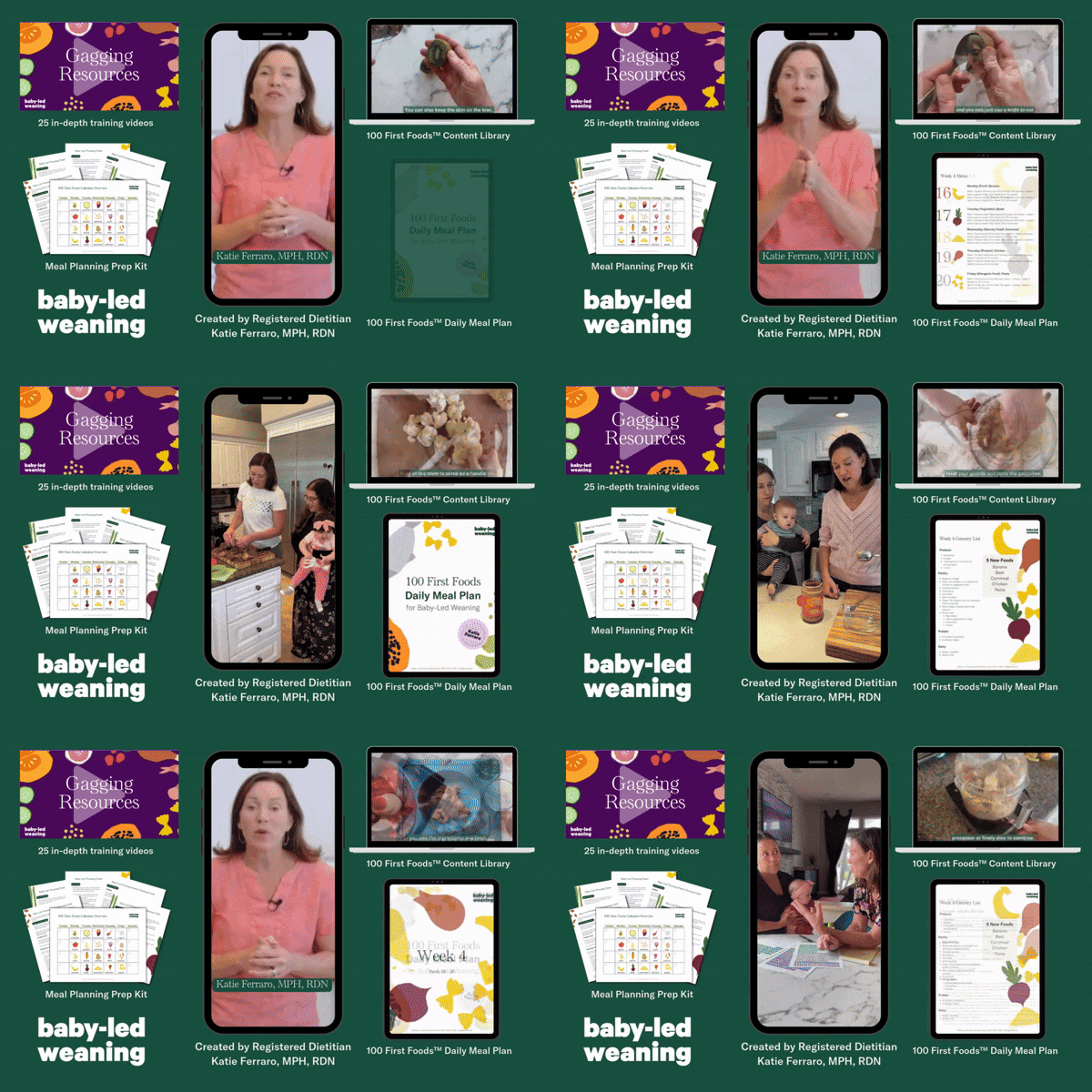
- Baby-Led Weaning with Katie Ferraro program with the 100 First Foods™ Daily Meal Plan, join here: https://babyledweaning.co/program
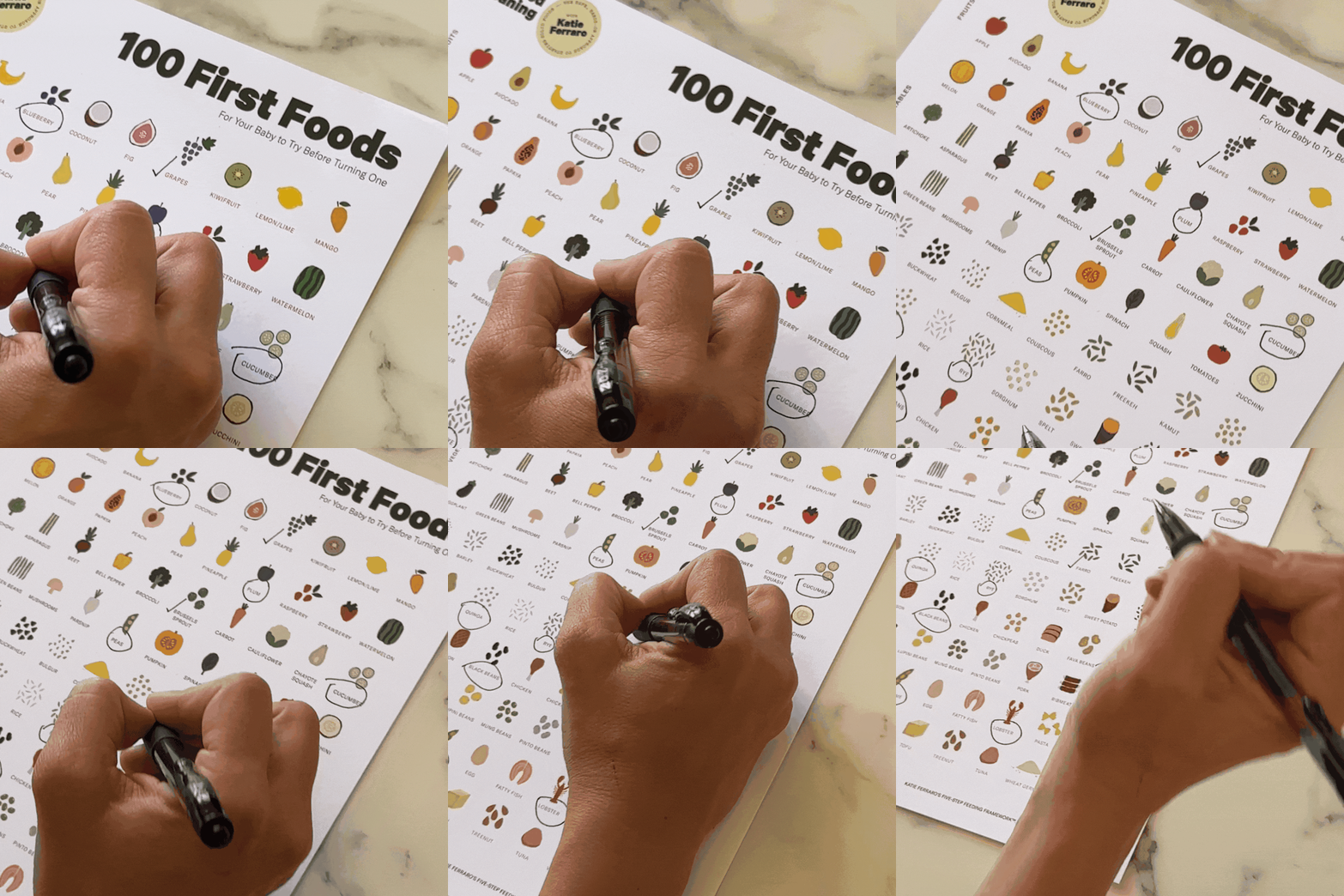
- Baby-Led Weaning for Beginners free online workshop with 100 First Foods™ list to all attendees, register here: https://babyledweaning.co/baby-led-weaning-for-beginners

Latest Episodes


Katie Ferraro (0s):
And yes, I know you are scared that your baby is going to choke. However, we know the research shows us that babies who've had the least amount of practice with finger foods, those are the babies who are actually at elevated risk for choking. So it's important to introduce these foods early to help reduce choking risk. Hey there! I'm Katie Ferraro, Registered Dietitian, college nutrition professor, and mom of seven specializing in baby-led weaning. Here, on the Baby-Led Weaning Made Easy podcast, I help you strip out all of the noise and nonsense about feeding, leaving you with the confidence and knowledge you need to give your baby a safe start to solid foods using baby-led weaning.
Katie Ferraro (41s):
I know there are a lot of people out there who might doubt your baby's ability to feed themselves real, wholesome foods from their first bite. And if you're feeling like you're on the fence about doing baby-led weaning, I've got 10 reasons why you're going to want to go all in on baby-led weaning. Now I like to start these mini BLW training episodes with a BLW tip of the day. Today's tip is, even though all of this trying new foods with your baby stuff may seem hard right now, the hard work that you are putting in during the weaning period, it is going to pay off down the road. This whole episode is packed with reasons why it's worth doing baby-led weaning. But I like to remind parents, you are going to have to feed this child of yours for the next 17 and a half years of its life.
Katie Ferraro (1m 24s):
So you might as well put in the hard work now helping your baby develop a healthy relationship with food during that all important flavor window. That's the period your baby is in when they will like and accept a wide variety of foods and flavors and tastes and textures. So yes, it is hard now for you to keep offering that variety of foods and trying to achieve that diet diversity, but I promise you, you are saving yourself so much time, so much energy, so much money, so much heartache down the road by making the decision to do baby-led weaning during this crucial and critical period for your baby. And if you're still on the fence and you're like, "Well, I'm kind of into a baby-led weaning, but I think I'm also going to do some traditional spoon feeding too."
Katie Ferraro (2m 4s):
Hang tight because after this quick list in this episode, you're going to be 100% all in with self feeding. So let's get started with 10 reasons why you're going to want to go all in on baby-led weaning. Now, I split this 10 reason list up into two subsections. I've got five reasons that are going to benefit your baby, and then five reasons that are going to benefit you as the parent or the caregiver. So 10 reasons to go all in on baby-led weaning. Starting with the things that benefit your baby, in no particular order because they're all very important, doing baby-led weaning is going to help lower your baby's risk of food allergy. It's not something we always associate with baby-led weaning, but increasingly new research and updated guidelines are showing us that earlier introduction of potentially allergenic foods helps to reduce the risk of certain types of food allergy down the road.
Katie Ferraro (2m 52s):
Now, traditional spoon feeding babies tend to have just a few different fruits or vegetables under their belt by the time the protective window closes for food allergy prevention, which we think is at around 11 months of age. We had leading pediatric allergist Dr. David Stukus on the podcast back in episode 227 talking about that if you want to go and listen to it. But introducing your baby to a wide variety of foods, doing baby-led weaning, having all the different textures, having all the different categories of foods, it also incorporates introducing those allergenic foods, which in turn can lower your baby's risk of food allergy. The second reason why baby-led weaning helps your baby is that it actually helps lower your baby's risk of choking. I know that your fear of your baby choking is very top of mind, and I want you to know that there's research that shows us that babies who have had the least amount of practice with finger foods are actually at elevated risk for choking.
Katie Ferraro (3m 43s):
So even though you might feel safer doing purees, and I advocate for and teach purees for a few days approach to baby-led weaning, I don't want to see you get stuck on purees for weeks and months, which unfortunately is what happens with traditional spoon feeding. So baby-led weaning can help to lower your baby's choking risk as they get lots of practice with textures and different tastes and flavors and foods as long as they're six months of age plus showing those other reliable signs of readiness to eat. A third reason why baby-led weaning is beneficial for your baby is that it's fun for your baby. It might not feel fun the first few days and weeks when you're like, this baby is not eating anything. But if you stick it out for eight weeks, I divide my baby-led weaning program into three distinct eight week phases.
Katie Ferraro (4m 23s):
Phase one of baby-led weaning is the first eight weeks. By the time you get to phase two, the second eight weeks of baby-led weaning, when your baby is starting to move to those combination foods and they're handling multiple textures and you're able to drop a milk feed and they're picking everything up and putting it in their mouth and they are enjoying every second of mealtime. A mere eight weeks into starting this process, you've already far surpassed the enjoyable feeding experience. You've hit it basically that with traditional spoon feeding we never achieve. So to watch the joy on your baby's face when they're doing the thing that anatomically they were designed to do, which is to feed themselves and knowing that it only took eight weeks to get there, it's so worth it. It's so fun for your baby.
Katie Ferraro (5m 4s):
Another reason why baby-led weaning is beneficial is that it helps your baby with their motor skill development. I'm really excited that I'm having an occupational therapist come on in a couple of episodes down the road. We already recorded it, but she'll be teaching all about fine motor skill development and gross motor skill development. That'll be an interview with Emma Hubbard. She's a pediatric occupational therapist. She's from Australia. She's going to be on in episode 284 talking about postural support when starting solid foods. And I want to make sure you guys listen to that cuz she's going to go through all of the different fine and gross motor skills that are associated with baby-led weaning. But when we take away our baby's autonomy to feed themselves and, we shove a spoon of an arbitrary amount of pureed "goop"
Katie Ferraro (5m 45s):
into their mouth. We are not allowing them and affording them the opportunity to practice those motor skills that are all part of their overall development. Eating is not adjacent to other types of development. It's an integral part of it. And what your baby baby is learning by picking up foods and smooshing foods and bringing it to their mouth and smashing the food and eventually tasting it and chewing it and swallowing it, all part of their developmental achievements, which we want to see them moving in the right direction, not taking that ability and that autonomy away from them. Number five reason why baby-led weaning benefits your babies is that it helps your baby meet their nutrient needs. I know you might be worried that your baby can't get enough iron if you don't spoon feed white rice cereal, but have lots and lots of content and training and education and ideas about how you can use naturally occurring sources of iron from wholesom, real foods that babies can eat from six months of age.
Katie Ferraro (6m 35s):
And the research shows us that babies who start solid foods with a baby-led approach, not only are they not at a higher risk of choking, which we've already covered than traditional spoon feeding, but they also do not suffer from growth faltering or nutrient gaps, although parents are scared about that. And sometimes even doctors unfortunately perpetuate that myth that, "Oh, well I like the idea of baby-led meaning, but they won't get enough iron." There's absolutely nothing in the research to support that. They have tons and tons of ways that you can help your baby eat iron rich foods safely from their first fights. So now what does baby-led weaning do to benefit the parent or the caregiver? I think first and foremost, this is technically reason number six, but it's reason number one under the parent benefits is that it helps reduce the risk of picky eating.
Katie Ferraro (7m 16s):
There is absolutely no way to prevent picky eating. Anyone who's telling you they can prevent picky eating is likely trying to sell you a course or a program on preventing picky eating. Picky eating is developmentally appropriate for toddlers. What modality you choose to start solid foods with. However, the severity and the intensity of the picky eating is greatly diminished when you start solid foods with a baby-led approach. My whole 100 First Foods approach is predicated on this idea of really helping our babies achieve diet diversity. And there's this emerging body of research that's really pointing to the greater number of foods and flavors and tastes and textures that a baby can eat during that flavor window. That's what sets the stage for helping them have greater acceptance of these foods throughout their lifespan.
Katie Ferraro (8m 1s):
With my 100 First Foods approach, your baby eats a hundred foods by the time they turn one, but with traditional spoon feeding babies have only had 10 or 15 foods by the time they turn one. And all children will experience some degree of picky eating in the second year of life. And if your baby only has 10 or 15 foods and you lose those 10 or 15 foods to picky eating, that becomes a very incredibly challenging child to feed. But if your child has a hundred foods and then they lose 10 or 15 of those foods to picky eating, it's no big deal. Because you still have 85 or 90 foods that your baby will eat. So again, there's no way to prevent picky eating, but baby-led weaning helps reduce the risk of picky eating, the severity and the intensity of picky eating. Another benefit for the parent or the caregiver with regards to baby-led weaning is that it's easier and the convenience factor comes in because with baby-led weaning, your baby is learning how to eat modified foods that the rest of the family eats.
Katie Ferraro (8m 50s):
Furthermore, baby-led weaning saves time. You don't have to be short order cooking or getting different foods or prepping different foods for one child who's a picky eater or have to buy these special pouches or I have to mash the food this way because I have a baby. With baby-led weaning, your baby begins to join in and participate in family meals from their first bite. The ninth reason why it's worth going all In on baby-led weaning is that baby-led weaning saves money. Again, you don't have the need for special foods, you don't have to buy special supplements. You don't have to buy these expensive supplement programs that want you to mix in all of the allergenic proteins to your baby's cereal or their milk bottle. It's ridiculous. With the allergenic food introduction, your baby can learn to eat food-based versions of those food proteins just like the rest of the family.
Katie Ferraro (9m 33s):
If you're having shrimp or you're having wheat or you're having soy, or you're having fish or shellfish, if you're having tree nuts or peanuts, your baby can eat safe food-based versions of those foods. You don't have to buy special foods. Then I would say the last reason to go all In on baby-led weaning is that even if you yourself would claim or admit that maybe, you don't have the best relationship with food, baby-led weaning is an opportunity for you to kind of wipe the slate clean, right? Babies are a blank slate; they don't have messed up or weird relationships with food stuff. They don't have food issues, they don't have a history of disordered eating or whatever you might be bringing to the table with regard to helping your child learn how to eat baby-led weaning allows you to try new foods too.
Katie Ferraro (10m 17s):
I know in our Hundred First foods list, one of the five food categories are the starchy foods and there's lots of whole grains on there. Kamut and sorghum and quinoa and millet and parents will always, always comment, "Katie, I do not know how to eat these wacky grains, where do I even get them? What do I do with them?" But they do it; they pick one new grain starchy food a week as part of the 100 First Foods program and they, themselves, learn about eating other sources of carbohydrate besides pasta, potato and rice. And they'll say, "You know what? Okay, it's not my first choice. I still love pasta, but like it's pretty cool that we tried sorghum together as a family" or, "Now I have another, I know how to make quinoa in a format that's safe for my baby." So baby-led weaning allows you to try new foods too. So there you have it, 10 reasons to go all in on baby-led weaning.
Katie Ferraro (10m 59s):
If you need some more ideas about the foods your baby can safely eat because you're like, "Alright, I'm on board with this thing." And you want to help your baby eat a hundred foods before they turn one, I have a free 100 First foods list that I give to everybody on my one hour online free training called, "Baby-Led Weaning for Beginners." It's all about how to get your baby to eat 100 foods before turning one without you having to spoon feed purees or buy pouches. You can sign up for this week's workshops at babyledweaning.co. Again, that's babyledweaning.co to get your copy of the 100 First Foods list. And I hope to see you on the training and I do hope that you guys will go all in on baby-led weaning.
The Program Baby-Led Weaning with Katie Ferraro
A step-by-step digital program for starting solid foods safely and navigating the original 100 FIRST FOODS™ meal plan with baby-led weaning.
 EXPERT-LED, PROVEN APPROACH TO EATING REAL FOOD
 CONCISE VIDEO TRAININGS TO MASTER BABY-LED WEANING
 100 FIRST FOODS DAILY MEAL PLAN WITH FOOD PREP VIDEOS
Baby-Led Weaning for Beginners Free Workshop
Is your baby ready to start solid foods, but you’re not sure where to start? Get ready to give your baby a solid foundation to a lifetime of loving real food…even if you’re feeling overwhelmed or confused about this next stage of infant feeding.
Get baby-led weaning recipes and tips delivered to your email inbox.