
How to Handle Information Overload in the Baby Space with Sharon Mazel
In this episode we're talking about:
- How social media contributes to anxiety in the first year of parenting
- What to do when you're getting competing advice about your baby
- Why bite-sized pieces of parenting advice are easier to “swallow”!

LISTEN TO THIS EPISODE
Episode Description
Are you overwhelmed by info about how to raise your baby? Pregnancy and parenting expert and author Sharon Mazel has some simple tips on how to handle information overload in the baby space.
About the Guest

- Sharon Mazel is an author, mom of 4 and a parenting coach
- She helps parents get organized and ready for their baby’s next stage
- Sharon is the author of a new book “Bite Size Parenting”

Links from this Episode
- Sharon’s website: https://www.sharonmazel.com/
- Sharon’s Instagram: https://www.instagram.com/sharonmazel
- Sharon’s book (this is an affiliate link): https://amzn.to/3ESDDqf
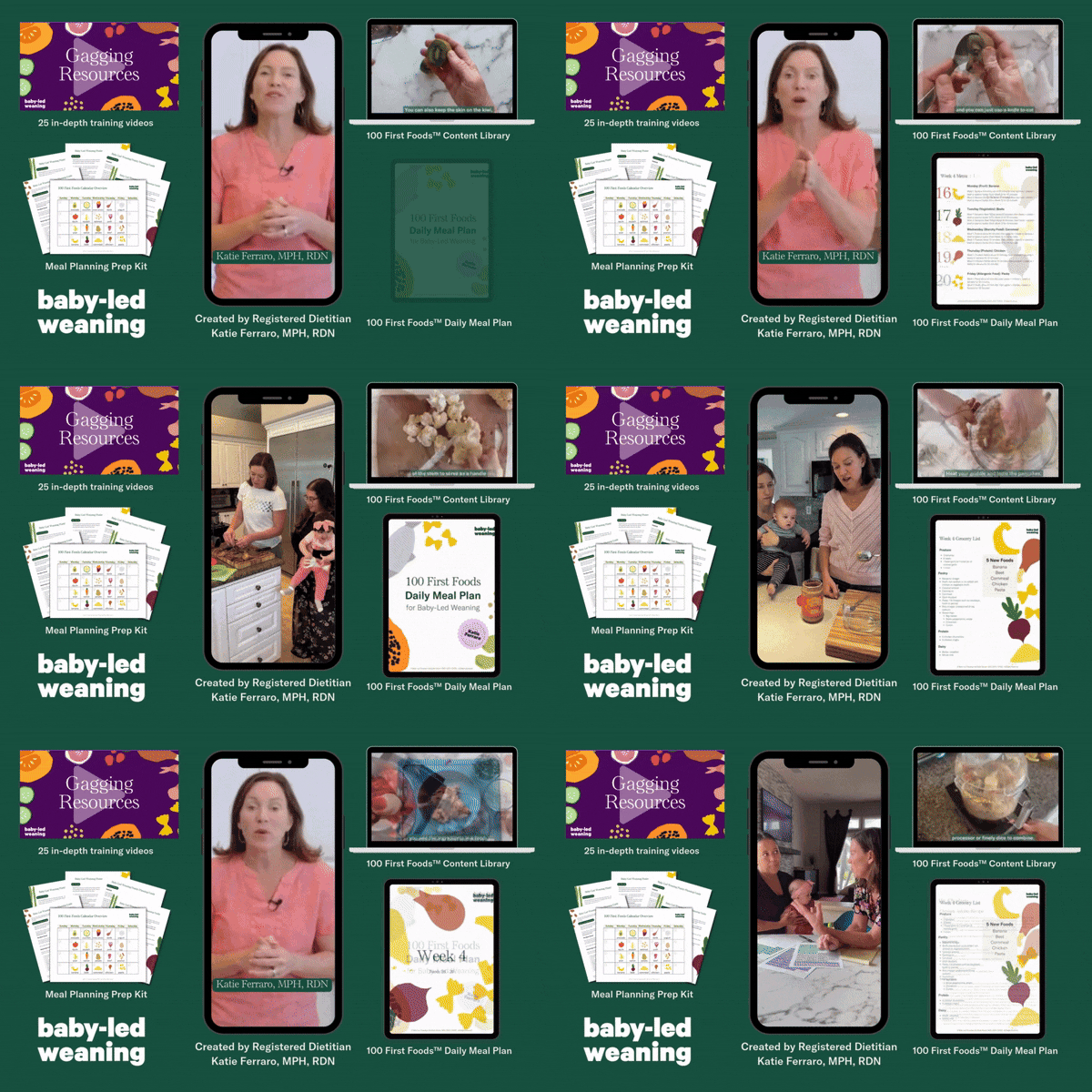
- Baby-Led Weaning with Katie Ferraro program with the 100 First Foods™ Daily Meal Plan, join here: https://babyledweaning.co/program
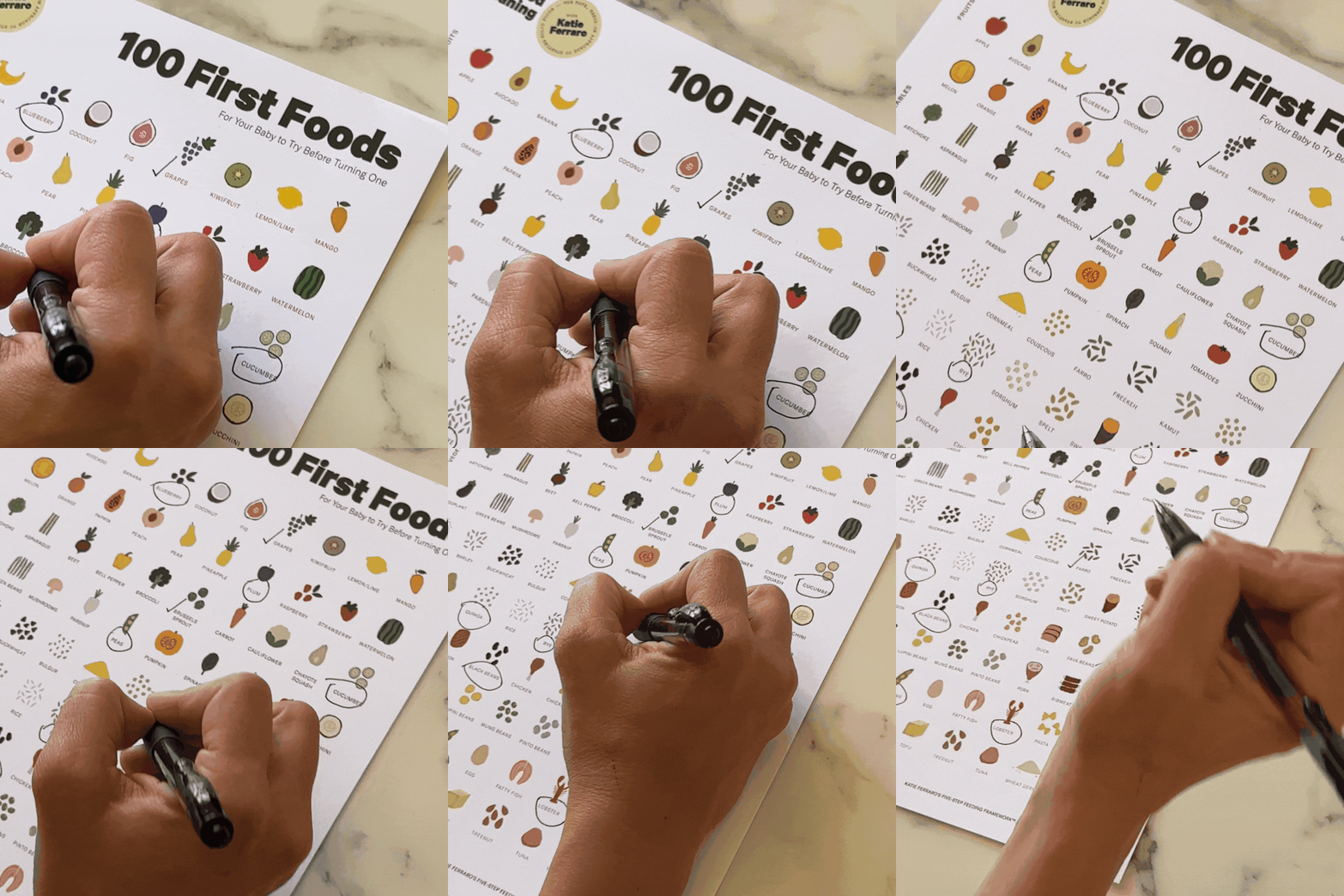
- Baby-Led Weaning for Beginners free online workshop with 100 First Foods™ list to all attendees, register here: https://babyledweaning.co/baby-led-weaning-for-beginners

Latest Episodes

Katie Ferraro (0s):
Do you ever get burned out trying to figure out which foods to make your baby? I know you're juggling all the things about being a parent. And then on top of that, you're trying to give your baby a safe start to solid foods. If this is you, you are the person that I created my 100 First Foods Daily Meal Plan exactly for. So back in 2016, I created the original 100 First Foods approach to starting solid foods. We've always had a daily meal plan, but the last few weeks and months I've been revamping the whole thing, streamlining it for parents who wanna know exactly which food to feed, along with instructions and recipes on how to make that safe for your baby's age and stage. So right now, I'm myself am working through the program with my friend Baby Ezra. I'm in week 15, so we're doing foods number 71 to 75.
Katie Ferraro (40s):
We're like three quarters of the way to the 100 First Foods with this baby, and we do five new foods each week in the program. So we follow my five step feeding framework this week he's having for his new fruit, it's strawberry I just did a updated version of our fabulous, easy strawberry stuffed french toast recipe, which is also a safe way to offer your baby bread. For the new vegetable of the week, Ezra is having brussels sprouts, I got a shaved brussels sprouts fritter recipe, so good even picky toddlers like it. For the new starchy food of the week, we're doing tortilla. Tortillas are not safe for early eaters, but the chicken enchilada caserole recipe we have for phase two and three of the program. So good. So easy. New protein food of the week is black beans. I've got a black beans, sweet potato tater tot recipe, super fun finger food. And then we do a new allergenic food every Friday.
Katie Ferraro (1m 21s):
This week it's wheat germ to reintroduce wheat and I've got a wheat germ banana bread recipe, which is awesome if you wanna like bake ahead and freeze it for busy weekday morning. So if you wanna follow the same 100 First Foods Daily Meal Plan that we are doing with baby Ezra, it's all part of my Baby-Led Weaning with Katie Ferraro program. I've got the exact sequence of foods to feed. I've got 100 First Foods content library. It shows you how to safely prepare all the food as well as my 100 First Foods Daily Meal Plan. So I want your baby to also eat 100 foods before turning one. If you wanna follow the exact meal plan and sign up, head to babyledweaning.co/program. Again, that's babyledweaning.co/program and I hope to see you there.
Sharon Mazel (2m 31s):
So this idea of comparison is really increased because of social media and so I think that's increasing the anxiety that every new parent is facing. There's also so many products on the market and so many companies telling us as parents, you must have this product, you need that product. And the truth is, is that babies don't need that much, but we buy into it because we see it everywhere.
Katie Ferraro (2m 55s):
Hey there. I'm Katie Ferraro, Registered Dietitian, college nutrition professor, and mom of seven specializing in baby-led weaning. Here on the Baby-Led Weaning Made Easy podcast, I help you strip out all of the noise and nonsense about feeding, leaving you with the confidence and knowledge you need to give your baby a safe start to solid foods using baby-led weaning. How are you doing? Dealing with the information overload that is having a baby or thinking about having a baby. I remember when I was pregnant with my oldest, I don't know I had a couple of books someone gave to me and then I had like some books.
Katie Ferraro (3m 35s):
I was like to my husband "Like, you need to read these." These are about like becoming a parent, a dad. And like it was getting closer and closer and closer to our oldest being born. He was like, "you haven't read any of these books." I read all of them. I feel so prepared. And he was like, "you know, I feel like I'm just gonna let my instincts kick in when the baby gets here." And true to his word, he read zero of the books. It was totally fine as a dad, but it helped me feel prepared to read books. I get overwhelmed by social media, so I like books. And so my guest today also likes books. She's an author. Her name is Sharon Mazel. Sharon is an author, she's a journalist, she's a mom of four, also a parenting coach. And so she wrote a book called Bite-Size Parenting Your Baby's First Year.
Katie Ferraro (4m 18s):
And we're gonna have a conversation about how to deal with information overload in the baby space. As she says in the interview, her babies are no longer Babies. So she's been at this a little bit longer than most of us and she has an interesting and unique perspective on how to deal with information overload. So I hope you guys enjoy this interview episode all about how to deal with information overload in the baby space with Sharon Mazel.
Sharon Mazel (4m 45s):
Hi Katie, thanks so much for having me.
Katie Ferraro (4m 47s):
Hi Sharon. I know you're a mama of four. You've worked in the baby space for over 25 years. How did you come to be a parenting and pregnancy expert?
Sharon Mazel (4m 55s):
So I am a journalist by profession and by training. And as a journalist, I spend a lot of time researching and writing and this is something that I've been working in for 25 years working in various websites and book series and I have started really trying to focus on giving parents today what they need in terms of the information about parenting in more digestible ways. And so I'm focused mostly today on social media, really meeting parents where they are. I offer courses and I do parenting coaching and of course I have my brand new book, Bite-Size Parenting and I do it all in a way that empowers parents, giving them information that really helps them understand, feel knowledgeable, feel confident, and really, really get to the core of what they need to know without feeling overwhelmed.
Katie Ferraro (5m 51s):
So when your publicist reached out, it was about your book Bite-sized Parenting Your Baby's First Year. Tell us how this new book differs from other parenting books that are out there. Like what's your why, why did you feel like you needed to write this book?
Sharon Mazel (6m 3s):
So it's a great question and as I said, I've been doing this for so many years and I've really noticed that recently, let's say over the last 10 years, parenting has just become so much more overwhelming. and I believe it's because there's so much information out there. Parents today can go on Dr. Google and search for anything they wanna search for and get answers. They can read large parenting books, they can go on online blogs, they can go to social media. The problem becomes is that there's so much information out there and when there's so much information out there, it becomes overwhelming. Who do I trust? This is an opinion or is this fact, I don't know, I'm getting all these different ideas. People are telling me things in the playground, my mother-in-law's telling me something else.
Sharon Mazel (6m 47s):
I'm just so overwhelmed. And so what I really wanted to do was create a book bite-size parenting that was bite-sized, that was digestible, that was actionable, that gave strategies that really helped parents feel less stressed and more empowered and confident. And so what makes this book really different than any other book out there is that I, I call it like a choose your own adventure. I give parents the option of how to digest the information. So every topic has two ways of learning and two ways of getting all the strategies. And so I'll show it to you here. Each topic has an illustrated short infographic with quick bites, six quick bites.
Sharon Mazel (7m 28s):
You need to know how to soothe your crying baby. Here are six strategies that You can try right now. Boom, boom, boom. And if it's two o'clock in the morning and your baby is crying and you're exhausted and you don't have time to read paragraph after paragraph. This is a great way to get the information. And then perhaps when you have a little more time, the baby falls asleep. It's the next day. Every section, every topic has what I call a closer look, which gives much more nuance and detail, a lot more information with every topic that really dives deeper, giving parents more of the why and the how So that they understand what those strategies, why they work, what those strategies are and that sort of thing. And so that's what makes this book very different.
Sharon Mazel (8m 10s):
It really speaks to parents in a way that they can understand the information and then really turn it into action and feel confident and empowered about doing it.
Katie Ferraro (8m 21s):
So I have your book, I read it cover to cover, you're covering a lot of territory in this book from sleeping to feeding, development and play. Do you consult with individual experts in each of those spaces as you're putting the book together and and what does that team look like?
Sharon Mazel (8m 35s):
Yeah, so this book is completely evidence-based there. This is not an opinion book. There's some wonderful parenting books out there that are opinion-based. This is evidence-based science-based, medical-based. And as a journalist and as somebody who's been doing this type of research for so many years, I have sources for everything in this book. So I'm the one who's going through all the journal articles, I'm going through the research and the data. I'm looking at the recommendations from the World Health Organization, from the American Academy of Pediatrics, from pediatricians who I interview, from psychologists, from physical therapists, occupational therapists, speech therapists. And I'm gathering all that information, I'm doing all the work, I'm gathering it and then distilling it into a way that's understandable for parents who don't wanna spend the time combing through the research or looking at the data or reading those very medical jargony journal articles.
Sharon Mazel (9m 28s):
And so everything is sourced and I have a whole list of the sources chapter by chapter. The book is laid out month by month. So every monthly chapter has a list of evidence-based sources that you can find on my website. So I'm really proud of that, that this is not that. This is really a trustworthy book and the information that I present both here and on my social media and in my coaching is, is very trustworthy. It's not just me thinking about something.
Katie Ferraro (9m 53s):
You mentioned a number of different credentialed professionals there. Did you by any chance interview dietitians for the feeding portion of your book?
Sharon Mazel (9m 59s):
Yes, dietitians and nutritionists. I also have information from those professionals as well. and I apologize because I, it's a very big part of the book, feeding solids, and obviously breastfeeding and formula feeding before six months and solids after six months. And yes, nutritionists and dietitians are amazing resources and they're in the book as well in terms of, you know, the, the information that they impart and the knowledge that they have.
Katie Ferraro (10m 26s):
Hey we're gonna take a quick break, but I'll be right back.
Katie Ferraro (12m 6s):
So I saw an interesting quote yesterday from a pediatrician who's kind of stating, after decades of working, she feels that parents have more anxiety than ever about everything related to their baby's development. And, you kind of alluded to that previously, but in this era of social media, do you feel that there is this information overload? And how do you see that playing out for new parents, especially for first time parents who have never experienced any of these things before. It's kind of just like this fire hose in your face the second you find out or even start trying to have a baby. Has that changed over the time that you've worked in this field?
Sharon Mazel (12m 46s):
Absolutely, absolutely. There's two reasons I think for this overload and this anxiety, this increase in anxiety, I think first of all we're living in a culture of comparison and that's exacerbated by things like social media. It used to be before social media was, you know, around the only times that we would see other babies were in our families, perhaps in our own families, maybe nieces or nephews, we would see other children in the playground. But now we see other parents and other children everywhere on social media. And so we are starting to see how somebody else is doing it. And what is presented on social media isn't always reality. So if we're seeing an influencer with a beautifully decorated home without a single lego in sight on the floor or toy, then we start to think, wait, what's wrong with me?
Sharon Mazel (13m 33s):
What am I doing wrong? Why is my house so messy? I don't have time to clean up my house because my baby is screaming all the time. Or if we see a new mom bounce back so quickly and she's wearing all her fashionable clothing items and we certainly cannot fit back into our clothes for many months after delivering, that creates unrealistic expectations. And so anxiety levels go up. So this idea of comparison is really increased because of social media and so I think that's increasing the anxiety that every new parent is facing. There's also so many products on the market and so many companies telling us as parents, you must have this product, you need that product.
Sharon Mazel (14m 14s):
And the truth is, is that babies don't need that much. But we buy into it because we see it everywhere. And as I mentioned before, the information overload. The fact that we can get so much information doesn't always reduce the feelings of stress. It actually can increase those feelings of stress and feelings of worry that we're not understanding we're not doing it right and it helps or, or it decreases the ability that parents naturally have to trust our own guts and to trust our own instincts and really, really feel like we got this, we can do this.
Katie Ferraro (14m 48s):
So I know with baby-led weaning, it's one of the few things that actually appeals to second time parents because a lot of times they've struggled with picky eating from traditional, conventional adult-led spoonfeeding with their oldest child. They're like, I'm willing to try anything else. But what you say is so true, like they kind of realize after a while, gosh, don don't need a lot of that stuff. That was essentially marketed to me the first time around and our audience consists mostly of parents caregivers of babies six to 12 months of age. And as a dietitian, I do all of my education on safe food preparation, reducing choking risk, offering, potentially allergenic foods, et cetera. Outside of that, transitioning to solid foods stuff, can you share what, what are some other changes that are babies are going through in the six to 12 month mark?
Katie Ferraro (15m 28s):
'cause obviously my subject matter expertise is in feeding and sometimes we focus so much on that, it's like this is not happening in a vacuum. Your baby's doing these other things. So what are the other things extraneous to feeding that are important for parents to know about in that second half of infancy?
Sharon Mazel (15m 42s):
I love that question because you're so right. Feeding takes such a big outsized amount of time in parents after, once you start in that six month mark and start feeding solids. But there are so many things that are going on with your baby as well, primarily, or not even primarily, but one of the big things is motor development. Before six months your baby is really just lying around, maybe rolling and hopefully learning how to sit So that they can sit well for feeding and eating at six months. But there's so much more that your baby's gonna start accomplishing starting at six months into the rest of the, the first year. So we'll be looking for things like sitting well, pulling up, cruising, pushing a push toy and even walking on some babies will start walking before their first birthday.
Sharon Mazel (16m 29s):
So motor milestones are gonna, did I mention crawling? Crawling is in there too. I don't, I can't remember if I said crawling, but crawling is there too. And it's actually a very important motor milestone. And so there's a lot of new and exciting physical development things that we'll be looking for in baby six to 12 months. There's also a lot when it comes to social development and communication, your baby is going to start babbling a lot more as your baby gets closer and closer to that first birthday, your baby may be saying some words with meaning, even if it sounds like babbling, even if you're the only one that could understand it as the parent. But when a child starts to use a sound or a gesture consistently and with particular meaning that you understand, that's like the first steps in communication.
Sharon Mazel (17m 16s):
And so these are the big things that we're gonna be seeing in that six to 12 month period. And it's so wonderful to see because your baby really is turning from a baby to a toddler, which is what happens at that first birthday. And the growth and development is extraordinary in that, in that six to 12 month period.
Katie Ferraro (17m 33s):
You mentioned it earlier, a living in this era of just information overload and I feel like it's getting, you know, more and more saturated every day. And so for new parents, what tips do you have for them to just cut through the noise? How do you focus on what really matters? I know that's probably an opinionated question, but I'm asking your opinion as someone who's worked in the parenting space and certainly had children for a lot more years than the parents listening who have like, what are your takeaways? How do we just focus on what matters and block out all the other crap we don't need to know?
Sharon Mazel (18m 1s):
It's a really hard thing to do because every day we are sitting there with our babies and every little thing that that baby is doing feels monumental. It feels huge, our baby, you know, it rolled over and bumps their head. It feels huge. Our baby gags with that first, those first solids, it feels huge. Our baby doesn't sleep through the night. It feels huge. All these things feel huge and they are in the moment and yet they're not so big because if we as parents can take a deep breath and then take a step back and start looking at the bigger picture, it's hard. This is, it's much easier for me to say this, my babies are no longer babies but I hope to encourage parents to understand that each moment feels big, but really when you step back, you're able to really take those small wins and they add up into real moments of joy and exploration and excitement.
Sharon Mazel (18m 57s):
And so if we can just remind ourselves, my baby's gonna stop crying, my baby is going to stop spitting up, my baby is going to learn how to take those first steps, it will all happen and it will happen in a way that we don't have to feel so tense about it because we're so focused on each individual moment. So take a deep breath and take a step back. That's my advice.
Katie Ferraro (19m 18s):
Hey we're gonna take a quick break, but I'll be right back.
Katie Ferraro (20m 36s):
I remember when I was struggling with potty training, I have two sets of multiples. I have a singleton and I have quadruplets and then I have twins. So I had seven kids, three and under for a while. And when my twins were born I was still struggling with potty training the oldest, I mean the potty training for me was just like, it was so overwhelming and a mom with older kids than mine told me they won't go to kindergarten in diapers. And I remember like that, like just setting that like kind of a ridiculous milestone. Like of course I knew that. And it's ironic because my twins actually started kindergarten recently and I saw that friend and I was like, you are totally right. They were not in diapers when they went to kindergarten, although at the time, in the thick of it with all those little kids, I was like, these children are never really going to learn how to go to the bathroom.
Katie Ferraro (21m 20s):
So, I think sometimes setting, you know, almost like comical barriers for yourself or or future goals can help you. Like they're going to learn how to eat real food. They are going to stop crying, they will start sleeping through the night and they will go to kindergarten, hopefully not in diapers and if they have diapers, you'll learn how to deal with it because maybe something else is going on. But Sharon, tell me a little bit about your parenting coaching. I was looking on your website, just the, the kind of services that you offer. What does a parent coach do?
Sharon Mazel (21m 45s):
So what I love about being able to speak to parents on social media through my courses, through my e guides, through my book, is I'm giving a lot of information out there, but what I love so much about my parenting coaching is that I'm sitting one-on-one with a parent, I'll do it over Zoom. So we're sitting in our each respective living rooms, but I'm able to really focus and tailor the strategies for that particular parent and that particular child because every child is different and every parent is different, and every parent child relationship is different. And so even though we all struggle with the same thing, we all struggle with getting our kids to sleep through the night. We all struggle with, with discipline issues or behavior issues. We all struggle with potty training.
Sharon Mazel (22m 26s):
We all struggle with, with starting solids. We all struggle with all the things that parents, you know, feel are just "I'm the only one", but I promise you that we all do it. But because everybody is different, everybody is going to want to parent in a slightly different way and that's perfectly acceptable. So as a parenting coach, I'm there to help guide the parent, figure out what works best for them. So I'll give you an example. If I'm doing a coaching on sleep, so there's so many ways of helping a child develop healthy sleep habits, sleeping through the night, learning how to nap well, but parents may differ in the way that they wanna approach it. Some parents wanna sleep train, I like to call it sleep teaching.
Sharon Mazel (23m 8s):
Some parents want to co-sleep bed share. Some parents wanna do it in a very gentle way. Some parents are like 'No I have to go back to work and I want my kid to sleep." And so all these different nuances allow me and give me the opportunity to work individually with a parent to help strategize and tailor those tips and tools specifically for that child and that parent. So that's, that's what a parenting coach does and and there are a lot of wonderful coaches out there. I guess what makes me a little different is I'm a one-stop shop. I'm not just doing sleep, I'm not just doing feeding, I'm not just doing potty training. Any type of parenting topic is something that I work with parents on.
Katie Ferraro (23m 47s):
So tell us, where can our audience go If, they want to learn more about your work and also support your business and to buy your book?
Sharon Mazel (23m 53s):
So my website is Sharonmazel.com everything is there. I also speak to hundreds of thousands of new moms and dads, expectant moms and dads on my Instagram account, which is at SharonMazel. And of course, you can find Bite-Sized Parenting wherever books are sold. On Amazon online, Barnes and Noble, and of course in your local bookstore. And if it's not there, be sure to ask them to carry it. The book just came out and I'm really thrilled and excited for parents to get their hands on it.
Katie Ferraro (24m 24s):
I noticed the illustrations in your book and then it made me think of your Instagram, which I know is a lot of infographics. Is it the same artist that did the book that does your Instagram?
Sharon Mazel (24m 32s):
No. So the artist that I have for the book is the wonderful Kara Western. And what I love about the illustrations in the book, the stuff that I use on on Instagram are just stock icons. But the illustrations in bite-size parenting are specifically for the book and they're so relatable. That's what I love about the illustrations. There's one in particular that I'll describe where there's a new mom who is changing her babies, her newborns diaper. It's a poop blowout. There's poop everywhere. She is leaking breast milk. So she has stains on her shirt, she's crying her, her hair is all messy. And it's so relatable because we've all been there, we've all changed those poop blowout diapers. And these illustrations besides being cute and adorable and beautiful are also really relatable.
Sharon Mazel (25m 17s):
Again to help parents understand that they are not alone. Everybody is struggling with the same things and there are ways to feel empowered and confident through all the information in bite-sized parenting. Well,
Katie Ferraro (25m 28s):
Thank you so much for your time. I really appreciate it and congratulations on the book.
Sharon Mazel (25m 31s):
Thanks so much. Thanks so much for having me.
Katie Ferraro (25m 35s):
Well, I hope you enjoyed that interview with Sharon Mazel. She's online at Sharonmazel.com her book is called Bite-Size Parenting Your Baby's First Year. I'll link all of her resources on the Shownotes page for this episode, which you can find at BLWpodcast.com/392. A special thank you to our partners at AirWave Media. If you guys like podcasts that feature food and science and using your brain, check out some of the podcasts from AirWave. Again, we're online BLWpodcast.com. Thanks so much for listening and I'll see you guys next time. Bye now! If you're interested in doing baby-led weaning, but you're not exactly sure, like what does that mean?
Katie Ferraro (26m 17s):
What does it look like? Where do I start? My online program called Baby-Led Weaning with Katie Ferraro has everything you need to give your baby a safe start to solid foods and get them to eat over 100 foods before they turn one, whether you're terrified of choking or maybe you've started but you feel like you're feeding your baby the same foods over and over 'cause you don't know what to feed next, or you're looking for guidance on how to prepare foods safely for your baby's age and stage. My program has exactly what you need. There's five hours of concise self-paced video training. You can knock this thing out during nap time this week. You also get access to my 100 First Foods content library so you can see and learn exactly how to prep all of the 100 foods as well as my original 100 Days Meal Plan. I've been refining this program for the last seven years, just today of mom wrote to be and told me that the 100 Days Meal Plan has been a game changer for her busy lifestyle.
Katie Ferraro (27m 5s):
When you join the program, you also get access to over 100 phase two combination food recipes. So you're gonna try out the trickier textures, push your baby's palate. And what's cool about these recipes is your whole family will enjoy them. So everything you need to give your baby a safe start to solid foods is inside of the program. It's created by me, a Registered Dietitian who specializes in infant feeding. If you're tired of hunting and pecking around the internet trying to piece this stuff together on your own, I put it all in one convenient place for you. I invite you to check out the Baby-Led Weaning with Katie Ferraro program that's at babyledweaning.co again, that website is babyledweaning.co and click on program to learn more.
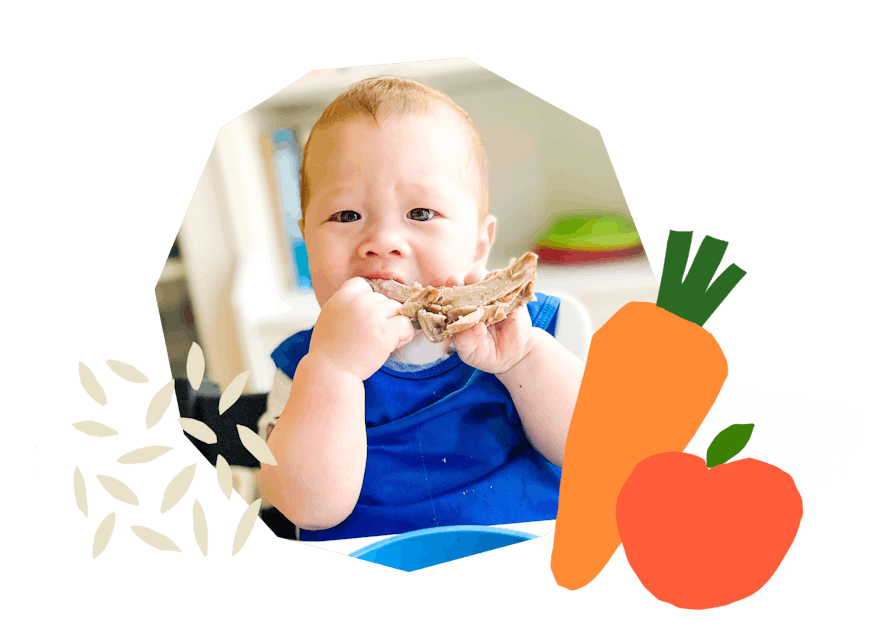
The Program Baby-Led Weaning with Katie Ferraro
A step-by-step digital program for starting solid foods safely and navigating the original 100 FIRST FOODS™ meal plan with baby-led weaning.
 EXPERT-LED, PROVEN APPROACH TO EATING REAL FOOD
 CONCISE VIDEO TRAININGS TO MASTER BABY-LED WEANING
 100 FIRST FOODS DAILY MEAL PLAN WITH FOOD PREP VIDEOS
Baby-Led Weaning for Beginners Free Workshop
Is your baby ready to start solid foods, but you’re not sure where to start? Get ready to give your baby a solid foundation to a lifetime of loving real food…even if you’re feeling overwhelmed or confused about this next stage of infant feeding.
Get baby-led weaning recipes and tips delivered to your email inbox.