
From 3 Naps to 2: The 8-Month Routine Reset for Sleeping + Eating with Alejandra Zuniga
- How to recognize the signs your baby is ready to move from 3 naps to 2 around 8 months
- Why solid foods, milk intake changes, and sleep shifts can affect each other.
- How to improve mealtime attention and family dynamics by understanding the role sleep plays at the table.

LISTEN TO THIS EPISODE
Episode Description
Around 8 months, many babies start eating more confidently, drinking a little less milk, and transitioning from 3 naps to 2…so it can feel like your whole routine suddenly stops working.
In this interview, pediatric sleep specialist Alejandra Zúñiga explains what’s happening during this “8-month reset,” how sleep impacts your baby’s attention at the table and family mealtimes, and what to tweak so sleep and starting solid foods can work together.
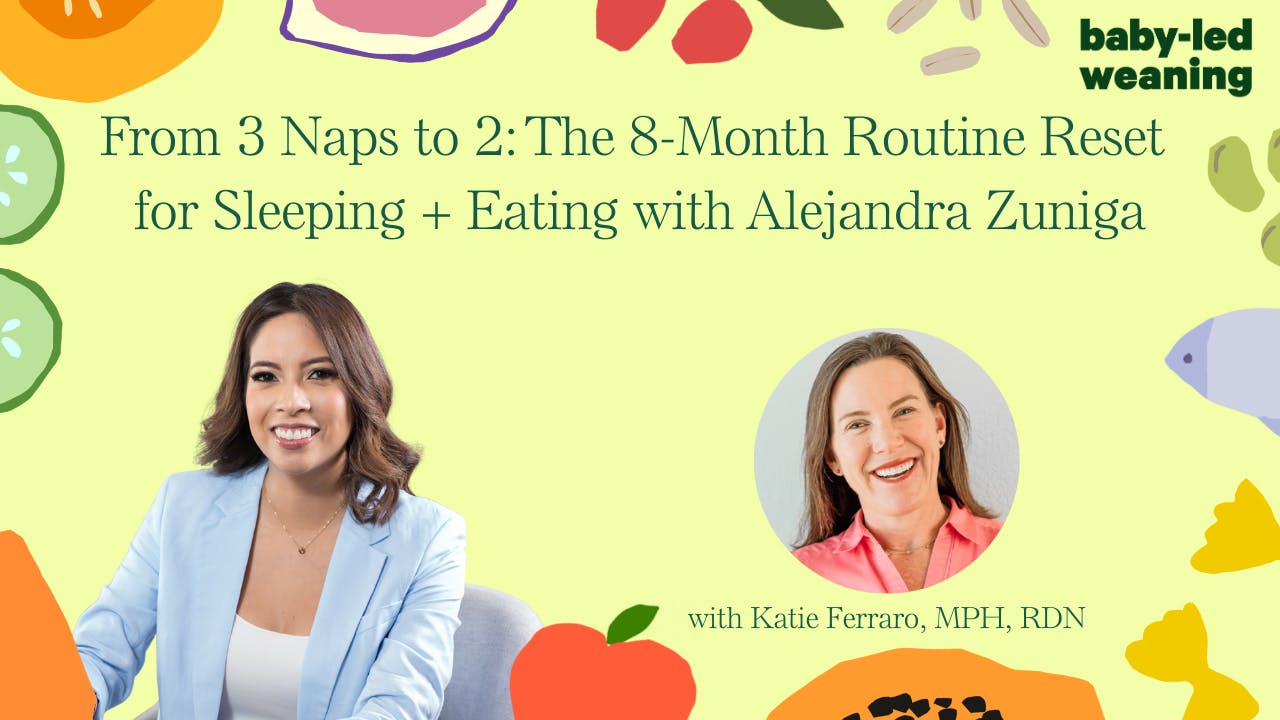
About the Guest
- Alejandra Zúñiga is a pediatric sleep specialist and Certified Gentle Sleep Coach (Easy Nights), supporting families in building sustainable sleep habits with a mindful, low-tears approach.
- She’s a mom of two who got into infant sleep work after navigating her own newborn sleep struggles and wanting a calmer, more rested household.
- Alejandra offers sleep coaching and consultations for children ages 0–5, working with families virtually (and beyond Houston).

Links from this Episode
- Visit Alejandra’s website for sleep help at https://www.easynightsgsc.com/

- Baby-Led Weaning with Katie Ferraro program with the 100 First Foods™ Daily Meal Plan, join here: https://babyledweaning.co/program and save $50 when you sign up using the code BLWPOD50
JOIN NOW AT $50 OFF CODE: BLWPOD50

- Baby-Led Weaning for Beginners free online workshop with 100 First Foods™ list to all attendees, register here: https://babyledweaning.co/baby-led-weaning-for-beginners

Other Episodes Related to This Topic:

Latest Episodes




Sierra (0s):
From athletic stuff, like a full core pickup game, swish to athletic ish stuff, like a half mile stroll. Get those steps in head to Sierra or sierra.com for the brands you want at the prices that let you do it all from athletic to athletic ish Sierra's. Got it.
Walt Disney World Resort (15s):
We are leaving today and entering a world of Mickey Mouse, waving princess meeting and greeting lights. Saber clashing the Twilight Zone, tower of terror, dropping Banshee flying Space mountain, launching Galaxy rewinding. What is the with galaxy rewinding fireworks, igniting world of other worlds for whatever you love. Infinite Worlds await at the most magical place on earth. Walt Disney World Resort.
Alejandra Zuniga (47s):
We go from three to two Naps, but the total amount of sleep remains the same. Usually we aim for around three to three and a half hours of daytime sleep, between three or two naps at that age. So babies that already move to a two Naps schedule do tend to have longer naps. An hour and a half to two hour naps. But then also, you know, bedtime adjusts. So usually when we drop a nap, if your baby usually goes to bed at eight, then they're gonna start going to bed at seven. Because we are moving, we're shifting the schedule a little so they don't have like a very long awake window between sleep periods.
Katie Ferraro (1m 25s):
Hey there, I'm Katie Ferraro, registered dietitian, college nutrition professor and mom of seven specializing in Baby led weaning. Here on the Baby-Led Weaning Made Easy podcast. I help you strip out all of the noise and nonsense about feeding, leaving you with the confidence and knowledge you need to give your baby a safe start to solid foods using Baby-Led Weaning. Tell me, are you one of those parents who is more obsessed with your own sleep or your baby's sleep? Sleep is important and something that we tend not to get enough of for a multitude of reasons, but having a new baby really can throw a wrench in your adult sleep and you tend to spend a lot of time focusing on your baby sleep and that sleep schedule.
Katie Ferraro (2m 10s):
Well, in today's episode, I'm joined by pediatric sleep specialist Alejandra Zuniga. She's from Easy Night's Gentle Sleep Coaching and she's gonna be talking about a big shift that happens for a lot of families around the eight month mark. So If you think about it, that's after your baby's been eating solid foods, generally for about two months or so. Okay. And that's when they actually start getting kind of decent and good at eating finger foods. They are gonna start drinking a little bit less milk, so less breast milk or formula if you're bottle feeding. And this is when your baby transitions from three Naps down to two. So In this interview, Alejandro's gonna be unpacking what's really going on during this routine reset. Okay.
Katie Ferraro (2m 50s):
She'll be talking about how sleep impacts your baby's attention and their mood at the table. And then why mealtime dynamics tend to feel totally different when, when everyone is overtired. So If you are in the thick of the eight month, she calls it a regression, I think it's a progression. Maybe we can agree to disagree or If you feel like your schedule is suddenly not working like it used to, I think you'll really enjoy this conversation with Alejandro Zuniga. I met her in person actually just a little while ago. My sister-in-law, Charlotte just had her third baby. They live in Houston. So I was at her baby shower and before that she told me that one of her friends who was gonna be there is a sleep consultant. So I had the opportunity to chat with Alejandra at the shower and it's just so interesting how there was so many similarities in both of our fields.
Katie Ferraro (3m 37s):
So I'm in infant feeding and she's in the baby sleep space, but there's a lot going on at the eight month mark and it's a little frustrating for parents 'cause the schedule starts to change and anytime your schedule changes, I know it's hard to deal with, but Alejandra's gonna help you handle this switch from three Naps down to two. And I'm also gonna talk a little bit about what's changing nutritionally for your baby at this phase as well. So with no further ado, here is Alejandra Zuniga from Easy Nights Gentle Sleep Coaching to talk about that shift from eight months, three Naps down to two.
Alejandra Zuniga (4m 12s):
This baby was like 10 months old. And then when I mentioned, you know, how this, having a schedule at that age can really help, you know, benefit sleep at night, the family were like, even I should do this. And you know, just having predictability in their schedule, help them improve their nights. Like really kind of immediately when they realize that
Katie Ferraro (4m 38s):
For my first baby, I feel like I didn't have a schedule at all. And then I had the quadruplets after that and my schedule was so on point, I was like, I don't know how I ever lived without a schedule. And I've been like diehard schedule ever since then. So do you find that as well that parents are just like, once they have the schedule, like I don't know how I ever live without it?
Alejandra Zuniga (4m 57s):
Absolutely. And you know what? I just remember another story about a family that, you know, I've started working with them. They have four kids now. I started with them when they had two, then they had twins. And I was like, oh my God, how, you know, how are you gonna do it? And then the twins, the babies are four months old. They are already in a regular schedule. Both of them, even though you know, they are both individual babies, you know, individual people, they found that rhythm. And even with, you know, four under five years old, they're doing great.
Katie Ferraro (5m 34s):
Nope, you can do it as long as there's some sleep because you do have to sleep at some point. And I know when I met you at Charlotte's shower or before that, I was like, Charlotte, which are your friends are gonna be here. So you told me that you were a sleep consultant. I was so excited to meet you. But I'm curious, how did you get into the world of infant sleep work? How did you decide to start a business around this idea?
Alejandra Zuniga (5m 55s):
Well, basically when I was pregnant with my first baby, my daughter, she's six now, I had just moved to the city. I was already pregnant, you know, like eight months pregnant. And I was just getting ready. And every advice that I had, you know, from my mom or my sister, because my sister have had her first baby 10 years before me. So I, those, my mom and her was, were my reference, right? How did you do that? What do I do? What do I buy? How do I prepare? And their answers around sleep were really abstract. Like I didn't, my mom was like, I didn't really sleep for one year. And my sister was like, yeah, you know, you'll find your rhythm.
Alejandra Zuniga (6m 36s):
And I was like, okay, that's not me because I personally need to sleep. Okay. And so I just, okay, I'm gonna go with everything else they say, but not, not a about sleep. So I just went and a friend of mine recommended to, you know, take a course like a sleep course. So I did and I started reading all the books, you know, that I could find about baby sleep and realize that, you know, babies, although we cannot give them a rigid schedule, they can have some, you know, predictable rhythm throughout the day to help them sleep better. And so I was like the perfect student when it came to, you know, baby sleep. And when my daughter was born, I was like really into the, the schedules, the routine, the wake windows, the sleepy cues and introducing, you know, routines as early as I could.
Alejandra Zuniga (7m 25s):
And she was sleeping, you know, through the nights in like four months old, you know, with ju just maybe like one feeding. But she was like putting herself to sleep and sleeping through the night. And so I was sleeping well, which I feel like that was what made me, you know, a better mom, better mood. I was like, I had energy in the morning. Also, my husband was working, as I said, we just moved to the city so he couldn't take a long, you know, leave from work before because he just started work. So he only took two weeks. And so I feel like sleep was the key for me to, you know, parent well or to learn how to parent because I don't know if I did it well, but at least it worked for me.
Alejandra Zuniga (8m 9s):
And so I just started, you know, once I started meeting other, other moms, I was just giving advice to everyone so much that even my husband was like, you know, why don't you do this for a living? And so I really, really, really liked found the passion about sleep, you know, baby sleep. And then I decided the, the year after, before my second baby was born to train and get certified in sleep, in sleep training. And you know, it worked perfectly because it was, that was during COVID, so I was like at home with my baby and I could train virtually. So it just, and then when my second baby was born, I was already trained. And then after a few months I, you know, started it as a business just, you know, providing help for to other families.
Katie Ferraro (8m 56s):
I wanna ask you what your favorite age of baby to work with is. Like when do you think Alejandra that's implementing a sleep schedule is ideal in order to have the most impact for families? Like If you were pregnant and starting from scratch, when are you gonna get like the best bang for your buck? As far as sleep training goes,
Alejandra Zuniga (9m 14s):
Definitely you have to start at the newborn stage. You have to start with the routines with getting to know your baby. You know, getting to know the sleepy cues and offering sleep when they are ready to, rather than following a rigid schedule. Because not every baby is ready to sleep at the same time that the next one, right? And so the key is to getting to know the baby. And I actually have a course called the Three Cs of sleep. I give this, it's like a workshop I provide to, to new parents. And it's basically remembering three Cs, consistency, connection, and cues. Okay. And so connecting is the first step in the first month.
Alejandra Zuniga (9m 55s):
You can always, you know, make sure to connect, bond with your baby, get to know their sleepy cues, know when they're tired, know when they're hungry, etc. Cues you can provide the cues with the right environment, you know, the cues. Let your baby know that it's time to sleep with the right environment, a very sleep conducive environment. And those routines give your babies the cues that it's time to sleep. And then consistency is just repeating it every day, every time they look sleepy, providing the nap, having a bedtime routine every day. And you know, If you do it, If you do this since they're newborns, some babies are sleeping, you know, or putting those themselves to sleep at three months or four months.
Alejandra Zuniga (10m 39s):
So really early. So by that time you go back to work, if that's your case, you know that your baby's already sleeping through the night or even if it's just, you know, at that age they still night, have night feeding sometimes, but even if they wake up for a feeding, they, you know that they will go back to sleep and you'll have like, I don't know, five consecutive hour hours of sleep at night and you'll be, you'll have energy in the morning to go to work, right? For either mom or dad. So I feel like that is the best time to start.
Katie Ferraro (11m 8s):
And what's the third c? The consist? The, the cues, the consistencies
Alejandra Zuniga (11m 12s):
Connection cues, the connection, consistency,
Katie Ferraro (11m 15s):
Connection cues and consistency to help your get your baby going to sleep. So now the moms that are listening are audience, a lot of them, they are really driven by schedules and a lot of them do have their nap schedule, their sleep schedule figured out as the baby approaches. The six year mark though, I mean this is sometimes where parents get annoyed 'cause they're like, you know what, I have a really good sleep schedule down. We've got breastfeeding or bottle feeding situation down and now it's time to start solid food. So the reality is when you start solid foods, there's really not that much eating going on. And literally for the first eight weeks or so, the baby's not going to eat that much. So it truly doesn't really affect much else in your schedule other than you need to try to work in solid foods once, maybe twice a day If you need to.
Katie Ferraro (11m 58s):
But one thing I really loved about our conversation when we were hanging out together in Houston was talking about what happens around the eight month mark. So Alejandra, can you talk about this eight month transition? 'cause from a solid food standpoint, this is when babies really start to get the hang, they're eating more food, they're drinking less milk, that's weaning in action. Like that's what we want. What are the changes taking place in their sleep schedule?
Alejandra Zuniga (12m 24s):
Absolutely. Eight months old is a big, you know, there is a big regression. It, it's called a eight month regression around, you know, sleep babies usually are developing a lot of motor skills. You know, they're cruising, some babies are already standing up, crawling, cruising around, you know, furniture. And they're also having some cognitive development as well. They develop, you know, object permanence and there is some separation anxiety that comes around that age. As you said, this is when babies actually start eating the food and not just experimenting with texture, but actually you're, you know, having a full meal. And so, and also this is the time when babies, you know, between eight to nine months babies go from a three nap schedule to, to a two nap schedule.
Alejandra Zuniga (13m 12s):
So there is like a big change for babies, you know, in, in development. And sometimes that brings some sleep disturbances at night. You know, babies tend to wake up more frequently. Also, teething sometimes at this age kind of like has a peak. Even though teething starts early on, like it starts around three months, you know, you really start getting teeth. Babies usually start getting teeth later on eight 10.
Katie Ferraro (13m 37s):
Yeah. Or they could be after one and still not have any teeth. So yeah,
Alejandra Zuniga (13m 40s):
Exactly. But the process is, is there, so there is so many things happening to the, to the babies at that time that sometimes there is a like a big, there's a big leap and, and that's what brings that, that famous eight month regression.
Katie Ferraro (13m 55s):
And I think a lot of times parents, they think they really miss that third nap. Like, oh my gosh, it's the end of the world. My baby used to take three Naps and they're going down to two. But the quality of those Naps, it doesn't necessarily go down and sometimes the length of the Naps can actually go up, right? Your baby's starting to stretch the amount of time that they can go between feeds. So as they learn to eat a little bit more food and they're drinking less milk, they actually go longer in between feeds because they can actually hold a little bit more food in their stomach. They're holding that milk in there for longer and when they're sleeping they tend to sleep a little bit longer as well. Is that what you would experience as well with the Naps to just going from the number might be going down but it's not the end of the world because the quality of the nap could be getting better?
Alejandra Zuniga (14m 42s):
Absolutely. No, the the, we go from three to two Naps, but the total amount of sleep remains the same. Usually we aim for around three to three and a half hours of daytime sleep, between three or two Naps at that age. So babies that already move to a two naps schedule do tend to have longer naps, an hour and a half to two hour naps. But then also, you know, bedtime adjust. So usually when we drop a nap, if your baby usually goes to bed at eight, then they're gonna start going to bed at seven because we are moving, we're shifting the schedule a little so they don't have like a very long awake window between sleep periods.
Katie Ferraro (15m 23s):
And That's one extra hour for like you to get some time to yourself if they're going to bed an hour earlier too.
Alejandra Zuniga (15m 28s):
That's an hour earlier. Exactly. And that's the beauty of having that predictability, knowing that your baby is gonna have two Naps at a certain time of day and going to sleep at seven gives you, you know, just that peace of mind where you can schedule some downtime for you. Quality time with your partner just watching TV if you want, or reading a book knowing that your baby will be going to sleep at at that certain time. Right. And so parents that usually come to me at that age are experiencing some changes. You know, babies are either taking too long to fall asleep for some reason or waking up frequently at night and that predictability, they lo lose that predictability for a while.
Alejandra Zuniga (16m 12s):
And so what we, how we start working on getting the baby back to, you know, the regular schedule is reviewing his daytime routine, establishing like a very predictable schedule. Not rigid again, but very predictable. Starting with what time they wake up at this age they can have usually like three meals throughout the day, you know, breakfast, lunch and dinner plus the bottles or nursing sessions throughout the day and plus those two blocks of sleep in the middle of the day. And so this is a time where actually it's really a a time where, where parents can move on to that predictability because we can give them, you know, the babies that regularity in their schedule three consistent meals, two Naps.
Alejandra Zuniga (17m 2s):
So you know, repeating that every day is gonna give their brain that information when to produce a melatonin to go to sleep. You know, the sleep hormone. We all have a pick of melatonin before we go to sleep. And so when you give that predictability to their, to their brain, then their brain knows, okay then at seven is when I need to produce the melatonin that is gonna help them fall asleep quickly and stay asleep the whole night. And also another thing that is really big at this age is usually if the babies are still, you know, taking a bottle at night or nursing at night, this is the time when they're usually win. You know, we night win so they can go the whole night without feeding.
Alejandra Zuniga (17m 47s):
But also, you know, we have to make sure that they're getting enough calories.
Katie Ferraro (17m 51s):
Yeah. And I think a lot of times some parents will, we always say, you know, compare and despair. Be like, wait, what you, my baby's still waking up in the middle of the night. If your baby's still waking up the night, that's fine. We just like to let you know that there are babies out there that when they start solid foods, even at six months of age, a lot of them are already not waking up in the middle of the night. So sometimes parents like, okay, well that's a goal I'm gonna work towards. It's not gonna happen overnight. But certainly for babies that are, when our babies that are doing baby Led weaning, by the time they're at the eight month mark, they've got around 80 different foods that they've eaten. They're up to two to three meals a day. These babies are picking the food up, bringing it to their mouth, they're breastfeeding or bottle milk intake is starting to decline. That is what we expect to happen. 'cause we're moving towards the time by, we're at one year of age, most of their nutrition can be coming from milk.
Katie Ferraro (18m 36s):
We're not in any hurry to stop breastfeeding. Lots of benefits to extended breastfeeding. But the reality is you do not need to be waking up in the middle of the night 'cause your baby has the capacity to stretch it and go through the night. Especially if you're on a schedule, right? And you have those three meals, you have the milk, the infant milk in between those meals, you've got your Naps in between there and you've got that bedtime. There's no reason for that baby from a nutrition and a growth development standpoint. They do not need to be waking up in the middle of the night for their nutrition anymore. It's, it's not like they're newborns. I mean it's a very different situation even at eight and nine months of age.
Alejandra Zuniga (19m 8s):
Yeah, exactly. And some parents, you know, think that the babies still, if they wake up at night, it's because they're hungry.
Hungry Root (19m 15s):
Hey, we're gonna take a quick break, but I'll be right back. This episode is sponsored by Hungry Root. You know that saying about the cobbler's kids never having any shoes. I feel that to my core because I cook and prep food and tweak recipes for babies all day long in my business. But then the burden of trying to figure out what to feed my actual family for dinner, it just looms large at the end of every work day. And I know I sound like a broken record going on about Hungry Root, but it is one of the things that has truly simplified my life lately. It's been extra helpful 'cause I feel like Hungry Root finally gets me. Here's what I mean, Hungry Root is a personalized grocery and recipe service that plans your food for you. So it fills your cart with meals and groceries that fit your health goals, your food preferences, and your budget. And then delivers everything right to your door. So the mental load relief is real. Like even if I only use Hungry Root for one or two dinners a week, that's a few nights where I know I don't have to do like what are we eating? Do we have the ingredients? Is anybody gonna complain? Like spiraling outta control? I've just opened the app, I pick what looks good, it's basically handled. Plus there's so much variety. There are over 50,000 chef crafted recipes with many ready in 15 minutes or less. Plus there's over a thousand grocery items now too. I know you're gonna love Hungry Root as much as I do for a limited time. You can get 40% off your first box plus get a free item in every box for life. Go to Hungry Root.com/weaning and use the code weaning that's Hungry Root.com/weaning code weaning to get 40% off your first box and a free item of your choice for life.
Katie Ferraro (21m 1s):
So let's talk about that. A lot of parents are like, my baby wakes up in the middle of the night, boom. It must be they're hungry. We know at the eight, the nine month mark when they're eating two to three meals a day and getting the infant milk in between meals and having two solid Naps in the middle of the day, if they wake up in the middle of the night, it's not always hunger. Alejandro, what is it then? What might be the other causes of waking up in the middle of the night that are not hunger?
Alejandra Zuniga (21m 24s):
Absolutely. Most people don't know is that we all wake up in the middle of the night. We just don't remember how sleep works for, you know, and babies starting four months and older. We all go through sleep cycles. Okay? And a sleep cycle starts with really light sleep, goes to mother, sleep, deep sleep, rem and then it goes back to light. Right? And that's how we go through cycle and cycle. So when we finish one cycle and jump to the other, because we are in very light sleep, okay, sometimes our brain, we either connect to the next cycle or our brain wakes up for some reason. That reason usually means that there has been a change in conditions around us.
Alejandra Zuniga (22m 7s):
So let's say we get cold, right? It got like our room got cold, so we wake up during that light sleep. Okay? Usually for babies what happens is that maybe they are having some sleep association in the beginning of the night, meaning that maybe they are rocked to sleep, maybe they're fed to sleep. You know, some parents, since the babies are born, you know, most babies tend to fall asleep while they're feeding when they're born, right? But then eventually as their feedings become more efficient, they have more awake time, they, they don't need to fall asleep, you know, during feedings. But then some parents, you know, ma maintain that habit until they're, you know, older.
Alejandra Zuniga (22m 50s):
And so when babies are actually fed to sleep or rock to sleep, when they have those micro arousals between cycles, that's when their brains, you know, say, okay, there's, I'm not in my mom's arms right now, I'm in my, in my Crip. And that's when they wake up and then the mom or the dad has to go back and feed them or rock them again to get them back to sleep.
Katie Ferraro (23m 12s):
But you don't always have to be feeding them. Is the answer too that sometimes rocking them or
Alejandra Zuniga (23m 17s):
No, it, no, it can be rocking, it can be, you know, feeding. Usually when a baby wakes up, it's either they're not having enough daytime sleep. Okay, so their Naps are too short or they're having a long awake window in the beginning, I'm sorry, before bedtime. They're having a long awake window before bed or they're having a strong association, you know, a sleep association when they need to be fed or rocked to sleep. So if they're, if they are usually, you know, rocked or fed to sleep, then they wake up and need the same, especially if they are, you know, if they didn't have enough daytime sleep or a long awake time before bed that causes, that causes our body to release the stress hormones.
Alejandra Zuniga (24m 4s):
And when we have a stress hormones, we, our body, you know, it, it's either hard for us to fall asleep or we remain in light sleep most of the night. We don't, our brain is not able to go into deep sleep and follow all the stages that we need to follow just because of all the stress hormones. And that probably happened has happened to, you know, to you like you,
Katie Ferraro (24m 23s):
I feel like as a mom too, like, I mean I have an order ring and like the amount of data I can get on my sleep, it's like it, it's insane. I don't know that I need that much. Like yeah, I know I should be sleeping more and, but whatever. But it is helpful to realize like, okay there are normal variations in your sleep pattern and you can look at your bad sleep nights and see how it's affecting your bad day. Like I can be having like why am I in such a bad mood today? And totally look at my last night's sleep pattern and be like, the data doesn't lie. Like I do not think we need to be tracking our babies at that level. I don't even think we need to be tracking ourselves as adults at that level. Like maybe less tech, more sleep would be a good idea. But tell our audience Alejandra if they're interested in learning more working with you.
Katie Ferraro (25m 7s):
I know you have an online program, but you also do in-person consults, which I think is amazing and I know more and more today parents are really craving like that in-person connections. So for those people who are in the Houston area or you do virtual consults, but like with individual people, tell us a little bit about the services that you offer and where people can learn about you and how we can support your small business.
Alejandra Zuniga (25m 29s):
Yeah, absolutely. So with virtual sessions, I have like a an hour session that you know is ask me anything. You just book a call and we talk online about what's happening and it give you recommendations. But then I also have longer programs where I give, you know, not that, just not, not just that session, initial session, but ongoing support for either either three weeks or six months. I have two options and I must tell you some parents really appreciate that six month support just because, you know, it's not like we're, it's gonna take six, six months for them to fix whatever problem they're going through right now, but you know, they just know that, you know, they're gonna have changes, they're gonna travel, their baby are, is gonna, you know, go to daycare or they're going back to work in a few months.
Alejandra Zuniga (26m 18s):
And so just having that one-on-one support, just able to ask questions quickly. A lot of families really appreciate that support and so I, I provide, provide that either virtually or I do home visits here in Houston, but that's just for the initial consultation. So I go to their house, I spend almost like two hours just getting to know them. Sometimes even getting to know the baby, which is my favorite part of the job, especially toddlers are my favorite. 'cause they like show you where they sleep and show their you, you know, they show you their books and, and I don't know everything you can, you can actually talk to them. So it's really, it's really fun to do those, those sessions.
Alejandra Zuniga (27m 2s):
So I do that in Houston and I also have a five day intensive here in Houston where I go to the family's house for five days to help them, you know, work on that schedule, teach them some techniques and eventually, you know, ideally the goal is that by day five the baby is already learning to put themselves to sleep. And you know, and I do it with the, the the, the good part if I is I do it with them in their house.
Katie Ferraro (27m 32s):
And don't you work with children up until age five too? I was surprised to learn that, that there might even be reasons for having a sleep expert come to help you with older kids too.
Alejandra Zuniga (27m 42s):
Yeah, absolutely. You know, three years old is a, is a very common age for, for babies or, well I do not know that preschoolers, yeah,
Katie Ferraro (27m 51s):
I think I blocked everything about having three year old outta my brain. 'cause it was not a good time.
Alejandra Zuniga (27m 56s):
It's, it can be chaotic because I think at that age it's more about behavioral, behavioral challenges rather than sleep itself. You know, babies or kids at that age are more independent. They want more control. They're testing boundaries. And so at bedtime they usually tend to stall, cry, resist going to bed, and then they're waking up, getting out of bed. This is a time when, you know, most kids go to preschool. This is a time when most kids, you know, go to a big kid bed and, and you know, there are a lot of changes around around them and that, you know, sometimes brings separation anxiety.
Alejandra Zuniga (28m 36s):
There's also a peak of separation anxiety at three years old. And so there's different kinds of challenges. More behavioral. It's more about how do we motivate, motivate the, the kid to stay in bed and to actually go to sleep. 'cause then again, there are stalling, resisting bedtime, skipping Naps, those kind of things. So yeah, I do, I work with with kids until they're five or six. So like kindergarten age that might be going through something like that.
Katie Ferraro (29m 6s):
And what's the best way to get in touch with you?
Alejandra Zuniga (29m 8s):
Instagram is the best way. All my information is there. It is Easy.knight and my website is easyknight gsc.com. So all my information is either there in on, on my website or through Instagram.
Katie Ferraro (29m 23s):
Well thank you so much for sharing all this information. I know it can be a stressful time when parents are transitioning from three to two naps, but it's not the end of the world because those Naps sometimes are better quality Naps. The nighttime sleep is a little bit better, a little bit longer. They're eating more, they're stretching it out. They're relying less on breast milk or formula for their nutrition. So everything is kind of changing in this period. And I know it's annoying when you get your schedule schedule set and it changes, but it's happening for a reason and I think the schedule's gonna keep everybody sane. So thank you so much for sharing this. It was great chatting with you.
Alejandra Zuniga (29m 56s):
Absolutely was my pleasure.
Katie Ferraro (29m 59s):
So I hope you're not too stressed if your baby's making that switch from three down to two Naps. Alejandra did a great job, I think of summarizing the changes your baby's going through, the importance of sticking with that schedule. I know there's a lot of things changing for your baby around this stage. One thing I did wanna point out regarding timing of foods and sleeping, it really doesn't matter for the most part what time of day you offer introduce new foods. But when it comes to offering your baby new allergenic foods, I generally will not do a new allergenic food before bedtime. And here's the reason why. If your baby's going to have an allergic reaction to food, okay, the vast majority of those reactions are gonna occur within minutes and up to no more than two hours following ingestion. So it's a good idea to do the new-ish allergenic food more than two hours before bedtime just to observe for any potential allergic reaction.
Katie Ferraro (30m 46s):
Other than that, go for it. I'm gonna put all of the links to the resources that Alejandra talked about on the show notes page for this episode, which you can find@blwpodcast.com/94. A special thank you to our partners at AirWave Media. If you like podcasts that feature food and science and using your brain, check out some of the podcasts from AirWave. We're online@blwpodcast.com. Thanks so much for listening. I'll see you next time. Bye now.
Blinds.com (31m 18s):
This President's Day upgrade the look of your home without breaking your budget. Save up to 50% sitewide on new window treatments@blinds.com. blinds.com makes it easy with free virtual consultations on your schedule and samples delivered to your door fast and free. With over 25 million windows covered and a 100% satisfaction guarantee, you can count on blinds.com to deliver results you'll love. Shop up to 50% off site-wide. Plus a free professional measure during the President's Day Mega sale last chance happening right now@blinds.com terms apply.
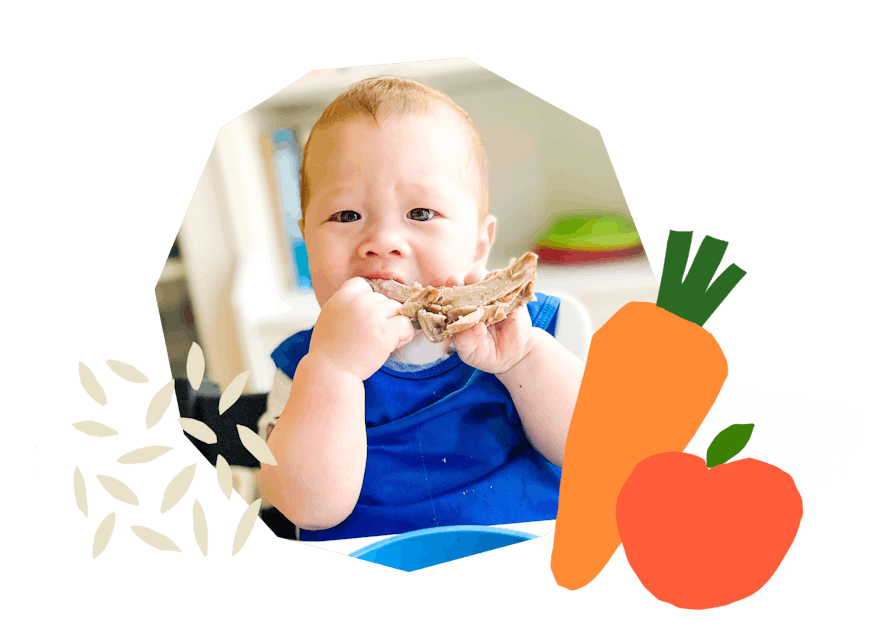
The Program Baby-Led Weaning with Katie Ferraro
A step-by-step digital program for starting solid foods safely and navigating the original 100 FIRST FOODS™ meal plan with baby-led weaning.
 EXPERT-LED, PROVEN APPROACH TO EATING REAL FOOD
 CONCISE VIDEO TRAININGS TO MASTER BABY-LED WEANING
 100 FIRST FOODS DAILY MEAL PLAN WITH FOOD PREP VIDEOS
Baby-Led Weaning for Beginners Free Workshop
Is your baby ready to start solid foods, but you’re not sure where to start? Get ready to give your baby a solid foundation to a lifetime of loving real food…even if you’re feeling overwhelmed or confused about this next stage of infant feeding.
Get baby-led weaning recipes and tips delivered to your email inbox.