
Why Sensory Play Matters when Starting Solid Foods with Dawn Winklemann, MS, CCC-SLP
- How sensory play supports your baby’s feeding development and why it’s easier than you think
- What words to say besides “good job” when you’re at the table with your baby
- Which foods to include in sensory play…even if you’re not one of those “play with your kids” moms
LISTEN TO THIS EPISODE
Episode Description
Sensory play doesn’t just mean bins of dried beans or rice (...which are a choking hazard for early eaters). Instead, it’s a powerful tool at the table for your baby. Dawn Winkelmann, MS, CCC-SLP joins me to explore how sensory play supports your baby’s feeding development…and we talk about why letting your baby touch, smell and even play with food helps build feeding skills, reduces severe picky eating and supports overall sensory regulation. Bonus points for using the food you’re already making for baby-led weaning to make this happen!
About the Guest
- Dawn Winkelmann is a Speech-Language Pathologist and Pediatric Feeding Therapist specializing in infant swallowing.
- Through her private practice, Ms. Dawn provides in-home feeding therapy and online coaching, helping parents start solids safely with the baby-led weaning (BLW) approach. She also teaches techniques to help with picky eating, tube feeding, children with special needs (Autism, Down syndrome, etc.), as well as medically compromised kiddos who struggle to eat a variety of foods + liquids.
- Ms. Dawn is the inventor of several feeding products, including the award-winning ezpz Tiny Cup & Tiny Spoon (for infants) as well as the Mini Cup & Straw-Training System, Mini Utensils, and Mini Feeding Set (for toddlers), available for purchase at Nordstrom’s, Bed Bath & Beyond, Target, and Amazon.
Links from this Episode
- Learn more about Dawn Winkelmann, MS, CCC-SLP on her website www.msdawnslp.com and her Instagram @msdawnslp
- ezpz Play Mat - use the code BABYLED for a 15% discount, shop here (this is an affiliate link): https://ezpzfun.com/BABYLED
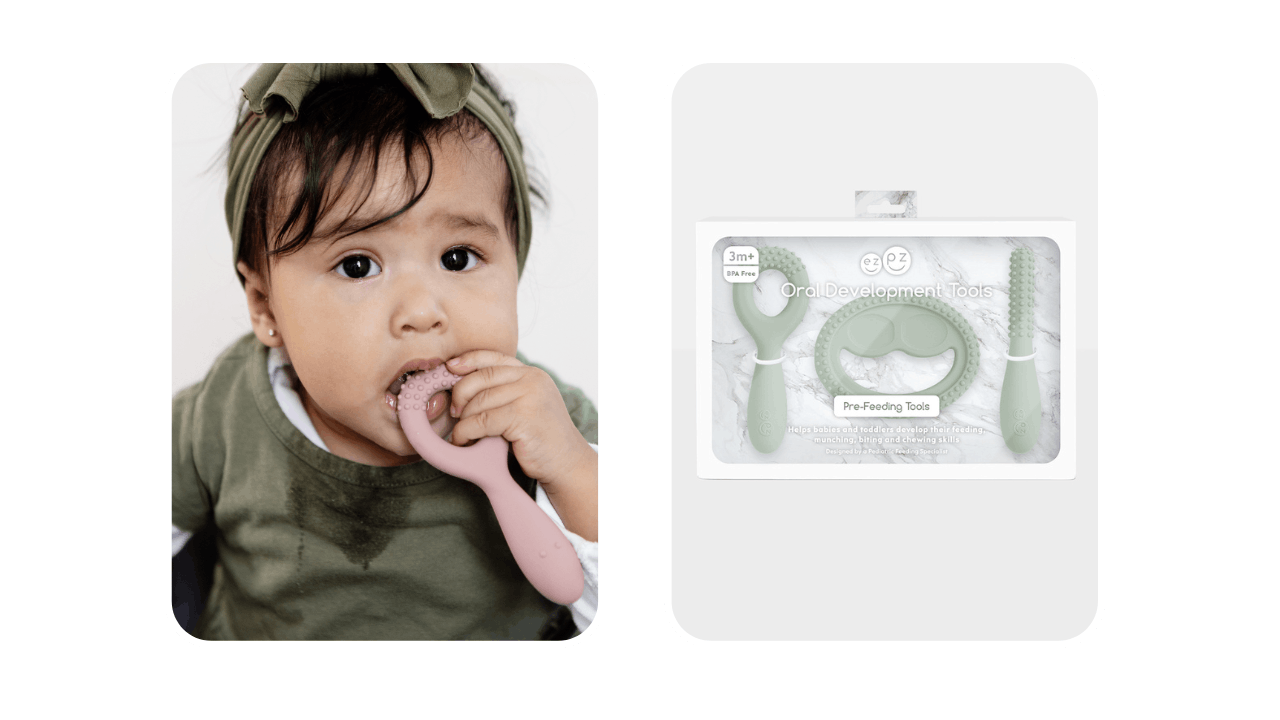
- ezpz Oral Development Tools - great for pre-feeding sensory exploration and code BABYLED works for 15% off here.
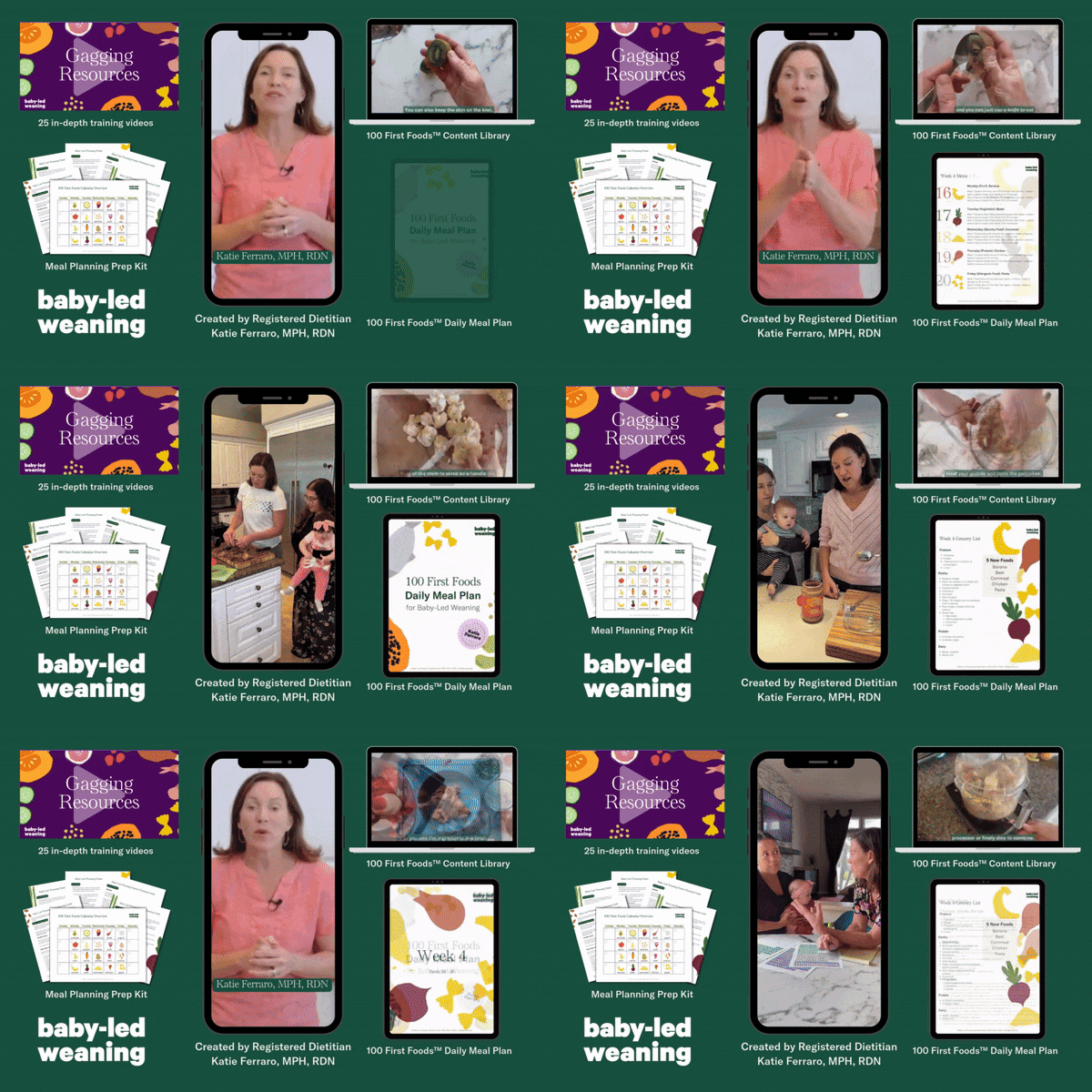
- Baby-Led Weaning with Katie Ferraro program with the 100 First Foods™ Daily Meal Plan, join here: https://babyledweaning.co/program and get $50 off when you sign up using the code BLWPOD50
JOIN NOW AT $50 OFF CODE: BLWPOD50
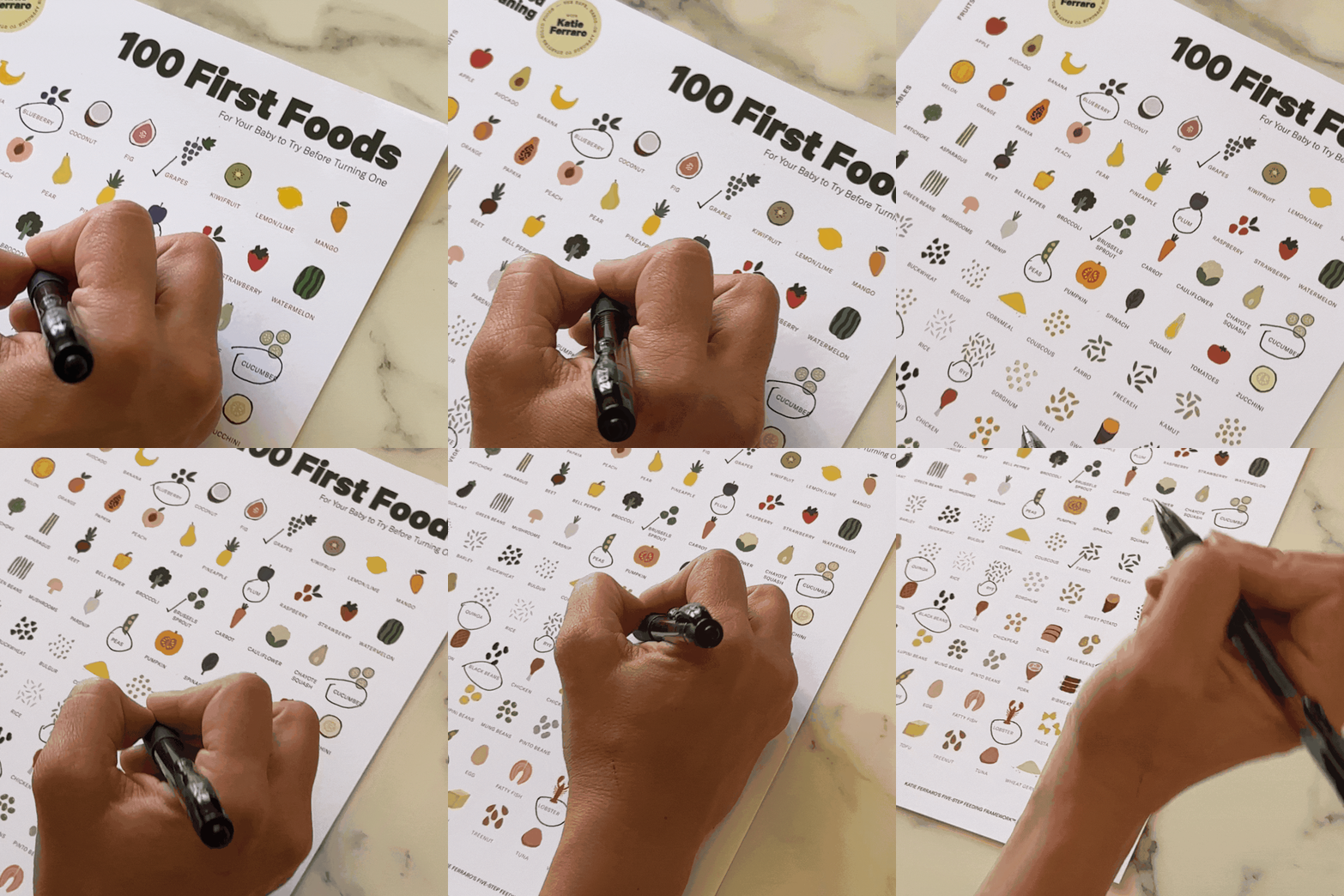
- Baby-Led Weaning for Beginners free online workshop with 100 First Foods™ list to all attendees, register here: https://babyledweaning.co/baby-led-weaning-for-beginners
Other episodes related to this topic

Latest Episodes

Hungry Root (0s):
I love this time of year. Okay, summer's fine, but fall is totally my jam. My birthday happens to be in September, plus my kids are all settled back in school. I can finally get my brain back into workspace. It's like all about a clean slate. And I like to set new goals. I get a little more structure and one of my goals this fall is eating more real food that actually fuels me, But without adding more work, enter Hungry Root. Hungry Root has really changed meal prep for me. They fill my grocery cart with smart, delicious choices that are easy to cook, totally tailored to me and my family's s food preferences. I've been switching up a few things in my diet these days. Hungry Root, that totally gets it. I've been trying out some new almond milk yogurts. I had a new plant based salad dressing the other day. We had this unreal mushroom risotto that showed up in our box with truffle oil the other night that made me feel like a super fancy chef, But my family actually loved it on a weeknight, the Hungry Root Smart Cart, it gets smarter with every order I love. I can still like tweak meals and groceries before they ship. I'm still operating outta my kitchen. But like Hungry Root has just taken away a lot of the mental load of the preparation because honestly, I spend all day prepping meal plans and recipes and working on baby-led weaning food for other people's babies when it comes time to feeding my own family. I really appreciate that Hungry Root has kind of stepped in and the quality top notch. There are no artificial sweeteners, no weird additives. There's brands that I already buy, like Vital Farms and Harmless Harvest. So If you wanna take advantage of all that Hungry Root has to offer to help streamline meal prep in your household, I'd love If you could take advantage of this exclusive offer for our listeners. For a limited time, you can get 40% off your first box, plus get a free item in every box for life. So If you go to Hungry Root.com/weaning and you use the code weaning, that's Hungry Root.com/weaning code weaning, you'll get 40% off your first box and a free item of your choice for life. A little icing on the cake there. Hungry Root.com/weaning code weaning. And check it out for your family.
Rula (2m 4s):
I know because you're a podcast listener and since you listen to podcast, you have no doubt heard podcast ads for online therapy. And I know you probably listen to podcasts because you're a busy parent, right? You've got a lot going on. You're in charge of your baby, of your family, maybe your job friendships, family relationships, and these things are stressful. If you're approaching burnout or your anxiety or your stress is piling up, then yeah, high quality therapy can help. But here's the problem. Most online therapy platforms focus on connecting clients with licensed therapists, but they often fall short when it comes to help with medication management. RULA is a healthcare company and a provider group that's working to change that RULA provides in-network covered care. And RULA patients typically pay just $15 per therapy session when they're using insurance. So RULA has a wide range of licensed professionals, including psychiatrists who help you get the care that you need. RULA is the place to go for your mental healthcare, even if you're not sure exactly what you need, because affordable and accessible mental healthcare should not be out of reach. But too often it is. Thousands of people are already using RULA to get affordable high quality therapy that's actually covered by insurance. Visit RULA.com/weaning to get started. And after you sign up, they'll ask you how you heard about them. Please help support this show. Let them know I sent you. That's RULA.com/weaning because you deserve mental health care that works with you and not against your budget.
Dawn Winklemann (3m 38s):
When we talk about Sensory play for babies, it is basically any activity that engages their senses, right? Touch, taste, smell, sight, even sound. And when it comes to starting solids, Sensory play means that you're giving baby the chance to explore food and engage with food before you're expecting them to actually eat it.
Katie Ferraro (3m 59s):
Hey There, I'm Katie Ferraro, registered dietitian, college nutrition professor and mom of seven specializing in baby-led weaning. Here on the Baby-led weaning with Katie Ferraro podcast. I help you strip out all of the noise and nonsense about feeding, giving you the confidence and knowledge you need to give your baby a safe start to solid foods using baby-led weaning. If you have ever felt stressed about your baby making a mess at mealtimes, please know you are not alone. And today's episode might just help you see that mess in a whole new light. I'm joined by my friend and colleague, Dawn Winklemann. She's a speech language pathologist and feeding expert.
Katie Ferraro (4m 40s):
She designs all of the products for ezpz. So that's the brand that makes the developmental feeding gear that I love. But Dawn's not here to talk about feeding stuff today. She's actually gonna be talking about why sensory play is such a powerful tool when starting solid food. So I guess to some degree we are talking about food because she's gonna be sharing how you know when your baby is touching that food and squishing the food and smearing it and you might be like, oh my gosh, they're just playing with it. Dawn is gonna link that to how that's actually helping to build your baby's feeding skills, how it helps regulate their sensory experiences and can even reduce picky eating down the line. So Dawn will be sharing some ideas for incorporating sensory experiences at the table. She's gonna talk a little bit about a tool and a product that she helped redesign for Ezpz, their ezpz Sensory mat, which is intended to support babies and toddlers during both Meal and Playtime.
Katie Ferraro (5m 29s):
So I'm not personally a huge fan of art projects. I feel like with the Mess with a bunch of kids in mealtime, like that's enough mess for me. But Dawn's gonna be talking about Sensory play and how you can use that both at mealtime, but outside of Mealtime. Dawn even divulges in this interview, how she uses the ezpz Sensory mat for her own pedicures, which to be honest is not something I had even thought of. So If you want to check out the Ezpz play mat, If you go to ezpzfun.com/babyled, I have all of my favorite feeding products linked up there, but I recently freed up a spot for the Sensory mat because after this conversation I'm like, Ooh, I definitely see how parents of babies would want to use that.
Katie Ferraro (6m 9s):
If you use the Code BABYLED that always works for 15% off@ezpzfun.com/babyled. So with no further ado, I wanna bring on Dawn Winklemann. She's going to be talking about why Sensory play matters when you're starting solid foods. Because if you've really ever wondered like, is that messy meal doing more harm than good, this episode and interview is gonna show you that it might actually be the best kind of progress.
Dawn Winklemann (6m 38s):
So I recently worked with a mom who was a professional organizer. Her brand was all about structure and cleanliness and living with two children. And she even had a catch phrase called Clean the Chaos. She had a beautiful social media presence where she shared her, you know, perfectly tidy home and all of her routines with two young kids. She even showed how she would wipe her baby's face and clean her daughter's ezpz, tiny spoon after every bite that she was kind of preloading. But that level of order started to backfire. Her baby suddenly stopped touching food, cried when anything dripped on her chin or dripped on her hands and she completely refused to eat.
Dawn Winklemann (7m 22s):
And that's when she came to me for feeding therapy. And we gently introduced a Sensory food play approach with no pressure, no wiping, no cleaning, mid bite, just exploring. And we did this while educating mom on the Sensory benefits of embracing the mess and the shift was incredible. Her baby began engaging with food again, meal times began joyful and not stressful. And the mom even told me afterwards that I thought I had to control the mess to be a good mom, but you taught me that food is an important Sensory experience. And that right there is the power of Sensory play. Oh,
Katie Ferraro (8m 0s):
I love that. I can just see that mom like sitting on her hands while you are letting her baby go to town with some yoga or something. And I tell parents oftentimes, you know, our goal is not to eliminate the mess. There are some things we can do and I'm sure you'll share some tips for minimizing the mess. But as you mentioned, learning how to eat is a full Sensory experience. And so as your baby's touching that food, smashing it, you know, shoving it in their ear, you may not notice it right at first, but those are some of the kind of steps towards learning how to eat. And if your baby won't touch the food, therein lies the problem. They're not gonna be able to bring it to their mouth. So we understand the role of Sensory experience in learning how to eat, but Dawn, could you talk a little bit about Sensory play? What exactly is it and then how does that relate to starting solid foods? Does it just mean let your baby play with their food?
Dawn Winklemann (8m 40s):
When we talk about Sensory play for babies, it is basically any activity that engages their senses, right? Touch, taste, smell, sight, even sound. And when it comes to starting solid Sensory play means that you're giving baby the chance to explore food and engage with food before you're expecting them to actually eat it. So a lot of families think that it's just like playing with the food and smacking it around, but actually this could be squishing the avocado with their fingers before they actually put into the mouth. Or maybe they're smelling that banana that you're offering to them and they're leaning forward and smelling it, but they're not really grabbing it and putting into their mouth. It could be that they're just kind of obsessed with watching yogurt drip off of the spoon and onto their bowl or listening to the crunch of a peanut butter puff instead of actually just like chewing it and enjoying it.
Dawn Winklemann (9m 31s):
It's really just letting them kind of explore those foods. If you think about it, they're seeing this for the very first time they're smelling these foods for the very first time. This is really exciting for them. It might be messy, but that mess is meaningful. So instead of rushing to clean their face or not allowing them to put their hands in their bowl or stick their fingers in the cup, let them play a little bit, it's their way of learning and they're learning basically one squish at a time.
Katie Ferraro (9m 59s):
So some parents worry that playing with food will encourage bad table manners. How do you respond to that concern for parents?
Dawn Winklemann (10m 4s):
It's hard for parents to understand that table manners also is a developmental process. I totally understand their concern, but here's the truth. Sensory food play isn't about being messy for the sake of it. It's about learning. And when babies engage in their senses, when they're looking and touching and smelling and hearing and tasting, they're actually wiring their brains for future mealtime learning. And it's not just the hands are in the yogurt, we give them teethers and popsicles and baby-led utensils to explore that food with.
Katie Ferraro (10m 39s):
When I was a kid, one of my favorite memories was my dad used to take me outside on Saturdays and let me help him fix the sprinklers in our yard, which somehow were perpetually broken. At first I thought it was just about, you know, getting the water back on. But he would show me how to figure out where the problem was and how to take things apart and put them back together. It didn't feel like work. I kind of felt, oh my gosh, I'm solving a puzzle. And without even realizing it, I was learning problem solving and patience and that satisfaction of fixing something my own two hands. And that's exactly why I love Kiwi Co because our kids get that same spark of learning through fun hands-on projects. And I know that you're also in the baby and the toddler stage and Kiwi Co has crates for you too.
Katie Ferraro (11m 20s):
The Kiwi Co hand a crate is designed for ages zero to 36 months with research backed activities for babies that engage all five senses. And for your curious toddlers, the Kiwi Co Koala crate for ages three to six helps little scientists discover the world through pretend play in our house. The kids get so proud when they finished a project, my twin son Gus, he just felt a mini catapult and the look on his face when he launched his first pompom across the room, just priceless. And the best part is that these projects, they don't just sit on a shelf, they get used and played with over and over again. So If you want something that keeps your kids engaged and off of screens excited about learning, Kiwi Co makes it easy to spend quality time together while building creativity and confidence so you and your kids can tinker, create and innovate with Kiwi Co as well.
Katie Ferraro (12m 12s):
Get up to 50% off your first crate at Kiwi Co.com promo code weaning that's up to 50% off your first crate at KIWI CO.com promo code weaning.
Dawn Winklemann (12m 29s):
And through this play, they're developing the fine motor skills and the oral motor skills and the coordination that eventually leads to using a spoon or fork properly to drinking from an open cup. And yes, even wiping their own face with a napkin and having really good table manners. These are all developmental processes. So Sensory play today lays the foundation for polite, confident and independent eaters tomorrow.
Katie Ferraro (12m 55s):
That's important to keep in mind 'cause it doesn't feel like it when it's actually happening to you. Like this is the precursor to them actually having good manners. So tell us some simple practical ways that parents can incorporate this idea of Sensory play into mealtime at home with their baby who's just starting solid foods. Like, I like this idea because it's like, sorry, I'm not the type of mom to quote unquote play with my children, but like as a dietician and 'cause of the work I do, like yeah, I'm gonna make them food. So like if I'm making them food and we can also call it Sensory play. Like can I kill two birds with one stone?
Dawn Winklemann (13m 20s):
Yes, absolutely. I, I tell parents, here are the three tips that I say that make it very practical, right? Not one more thing that parents have to kind of add onto their plate. Something that they can do right before mealtime. So the first is give a five minute pause. Give your baby at least five minutes to explore the food before you're actually expecting them to eat it. And this is a relaxed time. This is a time that you're kind of just watching your baby explore the foods, you know, maybe touching, smelling it. We're not really saying, okay, come on honey, take a bite. Like try the, you know, or preloading the spoon for them. We are just letting them explore it in their own time.
Katie Ferraro (14m 1s):
And can I add something about that five minutes, like set a timer? 'cause if you're type A like me, I see so many parents that are like, see look, what did I tell you they're not touching it. And I was like, mom chill. It's been like two seconds. She's like, no it's not. It's been two minutes. Like no like five minutes is a really long time And we have some babies, you know, 20 minute feeding. They might not touch the food till minute 18 or 19 like you are gonna give up within the first minute. So like really remember that this learning how to eat process takes time and you gotta slow down and chill. So make this your chill time too.
Dawn Winklemann (14m 30s):
Yes, absolutely. And and having that, just that idea of five minutes can kind of just calm and like you said, it may take a little bit longer for most kids, but I like to give parents that five minute kind of pause to allow them to kind of like sit with it and really watch, I've had so many parents during this five minute pause tell me, you know what, I never realized that my baby really reaches more with their right hand than their left. I really didn't realize that they kind of have a routine. They kind of like touch all the food with their fingers first and then they start to eat. It's, it ends up being a way for them to really get to know their baby. And it's funny because I am asking parents to take this five minute pause to kind of let babies explore.
Dawn Winklemann (15m 13s):
And it's always something opposite that parents learn, they're learning, you know what, it takes me this long to actually call my own breathing. Like I didn't realize how anxious I was about offering them this new food or I didn't realize that I never drink my coffee. You know, that's warm. It's giving them that time to kind of decompress and really just observe this amazing thing of watching their babies learn.
Katie Ferraro (15m 39s):
Hey, we're gonna take a quick break but I'll be right back. Okay, so I think you're gonna have a list of three things.
Dawn Winklemann (15m 51s):
Take a pause. Yeah, Five minute pause. And then the second is offer a tool. So give your baby a safe textured toy or a teether or a utensil. I personally like offering the easy peasy oral development tools because it comes in a set of three with three different oral textures that babies can kind of explore with this. And it is a way for them to practice those fine motor skills that encourage hand to mouth coordination in a fun pressure free type of way. And we have less expectations when we're offering teethers than when we're offering utensils. When we offer that spoon, when we offer that fork at baby's first birthday, we expect precision, we expect eating.
Dawn Winklemann (16m 36s):
But if we offer a tool like a teeter, we're it really our expectations get lower to letting them practice. I love
Katie Ferraro (16m 43s):
It. It's you feel like you're like we tell parents in our program we have whole pre feeding section and I can't tell you I've like grown to love the oral development tools so much because parents are, I wanna start, I'm so anxious the doctor said it's like hey, your baby's only four or five months of age, you're not ready to start yet. Go through these pre feeding exercises. Yeah, get your baby in the height jar, get their accolade to it but we're not doing foods yet but here's the oral development tools. And the parents are like, oh my gosh, now they're using the loop tool. Like they love it. It's such a wonderful pre feeding exercise for both the mom and the baby as far as getting into a routine of being comfortable in your high chair. 'cause as we know babies that don't like their stroller, babies that don't like their car seat, they don't like the high chair right away. And so if on day one I'm starting solid foods, you plop them in a highchair and they've never been in that, they're gonna flip out. And of course you can't offer solid foods to a baby who's freaking out.
Katie Ferraro (17m 24s):
So use that pre feeding time I think is a, a really good time to start doing some of the Sensory play. And again, those oral development tools that you developed are top-notch. I love them so much.
Dawn Winklemann (17m 33s):
Thank you. And then the third thing is talk through the experience. So during these five minutes narrate what your baby is doing during this exploration. Say things like, your fingers are in the bull and now they're in your mouth. It not only supports Sensory development but also boost vocabulary language skills, speech skills. Because what I usually hear at mealtime when I'm, you know, watching these families feed themselves, I hear, good job, good
Katie Ferraro (18m 1s):
Job, good job.
Dawn Winklemann (18m 3s):
And baby's not learning anything about
Katie Ferraro (18m 4s):
That. Well you're so smart. It's like, I mean I know you're baby's smart but like they don't need constant phrase. I used to tell the moms like Oh my gosh, I was talking to Marsha Dunkle, like Marsha, these moms are like, they're always up in their baby's business. She's like, don't say that Katie. They're excessively cheerleading. Like you can counsel them about you don't need to excessively cheerlead. And it's true like we can sit in our own silence like do just let the baby chill. You don't have to be constantly providing feedback, take a break.
Dawn Winklemann (18m 26s):
Well, and there's a difference between kind of not knowing what to say and saying good job and actually improving. This is a speech language pathologist in me is this is a time that we are boosting vocabulary. This is a time that we want to provide language. This is a time that we want to offer speech skills that baby is going to start imitating. As a speech pathologist, we know that body parts are one of baby's first words. Foods are one of baby's first words. Their cup and spoon are some of baby's first words. This is the time to be able to start to focus on that. And then you'll naturally start to do that throughout the rest of the process. But I love these three tips because it gives parents something that they're supposed to be doing.
Dawn Winklemann (19m 11s):
And during this five minutes, I really encourage parents to focus on these three things and then try to bring those three aspects into the rest of the meal. Try to pause during the meal, try to continue to offer different tools, continue to talk with your baby because when parents are focused on this, they are less focused on the mess that is happening, less focus on trying to get another spoonful in for the baby. They are less likely to kind of try to force feed. It ends up being a more joyful experience for baby for sure and a more enjoyable experience for parents because they are really embracing their role.
Dawn Winklemann (19m 56s):
The role is to be able to teach during this time, right? And we can focus on teaching these vocabulary words, these first words that babies are gonna have. And also being able to use Sensory play at the beginning of the meal instead of, I've seen well-meaning parents as well as well-meaning therapists recommend to parents to do Sensory play with dry beans or rice or small pasta and do these Sensory bins, which Sensory bins are great. Those are really fun activities for toddlers. But they pose a serious choking risk for babies. So the good news is, is that you don't need tiny unsafe objects or un you know, cooked foods. Yeah,
Katie Ferraro (20m 36s):
Uncooked, dried beans.
Dawn Winklemann (20m 38s):
Yeah. To make Sensory play exciting. There's plenty of safe edible textures that you're already providing to your baby and they can explore and learn and enjoy all that without the worry of, of choking.
Katie Ferraro (20m 50s):
Okay, so Dawn, I wanna switch gears and present a situation. I was recently working with a family for some parent coaching of typically developing baby. He's seven, eight months of age. Mom had like started with pure, she's like, oh my gosh, I'd never heard a baby led weaning. I saw my, my sister-in-law's baby was doing it with you. So can you show me, you know, the basics as we're offering some finger foods to this baby. He's doing fine with them, exploring him, taking his time. The older child who's sitting there and mom starts divulging like, oh my gosh, she's really super picky. She, her biggest thing is she doesn't like to get messy. She's like, you know, and I am type A, I spoonfed her, I scraped every little food from the side of her mouth and got like, mom was like, I think I kind of created this problem. So as we're sitting there, like I'm offering a snack to the toddler as well.
Katie Ferraro (21m 31s):
I actually used your easy peasy play mat with a couple of different snacks in there. This toddler, the older sister, she really, really wouldn't touch the food. And that's the point where I say to the mom like, listen, you know, I work with typically developing infants. I, if you're having concerns, you really should go see a feeding therapist. This is who I recommend in our area because her daughter was not gaining weight. So she had unintended weight loss. She was falling off her growth chart from,
OSEA (21m 53s):
we recently stayed in a rental house and rental houses stress me out more than hotels for a number of reasons. I just on the whole have too many children for rental houses. But this one had the most aggressive signage about not using their towels for makeup removal. So you know how like you stay at a rental house and they have those like passive aggressive signs. Sometimes they're aggressive, aggressive about like please do not use these white towels to remove your mascara or your makeup. And then like If you forgot your makeup remover, there's no soap there, then you're kind of up a creek or they'll give you disposable makeup remover towelettes, except those ones are packed with chemicals and then they always burn my eyes. I just wish someone would make a rental house size container of OSEA's ocean wave cleanser. So OSEA is a company that I only recently started using, but they've been around for over 25 years. And it shows the OSEA skincare products are thoughtful, clean, vegan, and cruelty free. And I love knowing that they're also climate neutral certified. It's skincare that feels luxurious but it's also responsible. And here's the deal with the OSEA Ocean Wave Cleanser. So it's a cleansing oil plus makeup remover in one product. So it has this gentle bi phase water light cleansing oil. It really effectively dissolves your makeup plus impurities and excess sebum. But then the secret ingredient kicks in and that's undaria seaweed leaves. And this leaves your skin feeling so soft, so nourished your perfectly prepped for like, it's got a double cleanse basically of your whole skincare routine. So I massage it in, rinse it with warm water and then I wipe it with a reusable bamboo cloth that I clean myself because I do not live at a rental house. My skin feels clean, smooth, never tight or dry, just soft and balanced. The OSEA Ocean Wave Cleanser uses Seaweed plus Gentle Botanicals and antioxidants. It literally feels like a mini reset button. It's how I end every day. Even the chaotic ones when I'm not on vacation. You can get healthy glowing skin for this season of your life with clean, vegan skin and body care from OSEA. You can get 10% off your first order, anything from their site when you use the code weaning at OSEA malibu.com, you get free samples with every order, which I love, and free shipping on orders over $50. Head to OSEA malibu.com and use the code weaning for 10% off our toddler well checks.
Katie Ferraro (24m 14s):
And a lot of it was stemming from the mom being like, well I can't force feed her now because she's a toddler. But she also doesn't wanna touch the food in that regard. Obviously I know that going to see a a feeding therapist is a good idea, but would Sensory play be helpful? I mean we were at a point where this child wouldn't even really, she would touch the dry snacks but anything that was remotely wet, she wasn't having anything to do with it.
Dawn Winklemann (24m 35s):
Sensory exploration is crucial for babies and for toddlers, specifically for babies who are learning to eat and even more so for toddlers who are struggling with picky eating tendencies. In 2012 I made a program called The Four tip, which you know about, which are ways to help babies with Sensory related food activities. And the Sensory exploration includes offering babies different tastes, textures, temperatures and tents, tens being the color of the food and it helps them become more comfortable with these new experiences, which is essential for building the oral motor skills needed for chewing and swallowing. But it's also important for older kids toddlers going through the picky eating phase.
Dawn Winklemann (25m 18s):
Now it's not just playing with food, it's about trust. When babies are allowed to explore food on their own terms, they feel more safe, they feel more in control. And babies who have the opportunity to explore foods are less likely to be overwhelmed by unfamiliar foods and experience extreme picky eating later on, which is what you're kind of describing. And this is because those babies have already have learned a routine for exploring. They know and understand what is expected and how to process these new food sensations for those toddlers like you were discussing that really weren't able to have that experience. They tend to not want to touch foods.
Dawn Winklemann (26m 0s):
And it's interesting because if they're not willing to touch the food with their fingers and their hands, they're definitely not willing to touch the food with their tongue and their lips and their mouth, right? So we really want to kind of embrace, I tell families embrace that messy moment of your baby putting the food into their hair because it's not just a cute Instagram moment, it's developmental gold. This is like letting you know like, hey my baby really trusts food. They really like this Sensory exploration and it's going to be less likely that your child is gonna have those extreme picky eating behaviors because they're showing you through their actions that they're trusting food and they're trusting that relationship with you and with food.
Katie Ferraro (26m 45s):
Hey, we're gonna take a quick break, but I'll be right back And you had sent me some of the newly, you guys just redesigned the easy peasy play mat and I wanna ask you about that in a second. And it was kind of just a reminder to me 'cause I have, you had given me a bunch in the past, like when all my kids were little, I remember we would use them a lot for older babies to do like, you know, deconstructed fish taco night. And it's a product that I use mostly like for preschool age kids. And since I work primarily with infants, I stick to the Tiny Bowl mini bowl and the easy peasy mini mat. And again, the mini mat, you're, I use it until kids are in preschool and then you get to a point where just portion size it's just not enough.
Katie Ferraro (27m 25s):
But the play mat, one of the things I love about it is that that's a product that yes you can use it in the baby led weaning phase. But like I know my daughter Hannah, she still uses the play mats like for arts and crafts. Like she has 'em out all the time for non-food related stuff. She's like, is it okay if I use this? I was like, yeah, I don't really use them for work that much but she's constantly using them. So that's a product that like, I don't know we've been using for at least seven years with one mat. So tell me a little bit about the redesign of the Ezpz play mat and how you see it being used at the different phases, particularly for babies If you can't, 'cause most of the parents listening have a baby, they might have a toddler or older child too, but they're interested in how can this product help them, you know, throughout the lifespan.
Dawn Winklemann (28m 2s):
Yeah, this product is by far the product that I used the most in my private practice because you can use it like you said, for all ages. So for babies, for Sensory play, for toddlers who are a little bit picky all the way through even you know, preschool and beyond. I personally use the play mat for my pedicures. I put, you know, the cotton balls and and paint in the, the flower section in the mat and then the, the flatter section I use to put my feet and then it just makes it for less mess. How
Katie Ferraro (28m 35s):
Does the nail polish not stay in the mat?
Dawn Winklemann (28m 37s):
I use it on the side. So you take the bottle and you put it into the pedal and it just kind of ends up being at this angle. So it's easy for you to dip it in and be able to paint.
Katie Ferraro (28m 47s):
Oh genius. Okay.
Dawn Winklemann (28m 48s):
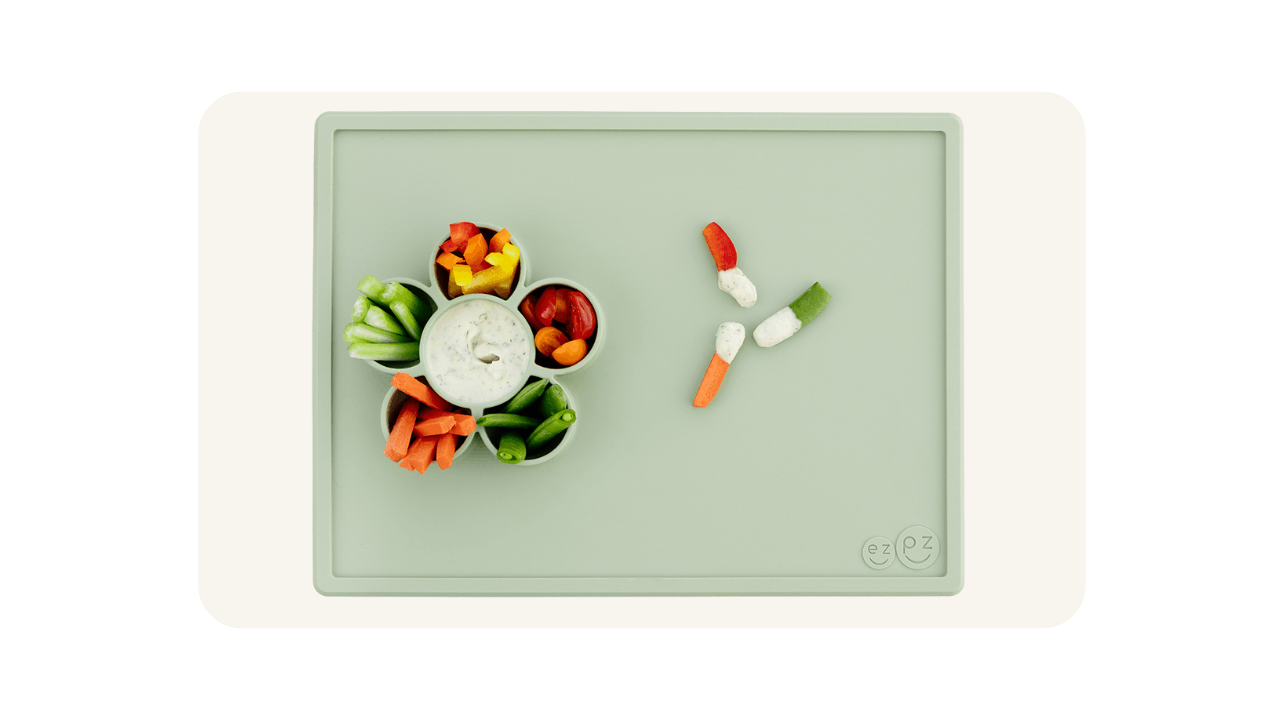
I don't have to hold it like I can like hold my toe or whatever. So it's, it can be used throughout the years. So I designed the ezpz play mat as a developmental tool to help babies get ready for solids through Sensory play. So think of this mat as a clean safe space where babies can explore textures and practice hand movements and build the Sensory motor skills that they need at the table. It works on the Palmer grasp, it works on the pincer grasp. It's all in one mat with a flower compartment that assists with sorting puree strips of food, cubes of food objects like teethers or utensils. It's suctions directly to any flat surface making it difficult for babies hands to kind of pull it up or tip it over.
Dawn Winklemann (29m 33s):
It really strengthens those fine motor skills because it helps them kind of improve those hand to eye coordination and it reduces sensitivity to textures. And I say that because you can use the flat part of the mat to be able to, let's say we put some yogurt on there and then we can use the flower sections to be able to offer different textures that we can add to the yogurt. So it's a wonderful way to be able to allow BB to explore some different textures, some different smells, and again acting in a way to be able to help families think outside the box when it comes to this. And for parents who are worried about Sensory play and like having it, you know, be more messy and not really having more refined skills at the table.
Katie Ferraro (30m 19s):
Yeah, it's not like a boring wooden Montessori toy. It's like,
Liberty Mutual (30m 25s):
And Doug limu and I always tell you to customize your car insurance and save hundreds with Liberty Mutual. But now we want you to feel it. Cue the EMU music, limu, Save yourself money today. Increase your wills, customize and save. We save That may have been too much feeling Only pay for what you need@libertymutual.com. Liberty, Liberty, Liberty. Liberty Savings very underwritten by Liberty Mutual Insurance Company in affiliates Excludes Massachusetts.
Katie Ferraro (30m 53s):
Yes, This one they're actually gonna get into. And just if I can describe it real quick, since this is a podcast and people listening, like If you think about the keyboard on your laptop, it's like double that size and then on one half of it it's a suction map but on the left hand side of it I guess depends how you lay it out. I always put it the left because I'm left-handed, but there's a flower and there's a center little, it looks like about a two ounce portion ish if we had to guess. And then five petals around it. So you can put something in the middle again we do, I just keep thinking of the deconstructed fish taco, you know the fish, some of the soft tortilla strips will do the, the beans in one, the avocado in one, the sour cream. And so the, the baby can put the stuff together, you can do it for them. It works for feeding but it also works for arts crafts apparently for doing your pedicure too if you're a don.
Dawn Winklemann (31m 33s):
Yes. And what is so important about this is that it allows babies to have a Sensory play space and it makes families feel a little bit more comfortable with Sensory play because it doesn't look like a
Katie Ferraro (31m 45s):
Plate and there's only one thing you have to wash after. That's what I love about it doesn't have like 50 parts. Like I hate those toys where like there's 12 things to wash. No thank you. This is one thing, this one I don't put in the dishwasher. I always hand wash this just 'cause it's like it's kind of floppy 'cause it's bigger than a lot of the other easy peasy stuff. And I love the idea of folding it in half to store it. 'cause in the past I had, you gave me seven of 'em so they were like taking up a ton of room. But once I learned to fold them in half, they store really great and I have 'em in our art closet now as opposed to the baby-led weaning closet.
Dawn Winklemann (32m 12s):
Yeah, I love it. And it makes parents feel a little bit more comfortable 'cause it doesn't look like a plate, it doesn't look like a bowl. So they're not feeling that their baby is just gonna go to the high chair and then splash, you know, play with food at the high chair. So this is a great opportunity to be able to play with some of these food opportunities and more Sensory play at the table or on the floor and be able to really engage more in this Sensory play as the baby starts to grow older into a toddler. The way that I designed the mat is that of the petals of the flower, three petals are closest to the child.
Dawn Winklemann (32m 51s):
Those are for foods that are preferred foods. So If you toddler is going through picky eating, these three petals that are closer to the child are for their preferred foods. And the two petals that are furthest away from the child are for the new foods or non-preferred foods. So those foods are farther from the child, allowing them to have more Sensory engagement with them but not being expected to be able to eat those. And then having that center compartment, I always love to have a dip. So with babies we can put yogurt in here and have different fruits in the other petals so that they kinda learn how to dip if we wanna do some hummus with some veggies for kids as well. It just ends up being a wonderful way to be able to have some good Sensory opportunities for a
Katie Ferraro (33m 37s):
Baby. And I do a variation of that for baby-led weaning. I'll take that mat and in the middle of it for the first 10 minutes of the feeding session, all for the new food of the day. So put that out first. Allow the baby the time to explore just with that food on its own so they're not distracted with other foods. And then in the second 10 minutes swap in bringing back in some of the familiar foods from previous days in addition to more of the new food of the day. So in that way you're continuing to offer one new food per day, but you're still reintroducing the familiar foods from previous days. So just kind of, you know, similar but slightly different to what you're doing. And it's a visual reminder for us to keep the portion small for babies and children and to offer a variety of foods. I know we use it for my bigger kids a lot for like baked potato bar night.
Katie Ferraro (34m 17s):
They love baked potato bars. Yes. So easy. So like anything else, also leftover chili, let's put that in the middle. Or some cheese or some bacon or some sour cream. And then in the big flat part, then they can have their own potato. Again, it's not making extra dishes. They're gonna be so much more inclined to eat that. We know that, that when children have a hand in preparing their own food, that they're much more inclined to eat those foods. And so this is something that, especially for the toddlers, If you can start instilling that, it helps them with that sense of independence. But it also, you're kind of setting them up with the tools for success to be continually exploring new foods. 'cause we know that's a lot harder to do for toddlers than it is for babies.
Dawn Winklemann (34m 50s):
Yes. And being able to establish that as your baby is growing, then they're used to this. So they're used to this opportunity, they're used to the Sensory play activities. And as your child is starting to get older and having more experiences with foods, this is a wonderful tool to be able to grow with your baby. A wonderful tool to be able to help your child learn the Sensory aspects of food. And it's a really safe space. And again, it, I designed it specifically to not look like a plate or a bowl so that it allows a little bit more curiosity and allows for both the family, the parents, as well as the baby to be able to have a place that's a safe exploration.
Katie Ferraro (35m 29s):
So Dawn, tell us where we can go to check out the play mat as well as the other feeding products you've developed for Easy Peasy and also to support your work and your business.
Dawn Winklemann (35m 36s):
Thank you. They can go to ezpzfun.com. And if you'd like to follow along for tips on Instagram at Miss Dawn SLP.
Katie Ferraro (35m 47s):
Well, I hope you guys enjoyed that interview with Dawn Winklemann. She has such a nice way of linking things that to be honest, I think are annoying like babies making a mess to like why that's actually, they're making progress though. If you wanna check out all of the links and the resources that Dawn mentioned in today's episode, you can go to the show notes, which is @blwpodcast.com/62. If you wanna check out any of the ezpz products that Dawn designed, including the ezpz Sensory mat for Sensory play for your baby, or a pedicures for yourself, that's at ezpzfun.com/babyled the code, babyled always works for 15% off@ezpzfun.com/babyled. A special thank you to our partners at AirWave Media.
Katie Ferraro (36m 28s):
If you guys like podcasts that feature food and science and using your brain, check out some of the podcasts from AirWave. We are online@blwpodcast.com. Thanks again for listening and I'll see you next time.
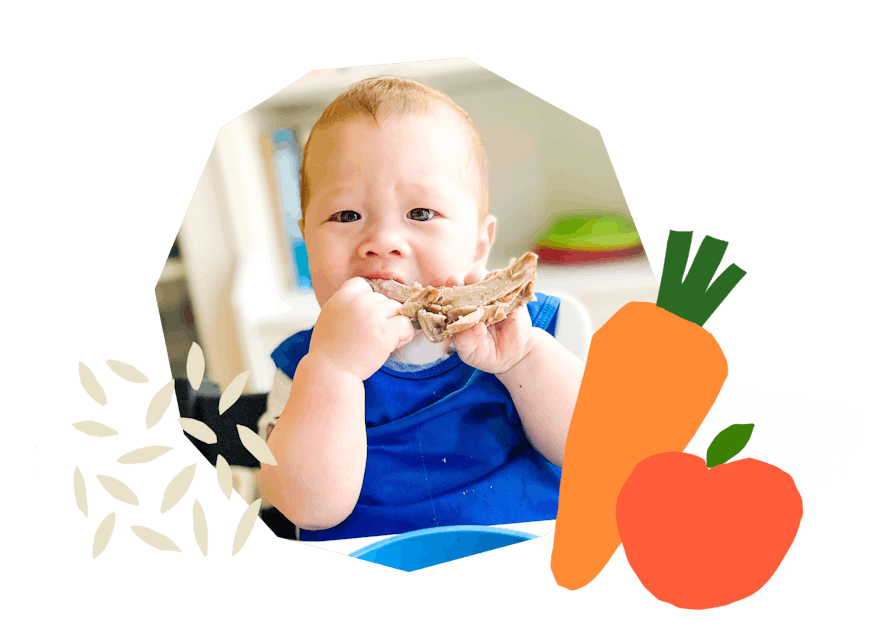
The Program Baby-Led Weaning with Katie Ferraro
A step-by-step digital program for starting solid foods safely and navigating the original 100 FIRST FOODS™ meal plan with baby-led weaning.
 EXPERT-LED, PROVEN APPROACH TO EATING REAL FOOD
 CONCISE VIDEO TRAININGS TO MASTER BABY-LED WEANING
 100 FIRST FOODS DAILY MEAL PLAN WITH FOOD PREP VIDEOS
Baby-Led Weaning for Beginners Free Workshop
Is your baby ready to start solid foods, but you’re not sure where to start? Get ready to give your baby a solid foundation to a lifetime of loving real food…even if you’re feeling overwhelmed or confused about this next stage of infant feeding.
Get baby-led weaning recipes and tips delivered to your email inbox.