
Tongue Ties & Lip Ties: Do These Affect Baby's Ability to Self-Feed? with Dr. Shaina Holman, DDS, PhD
- What tongue ties are and why experts don’t always agree on treatment routes
- How having a tongue tie does - and does not - impact your baby’s ability to breastfeed, bottle-feed and eat solid foods
- Why babies who have had tongue tie releases sometimes struggle with solid foods and what to do if this happens to you
LISTEN TO THIS EPISODE
Episode Description
If your baby has a tongue-tie (or has had one released) you might be wondering: will this affect their ability to start solid foods?
In this episode, I’m joined by Dr. Shaina Holman, DDS, PhD, a dentist with a rare specialty in infant tongue-ties and a research background in infant feeding. She runs a multidisciplinary infant feeding clinic in North Carolina, working alongside lactation consultants, SLPs, and infant massage therapists to take a whole-body, team-based approach to diagnosis and treatment.
Dr. Shaina explains what tongue- and lip-ties are, how they can impact both milk feeding and solid feeding, and what to look out for if you’re considering - or have already done - a release. As a mom of three who’s done baby-led weaning with her own kids, she brings both clinical and practical insights to this conversation.
About the Guest
- Dr. Holman completed her undergraduate education at Duke University where she majored in Biological Anthropology and Anatomy and graduated with distinction. She completed a D.D.S. and Ph.D. in Biomedical Sciences in a dual degree program at the University of Maryland in Baltimore.
- She is a baby-led weaning mom of 3 and Dr. Holman owns and operates Holman Family Dental Care in Chapel Hill, NC where she also runs an infant feeding and tongue tie clinic.
- She is a member of the Academy of General Dentistry, the American Dental Association, North Carolina Dental Society and is a Silver Life Member of the Chapel Hill-Carrboro NAACP.

Links from this Episode
- Visit Dr. Shaina’s private practice website and her tongue tie clinic
- Follow Dr. Shaina on Instagram @holmanfamilydentalcare
- Baby-Led Weaning with Katie Ferraro program with the 100 First Foods™ Daily Meal Plan, join here: https://babyledweaning.co/program and get $50 off when you sign up using the code BLWPOD50
JOIN NOW AT $50 OFF CODE: BLWPOD50

- Baby-Led Weaning for Beginners free online workshop with 100 First Foods™ list to all attendees, register here: https://babyledweaning.co/baby-led-weaning-for-beginners
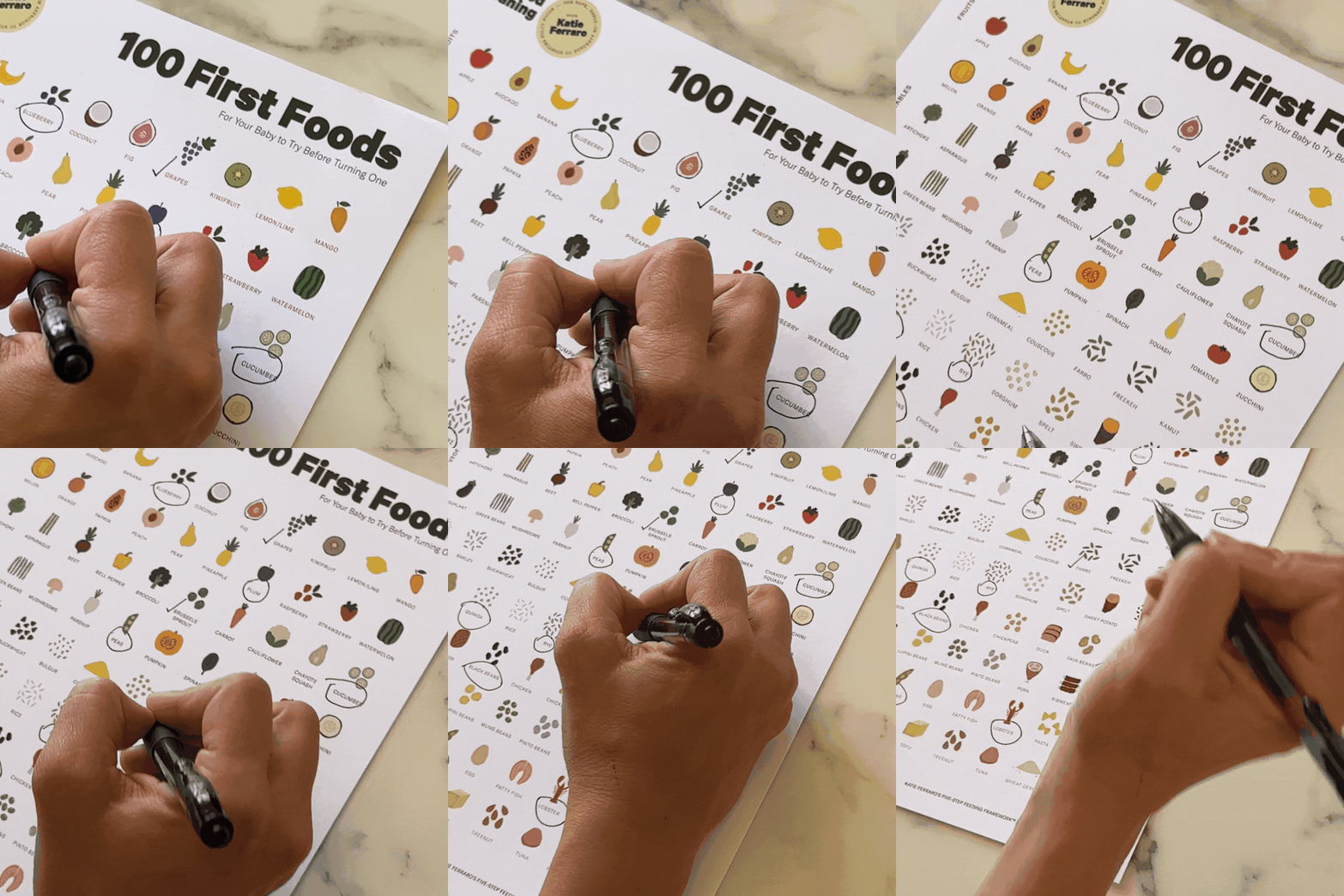
Other episodes related to this topic:

Latest Episodes





Hungry Root (1s):
You know that feeling when it's five o'clock and your baby's hungry and you've got bigger kids and they're melting down and you still have absolutely no clue what even the big people in the house are gonna be eating for dinner. That was literally my life every night until I found Hungry Root. So Hungry Root takes the stress out of mealtime by doing the planning and the shopping for you. So it's not just another meal kit, but Hungry Root is a personalized grocery and recipe service that actually gets smarter the more you use it. So you take a quick quiz and then you tell 'em what you like. So what you're avoiding, maybe you're re gluten free or you're dairy free or what you're trying to do more of like you're high protein or you're gut friendly, you name it. And then their Smart Cart Tech fills your cart with meals and groceries that are tailored to your family's needs. So it's literally like having your own personal shopper and chef. So we have seven kids and trust me when I say this has totally been saving me time, sanity, and money. No more impulse grocery runs, no more wasted food. And best of all, most of the meals are ready in 15 minutes or less. And I absolutely love just the variety of foods that I have been kind of like sneakily been forced to make with my Hungry Root Box. I love opening my Hungry Root box and I'm not just seeing dinners, I'm seeing snacks and smoothies and salad kits, even sweets. They're all made with high quality ingredients, no artificial sweeteners, no preservatives, no weird additives. They work with brands that as a dietitian I already trust, like Vital Farms and Harmless Harvest Ethical Farmers. It's like all of the good stuff. I'd love if you could take advantage of this exclusive offer. You can get 40% off your first box plus a free item in every box for life if you go to Hungry Root.com/weaning and use the code weaning, that's Hungry Root.com/weaning code weaning for 40% off your first box and a free item of your choice for life.
Dr. Shaina Holman (2m 3s):
If you are in a situation where you've already had a tongue tie release and you've already worked through that, you can definitely have a little peace of mind of knowing that you've made it through a huge obstacle, a huge developmental period of time in your baby life.
Katie Ferraro (2m 17s):
Hey there, I'm Katie Ferraro, registered dietitian, college nutrition professor and mom of seven specializing in baby-led weaning. Here on the baby-led weaning with Katie Ferraro podcast. I help you strip out all of the noise and nonsense about feeding, giving you the confidence and knowledge you need to give your baby a safe start to solid foods using baby-led weaning. So what's the deal with Tongue Ties and Lip Ties and are they impacting or impeding your baby's ability to either breastfeed or to start solid food safely? If you've ever wondered about whether your baby has a tongue tie, of course you are not alone, right?
Katie Ferraro (2m 58s):
These days it feels like every single baby has been told that they have a tongue tie. In fact, tongue tie release is done in hospitals, which are just a small fraction of the total procedures. They increased more than 800% between 1997 and 2012 according to one study. So that's over 12,000 hospital-based tongue tie releases per year. And that number doesn't even include the many procedures done in dental and outpatient clinics today. And I know even for my oldest who's turning 11, the first time I even heard of a tongue tie was when her pediatrician mentioned it and we had it done in an outpatient clinic and that was like pre-laser era and there was tons of blood and it was so incredibly traumatic. I still, to this day when I talk to parents about Tongue Ties, I put myself right back in that moment and it was one of the worst moments of my life.
Katie Ferraro (3m 41s):
And So I know personally how incredibly frustrating it can be to be told your baby has a tongue tie but not really understand exactly what that means. And I see parents every day who are struggling with breastfeeding and are struggling with starting solid foods and they, they're told, oh my gosh, maybe your baby has a tongue tie. And then they're just kinda left to hang there to like figure it out on your own. What that means, my guest today is gonna help you understand exactly what that, that it's not even a diagnosis in many cases. What that like side comment or maybe it's a tongue tie might actually mean, okay, my guest today is Dr. Shaina Holman. She's a dentist that has a PhD in biomedical sciences. Dr. Holman specializes in infant feeding.
Katie Ferraro (4m 21s):
She runs a multidisciplinary infant feeding clinic in North Carolina alongside lactation consultants, speech language pathologist. She even has an infant massage therapist who works with her, which is so cool and she's gonna talk about that. But Dr. Holman is not just a clinician, she's also a mom of three. She's done baby-led weaning with all of her babies. She's a huge baby-led weaning advocate. She actually was a guest at my baby-led weaning summit a while back talking all about Tongue Ties and Lip Ties. Anytime I have questions about baby-led weaning and Tongue Ties, I go right to Dr. Holman. So we did this conversation, we actually recorded this interview a little while ago, but the topic is so incredibly relevant, especially if you are concerned about how a tongue tie or to a lesser degree a lip tie might be affecting your baby's ability to breastfeed.
Katie Ferraro (5m 8s):
And I just say a lesser degree for lip tie because they are less common than Tongue Ties. But we're gonna talk about breastfeeding bottle feeding and the transition to solid foods. Dr. Holman will help you understand what a tongue tie or lip tie actually is when it needs treatment and what you can expect before and after a release if you decide to make that change for your child or if you decide not to. 'cause she's gonna talk about babies who have had the tie released and the ones who have not. And in many cases they're able to succeed both with or without the tongue tie release. So let's dive in talking to Dr. Shaina Holman about Tongue Ties and Lip Ties and how these do or do not affect a baby's ability to self feed.
Dr. Shaina Holman (5m 52s):
Happy to be here.
Katie Ferraro (5m 53s):
Alrighty, so you have a very interesting background. You are a dentist but you also have a background, you have a PhD and you know a bit more about infant feeding than I would say most dentists do. So could you share just a little bit about your background and the type of work that you are currently doing with infants as it pertains to feeding?
Dr. Shaina Holman (6m 10s):
Yes, absolutely. So I am a dentist based in Chapel Hill. I went to University of Maryland for dental school where I did a DDS PhD. So I basically did two years of dental school, then I left and worked on my PhD work and then came back and finished dental school. My PhD is in biomedical sciences and my dissertation project was all about infant sucking and the physiology behind it and the role of specifically of oral sensation, which usually people in the field of swallowing do not fully appreciate. They tend to appreciate more of the pharyngeal swallow and sensory in the oropharynx. So I was trying to show them that the oral sensory information's also important in the swallow. And I then did a one year residency in more advanced dental procedures.
Dr. Shaina Holman (6m 53s):
And then I moved back home to Chapel Hill, North Carolina. I started my own practice about two and a half years ago now and a big part of my practice revolves around the airway and treatment of Tongue Ties and sleep apnea appliances. So on Mondays we run an infant feeding clinic. It's a multidisciplinary clinic where I have an infant massage therapist and an infant, a lactation consultant. The three of us do assessments for babies that are referred because they're suspected of having a tongue tie. We pride ourselves on being very conservative in our approach and very thorough in our conversations and evaluation. And if we all think there's a tongue tie present, then it, we can release it with a laser.
Dr. Shaina Holman (7m 34s):
And sometimes we don't think there's a tongue tie or we think there's other things we need to try first or rule out first, so we make those referrals.
Katie Ferraro (7m 42s):
You said you're very conservative and I just noticed that word because I feel like a lot of other parents would agree that Tongue Ties are something that they never heard of until they struggle with breastfeeding and then all of a sudden you look around and it's like, it feels like every single baby has a tongue tie. Do you think that there are practitioners who are less conservative and perhaps unnecessarily treating Tongue Ties that maybe aren't truly problematic or even existent?
Dr. Shaina Holman (8m 4s):
Absolutely. I think a lot of those people tend to be dentists. I think a lot of dentists don't really do their own assessment. They are just getting notes from a lactation consultant and doing a forklift under the tongue and looking and saying, okay, there's something there and I can remove it. And they're not really understanding the infant feeding physiology and really taking a step back. One thing we see pretty routinely in my practice is that the infant massage therapist will often find things going on with a baby that could explain a lot of their feeding difficulties or it go, they're seeing things and I'm seeing things. So that's a piece that's often completely missed. I mean the pediatrician doesn't even notice the things that a massage therapist can notice until a child is much older.
Dr. Shaina Holman (8m 48s):
But yeah, just so things like when I say that, I mean things like torticollis plagiocephaly, like when the head is not shaped properly, often we see problems with nerve compression in the back of the head. So sometimes when I'm doing my suck exam, maybe there's a tongue tie, but the whole rhythm and refluxes around the suck are off. And often when we step aside and we discuss that and I say, you know, this just doesn't seem right, the massage therapist goes, oh yeah, there's a lot of nerve compression there. And it's like, oh okay, that makes sense. So you know, having that multidisciplinary approach is really important. Like I really couldn't imagine even making a diagnosis without having them there.
Katie Ferraro (9m 26s):
I think it's really cool that you have a multidisciplinary approach. Like I go to a typical pediatric dentist, like I've never seen a infant massage specialist or an I-B-C-L-C there. So I think it's really important that we do have the different disciplines involved. And I was curious if you could tell us a little bit more about how do Tongue Ties or Lip Ties or have you even heard of cheek ties? How do they occur? Are they genetic? Do all babies have them? What's your take on that? Yeah,
Dr. Shaina Holman (9m 50s):
A few different thoughts on that. I mean I think there's a lot of debate about the prevalence because no one's screening for them at all. Like in the hospital, pediatricians don't know how to diagnose them so they're just often missed. But I've heard estimates somewhere around like 5% or So it, So it common enough that you're gonna routinely see them and then there's what looks like a tongue tie in what's actually functionally causing a problem. And those two things are different. Sometimes you can have one that looks really tied but there's no functional problems. So again, it kinda makes this whole thing much more complicated as far as where they come from. They are thought to be genetically dominant. So there often is a parent that also has a tongue tie. So sometimes getting that history from a parent is helpful about, they had maybe speech therapy or they had feeding therapy or they have a severe gag reflex or some of the other symptoms that you might see in an adult.
Dr. Shaina Holman (10m 40s):
Or maybe they say, oh yeah, at birth I had mine clipped as well or my mom told me that. Or my mom never breastfed me 'cause she said it was too painful. So sometimes there's a little clue in there that it might be from one of the parents.
Katie Ferraro (10m 52s):
Hey, we're gonna take a quick break but I'll be right back
Nordstrom (11m 1s):
Summer's here and Nordstrom has everything you need for your best dress season ever from beach days and weddings to weekend getaways in your everyday wardrobe. Discover stylish options under a hundred dollars from tons of your favorite brands like Mango skims, princess Polly and Madewell. It's easy too with free shipping and free returns in store order pickup and more. Shop today in stores online@nordstrom.com or download the Nordstrom app.
Katie Ferraro (11m 34s):
Now you mentioned breastfeeding and we know that of course a baby that has a tongue tie is it's gonna be more challenging for breastfeeding. So a lot of our audience, their parents of babies who are probably, they've figured out breastfeeding or bottle feeding, the baby is thriving on formula and or breast milk. But now we're moving into a new phase when it's time to start solid foods. And So I was curious if you could talk a little bit about considerations that parents and caregivers of children who have a tongue tie that's either been released or not released. And I know that's the answer's kind of different there. What should they take into mind as they start this next phase, which is starting solid foods?
Dr. Shaina Holman (12m 8s):
Yeah, a few different things. So sometimes I hear from parents that they know their child has a tongue tie but their breastfeeding never bothered them or the baby's been able to gain weight and they just never really thought it was something to be addressed. And they come to see me because now they're starting solid foods and now they're having trouble. Some of the signs that your child might have a tongue tie that you might be noticing when introducing solid foods would be preferences for softer foods versus foods that require more chewing.
Katie Ferraro (12m 37s):
Could you explain why that is? Because I think you know a lot about the anatomy of the mouth, but I'm like well why would that be? 'cause if we only give our babies one texture, we don't really know what their preferences are. We encourage parents to give a lot of variety of different tastes and textures. And you're saying there might be an anatomical reason why they're preferring just the softer
Dr. Shaina Holman (12m 54s):
Textures? Exactly. So when you get food in your mouth and you go to chew it, the roll of the tongue is that your tongue is gonna deposit the food onto your teeth and then your teeth are gonna chew the food and then your teeth are going to, your tongue's gonna move that food back into the center of the tongue and then the tongue collects and forms a bolus. So like a little mushy blob of food on your tongue and then that bolus is swallowed. So the trouble that babies will run into or, and again not even babies but even honestly children, adults, all ages that have Tongue Ties is that when you ask them to chew food and then you have them open their mouth and show you there's no bolus, it's just food scattered all around their mouth that makes it really hard to initiate a swallow it, it makes it hard to chew without gagging on your food.
Dr. Shaina Holman (13m 40s):
So you have trouble like that. So the ability of the tongue to move side to side is called lateralization. And if you have a tongue tie, it's very difficult for your tongue to lateralize enough to really chew food. So some parents think their child just is a picky eater and then you really start to ask questions about what they're eating and you realize it's like mac and cheese and potatoes and just really soft foods that don't require almost any chewing and that that would be a reason to maybe suspect a tongue tie, especially if you ran into any of the issues with the breastfeeding or bottle feeding as well. Or maybe someone's already put this in your ear a little but that there might be a problem. You also just see a lot of gagging in kids that have Tongue Ties that haven't been released already and are trying to eat solid foods.
Dr. Shaina Holman (14m 26s):
The the proper rest position of your tongue just when you're not eating any food at all is to have your lips closed and your tongue resting across the roof of your mouth. So if your tongue can't naturally rest in that area, it's gonna make your mouth just really prone to gagging. 'cause your mouth is not used to anything touching it like your tongue resting against the roof of your mouth like that. So you tend to see, again all ages, I have adults that are tongue tied that can't swallow pills, that can't take multiple gulps of water in a row but just makes this gag reflex really strong. So that might also be a reason to get that something checked out. You might have even noticed a gag reflex when bottle feeding your baby or even breastfeeding or reflux.
Dr. Shaina Holman (15m 8s):
So those would all be kind of signs and maybe there is something anatomical going on here
Katie Ferraro (15m 13s):
And our audience knows that gagging is a natural and necessary part of learning how to eat so they're anticipating and expecting some gagging. But you're saying that really a tongue tie can cause the baby to have a very sensitive gag reflex and of course that that's a subjective measurement, but is that the correct interpretation of what you're saying? Yeah,
Dr. Shaina Holman (15m 33s):
Parents have often noticed this kind of thing already by the time they see me. Like when I give my baby a pacifier they just gag on it or they've had a really hard time trying to find a correct bottle to use or a bottle that the baby can take because every bottle seems to just make them gag. People say they can tell there's more, there's a lot of reflux, the baby's constantly spitting up. But a lot of times it's pretty distinct. It's not just gonna be occasional gagging and not the gagging after chewing it's gonna be really anything enters their mouth and they're gagging to even tell you what that looks like in an older child with a tongue tie. I recently had a five-year-old that was throwing up multiple times during the week and like it found it so hard to just eat regular meals because they're just continuously gagging.
Katie Ferraro (16m 13s):
Did that five-year-old have a tongue tie?
Dr. Shaina Holman (16m 16s):
Yeah. And once released it took a few weeks after the release but stopped gagging completely.
Katie Ferraro (16m 20s):
Well and you were talking, I know from speaking with you previously that there is the potential sometimes where older babies need a tongue tie release. But you were telling me that it's much more advisable to have that tongue tie released prior to age one. Is that correct?
Dr. Shaina Holman (16m 34s):
If you're looking for benefits with, with nursing it's ideal to do it before three months. There's kinda diminishing returns on that after three months. But before age one you're gonna not be dealing with such a large baby, you're not gonna be dealing with back teeth and after you do the release you need to do stretches of the wound area to make sure it heals well. So it's really difficult to do that if a child has molars. Definitely if you're talking about toddlers in doing tongue tie releases, that can really cause an oral aversion in addition, you're not gonna be able to stretch it well so the chance it's gonna reattach itself is really high. So I feel like the, the risk benefit of that is kind of tricky when you're in the toddler phase.
Dr. Shaina Holman (17m 16s):
So it's just so much easier when they're really little and they can jump into doing the right thing and you can stretch it and make sure it heals well. And then I did, I pick up with doing a lot of tongue tie release is starting again around age four 'cause that's a, a child that's old enough to work first with the SLP and to have a full feeding assessment and they're old enough to have anesthetic given where you can really talk to them about what to expect and how this is gonna work. And they can be a participant with their own therapy afterwards to make sure their tongue can regain its function and learn to rest on the roof of its mouth and lips can learn to stay closed and they can learn how to articulate certain sounds and how to do and how to eat solid foods and swallow properly.
Dr. Shaina Holman (17m 56s):
So there's a lot more that goes into it when you're older. So it tends to be something just is so easy and minor to do as a baby and then you don't have to worry about all this stuff later on.
Katie Ferraro (18m 6s):
I'm not laughing but you say like so easy and minor to do and like as a parent of a child who had a tongue tie and I had a terrible, it was my oldest and she had a, I just was so frustrated she couldn't breastfeed, she latched perfectly but she wouldn't transfer. And it turns out she'd had some nerve damage from during the delivery and we had her tongue tie released even though it was probably unnecessary and it was not done by a dentist with a laser, it was done by a very non-compassionate medical doctor with a pair of scissors and there was a ton of blood and it was literally like the most traumatic part of parenting. I have seven kids now and I can still cite that as the most traumatic thing I've ever had to do with my child. So like it's so routine but it's nice to be with a practitioner for whom, oh gosh, this is run of the mill. This is common.
Katie Ferraro (18m 46s):
Like I know you're speaking a little bit off the cuff but I appreciate your confidence with it because I would've needed that as a first time mom. Which I did wanna ask 'cause there's a lot of parents listening who have babies who have already had their tongue tie release, they're concerned, they wanna know what should they be on the lookout for as they now transition from breastfeeding and or bottle feeding to solid foods. They've already had the tongue tie released.
Dr. Shaina Holman (19m 8s):
Yeah, what I would say there is when babies are really little and have their tongue tie released, they tend to jump into doing all the chronic correct things really easily. But especially if your baby had their tongue tie released after three months old, you should be especially looking out for signs. The things that you wanna be seeing in a baby that after having the tongue tie released is that they're sleeping with their mouth closed. The nasal breathing should be good, there should be no snoring, no issues like that that should all show you good signs that their tongue is functioning like it should. If you giving that baby a bottle, the most of the nipples should be in the baby's mouth. There should not be any chewing motion being seen, no chomping with the jaw. Again, those are signs that your tongue is doing what it needs to do.
Dr. Shaina Holman (19m 51s):
But sometimes you do have a situation where a baby's had a tongue tie release and they are still mouth breathing and they are still not able to feed very well or nurse very well or eat a bottle very well. Like there's other things going on and those babies sometimes, even though their tongue's released just are not lateralizing their tongue very well. And that would be also a reason to see an SLP or speech language pathologist. If you're feeling like, hey, I had this tongue tie release but it really didn't fix any of these problems, then they might need to actually work with someone to do more exercises and training of the tongue.
Katie Ferraro (20m 23s):
And I've heard you say, I've heard you say that for every anterior tongue tie there's usually a posterior component. So could parents sometimes assume maybe it wasn't all taken care of, the one time it was released is, do you see that?
Dr. Shaina Holman (20m 38s):
Absolutely. I treat a lot of tongue tied babies that have already had releases that either reattached or were not fully released in the first place or just due to normal growth and development or maybe dealing with an unrelated issue of muscle tension. There's more tissue there that needs to be released.
Katie Ferraro (20m 58s):
Hey, we're gonna take a quick break, but I'll be right back.
1-800 Contacts (21m 8s):
Close your eyes, exhale, feel your body relax and let go of whatever you're carrying today While I'm letting go of the worry that I wouldn't get my new contacts in time for this class, I got them delivered free from 1-800-CONTACTS. Oh my gosh, they're so fast. And breathe. Oh sorry. I almost couldn't breathe when I saw the discount they gave me on my first order. Oh sorry. Namaste. Visit one 800 contacts.com today to save on your first order. 1-800-CONTACTS
Katie Ferraro (21m 41s):
As a mom of two children, I know you told me that you did do baby-led weaning with your kids. So you're familiar with the baby-led approach to feeding and as a practitioner then working with parents who have had babies that have had their Tongue Ties released. If there aren't these secondary problems like it was, it was you who did it, you did a great job five and a half months later the mom comes back and the baby's ready to start solid foods. If they haven't had complications with the tongue tie release, is there anything they need to take into consideration as they start solid foods?
Dr. Shaina Holman (22m 8s):
Not really that they should be really good to go
Katie Ferraro (22m 10s):
And they can eat of all variety of textures and
Dr. Shaina Holman (22m 14s):
Absolutely.
Katie Ferraro (22m 14s):
Okay. So Dr. Shaina, if we have parents and caregivers listening and they have had a baby with a tongue tie, some of whom maybe had it released or some who decided not to, is there any parting words of wisdom that you can give them as they transition into this period where they're starting solid foods with their baby?
Dr. Shaina Holman (22m 30s):
Yeah, a few thoughts. If you are in a situation where you've already had a tongue tie release and you've already worked through that, you can definitely have a little peace of mind of knowing that you've made it through a huge obstacle, a huge developmental period of time in your baby's life and you really have set them up for success with transitioning to solid foods. You know, you, you're much less likely to run into some of these issues than someone who has not had that path and already had it released. You're baby's much less likely to have sleep apnea or speech issues. And so this should be a much smoother experience from here on out. And if you haven't had the tongue tie released and you suspect there might be one or someone's maybe already told you there is one and you haven't really felt like you want to address it yet, have some confidence in knowing that it, there's still plenty of time here.
Dr. Shaina Holman (23m 18s):
I mean if you can do it before age one again, you're just gonna save yourself a lot of headache down the road. And babies tend to jump into doing the right thing pretty well and even if they need to work with a feeding specialist or feeding therapist, it's all relatively pretty minor and they'll be on a, again, kind of on a road to success. Not to be dramatic about it, but it's gonna save a lot of headache down the road of having to involve a lot more specialists and deal with a much more complicated situation.
Katie Ferraro (23m 45s):
And I appreciate that. 'cause I think think there's a lot of parents for whom that they kind of breathing a sigh of relief. Okay, the worst is behind me breastfeeding was challenging. We either figured out how to make it work or we decided to do bottle feeding. The baby is thriving as we move into this next phase. Even with the tongue tie or having had the tongue tie release, you can succeed with your baby trying a variety of different textures as part of starting solids. And Dr. Shane, I was curious if for parents who they maybe don't know, they suspect that their baby might have a tongue tie, it seems like something everyone always talks about, but you don't wanna speculate, you do wanna get a diagnosis. What do you recommend for parents who suspect a tongue tie? What team member in the healthcare team should they see to kind of start this process of maybe figuring out if it's something that does need to be addressed?
Dr. Shaina Holman (24m 25s):
Yeah, that's a great question because I think this becomes a big frustration for parents is that their dentist is not looking for it. Their pediatrician's not looking for it and and then when they mention or try to advocate for themselves, they're again talking to someone not very well even educated. And sometimes those people very confidently will say there's no tongue tie. Instead of saying, Hey I, this isn't really something I have training in. So the type of person that's gonna be the most helpful is a speech and language pathologist that is specifically trained to work with babies and with feeding issues. So that could be with solid foods or even with bottles. SLPs can be great with different, trying to figure out a bottle that will work for you as well.
Dr. Shaina Holman (25m 5s):
And they, they're the specialist of the tongue. They have to deal, they deal with all functions of the tongue so they can strengthen those muscles and encourage the tongue to move more. And they can notice when the tongue physically is unable to do the things they're trying to teach it to do. Now even some SLPs are taught that Tongue Ties and that diagnosis is outside of their field. There's even SLPs in the school system that will get in trouble for mentioning that a child might have a tongue tie. So you also have to be understanding of that fact. There's a specific training in orofacial my that some SLPs have done and that kind of training will give them a lot more background in Tongue Ties.
Dr. Shaina Holman (25m 45s):
So looking for something, some kind of continuing education or training in orofacial my might end up helping you point help point you to somebody that might be able to help a little bit better. They at least know how to do the fullest functional assessment and give that to a provider to show reason for concern about a tongue tie, even if they can't technically say that the baby has a tongue tie.
Katie Ferraro (26m 8s):
And I like that suggestion because I think parents always wanna get a second opinion. But if like a healthcare provider tells you really definitively now your baby's cool, you don't have a tongue tie and you're like, all right, I got the word is we don't have a tongue tie, you know, that might not actually be the situation. And even for parents who've already had the tongue tie released, they're sometimes surprised to know that, oh gosh, maybe there was a posterior component or the scar tissue, it did reattach. So sometimes a second opinion is helpful. I know with my own, my sixth and seventh babies were twins and So I had, I had had my first one with this traumatic experience with the tongue tie and the using the scissors and lots of blood and not able to breastfeed. And then the last two I was worried 'cause I was like just looking and looking at pictures and you know, go to the tongue tie clinic and I loved the doctor there because she looked at both of 'em.
Katie Ferraro (26m 48s):
She goes, Nope, they're fine. She's like, you probably go to five other doctors who would tell you that that baby has a tongue tie and would need to have it released, but I do 30 of these a day or whatever it was. And she gave me the confidence and sometimes you're looking for a problem that's not really there. And I like, I appreciated hearing that as well 'cause I didn't wanna have to deal with that again. So I just wanna say thank you for being here and sharing this information because it is a confusing situation to parents and they're not sure what to do. And sometimes the onus is on the parents to make the decision. So being educated from a variety of different healthcare providers who are involved in this, I love that you have IBCLCs that work with you to help you identify if there might be a problem, or the infant massage therapist that you work with SLPs who are specializing in feeding that you're on a podcast with a registered dietitian who specializes in baby-led weaning.
Katie Ferraro (27m 30s):
I think that this is, you know, how we take that whole body approach for babies because there is no one healthcare professional or credential that is, you know, authorized to or even has the skillset to deal with all of this. And as a a dietitian, I teach in medical schools as well, and I love to remind parents that 90% of physicians in this country have never had a dedicated nutrition class. So parents get just as frustrated when they go to the doctor and the pediatrician ask questions about feeding and they kind of get blown off. It's not because the question's not important, it's because the person you're asking the question doesn't necessarily know the answer. So knowing where to get the answer I think is helpful and it's why being able to share expertise like yours on a podcast, it's so beneficial to our audience. And in closing, if you don't mind, could you tell us where the audience could go to learn more about you and your practice?
Katie Ferraro (28m 15s):
I know you guys are on Instagram. I think the services that you offer in North Carolina are really unique. Where can we learn more about you, Dr. Shaina?
Dr. Shaina Holman (28m 22s):
Yeah, you can go to my website, which is Holman fdc for family dental care.com. And that website we have a page about infant feeding and it describes kinda the setup of our clinic. So that would be a good resource and you can feel free to email me. I've tried to do good about staying on top of my emails.
Katie Ferraro (28m 41s):
You're amazing at email. I just wanna point that out so she actually responds. I'll go ahead and put all of the links that you're mentioning by the way, on the show notes page for this podcast episode, which is blwpodcast.com/ 52. What about your Instagram?
Dr. Shaina Holman (28m 53s):
Yeah, And Instagram is at Holman Family Dental Care and Holman is H-O-L-M-A-N.
Katie Ferraro (28m 59s):
Wonderful. Well, thank you again so much for being here. I really appreciate it. If you guys want to check out all of the resources that Dr. Shannon was mentioning, again, it's on the show notes for this episode, which is@blwpodcast.com/52. Thank you again so much. I really appreciate it. Well, I hope you guys enjoyed that interview with Dr. Shaina Holman. She's such a wealth of knowledge when it comes to infant feeding, Tongue Ties, Lip Ties. Please check out all of her resources. I'll put all of the different resources that she mentioned on the show notes page for this episode, which you can find@blwpodcast.com/52. A special thank you to our partners at AirWave Media.
Katie Ferraro (29m 39s):
If you like podcasts that feature food and science in using your brain, check out some of the podcasts from AirWave. We're online@blwpodcast.com. Thank you so much for listening and I'll see you next time.
The Energy Podcast with Chris Hadfield (29m 58s):
I'm Chris Hadfield. I'm an astronaut, an author, a citizen of Planet Earth. Join me for a six part journey into the systems that power the world. Real conversations with real people who are shaping the future of energy. No politics, no empty talk, just solutions focused conversations on the challenges we must overcome and the possibilities that lie ahead. This is on energy. Listen, wherever
Katie Ferraro (30m 26s):
you get your podcasts.

The Program Baby-Led Weaning with Katie Ferraro
A step-by-step digital program for starting solid foods safely and navigating the original 100 FIRST FOODS™ meal plan with baby-led weaning.
 EXPERT-LED, PROVEN APPROACH TO EATING REAL FOOD
 CONCISE VIDEO TRAININGS TO MASTER BABY-LED WEANING
 100 FIRST FOODS DAILY MEAL PLAN WITH FOOD PREP VIDEOS
Baby-Led Weaning for Beginners Free Workshop
Is your baby ready to start solid foods, but you’re not sure where to start? Get ready to give your baby a solid foundation to a lifetime of loving real food…even if you’re feeling overwhelmed or confused about this next stage of infant feeding.
Get baby-led weaning recipes and tips delivered to your email inbox.