
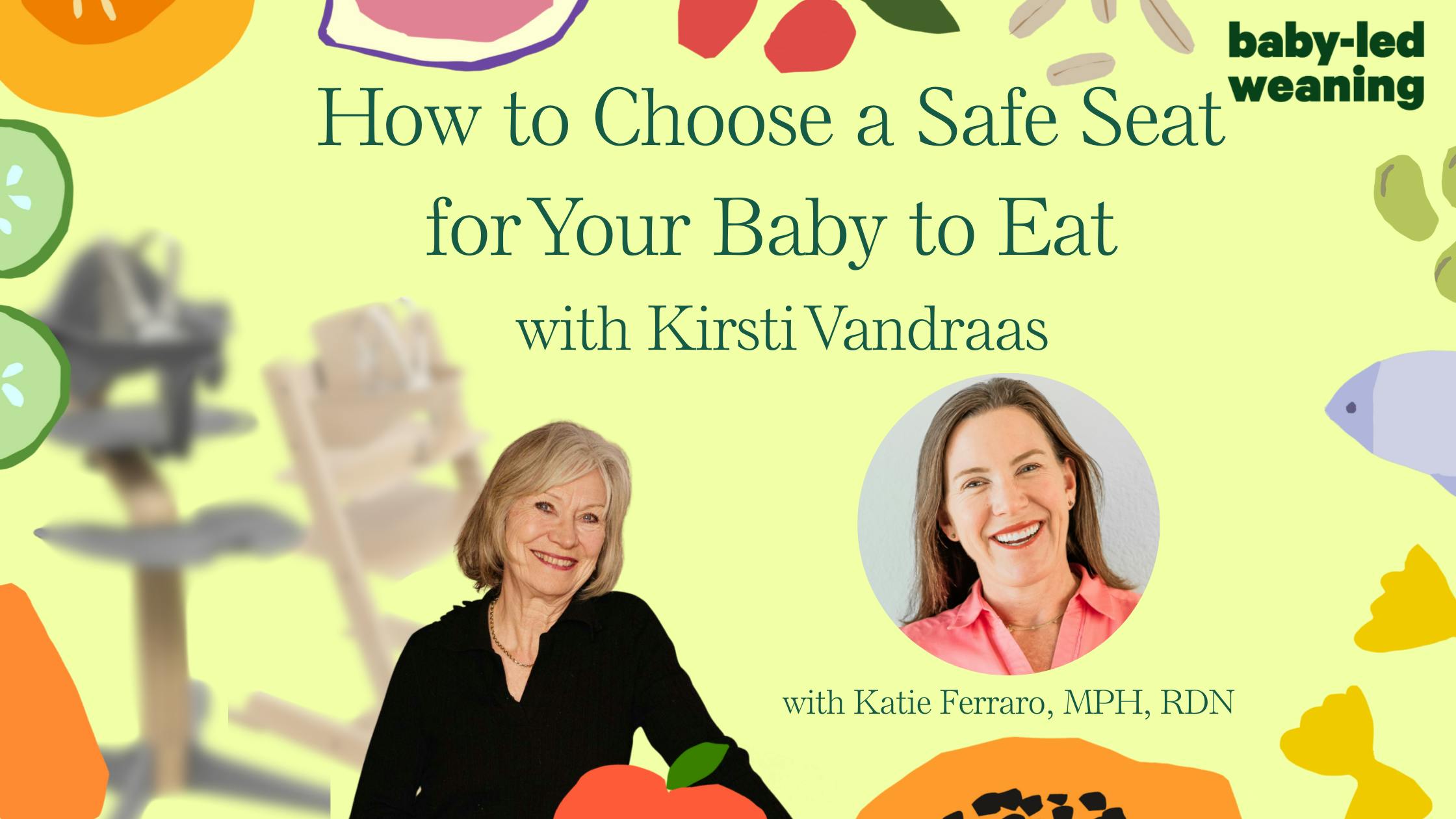
How to Choose a Safe Seat for Your Baby to Eat with Kirsti Vandraas
- Why high chair expectations differ in the U.S. vs. Europe, and how that shapes designs that bring your baby right up to the table for family meals (often without a tray).
- How straps and restrictive setups can get in the way of functional movement at meals—and when kids are developmentally ready for more freedom in their seat.
- Why a truly adjustable footrest matters for stability and torso control, supporting an upright “ready-to-eat” posture from your baby’s first bites.
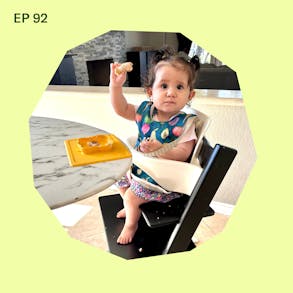
LISTEN TO THIS EPISODE
Episode Description
Ever wonder why some high chairs seem to “work” for starting solid foods while others leave your baby slumped, feet dangling, and frustrated? In this episode, I’m joined by physiotherapist and ergonomist Kirsti Vandraas to break down what a safe, supportive baby seat should actually do.
We cover the key features that matter most for independent eating—like a stable base, an adjustable footrest, and a setup that lets your baby move their arms freely. Kirsti also explains why high chair designs and safety standards can vary between countries, and what parents can do to create a safer, more comfortable eating setup at home.
Links from this Episode
- Get a free $80 tray for the Stokke Nomi High Chair or the Stokke Tripp Trapp High Chair (or free $70 Tripp Trapp cushion) when you purchase either high chair using the code BLWTEAM here.
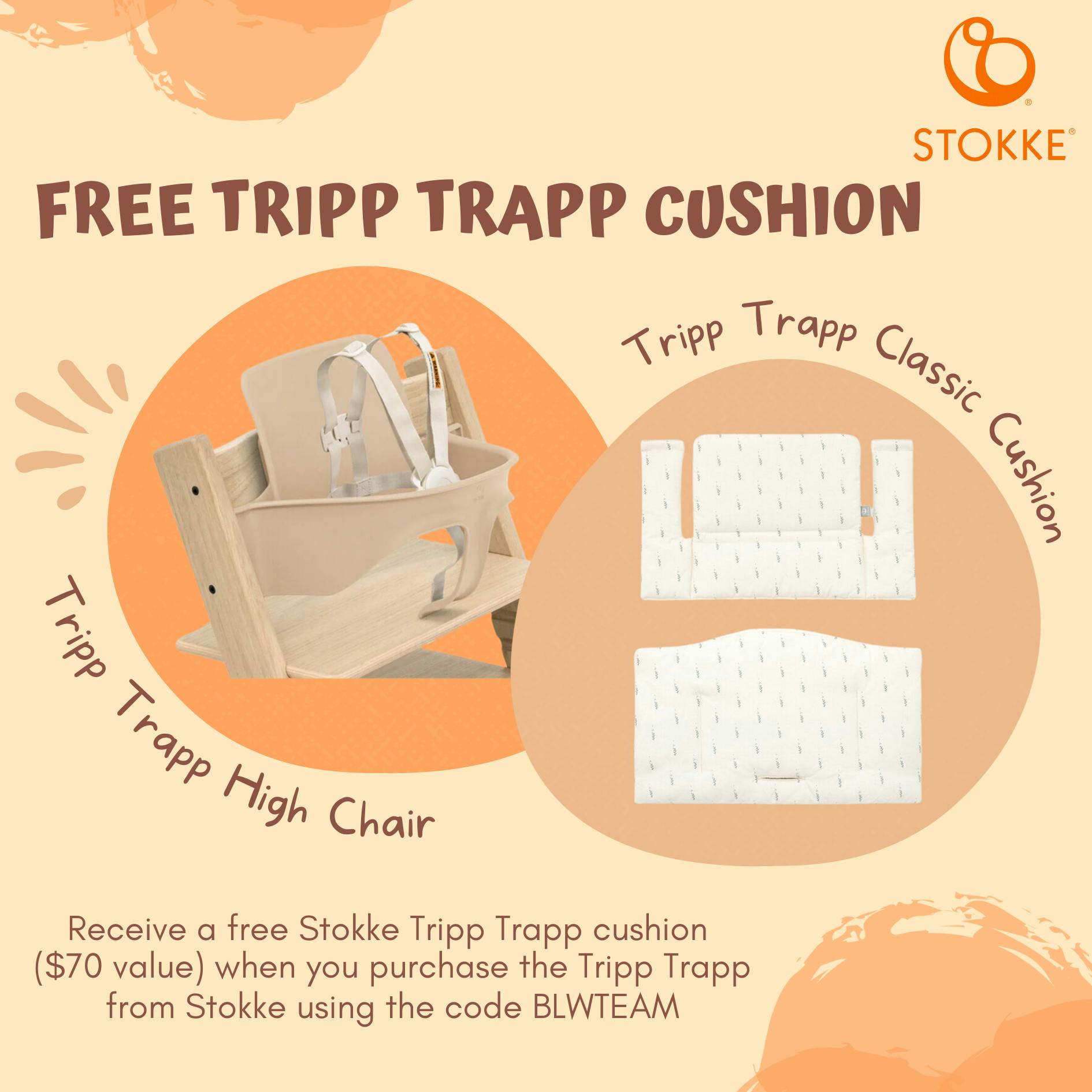
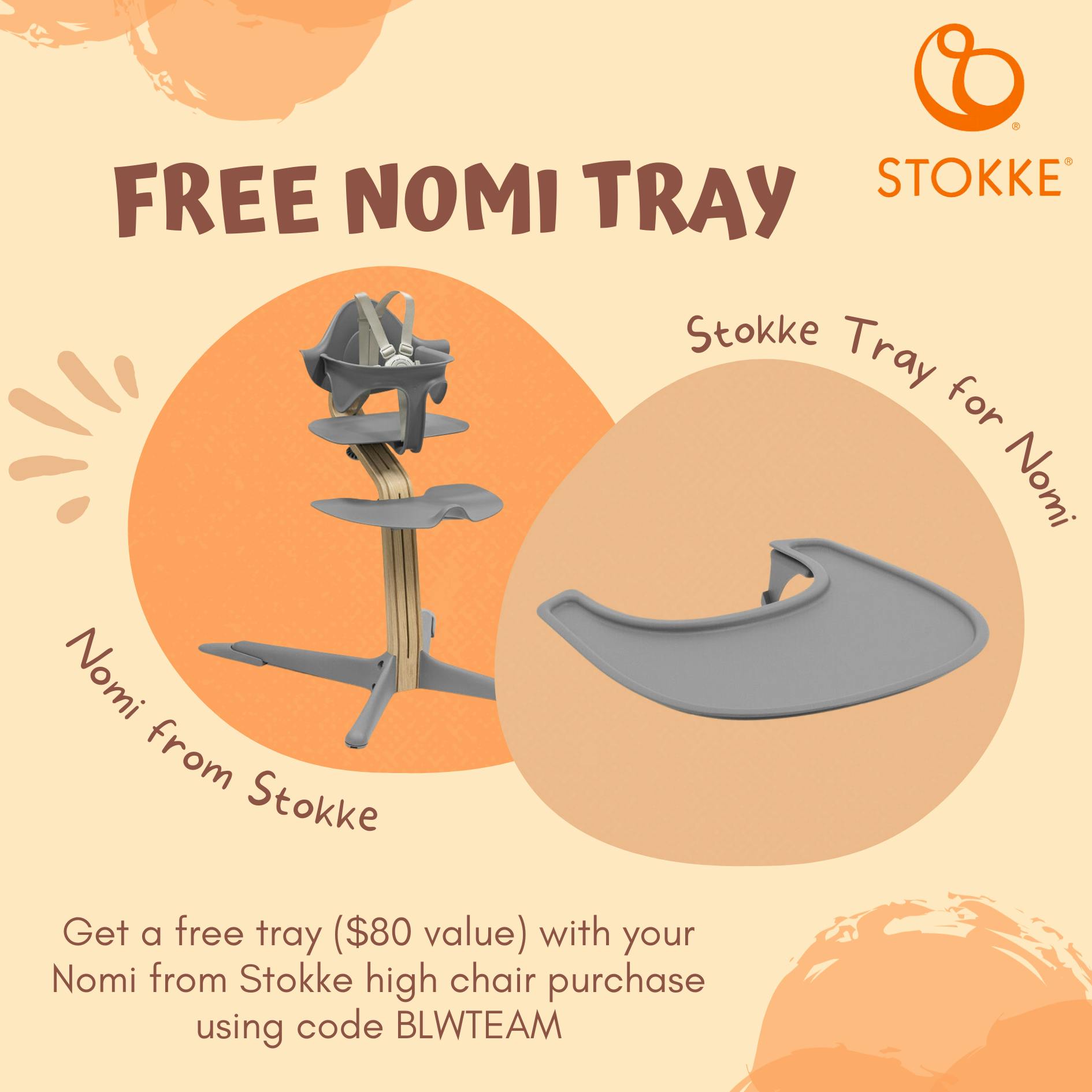
SHOP NOW FREE $80 TRAY CODE: BLWTEAM
- Baby-Led Weaning with Katie Ferraro program with the 100 First Foods™ Daily Meal Plan, join here: https://babyledweaning.co/program and get $50 off when you sign up using the code BLWPOD50
JOIN NOW AT $50 OFF CODE: BLWPOD50

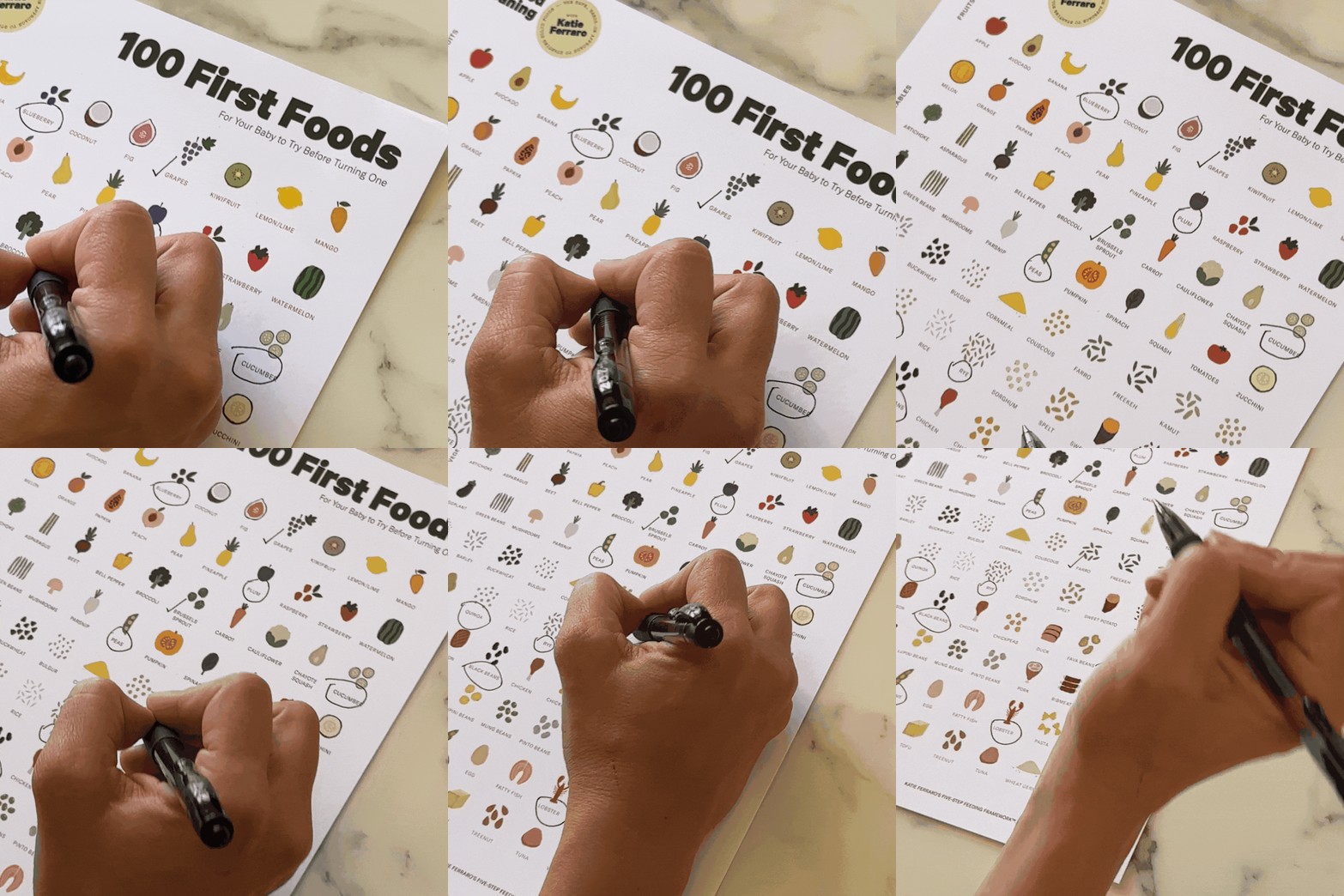
- Baby-Led Weaning for Beginners free online workshop with 100 First Foods™ list to all attendees, register here: https://babyledweaning.co/baby-led-weaning-for-beginners
Other Episodes Related to This Topic:
- Episode 7 - Why Your Baby’s High Chair Needs a Footrest
- Episode 488 - Best High Chairs for Baby-Led Weaning
- Episode 490 - Tripp Trapp vs. Nomi High Chair: Which One is Better?

Latest Episodes






(Unknown) (1s):
Tomorrow. I love him tougher. Our souls are made of his and mine are the same experience, the greatest love story of all time. Why did you leave me? Why did you betray your own heart? A film by Emerald Fennell, he's Cliff Kathy, Margo, Robbie Jacob A Lorde Kiss Me. And that is supposed to be damned Weathering Heights. Original songs by Charlie X, CX only in theaters Tomorrow. Experience at an IMAX rated R under 17 not admitted without parent.
Toyota (30s):
It's Toyota Truck month time for a truck that works as hard as you. Tacoma Tundra built for the job and ready for the trail available with four wheel drive and connected tech all backed by legendary Toyota reliability. Visit your local Toyota dealer for great financing and lease options available to qualified customers or visit buy a toyota.com to find your truck month deal today. That's buy a toyota.com Toyota. Let's go places
Kirsti Vandraas (1m 0s):
We don't want our children to fall off a high chair, but you want them to acquire the scale of knowing where the border is. The strapping in there is to stop them moving. That's inhibiting the children in a way.
Katie Ferraro (1m 15s):
Hey there, I'm Katie Ferraro, registered dietitian, college nutrition professor and mom of seven specializing in Baby-Led weaning. Here on the Baby-Led Weaning Made Easy podcast. I help you strip out all of the noise and nonsense about feeding, leaving you with the confidence and knowledge you need to give your baby a safe start to solid foods using baby led weaning. Hello and Welcome back. Today we're talking about how to choose a safe seat where your baby's going to learn how to eat. That's right highchair. And when it comes to highchair design, there's nobody more well known for iconic design in this space than Peter Opsvik of Norway.
Katie Ferraro (1m 56s):
So Peter Svic designed the trip Trapp High Chair back in 1972. He basically was looking around for a highchair for his own child to sit in a natural way at the grownups table, but no such chair existed. So he designed what is now the iconic trip trap chair so he could include his son in life around the table. So many of you have this chair, you recognize it. It looks kind of like a ladder. The trip trap is a iconic wooden high chair. It's got an adjustable seat and foot plate that grows with your child. So the brand ska that sells the trip trap, highchairs and other baby supplies and gear is headquartered in Norway. They've sold over 13 million tripp trapp highchairs at this point. I know personally I bought them all for my kids.
Katie Ferraro (2m 37s):
I bought them used because they've been around for so long. They really, really hold their value. They're pricey If you buy them new, but they're definitely worth it. And my kids are school age at this point, but we still use the trip traps every day for doing homework. So they're a fabulous investment, especially like If you have a smaller space or you're feeding multiple children, they don't kind of eat up your whole room regardless. Peter Opsvik Tripp Trapp, it's old school, it's from 1972 but it's still very relevant today. But that was from when his son was little. 40 years later in 2013, Peter Opsvik launched the Know Me. So this was the his realization of designing the next generation highchair. So one that he dedicated to his grandchildren. Peter Svic passed away in 2024, but my guest today is Kirsty Vandross and she's a physiotherapist and she's an ergonomic and she has worked with Peter Opsvik.
Katie Ferraro (3m 28s):
She worked with him for the last 13 years of his life. And Kirsti And I had this conversation, it's actually at this point recorded a number of years ago. But the content and the context of it was so relevant that I wanted to re-release this episode because I do get so many questions about, you know, why are those two highchairs, the trip trap and the Nomi, they're so different from the other chairs that are out there. And I also have Nomis and use them in my infant feeding practice on a regular basis. I love both of them. Sometimes parents get frustrated 'cause both the Trip Trap and the nomi, they're sold both by ska now they're sold without highchair trays. So I'm gonna get into the conversation with Kirsty in a second.
Katie Ferraro (4m 9s):
She's gonna talk about design principles and philosophies and how they're a little bit different American versus European standards. But we're gonna talk about the design background and If you have these chairs or you're looking at investing in either one of these chairs, I think you'll enjoy this conversation. I love hearing the stories behind the design of the products that we use every day. And I know personally, I've used the trip trap now for 11 years and I've used the Nomi for about nine years since it first came to the United States. And I love them both. I don't love that they're sold without the tray, but after this conversation I really understand why they were designed without the tray. And I do wanna mention upfront that I am an affiliate for stoa, the brand that does make these highchair. And I generally do have a code to get at this point $80 tray for free when you buy the high chair.
Katie Ferraro (4m 56s):
So please be sure to check out the description wherever you're listening to or watching this interview. If you are considering getting that high chair, you might as well get the $80 tray for free because if you have a bar height or a counter height table, your high chair won't reach that high 'cause it wouldn't pass the tip test, which Kirsty's gonna talk about in today's episode as well. And you would need the tray, or if you eat outside or you move your baby around the house, the tray is useful to have. We're gonna be talking about adjustability, we're gonna talk about the importance of the foot rest. She's gonna talk about why she thinks it's important for children to be able to climb in and outta their chairs. And I'm gonna share why I think that is super annoying. As a mom of seven children, we can agree to disagree on some things. I'm a dietician and an infant feeding expert.
Katie Ferraro (5m 37s):
She is a design person. So I really hope you enjoy this interview with Kirs VREs. Again, check out the description If you want to see what current deal or discount is out there for these highchairs. She is not a representative of Stoa. Again, she is a design expert who worked with Peter Svic, who was the very iconic designer now deceased though, who designed both Theoka Trip Trap and the Nomi. So with no further ado, here's a conversation on How to Choose a Safe Seat for Your Baby to Eat with Kirsti Vandraas.
Kirsti Vandraas (6m 12s):
It's a pleasure Katie. Thank you.
Katie Ferraro (6m 14s):
Now If you can, would you tell us a little bit about your background and how you know the whole life story? Maybe how did you get into product design and then how did you come to work with Peter Svic?
Kirsti Vandraas (6m 25s):
Oh, it's a long story. I am a physiotherapist and I started working in our major hospital here in in Oslo with people with back and neck problems. You know, people came into the hospital and more or less paralyzed with pain and never thought they would be able to come up and walk again. And with treatment and a lot of guidance, we built them up again and they went home and they were fine and had a lot of knowledge with how to behave to avoid back and neck problems. But then I saw that it was difficult for them to use the knowledge they had when they went back to work.
Kirsti Vandraas (7m 9s):
So I thought our institution equivalent to OSHA would be an interesting place to work to see if I was able together with other people to create positive working environments where you could work but still keep your health. So I spent 10 years in OSHA in charge of ergonomics and then I started thinking, what about going into a detail of the totality? Because ergonomics is obviously much more than chair and tables, but chair and tables were part of the totality And I wanted to see if we could make chairs in such a way that you didn't have to have problems with your body after sitting and working.
Kirsti Vandraas (7m 58s):
So I started working in an original company that developed sitting solution for the working person And that was fantastically interesting period. I was there for 16 years and then I met Peter Swick, one of a number of designers we used in that process. And now the last 12 years I worked solely with Peter and Peter's designs, promoting them, talking about it, taking part in the product development. So that was a long story with you know, the background and and how I ended up here.
Katie Ferraro (8m 33s):
And you are still actively working with Peter, is that correct?
Kirsti Vandraas (8m 36s):
Yes, yes.
Katie Ferraro (8m 37s):
Wonderful. Can you tell us a little bit about the history of the design of the trip Trapp and then the Nomi Highchairs and especially with regard to promoting freedom and fellowship?
Kirsti Vandraas (8m 49s):
Yeah, the trip trap chair was developed in the beginning of the seventies. Peter had just had his son born in 69 was sitting on an ordinary high chair. As you know, the high chair has been around for, for generations in old Egypt they used highchair. So the highchair has been there for many, many years and Peter had his son sitting in a high chair. But then when he reached that age year and a half, you know when he didn't really need to sit with the sort of the support all around his waist, he was looking for other chairs that he could place his son around the table together with the rest of the family.
Kirsti Vandraas (9m 33s):
And that did just not exist. So he thought he had to make his own. And the trip trap was born then in 1972 And I think he did something very clever back then because he did not make it to fit into what you call the design of the seventies. It had a distinct visual feature in the seventies and the result is that the chair still look quite fresh and modern. Had he designed it, given it the visual design of what the kitchen looked like back in 1972, it would've been an outdated, very old looking chair today.
Katie Ferraro (10m 17s):
Can we talk about tilting adult chairs versus non tilting height chairs? Because Peter's chairs for children are static, meaning they don't rock, but I know movement and tilting and rocking, it's an important component of the chairs he designs for adults. Why is that?
Kirsti Vandraas (10m 31s):
Well, I mean Peter isn't known for movement and variation and he sees it as his target If you like, to make chairs with as many comfortable and good sitting postures as possible and making it easy to move between them. Because Grownups now, we tend to sit way too much. They say that sitting is the new smoking sitting is not good for us. And as Grownups there's a tendency when we sit down we tend to sit there for way too long. Whereas small children, they bounce around, they move all the time right up until somebody says sit still, they will be active, they will be moving.
Kirsti Vandraas (11m 17s):
Whereas when they reach adolescents, you know they tend to sit right until you are asked them to move. So Peter's products for Grownups will always promote variation between good postures, making it very easy like a rocking chair If you like, just to get a picture of what I'm talking about. That it, it follows you and it gives you that variation when you're sitting. Whereas little children, they are like rubber balls, they bounce all over the place, they're always on the move. And for them it's so important to have a stable and good foot plate so that they can move as much as they like.
Kirsti Vandraas (11m 59s):
They do not need to have products that are movable to move even more.
Katie Ferraro (12m 4s):
So Kirsty parents often ask why the trip trap and Nomi highchair do not come standard with a highchair tray. Could you elaborate more on this?
Kirsti Vandraas (12m 13s):
Yes, it was never part of and still is not part of either of the two chairs and the philosophy behind it, the whole idea when Peter came up with the trip trap and later the city and an no chair, it was to have the child sitting together with the rest of the family around the table so that you can share the meal but also your thoughts and ideas on what have happened during the day and what have you. And in my country, the family gatherings are important part of our culture. So we share breakfast in the morning and there will be the main meal around five or six in the afternoon.
Kirsti Vandraas (12m 56s):
We work until four, we don't work till six or seven. So there's still an afternoon together with the family and then be able to share your thoughts and ideas around the, the table with the family table has always been a very important part of the culture and also the philosophy behind the product. But then things changes. We live differently today than what we did in the seventies. The chair is introduced to different markets where the culture again have different ways of doing it. Perhaps they're not eating all the meals together. And we saw that both stock and evil move really wanted to have the ability to sell a tray that can be fitted to either the stocker who tripped up or to the Nomi chair.
Kirsti Vandraas (13m 49s):
So Peter said yes to that that stocker could develop and sell trace, but it's, it's not part of of his idea when he first made the chairs.
Katie Ferraro (14m 1s):
Now what about the Nomi High Chair, which some of our audience is familiar with as also one of Peter's designs but very different?
Kirsti Vandraas (14m 9s):
Yeah, the trip top chair can be then adjusted as the child grows. So the bigger the child, you lower the seat height and you lower the foot plate. It's not very complicated to do that, but you need an Allen key and it takes a minute and you perhaps do it once a year or something. So it's not all that big a deal. But Peter felt that it would be nice to have a chair where it was easier where you didn't need tooling to adjust to another child or when the child grew. So he made for stock the company that has licensed the trip trap.
Kirsti Vandraas (14m 52s):
So just a few years after the trip trap was launched, he introduced a new chair to Stocky And that was called City And that was put in production and sold a few years, but Stocky felt that they wanted to concentrate on the trip trap chair. So a long story shorter there. Then the Danish company Evil move took over and updated the city chair and launched it five or six years ago. And they are built on the same principles that it goes with a child, but it's easier to adjust the seat height and the height of the foot plate If you like.
Katie Ferraro (15m 33s):
But the premise is the same, that it's a chair that grows with the child but also a chair that can be brought to the table. Is that correct?
Kirsti Vandraas (15m 42s):
Indeed, yes. It's the essence of it and it has that broad foot base, which is a very essential part of having a good product for children.
Katie Ferraro (15m 54s):
So now as I understand it, can you still purchase the highchair without the tray for both of them? Oh yeah. Parents I think sometimes are confused by the options.
Kirsti Vandraas (16m 2s):
The tray is not part of either the no me or the trip top. It's something that the company Stocker offers as an add-on, but it's not part of the trip top and it's not part of the, no no me chair by Pete, if I can put it like that. So you can buy a stock tray or you can buy a evil move tray that fits the product.
Katie Ferraro (16m 27s):
And I certainly agree with one of the benefits of baby led weaning and in general is that from your baby's S first bites, you can have the child joining in the family meal, but at least in the United States and Of course many other parts around the world too, depending upon where you live, If you do have a counter height or a bar height table which is higher, the highchairs are not permissible to be that high. From a safety standpoint. And I know you mentioned osha, which for our audience in the United States that's the Occupational Safety and Health Administration, but Kirsty worked for the equivalent in Norway. And I'm curious, can you tell us a little bit about the highchair tip test that highchair have to pass and how that maybe has shaped the advent of these chairs, at least in our market in the United States?
Kirsti Vandraas (17m 13s):
Yeah, the chair has to be tested according to European standards. If it is to be sold on the European market, then you have international standards, you have Chinese standards, you have American standards, the A STM standard in America and these standards differ. So it's a challenge for a manufacturer to or for a designer to design products that are fulfilling the needs you want and then you meets have been a in mind. And I think particularly on the US market, we see that the A SCM standard is made thinking of a totally different chair than a chair that grows with a child where you do not have the tray where you are to sit, where you are to climb in and out as soon as children manages that.
Kirsti Vandraas (18m 10s):
So it's a problem or a challenge I should say, to meet all these different standard session requirements. And when it comes to the tray, there is no requirement for a tray, but obviously it's got to be tested with a tray. If it's provided with a tray, it's a challenging part to get it stable enough for table height of like we have today, standard table height. If that should be up to a counter height, I don't think that would be possible at all to be able to create something that is so stable. It'll be then have such a wide base that you won't fit it under the the counter And I think it'll be counterproductive to try that.
Katie Ferraro (18m 56s):
And then If you had multiples and you had a few chairs, I can imagine it would kind of start yeah, taking over your kitchen. And one of the things I love about both OMI and the trip trap is that the footprint is relatively small compared to many of the highchairs that we would see standard highchairs in the United States. And so especially for families that live in smaller or more compact spaces, it oftentimes is just easier to include the baby at the table versus taking up half your kitchen with a very large, large high chair.
Kirsti Vandraas (19m 24s):
Yeah, yeah, that's
Katie Ferraro (19m 26s):
Good. Now you mentioned the tray And I wanted to move next to the footrest. You did talk a little bit about the foot plate on the trip trap requires tools to change it and we have seven trip traps at our house for our kids. And my husband's least favorite day is having to change the footrest. But I'm always just trying to make sure that the kids are seated in the chair where their knees are at approximately a 90 degree angle. So it's comfortable for them and they tend to fidget less at mealtime and for homework when they are seated with their feet resting flat on the footrest. I was wondering If you could talk a little bit about the footrest because in the United States parents are starting to hear more about the importance, especially of a baby's feet resting flat on the footrest and many of the chairs that are marketed to us don't have that option yet the trip trap and the Nome do.
Katie Ferraro (20m 14s):
So could you speak a little bit about the footrest or the foot plate
Kirsti Vandraas (20m 17s):
For children? They are in the process of learning how to move, how to stand up, how to reach, how to behave like Grownups and acquiring all the different skills of a little toddler. So for babies then, if they do not have feet on the elevated floor If you like, on that foot plate, it'll be difficult to have upper torso control. And that is important in order for your swallowing and to be able to sit and do activities at the same time as you are eating, you need to have that upper torso control If you like.
Kirsti Vandraas (21m 1s):
And your feet are instrumental in order to have good support to give you that control over your body.
Hungry Root (21m 9s):
Hey, we're gonna take a quick break, but I'll be right back. This episode is sponsored by Hungry Root. You know that saying about the cobbler's kids never having any shoes? I feel that to my core because I cook and prep food and tweak recipes for babies all day long in my business. But then the burden of trying to figure out what to feed my actual family for dinner, it just looms large at the end of every workday. And I know I sound like a broken record going on about Hungry Root, but it is one of the things that has truly simplified my life lately it's been extra helpful 'cause I feel like Hungry Root finally gets me. Here's what I mean, Hungry Root is a personalized grocery and recipe service that plans your food for you. So it fills your cart with meals and groceries that fit your health goals, your food preferences and your budget and then delivers everything right to your door. So the mental load relief is real. Like even if I only use Hungry Root for one or two dinners a week, that's a few nights where I know I don't have to do the like what are we eating? Do we have the ingredients? Is anybody gonna complain? Like spiraling outta control. I've just opened the app, I pick what looks good, it's basically handled. Plus there is so much variety. There are over 50,000 chef crafted recipes with many ready in 15 minutes or less. Plus there's over a thousand grocery items now too. I know you're gonna love Hungry Root as much as I do for a limited time. You can get 40% off your first box plus Get a free item in every box for life. Go to Hungry Root.com/weaning and use the code weaning that's Hungry Root.com/weaning code weaning to get 40% off your first box and a free item of your choice for life.
Katie Ferraro (22m 56s):
So we've talked a little bit about the sitting and the importance of that, the tray, the footrest. I was curious If you might talk a little bit about the straps in the United States. As you mentioned osha, there's obviously such a focus on safety Of course. Could you talk maybe a little bit about the overall notion of safety when it comes to highchairs in general and the freedom concept that you also discuss?
Kirsti Vandraas (23m 20s):
That's such an interesting and such a complicated topic, isn't it? What is a safe high chair? Of course we don't want our children to fall off a high chair, but you want them to acquire the scale of knowing where the border is on the seat so that as Grownups we can sit on that seat without falling off it. And that is something that in the process of growing up, you learn these skills. It's like walking down a flight of stairs or climbing up the flight of stairs. Children have to go through that process and the same then with a high chair and sitting in the US the A STM standard says that you have to have straps or harness in addition to the guard.
Kirsti Vandraas (24m 8s):
So you cannot say that we don't want to provide it in Europe. It's not a requirement. It's enough with the guard. And I think perhaps because we are using the car seat so often and strapping the children into the car seat, people think or parents think that it is important to strap children into highchairs as well. But the reason why you are strapping them into the car seat is because If you have a collision that child will, you know, have a a serious accident unless it's strapped into it. But for a high chair it's certainly different. There's no, there won't be thrown out of a high chair.
Kirsti Vandraas (24m 49s):
So the the strapping in there is to stop them moving And I think that's inhibiting the children in a way because it is important for them to be able to move and to change and to reach for something and to learn and acquire the skill of sitting. So the way I look at it, the harness is not something you, it would be preferably if we didn't have to use it, but that's standard in the US is made with a different type of chair in mind. It's made thinking of a high chair with a tray and you can't have a child climbing out of a high chair with a tray. It's dangerous.
Kirsti Vandraas (25m 30s):
Whereas from a high chair like zipped up or the NOMI chair, it's part of the idea behind the chair that a child early should be able to climb in and out of the chair on their own. It's that balance. I think providing the child with as safe as environment as possible, totally safe. It'll never be because should it be totally safe, the child would never start moving. They would just lie flat on the ground, but they start turning over, they go up on all fours, they start to walk. Yes, it is an unsafe period for the child, but that's why we as caretakers care caregivers to these children need to make sure that it is as safe as possible.
Kirsti Vandraas (26m 21s):
I think little children are risk seekers. They, you know, enjoy it when they can run fast Of course it's a danger then that they can fall over. They love to be able to climb into the chair. They're so proud when they acquire the skill of doing these activities that looks like a hurdle in the beginning and then become part of your skill, something you do without thinking about it.
Katie Ferraro (26m 49s):
I'm sure that Peter often gets asked how bead Scandinavian or Norwegian affects the design of his products and I was curious if you could expound a little bit on his approach to family meals. We've already touched a little bit on the notion of being able to bring the baby to the table and I think what you are saying about the freedom concept will be very ear opening I guess to some of our audience because it's very different in the United States where the goal is sometimes just get the kid in the chair, strap 'em in, you end up it's so top down where the child's not really the one directing the activity as you say. So anything else you could add about how family meals and the importance of that have helped shape the design of the trip trap and the NOMI chairs?
Kirsti Vandraas (27m 31s):
Yeah, from the ergonomic standpoint, obviously it's like every child, whatever size should be able to have a good height for sitting and eating or drawing or working or do whatever playing on the tabletop. So that's the reason why you can adjust it into height and depth to accommodate children of all sizes and shapes in addition to that where you reduce the height difference between the children around the table and the Grownups interaction becomes easier. You're not looking down at the children, you are on this more or less the same high level so that you are equal in a way.
Kirsti Vandraas (28m 15s):
And I think that there's so many things that children are like a little sponge, aren't they? They try to mimic what the Grownups do around a table and it's a learning process in that too. And also that you will listen to what they say, they will listen to you, they will be an interaction that hopefully results in a more enjoyable time for everyone around the table.
Katie Ferraro (28m 42s):
Okay. I have to ask you because we have seven children, age six and under. I have a 6-year-old, I have 4-year-old quadruplets and 2-year-old twins. So we have a small table where the breakfast and lunch we eat separate from the dinner table and the koka, the tripp trapps are around that. I have the straps for the two little ones because my assumption is if I don't strap them in, they're just gonna pop up and down and run all over the place and I turned my back and then there's seven kids running around my kitchen. Are you saying if like my family lived in Norway and those seven chairs were around the table, do the parents not, they do not strap the toddlers in at at all. I mean they do not risk falling out. It is not a safety thing for me. It is a, I hate to say it, but it's a control thing.
Katie Ferraro (29m 22s):
Do parents there just let the kids pop up and down?
Kirsti Vandraas (29m 25s):
Usually you buy the chair without the strap on, it doesn't come with a strap. In Europe you can buy them as a separate thing, but when you buy the tripped up, there are no straps on it. So yes, I, I'm not sure. Probably they are,
Katie Ferraro (29m 42s):
You are helping me to rethink the dynamic at my table, which is sometimes about control as a parent, even though you hate to hear yourself say that. But yeah. Is that an enjoyable experience for your kids if they feel restrained and not able to respond to their own biology, which is, as you mentioned, the need to move around frequently?
Kirsti Vandraas (30m 0s):
I've seen in kindergarten it's very common to have atop and Nomi in, in kindergartens here in Norway and there you'll have 14 children one year to three years sitting around a table and they're not strapped in. So it's got to be made interesting for them because if if they lose interest in yes interest, they will climb out or down from the chair. I read an article just yesterday from kindergarten here in Norway where they felt that the guard was probably keeping the child longer around the table than what they otherwise would do If you took away the guard.
Kirsti Vandraas (30m 42s):
So because the guard is there so the child will not fall off, but after a while they will acquire the skill to move to climb out of the chair. But I'm not sure, have you tried not strapping them in and see what happens?
Katie Ferraro (30m 59s):
Yes, I go crazy, but I'm going to rethink my approach. So I appreciate the insight. Yeah, you mentioned the guard and so that's for parents, if that's a plastic guard that now when you buy the high chair for both of the chairs, the high chair setup has the guard with it. In my experience, having two sets of multiples, one always being bigger than the other, there comes a point where you actually just can't fit the child into the chair comfortably. Like it becomes a struggle. They, I just said they kind of outgrow it. And I feel that that's for my babies, at least around 18 months where I'm like, okay, we've got to take the guard off now because it's too much of a struggle to get you in and out. Is there a recommended age at which you think the guard would be most appropriate to be removed?
Kirsti Vandraas (31m 38s):
I think, you know, for a manufacturer they have to be careful what they recommend there.
Katie Ferraro (31m 43s):
I know, but I,
Kirsti Vandraas (31m 44s):
I can use my two grandchildren as examples. They are two years apart. And the little one, when she was sitting with her guard, she saw her brother sitting in the same chair without a guard And I realized that every time I lifted her out of her high chair, she would try to get over to his chair and climb in. And then I thought to myself, okay, I'll sit here and watch and see what she would do. And she was able to climb right up onto his seat and turn around, sat down and looked at me with a smile, you know, that said everything, I managed it. I don't need that guard. That was what she told me with her face.
Kirsti Vandraas (32m 25s):
And she was not yet a year at that age. So it'll depend on the child, it'll depend on how you can control it in a way and how much or how difficult you find it. If the child just said, I don't want to sit here anymore, I'm leaving the table and then climb and go down. I think it's difficult to give a specific requirement for age on that. It's, it varies so much with the parents and with the children, but you, you cannot take it away until you are sure that the children realize where the end of the seat is so that they're not falling off.
Katie Ferraro (33m 7s):
I love the way you phrased that because sometimes as parents we look for, you hear about milestones by one year your baby should do this and 15 months they should do that. And Of course anyone who's had more than one child knows they do things at different stages, not, yeah, like your granddaughter at one could pull herself up in that chair. Some children are not that mobile at one. Some might achieve that earlier. And like you say though, when AC company's manufacturing a product with Of course safety having to be the overarching concern, they sometimes are loath to set that exact age. But it's nice to hear your experience with your grandchildren and we, we kind of need to keep in mind that all of our children are different. So thank you for sharing that. Well Kirsty, thank you so much for sharing all of this amazing information and for speaking on behalf of Peter and sharing your background as a physiotherapist and ergonomic, where can we go to learn more about your work and highchair choices in general, but in particular the Tripp Trapp and the Nomi
Kirsti Vandraas (33m 59s):
On Peter Opsvik homepage, which is Vic? No, there is so much information and not only showing his product, but the philosophy behind it and ways of holding presentations. There will be things prepared so that they can download. There's a lot of information to get there. So that's one way of acquiring more information and obviously Stock in Evil Move will have Home page with information as well.
Katie Ferraro (34m 32s):
And I will link to all of the resources that Kirsty shared in the show notes for this episode. If you go to blwpodcast.com. Kirsti, thank you so much for joining us.
Kirsti Vandraas (34m 43s):
It's a pleasure. Thank you.
Katie Ferraro (34m 45s):
Well, I hope you enjoyed that interview with Kirsty.
(Unknown) (34m 48s):
If you wanna check out more about the Soka trip trap or the No me Highchair, see the description where you're listening to this, I do sometimes have that affiliate discount code to get the tray for either of those highchairs for free.
Katie Ferraro (35m 0s):
If you're considering it, I will put the show notes on the website, on the internet@blwpodcast.com/92. Special thank you to our partners at AirWave Media. If you guys like podcasts, the feature, food and science at Using your Brain, check out some of the podcasts at AirWave Media. We're online@blwpodcast.com. Thank you so much for listening. I'll see you next time.
The Past and the Curious (35m 29s):
Grownups, if there's a child in your life who is interested in curious about or fascinated by people in places from history, then my podcast, The Past and the Curious might just be a hit in your home. From the invention of microscopes to world, traveling dogs to fashions of the 1890s Gold Rush ghost towns and audiences going wild for walking competitions, we've got a little bit of it all hosted by children's author and museum educator Mick Sullivan, that's me. The show is fun, funny, engaging, honest and beloved by kids and parents alike. Find The Past and the Curious at all. The usual podcast places.
The Program Baby-Led Weaning with Katie Ferraro
A step-by-step digital program for starting solid foods safely and navigating the original 100 FIRST FOODS™ meal plan with baby-led weaning.
 EXPERT-LED, PROVEN APPROACH TO EATING REAL FOOD
 CONCISE VIDEO TRAININGS TO MASTER BABY-LED WEANING
 100 FIRST FOODS DAILY MEAL PLAN WITH FOOD PREP VIDEOS
Baby-Led Weaning for Beginners Free Workshop
Is your baby ready to start solid foods, but you’re not sure where to start? Get ready to give your baby a solid foundation to a lifetime of loving real food…even if you’re feeling overwhelmed or confused about this next stage of infant feeding.
Get baby-led weaning recipes and tips delivered to your email inbox.