
Explaining BLW to a Skeptic: 10 Benefits of Baby-Led Weaning
- Why baby-led weaning supports paced self-feeding, optimal nutrient intake, and achieving developmental and feeding milestones
- How to quickly explain 10 compelling benefits of baby-led weaning compared to adult-led spoon feeding for safely starting solid foods
- What to do if someone doubts your baby’s ability to safely self-feed finger foods…and how to push past skepticism (safely!)
LISTEN TO THIS EPISODE
Episode Description
Trying to explain baby-led weaning to someone who doesn’t believe in it? This episode breaks down 10 research-backed benefits of baby-led weaning, perfect for when you’re faced with a skeptic (or feeling unsure yourself).
From reducing severe picky eating to supporting healthy weight, better speech development, and respecting your baby’s hunger cues, these talking points will help you confidently explain why this self-feeding approach is both safe and effective.
Whether you’re new to baby-led weaning or trying to win over a doubter, this list will give you the clarity—and science—you need to make the case
Links from this Episode
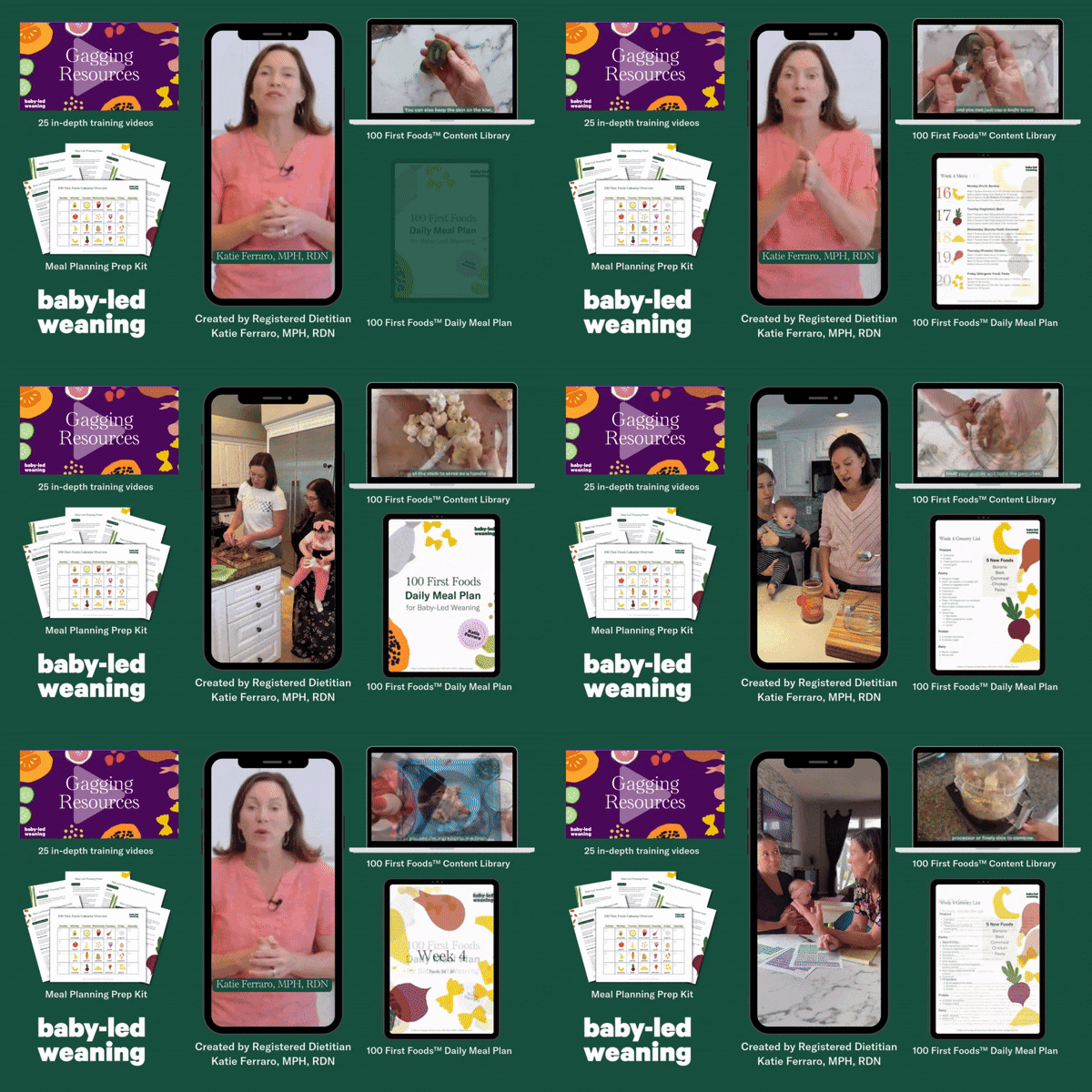
- Baby-Led Weaning with Katie Ferraro program with the 100 First Foods™ Daily Meal Plan, join here: https://babyledweaning.co/program and get $50 off when you sign up using the code BLWPOD50
JOIN NOW AT $50 OFF CODE: BLWPOD50
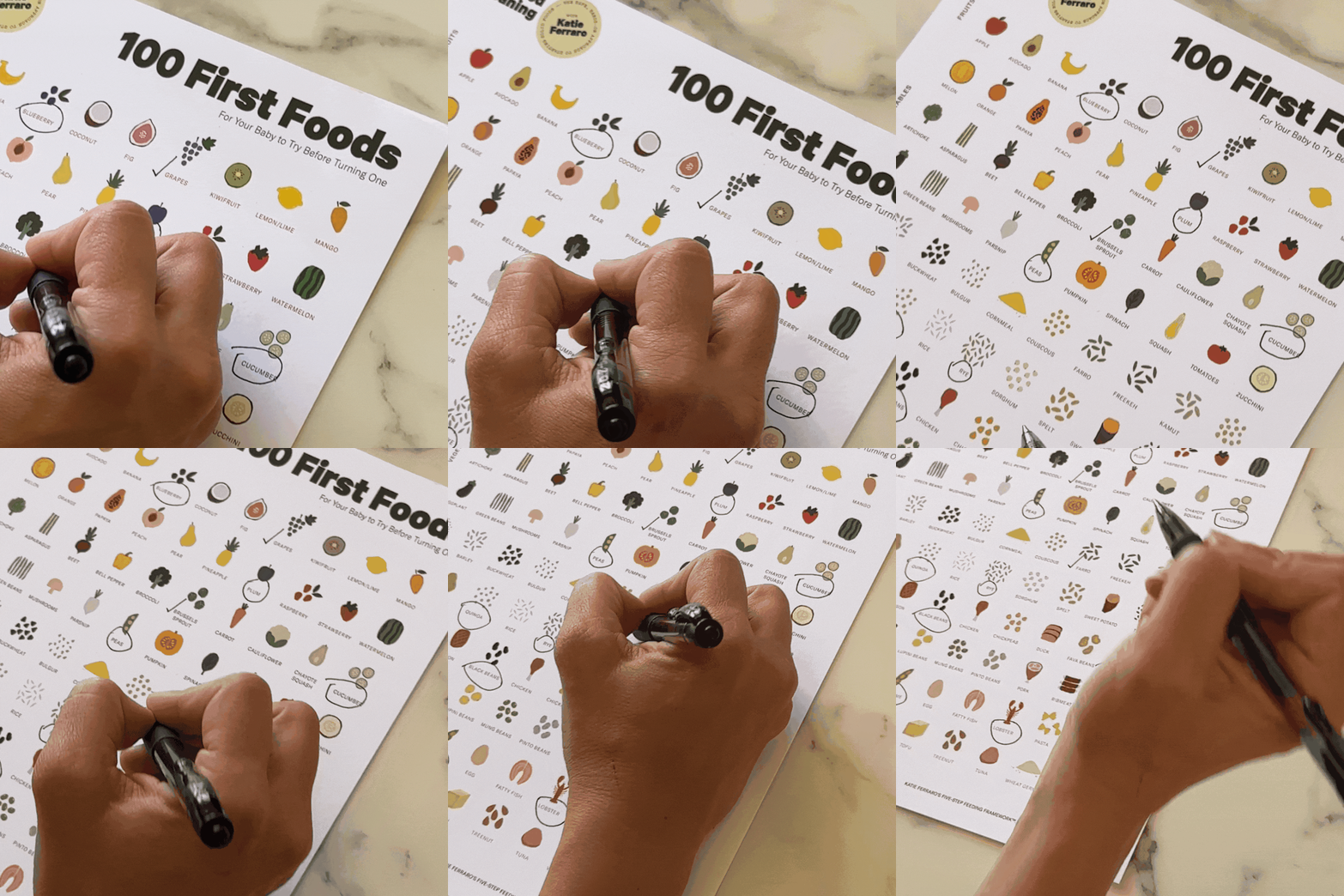
- Baby-Led Weaning for Beginners free online workshop with 100 First Foods™ list to all attendees, register here: https://babyledweaning.co/baby-led-weaning-for-beginners
Other episodes related to this topic

Latest Episodes

Katie Ferraro (2s):
And so Marsha and some of our other colleagues who are all infant feeding professionals, we have this group text and we were just kind of chit-chatting about different families that we're working with. And something that Marsha said really just jumped out at me. She said, oh, well Katie, the mom that's struggling, You know the baby has this skillset, but the mom doesn't have the confidence yet. And that really kind of jumped out at me because your baby has an inborn ability and desire to feed themselves, but not all parents have the confidence to allow the baby to essentially do the thing that they were born to do. Hey there, I'm Katie Ferraro, registered dietitian, college nutrition professor and mom of seven specializing in baby-Led Weaning. Here on the Baby-led weaning with Katie Ferraro podcast.
Katie Ferraro (43s):
I help you strip out all of the noise and nonsense about feeding, giving you the confidence and knowledge you need to give your baby a safe start to solid foods using baby-led weaning. Have you ever tried to explain baby-led weaning to someone who just doesn't get it? So I don't know, maybe it's your partner, your husband, your mom, your pediatritian, or maybe even you are still on the fence if you've ever been met with a skeptic look or someone who says, so wait a minute, you're just skipping spoon feeding and letting your baby eat whatever you eat. And then this is the episode for you. Today I'm gonna be sharing 10 compelling research backed Benefits of Baby-led weaning.
Katie Ferraro (1m 25s):
And these are the go-to talking points that I use whenever someone questions whether this approach is safe or smart or even possible. We're gonna be talking about things from preventing severe picky eating to can your baby get enough nutrition with this approach? And you might be surprised to learn that there's some new research even that's pointing towards the benefits of things like even healthy weight outcomes and speech development. So we're gonna dive into it all talking about why baby-led weaning is not just some made up thing on the internet. Guys, this is certainly more than a trend. Baby-led weaning is a powerful, practical and evidence supported way to help your baby start solid foods safely. Now, if you're just getting started with baby-led weaning, the best place to start figuring things out is my free online workshop.
Katie Ferraro (2m 10s):
It's called Baby-Led Weaning for Beginners. This is about an hour long free online video workshop where I'm gonna walk you through everything you need to give your baby a safe start to solid foods. I'm also gonna give everybody on that free workshop a copy of my original hundred first foods list so you never run out of ideas of foods that your baby can eat. You can sign up for the workshop at Baby-Led Weaning.co/workshop. You can take it right now, later today, tomorrow when your baby naps whatever is convenient for your schedule. But get signed up for that workshop as a great jumping off point that's at Baby-Led Weaning.co/workshop. And once you have the 100 first foods list and you're all lined up on what foods your baby's going to eat, in what order, if you need help making those foods safe for your baby's age and stage, check out my program.
Katie Ferraro (2m 57s):
It's called Baby-Led Weaning with Katie Ferraro. This is my comprehensive online program with all of the videos and recipes and instructions that shows you how to make those foods safe for your baby's age and stage. My program also has my 100 first Foods daily meal plan. This is 20 weeks of done for you meal plan. So you literally do not have to think about what food to make your baby next. You can get started with that program at baby-led weaning.co/program. So let's go ahead and dive in to why baby led weaning is a good idea and the benefits of it and how you can explain baby Led Weaning to a Skeptic. I like to start each of these mini training episodes with a Baby-Led Weaning tip of the day.
Katie Ferraro (3m 38s):
And today's tip is more of a quote than it is a tip, but I do a lot of talks for the state WIC association. So in the United States, the WIC program, which is the United States Department of Agriculture's special supplemental Nutrition Program for women, infant and children. So that's what WIC stands for, Women Infant and Children. And this is a program that helps provide nutrition education and supplemental healthy foods to pregnant women, postpartum women who are breastfeeding or not breastfeeding, but just have a baby and small children up until age five. And an interesting fact about this program, so it's for low income people, and an interesting fact about this program is that half of all babies born in the United States are on the WIC program, not just WIC eligible.
Katie Ferraro (4m 20s):
They're literally receiving WIC benefits. So this is a massive program that touches at least if not more than half of all babies born in this country. So I do a lot of work in a lot of education helping to modernize the infant feeding curriculum for the WIC program throughout the states. So it's a federal program, but it's administered at the state level. So I speak to each of the different states about baby-led weaning and starting solid foods safely. The WIC program gives out a lot of jarred foods, but I teach the families how to then turn those jarred foods into finger foods that babies can then pick up and then feed to themselves. So I do a lot of talk for these other nutrition professionals, and one of these talks that I do is all about the evidence behind Baby-Led Weaning, right? Because sometimes the other nutrition professionals are like, Hey, all these moms are coming and asking about this thing called baby-led weaning that they see on TikTok or Instagram, like is it a real thing?
Katie Ferraro (5m 7s):
I'm like, yes, there's a real incredible body of evidence that supports baby-led weaning. So one of the most requested talks I do is about a summary of the research. We talk a lot about the research behind Baby-Led Weaning here on the podcast, but my colleague, Amy Brown, she's a researcher out of Swansea University in the United Kingdom, she helped me develop this one presentation that I do all about the research. And so Amy has this quote when we're talking about the benefits of Baby-Led Weaning and the research that supports it. And so I'm going to read you the quote when I asked Amy Brown and she wrote this beautiful review article called Baby-Led Weaning the Evidence to Date, and I'm gonna link that in the show notes for this episode. I'll put in the description too, because this is a great review article.
Katie Ferraro (5m 49s):
Like if your doctor or another healthcare professional or anyone in your life who respects science and peer reviewed publications in respectable journals, if they're interested in actually reading the research, Amy's kind of synthesized a lot of the research about Baby-Led Weaning. So I went to her and I was like, Amy, help me summarize. Okay, for people who are interested in the research, how would you describe where we're at with regards to the research for Baby-Led Weaning? And this is Amy's quote. She says, baby-led weaning naturally encourages everything we know about introducing solid foods that leads to positive outcomes, naturally delaying introduction, a gradual introduction, self-paced feeding, and a sensory learning experience.
Katie Ferraro (6m 30s):
Whilst you can achieve those through careful spoon feeding, it is much easier when the baby is allowed to be in charge. And I just love that quote because it acknowledges that yes, there's lots of different ways to feed a baby. And certainly while you can shove a spoon of period gook down your baby's throat, it's easier if you let the baby lead the way the end of the day baby-led weaning is about letting the baby lead the way. In today's episode, I wanna go through 10 benefits of Baby-Led Weaning. And these are in no particular order, but we're gonna start with one of my favorites is that Baby-Led Weaning fosters family meals from the start.
Katie Ferraro (7m 12s):
Baby-Led Weaning encourages your baby to eat modified versions of the same foods that the rest of the family is eating right from day one. Even in the pre-feeding section of our program, we're showing parents the importance of getting your baby acclimated to the high chair or teaching about pre feeding skills, things that you can be doing even before your baby is ready to start solid foods as they join the family at the family table. Okay, so your baby's getting this idea even before they start solid foods that family meals are important. And if you look at the research around family meals, it's really, really compelling that families who eat meals together have so many positive outcomes that extend even well beyond nutrition.
Katie Ferraro (7m 54s):
A second benefit to Baby-Led Weaning is that this approach respects your baby's hunger and fullness cues, right? New research shows that Baby-Led Weaning promotes better maternal responsiveness to baby's fullness signals, okay? That supports healthy self-regulation that may reduce overeating down the road, right? You know when your baby is breastfeeding or bottle feeding and they're full, they turn their head away from the breast or the bottle, right? They're showing you those signs of fullness. Why then at six months of age, is it standard practice to ignore those fullness cues and start arbitrarily shoving a predetermined amount of food from a pouch or a jar down our baby's throats, right?
Katie Ferraro (8m 38s):
Babies inherently know when they're hungry, that's when they cry and show us their other hunger cues and also when they're full. If you're interested in learning more about your baby's hunger and fullness cues, go listen to episode 77. It's called baby hunger and fullness cues, what they are and how to spot them. But if we force feed babies, which essentially is what is happening with spoon-feeding, we are encouraging the baby to eat foods on our schedule as opposed to on their own schedule. We're very quickly teaching babies to override those inborn satiety. So satiety is the feeling of fullness. We want babies to stop eating when they're full.
Katie Ferraro (9m 19s):
If we let them regulate the pace of eating, they will inherently stop eating when they're full, as opposed to us determining when they're full, which by the way, I know You know a lot about your baby, but you don't know when they're full. Now, another benefit of Baby-Led Weaning that not a lot of people like to talk about is that Baby-Led Weaning does support healthier weight outcomes in recent years, especially in my field nutrition as a dietician, it's kind of fallen out of favor. The idea of talking about weight, okay? We went through a big period the nineties when everyone was focused on fat and low fat, and then in the two thousands and the 2010s, everything was about obesity and obesity reduction and pediatric obesity. And then more recently, nobody wanted to talk about the O word.
Katie Ferraro (10m 1s):
And I for one, also try to avoid the O word because I think if you look at the entire list of all of the wonderful things that baby-led weaning does, You know it's impact on your baby's weight is probably one of the lesser important ones. But as a dietitian, I would be remiss if I didn't point out the link between unintended weight gain and overweight and obesity with chronic disease development. So in a recent randomized clinical trial, babies in the Baby-Led Weaning style, the Bliss group. So that bliss is in Baby-Led Weaning research. It's the group that stands for baby-led Introduction to Starting Solids. That's a group where they get not only the baby-led weaning approach, but they get additional education.
Katie Ferraro (10m 41s):
That group had lower BMI for age Z scores at 12 months compared to babies who were spoon-fed. And this research suggests that self-feeding may reduce the risk of overweight and obesity down the road, and it makes sense, right? If we look at number two, which is this approach respects your baby's hunger and fullness cues 'cause they stop eating when they're full, then it supports this idea that number three, well there's probably going to be healthier weight outcomes, meaning less unintended weight gain down the road. The fourth benefit of a baby-led weaning in no particular order is that it has the potential to lower the risk of severe picky eating.
Katie Ferraro (11m 21s):
I want to point out that in no way am I claiming that Baby-Led Weaning prevents picky eating. In fact, quite the opposite. Many parents are surprised to learn that picky eating is developmentally appropriate. Picky eating is not a problem to be fixed. If you've ever had a toddler, You know that they are going to develop some degree of picky eating. It's a natural thing that is going to happen to your child when they cross over the one year mark. So generally, in that second year of life, your child is going to develop some degree of picky eating. And if you look at most babies, if they go through the traditional spoon-feeding approach, they will have 10 or 12 foods under their belt by the time they turn one. And if when your baby turns one, you lose those 10 or 12 foods to picky eating, that becomes a very challenging child to feed, right?
Katie Ferraro (12m 7s):
Those are the toddlers that end up in feeding therapy. And if you talk to our colleagues who are feeding therapists, most of them would agree that the majority of their caseload of toddlers and what they see those situations could have been prevented were the child allowed to explore with a greater variety of finger foods from an earlier age, starting around six months of age. Now, if your child has had a hundred foods by the time they turn one and then you lose 10 or 12 of those to picky eating, it's no big deal, right? 'cause your baby still has 88 or 90 foods that they will eat. So that's the crux. The whole idea behind my 100 first foods approach to starting solid foods with Baby-Led Weaning, it reduces the risk of a severe picky eating because we're exposing your baby to a wide variety of foods and flavors and tastes and textures early and often.
Katie Ferraro (12m 58s):
Okay? We need to take advantage of this flavor window. That's that short period of time where your baby will like and accept a wide variety of foods. So if you don't already have a copy of my 100 first foods list, that is a great resource to print out, put on your fridge, work on one new food a day. If you follow my five step feeding framework, we introduce five new foods per week. That's 20 foods per month. And in five short months, your baby will have eaten a 100 foods. You are doing the best possible thing you can to reduce the risk of severe picky eating in your baby by really maximizing what we call diet diversity during that all important flavor window. Hey, we're gonna take a quick break, but I'll be right back.
Katie Ferraro (13m 50s):
The fifth benefit of Baby-Led Weaning is that it saves you time. Okay? Yes, you are supervising your baby, but you are not sitting there and spoon-feeding your baby bite after bite. From a personal standpoint, the reason I got interested in baby-led weaning is 'cause I had struggled a lot with spoon-feeding, my oldest, and when it came time to start solid foods with my next set of babies, which were quadruplets, there was no way I could physically spoon-feed four babies at once. And when a colleague told me about baby-led weaning this approach where you wait till the babies are showing you the reliable signs of readiness to eat, you make them age appropriate soft finger foods, they pick it up and feed to themselves. I'm like, this sounds like the answer to my prayers.
Katie Ferraro (14m 30s):
And not to be dramatic, but it really was because it saves so much time. There's no short order cooking, right? You're not making, You know, scrambled eggs for this baby and then runny yolk eggs for that baby and then, oh, that baby doesn't like eggs. So we have to do a different source of protein for breakfast. Uhuh, everybody eats the same thing. And as a mom of seven and the product of a big family myself, I can assure you that when you come from a big family, there's just not time for the short order cooking. Sometimes I'm really surprised by my friends who have two or three kids, they're like making all these different foods for these different kids. It takes so much time. The sixth benefit of Baby-Led Weaning is that it saves money because you don't have to buy expensive baby food jars or pouches.
Katie Ferraro (15m 13s):
The cost of some of these products is astronomical. I know the cost of everything is through the roof right now, but my jaw hit the ground. I was at just Walmart the other day. And even the cost of pouches is insane. And if you think about it, what's in that pouch is not nutritionally complete. We've got some parents who are giving their babies three or four pouches a day, and the only thing in there is some liquified fruits or vegetables. The child is not getting whole grains, they're not getting protein foods, they're not getting the taste and texture opportunities. They're definitely not trying out the allergenic foods, and they're spending more of $10 a day on what is essentially fake food. The child is sucking out of a pouch. I totally get it that in a pinch, a pouch might be a food that you need to rely on.
Katie Ferraro (15m 58s):
Pouches are fine for travel days. Pouches are fine in a pinch. If you do do pouches, I would encourage you to pour the pouch into a bowl and offer it off of a preloaded spoon, not here to go on a tirade against pouches. If you'd like to learn more about the limitations of pouches though, go listen to episode 49. It's called pouches. Why Your Baby Does Not Need To Suck, period, food Outta Pouches. That's an interview with my friend, speech language pathologist, Dawn Winkelmann. That's at blwpodcast.com/149 to hear more about pouches, but they're expensive and you don't have to buy 'em when your baby's learning how to eat real food. And because the whole premise of Baby-Led Weaning is that your baby is learning to eat modified versions of the same foods that the rest of the family eats, essentially, you are going to be reducing the food cost because you're not buying separate special foods for your baby.
Katie Ferraro (16m 47s):
And now of course, your baby isn't eating the exact same foods as you at six months of age when they start out with solid foods. But keep in mind that by the time they turn one year of age, most of your baby's nutrition can be coming from solid foods. So if you're using this weaning period appropriately and offering your baby a wide variety of foods, you are going to be streamlining the food cost in your household because you're not buying special foods for your baby. Babies do not need baby foods. Your baby can eat modified versions of the same foods the rest of the families eating, and that in turn saves money. The seventh benefit of Baby-Led Weaning is that it encourages nutrient rich eating. Babies who start solid foods with this approach do not have nutrient gaps.
Katie Ferraro (17m 29s):
The research bears that out. These babies can meet their iron and their zinc needs from learning how to eat whole foods like meat and beans and eggs and whole grains. You do not need to rely on fortified cereals like You know, white rice, iron fortified cereal or, or even iron fortified baby oatmeal, okay? We talk about that a lot on the podcast, how you don't need to buy special baby foods. You do, however, need to offer protein containing foods. You need to offer whole grains. You can't just get by an avocado, banana, and sweet potato. So if you have my 100 first foods list and you go to the bottom of it, the section starting in the middle where the whole grains are, the starchy foods, and then the protein foods, both the plant and the animal foods, and then the allergenic foods, that's where the bulk of the iron and the zinc are gonna be coming from.
Katie Ferraro (18m 14s):
And as much as I love fruits and vegetables, like any dietitian, they're fine. They're not nutritionally complete. If you look at what's in pouches, it's primarily fruits and vegetables. And yes, fruits and vegetables are good because they have some vitamin C, and that helps your baby absorb iron from the other foods that they're eating. The reality is your baby benefits from getting a greater variety of foods that you can get in pouches. So when you're offering them real food, in addition to the nutrition, they're getting all the taste and texture opportunity, and we'll get to that in a second. But they're gonna be getting the iron, they're gonna be getting the zinc. And keep in mind that when your baby starts solid foods, the majority of their nutrition is still continuing to come from infant milk. So that's breast milk and or formula. So even if they're not super proficient at eating all the meats and the other plant proteins that you're offering, they're going to get better at it the more they practice.
Katie Ferraro (19m 2s):
Practice makes progress. In my 100 first foods daily meal plan, we do every Monday, a vegetable, every Tuesday, a starchy food on Wednesday, which is a whole grain. We do a protein food on Thursday and an allergenic food on Friday. And on day four in the first week, we do lamb as the first meat. And a lot of parents are like, oh my gosh, I can't do lamb. Yes you can. I show you exactly how to make a leg of lamb roast safe for your baby. So it's nice soft shreddable strips of meat. I show you three different ways to offer your baby that meat in the same 20 minute feed. And by the end of that one meal, your confidence is through the roof in your baby's ability to feed themself an iron and zinc rich food like lamb. Again, this works for families who eat animal foods, but we also have a whole section with plant proteins in there as well.
Katie Ferraro (19m 47s):
Again, if you want to get started doing this for your baby as well, check out the program Baby-Led Weaning with Katie Ferraro at Baby-Led Weaning.co/program. The eighth benefit of Baby-Led Weaning is that it helps achieve feeding milestone your baby. Learning how to feed themselves supports developmental skills. I know you see it when you're babysitting there. You are in awe of them using their Palmer grasp or their whole hand grasp to pick up the food to rake and scoop it out of the side of the suction mat or bowl. You are watching them develop the ability to chew and swallow food. You even get surprised when you see some of that food show up in their poop because you're like, yes, that is proof that it is actually going through their digestive system. They are finally getting that food in their mouth.
Katie Ferraro (20m 30s):
You're practicing that open cup drinking. Just yesterday, one of my friends who's a grandmother, and she recently, she was my neighbor before and when my twins, my youngest two were doing a 100 first foods, she would walk down the street every day, walk in the front door, what are the babies eating today? And she was there every day for all of their foods. And her own daughter now has two babies, and she moved across the country to Massachusetts to be with them. So she doesn't live in San Diego with us anymore. But I went with some of my kids to help both of her babies start solid foods or her grand babies that is, and the second grand baby, she just sent me a text message was like, she said, oh my gosh, Katie, you would not believe how good she is at her open cup. Now look at these videos. And she sent me all these videos of her granddaughter at eight months of age almost drinking independently from an open cup.
Katie Ferraro (21m 13s):
And that's pretty amazing. She said, we did what you said. We practice five minutes after every meal, and it's so wonderful that there's a grandmother who has time. She watches the baby three days a week to sit down and practice this five minutes after each meal. I know you're busy, but five minutes. And this baby, she's gonna be hitting that milestone at we're at 12 months of age. She can drink out of an open cup on her own, albeit with some spillage, but it's because the grandparents and the parents are allowing the child to do these things for themselves. So Baby-Led Weaning will help your baby achieve important feeding milestones that are helping them move in the direction of becoming an independent eater by the time they turn. One, a ninth benefit of baby led weaning is that it boosts language development.
Katie Ferraro (21m 53s):
Okay? The same study that I mentioned earlier that found that Baby-Led Weaning helps improve your baby's ability to respond to their fullness cues. And that responsiveness also found that this responsiveness is positively associated with infant verbal production. So while your baby is chewing, they're also practicing their oral motor skills that are needed for speech. And so many speech language pathologist are really, really coming around to this idea of Baby-Led Weaning. They're seeing how a lot of them are doing it with their own babies and like, oh my gosh, this is so much more effective than force feeding babies by spoon. But they're also seeing the benefits on language development for babies. And the 10th benefit of Baby-Led Weaning is that it builds confidence both for you and for your baby.
Katie Ferraro (22m 33s):
Baby-Led Weaning empowers your baby to trust their body and learn how to eat independently. And it gives you the confidence that your baby can safely explore a wide variety of foods without being force fed. If we think about the division of responsibility in feeding theory, this is a theory by Ellen Satter. She's a registered dietitian and a licensed therapist. And her division of responsibility in feeding theory says that we have some jobs in the feeding relationship and babies have some jobs. As parents, we are in charge of what the baby eats and where they eat and when they eat. But your baby is ultimately in charge of how much or even whether they eat. And anytime you're feeling pressured, like, oh my gosh, I gotta make my baby eat something because they're not getting enough, or I wanna finish this meal off with a pouch, or just gonna put some peanut butter on some bananas 'cause I know that they'll eat that.
Katie Ferraro (23m 20s):
Stop yourself and remind yourself what your job is. It is not your job to get your baby to eat. It is your baby's job to decide how much or even whether they want to eat. And that confidence that you will have in knowing that your baby can take care of themselves if you do your job right, you gotta make the variety of foods, sorry, you gotta make them safely. You need to offer them at set mealtimes and in a safe feeding environment. Those are your jobs, but let your baby do their job. And I'll leave you with a closing quote from another colleague. This is from Marsha Dun Klein. She is an occupational therapist. She is one of the most wonderful people in the entire world. She leads the Get Permission Institute. Marsha literally wrote the book on pre feeding.
Katie Ferraro (24m 1s):
She wrote the book called Pre Feeding Skills. She's been on the podcast a million times, just a wonderful person and a brand new grandmother. She also texts me all the time pictures of her amazing granddaughter just eating all these wonderful foods. She's having so much fun with it. And we kind of check in from time to time about different families that we're working with. And I was telling Marsha about another family that I'm working with and a mom who is struggling about something in particular. And Marsha said something interesting about confidence. And she said, oh, Katie, that's so interesting because the baby has the skillset, but the mom doesn't have the confidence yet. And that really kind of hit home for me because your baby has this inborn ability to feed themselves. But a lot of us as parents and caregivers, have not yet developed the confidence to allow the baby to go with that inborn ability and skillset to feed themselves.
Katie Ferraro (24m 50s):
So remember that your baby has the skillset and you're working on the confidence. Trust the process. As Joe Rapley, the pioneer and founder of Baby-Led Weaning, says, baby-led weaning is all about trust. Trust your baby's ability to do this. You do your job, you be in charge of what the baby eats, where they eat and when they eat, but trust that your baby knows that they know how much to eat and even whether they're going to eat and everything will work out in the end. I'll put a summary of everything we talked about today on the show notes page for this episode, which you can find@blwpodcast.com. A special thank you to our partners at AirWave Media. If you like podcasts that feature food and science and using your brain, check out some of the podcasts at AirWave Media or online@blwpodcast.com.
Katie Ferraro (25m 33s):
Thanks so much for listening, and I'll see you next time.
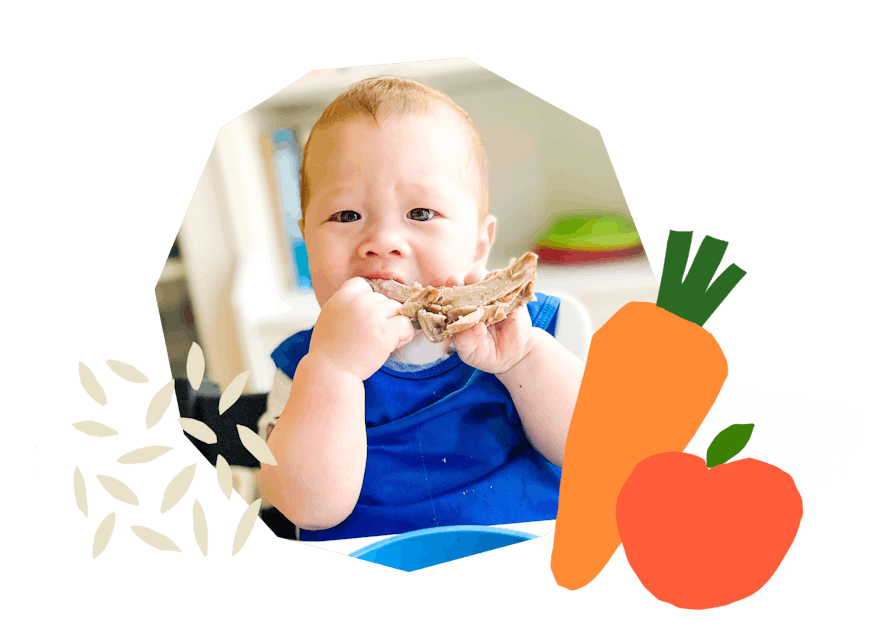
The Program Baby-Led Weaning with Katie Ferraro
A step-by-step digital program for starting solid foods safely and navigating the original 100 FIRST FOODS™ meal plan with baby-led weaning.
 EXPERT-LED, PROVEN APPROACH TO EATING REAL FOOD
 CONCISE VIDEO TRAININGS TO MASTER BABY-LED WEANING
 100 FIRST FOODS DAILY MEAL PLAN WITH FOOD PREP VIDEOS
Baby-Led Weaning for Beginners Free Workshop
Is your baby ready to start solid foods, but you’re not sure where to start? Get ready to give your baby a solid foundation to a lifetime of loving real food…even if you’re feeling overwhelmed or confused about this next stage of infant feeding.
Get baby-led weaning recipes and tips delivered to your email inbox.