
Building a Professional Network for Baby-Led Weaning with Jessica Coll, RD
- How Jessica Coll helped bring baby-led weaning into the professional mainstream in Canada
- Why she founded the International Baby-Led Weaning Network for Health Professionals
- How her work is driving the role of credentialed feeding experts in the baby-led weaning field
LISTEN TO THIS EPISODE
Episode Description
When baby-led weaning was still considered risky and unconventional, Jessica Coll, RD, was already teaching workshops to parents in Canada. Now, as the founder of the International Baby-Led Weaning Network for Health Professionals, she’s helping clinicians around the world feel confident supporting families through this feeding approach.
In this episode, Jessica shares how she built her professional network, why she believes dietitians and other providers should be involved in baby-led weaning, and what still needs to change in the way we educate professionals about starting solid foods.
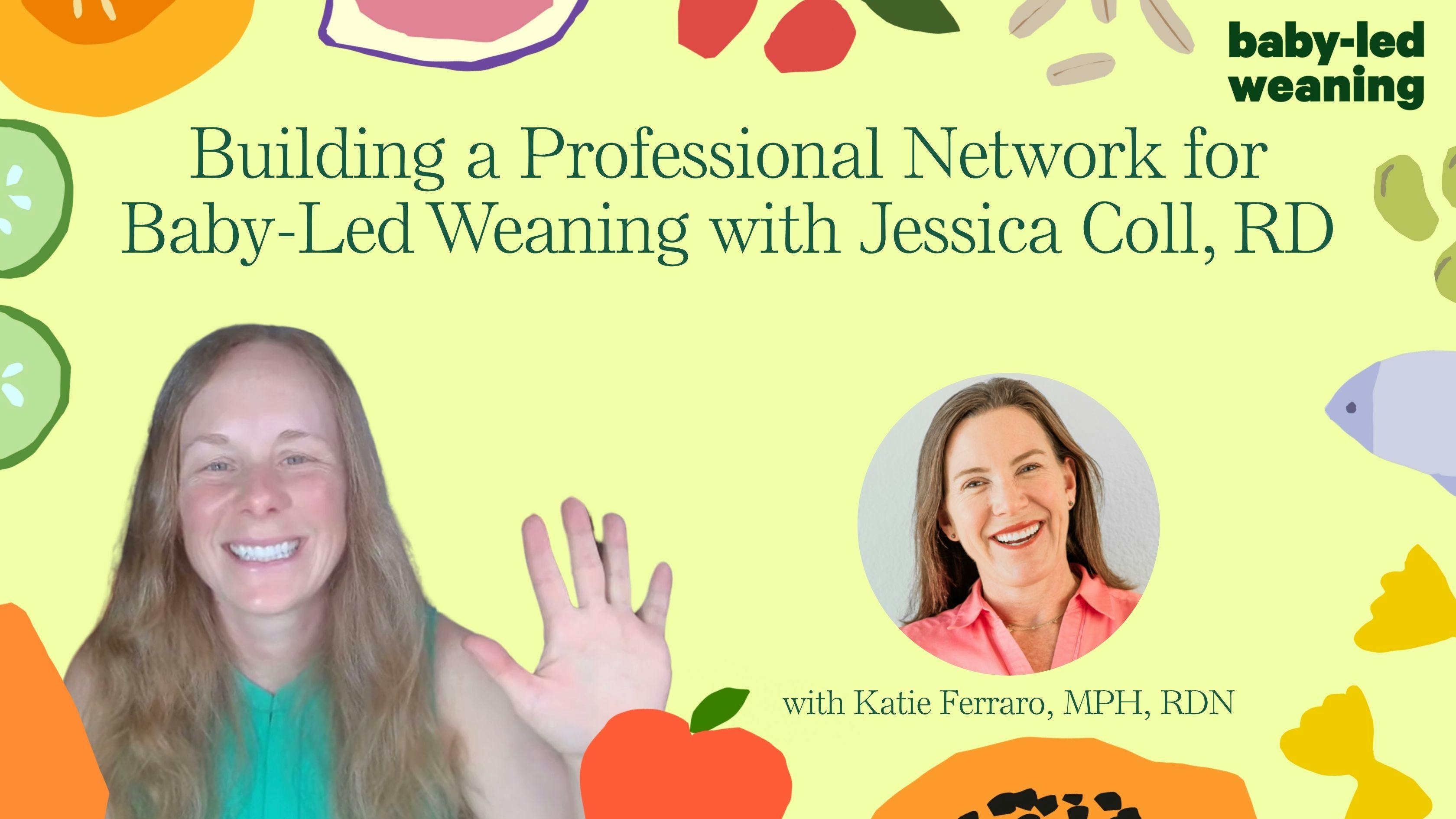
About the Guest
- Jessica Coll is a dietitian and founder of the Starting Solids Network
- Mom of 3
- Advocate for baby’s ability to self-feed
Links from this Episode:
- Visit Jessica’s website and use the code BLW for 20% off membership in the International Baby-Led Weaning Network for Health Professionals: https://www.healthlyinstitute.com
- Baby-Led Weaning with Katie Ferraro program with the 100 First Foods™ Daily Meal Plan, join here: https://babyledweaning.co/program and get $50 off when you sign up using the code BLWPOD50
JOIN NOW AT $50 OFF CODE: BLWPOD50
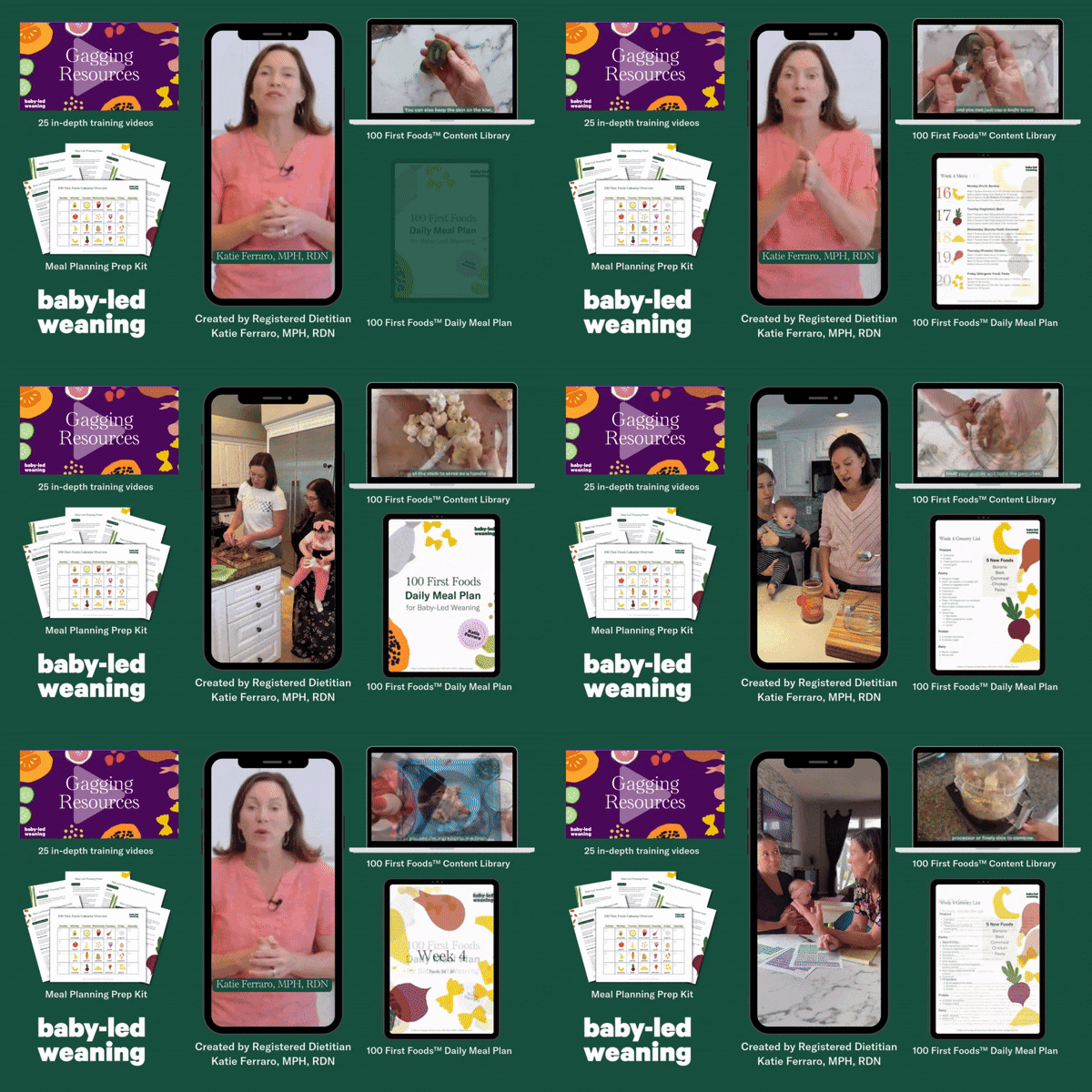
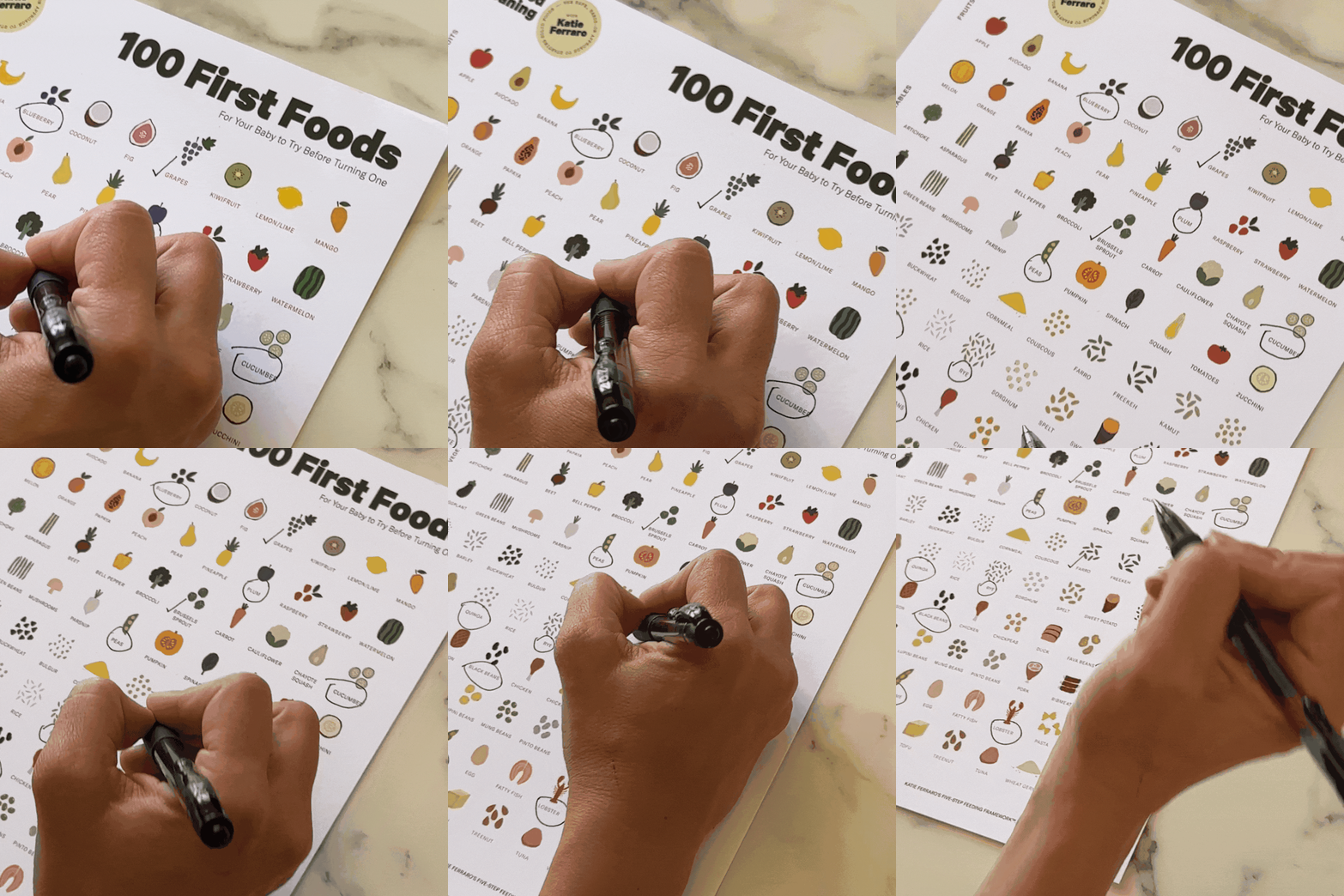
- Baby-Led Weaning for Beginners free online workshop with 100 First Foods™ list to all attendees, register here: https://babyledweaning.co/baby-led-weaning-for-beginners
Other Episodes Related to This Topic:

Latest Episodes


Hungry Root (0s):
I know that December is all about giving and giving to others. But if I may say, I sometimes do give gifts to myself. And the best gift that I gave myself this year was Hungry Root. Hungry Root takes the stress out of mealtimes by filling your cart with personalized picks and planning your week of meals, it gets smarter with every order. Like Hungry Root now knows I do not like beets. We accidentally got some beets in something and I made some tweaks Their, their technology is amazing with, there's over 15,000 recipes, first of all, that they choose from each week. My brain can't handle that. What I said is like, I want meals that are ready in just 15 minutes or less. There's this super wide grocery selection. There's things like smoothies and kids snacks and sweets and salad kits, ready to eat, meals, supplements. It is so easy to find options that are gonna fit your whole family's taste and nutrition goals too, because I know that you're in the thick of it with baby life and holiday madness and you're working and trying to maybe maintain a friendship or relationship. Or two, figuring out food every day for your family is a lot. Hungry Root knows that they fill my cart with the exact groceries and recipes that I need. Nothing more, nothing less. Everything is based on my own dietary goals. Our family food preferences. A little bit about what my kids will actually eat, but also kind of pushing the boundaries, sometimes trying new foods. It literally gets better every single time we use it. No holiday crowds. No last minute store runs. No guesswork. Hungry Root gets us. My last box had this cinnamon oat bake. Now I want every morning. I love the pre chopped veggies, the easiest beef stir fry I've ever made with a sauce that like was so delicious. I, I would never think of that on my own is all I have to say. I love that. Hungry Root is now like my kitchen brain. It's all clean ingredients, no junk. The meals are done in under 15 minutes. Truly a holiday miracle. Give yourself one less thing to worry about this season. If you want to check out Hungry Root, please take advantage of this exclusive offer for our listeners. For a limited time, you can get 40% off your first box, plus get a free item in every box for life. So go to hungry root.com/weaning and use code weaning. That's hungry root.com/weaning code weaning to get 40% off your first box and a free item of your choice for life hungry root.com/weaning code weaning. And check it out. I think you'll love how much hungry Root's gonna help streamline the meal prep in your family's life.
Rula (2m 31s):
Can we be real about productivity for a moment? Especially productivity post babies? I used to be the most productive person in the world because I really only had to worry about myself. And I feel like the more people that I've brought into the world, I'm like, what happened all of my time? And why can't I get anything done? Let's be real. Our culture is weird about productivity. You are now just supposed to magically be able to still do all the things, right, parent and work and manage a household. Maybe keep a friendship or two alive and never slow down. Oh yeah. And work out and maybe be nice to your partner or spouse. That to-do list, it just never gets done. I have two sisters and one of my sisters who's self-employed, she's like very productive. And we were talking the other day like, okay, what if you, she's like, imagine this. You got everything on your to-do list done in a day. Like what would that actually feel? Feel like you worked out, you fulfilled all your obligations. What would you feel like? And she said, you would feel like a robot, right? Guess what? You're not a robot. You're not a machine. If you're feeling burnt out or anxious or stuck, you are not alone. Therapy can help, but therapy also has to be accessible and affordable. And that's where Rula comes in. Ruler connects you with a licensed therapist or psychiatrist based on your needs and your schedule. So you answer a few questions and Rula finds someone who matches your preference and they take your insurance. So the average copay, it's only $15 per session. Seriously. And because RULA supports every step of your journey, including checking in to make sure that you're actually making progress, it doesn't feel like you're doing this alone. Thousands have already trusted RULA to support them on their journey towards improved mental health and overall wellbeing. So if you head over to rula.com/weaning, you can get started today. After you sign up, they'll ask you where you heard about them. Please say the baby led weaning with Katie Ferraro podcast to help support our show. Go to RULA.com/weaning and take the first step towards better mental health today because you deserve quality care from someone who cares and you are not a robot.
Jessica Coll (4m 40s):
I was sold right before even starting. I thought it made so much sense and I was just confident. I remember feeding. It was actually my daughter. I grabbed a piece of tortilla off of my plate just while I was sitting with her and I wasn't even planning on having her start food. And then she just grabbed it from my plate and we just watched her. She just kind of sucked on it for a little bit. And then, then I started experimenting. I was super excited because it was something that I had discovered. But back then there weren't any videos really that I could watch about babies starting baby-led weaning.
Katie Ferraro (5m 17s):
Hey there, I'm Katie Ferraro, registered dietitian, college nutrition professor and mom of seven specializing in baby-led weaning. Here on the baby-led weaning with Katie Ferraro podcast. I help you strip out all of the noise and nonsense about feeding, giving you the confidence and knowledge you need to give your baby a safe start to solid foods using baby lead weaning. If you are due to baby lead weaning and it feels like some sort of made up thing on the internet, I think you'll be happy to know that there is a real incredible body of evidence that supports a baby's ability to feed themselves safely from their first bites.
Katie Ferraro (5m 59s):
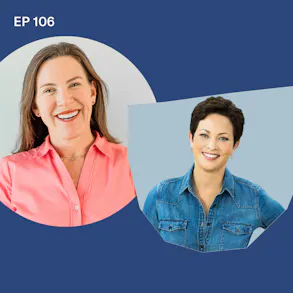
And nobody knows this more than my guest today. Her name is Jessica Cole. Jessica is a registered dietitian. She's based in Montreal, Canada. She's also a mother of three. And almost 15 years ago, Jessica was one of the first dietitians to start teaching about baby-led weaning. She led workshops for parents back in the day when the concept was still considered controversial by many in the professional nutrition and certainly the healthcare world. Now, fast forward to today. Jessica is the founder of the International Baby led weaning Network for health professionals. This is a global community that supports dietitians, speech language pathologists, occupational therapists, pediatricians, and other clinicians who want to confidently and safely guide families through baby-led weaning.
Katie Ferraro (6m 45s):
So I've had the great fortune to be able to work alongside and with Jessica now for a while. We both share a passion, particularly for educating registered dietitians about baby-led weaning and increasing the role of the registered dietitian in helping typically developing infants and their families to give those babies a safe start to solid foods. So in this episode, Jessica is gonna share her journey from being challenged by her peers for promoting baby-led weaning to now helping to lead the movement that makes it more accepted and expected in professional practice. If you ever have struggled to explain what baby led weaning is or why you're doing it, I think you'll really enjoy Jessica's story, which will give you a lot of clarity on some the history of the development of the field of baby led weaning.
Katie Ferraro (7m 29s):
So with no further ado, I want to welcome Jessica Cole, the founder of the International Baby led weaning network for health professionals who's gonna talk about her history and her experience building a professional network for baby led weaning.
Jessica Coll (7m 45s):
When I first began teaching baby led weaning workshops to parents and health professionals many years ago, back when baby led weaning was just starting to get traction in Canada and the us I was met with a lot of skepticism. And I think this is where we, how, how we started talking recently, Katie, you were like, well, what's going on with all the skepticism that you got? Yep. And at the time, there wasn't many research studies available and the idea of letting babies feed themselves was considered unconventional. Deep down, I believe that this approach had the power to change the way we think about introducing solids. And now I think I see that it's incredible to see how far we've come.
Jessica Coll (8m 29s):
I continue to lead the baby led weaning network for health professionals bringing members from around the world who share the same vision. So supporting families in a way that respects babies capabilities nurtures a positive relationship with food from the very beginning. Recently, I even taught a baby led weaning training for registered dietitians in partnership with my provincial, my provincial professional association earlier this year. And so this came full circle and it was, this is a first because they were able to position themselves about baby led weaning.
Katie Ferraro (9m 3s):
What is the history of baby led weaning in Canada? Like is that something, is it traditionally included in your nutrition curriculum and education? Did you learn about it when you were studying to be a dietitian or is it something that you kind of came across as most parents do when you had your own baby and you were like, oh my gosh, it doesn't feel right to, you know, be force feeding this baby by spoon or you know, what was your own experience in entre into baby led weaning?
Jessica Coll (9m 26s):
The absolute first time I discovered baby led weaning was when I was pregnant with my first child. And at the time I was leading a breastfeeding support group as both a lactation consultant and registered dietitian. And one day a mom in the group handed her six month old a whole banana. And I was stunned. I had never seen that. I had were been working in pediatrics for years already and I had never seen that approach before. She later handed me Jill Ripley's book and she said, you're going to love this. And she was right. I immediately started reading it, probably that same night, started researching. I hadn't even had my own child yet. But what struck me was how baby led weaning encourages babies to explore and discover their food at their own pace.
Jessica Coll (10m 11s):
It just made sense to me. And you know, I was thinking, well, what if we trusted babies? What if they were able to feed themselves from their first bite? And in nutrition education in Canada, baby-led weaning is not typically part of the standard curriculum. I had never heard about it during my own training at university and even working as a dietitian for the first few years of my career, I had never heard about it. Currently it's included in just one university course that I'm aware of, and that's at McGill University in Montreal. And that's where I teach that one myself. So that's recent development, but it's still very rare at this point.
Katie Ferraro (10m 50s):
And I was sharing with you, Jessica, I know you've worked in the US but in our curriculum historically when you take a nutrition throughout the lifecycle class, there's a section, so maybe an eighth to a 10th of what you learn would be on infant and pediatric nutrition, which is not very much. And then if you boil it down, you spend a lot of time focusing on breastfeeding, which is so important. And then we talk a lot about all those things that could possibly go wrong, but there's not so much taught about, you know, quote unquote, for lack of a better term, normal nutrition. And we call that nutrition for typically developing infants except for, you know, conventional adult led spoonfeeding and our books, even in the seventh edition, I believe it was still talking about, you know, start with white rice cereal and start at four to six months. And we know, you know, all the reasons why that information is not only outdated but also dangerous.
Katie Ferraro (11m 31s):
But in the newest version of our lifecycle book, there's finally a blurb and a mention of baby led weaning. And I think I was showing you in our other professional group, like the actual book. I'm so excited because I wrote it a couple of years ago at this point actually, and have been, you know, really working closely with the publisher for years to try to even get a mention of baby led weaning included and being able to support that with the evidence and the research behind this approach is really what, you know, finally encourage them. Yeah, you know, we should be sharing some other viewpoints in here. And now for the first time future dietitians in that lifecycle class in the us, again, it's just a blurb. They even cut the picture out. So the blurb about baby led weaning is next to a picture of a baby being conventionally adult led spoonfed. But you know, there's room for improvement.
Katie Ferraro (12m 13s):
But even just like at McGill University, the dietitians that go to school there, they will have heard about baby lead weaning from you, another credentialed feeding expert, which I know you and I are so passionate about, you know, having dietitians have a, you know, for kind of cheesy but a seat at the table when it comes to starting solid foods and particularly for normal and typically developing infants. As a mom though, I just wanna ask, 'cause you seem to remember so vividly the first time you heard about baby led weaning that was in a professional space. You were working in leading a breastfeeding support group with your background in lactation education. What do you remember about the first time your actual first baby was in that highchair and you placed some sort of a finger food in front of them?
Katie Ferraro (12m 53s):
Can you take us back there to what that experience was like?
Jessica Coll (12m 56s):
So as a mom that was, I was actually very confident. I was sold right before even starting. I thought it made so much sense and I was just confident. I remember feeding, it was actually, my daughter grabbed a piece of tortilla off of my plate while I was just, while I was sitting with her and I wasn't even planning on having her start food and then she just grabbed it from my plate and we just watched her. She just kind of sucked on it for a little bit. And then, then I started experimenting. I was super excited because it was something that I had discovered, but back then there weren't any videos really that I could watch about of babies starting baby led weaning and really not many recipes.
Jessica Coll (13m 41s):
So I was there creating recipes and testing all kinds of things. I, it was amazing.
Katie Ferraro (13m 47s):
Hey, we're gonna take a quick break, but I'll be right back.
Sierra (13m 54s):
At Sierra discovered top workout gear at incredible prices, which might lead to another discovery. Your headphones haven't been connected this whole time. Awkward discover top brands at unexpectedly low prices. Sierra, let's get moving.
Katie Ferraro (14m 13s):
I love that you said you were confident because that's not the typical response from parents when they start solid foods, no matter what approach they choose. But I think a lot of it's that you had educated yourself. You mentioned you read Jill Ripley's book and as I know you and I are both huge fans and colleagues of Jill Rapley and really admire her work and the work she's done in really promoting the importance of waiting until a baby is truly showing you those reliable signs of readiness to eat. I'm curious how it went with your subsequent babies. Did you also do baby led weaning? Were you even more confident? Did you have any setbacks? Because of course, just because it goes well with one kid doesn't necessarily mean that'll be the case with the others. What was your experience beyond your first baby?
Jessica Coll (14m 49s):
I started teaching workshops about baby led weaning after having my first child or soon after. And so back then I had actually reached out to Jill Rapley right from the start. I was so excited about it, started reaching out to baby led weaning pioneers and, and then, so I had done a lot of research, so baby led weaning was definitely in the books for my next two children. So I did that and it went really well. And, and of course with nuance the, the practice evolved. My practice evolved and just what we know knew about baby led weaning changed as new research came out. And also, you know, back then it was really either people were for or against baby led weaning and it still is like that a little bit, but much less than back maybe almost 15 years ago.
Jessica Coll (15m 39s):
So it's less like that now where people, families have to pick a side. Are you doing baby led weaning? Are you not? Like you just, I'm starting solids and I'm letting baby feed themselves and there's a variety of textures. So it evolved a lot over the years, but I still consider myself having starting solid started solids in a baby-led weaning way.
Katie Ferraro (16m 1s):
And I'm curious, what was the reaction from your peers? Because shortly after having this experience with your oldest child having your breastfeeding and nutrition dietitian background and you started teaching workshops, how was the reaction from your peers and other colleagues and dietitians in Canada, in your province? What sort of reception did you get as you started to kind of spread this idea of baby led weaning, which at the time was relatively new?
Jessica Coll (16m 23s):
The reaction from my peers? So in Canada it was exciting. There was a lot of curiosity about baby led weaning when I started out and it was exciting and there was a lot of skepticism. So my workshops back then would sell out. They'd even fellow dietitians started attending my trainings I had originally created for parents because there were no other trainings available for health professionals at that time. So like I said, the field was very divided. People were either strongly for baby led weaning or firmly against it. And it was as if we had to pick a side and there was no room for nuance, sometimes felt like a debate or a war even between two camps.
Jessica Coll (17m 7s):
And at one point I couldn't keep up with the demand to give those trainings. And so that's when I started offering trainings for health professionals about baby led weaning and the international baby led weaning for health professionals was created profess.
Katie Ferraro (17m 20s):
At what point was that, were you, how far into teaching these classes were you like, oh my gosh. 'cause the same thing happened. I have a parent course and it's, there's lots of dietitian moms in there. And once I started realizing that, I was like, oh, well I'm gonna make a variation of this course that you can use both in your professional practice, but also as a parent, it kind of just organically grew up. Or did you have someone you know specifically request, Hey, we need more training for dietitians. When did you decide, you know, to start that approach where you're training other, not just dietitians, but other healthcare professionals about baby led weaning?
Jessica Coll (17m 50s):
Yeah, so this was, I'm taking you back almost 15 years ago when I was one of the first to teach baby led weaning workshops to parents. And at that time, very few people had even heard about it. There was a lot of interest, it exploded. I, I was remembering myself running workshops every week and I still couldn't keep up with the demand. And then something unexpected happened, there was a dietitian who asked me to buy my materials so she could teach baby led weaning in her own community. And that's when I realized there was a need for trainings for health professionals. It was not just parent education but for professional support, resources and connection. And even me, I was thinking, well this is great because I'm alone doing this.
Jessica Coll (18m 33s):
And I actually began this as a pilot project with five dietitians. At first I said, okay, well you wanna buy my material, let's just start with the first five that apply to this network. And then since then it has grown to an international network with health professionals now in a dozen countries. And it's been incredible to see this passion which turned into a global movement. So, you know, just, just having connection with other health professionals and resources and support.
Katie Ferraro (19m 4s):
So why do you think it is important for registered dietitians and other health professionals to be well-informed about baby led weaning? Like we're thankfully very much past that kind of, you know, the really, I think judgmental era of the Facebook groups and you know, you can't do this and you can't do that. And I know dietitians always have a reputation, at least in the US kind of being the food police and focusing on what babies can't eat. I know in my approach, I've always focused on all the things babies can eat because we're taught sometimes, oh, stay away from this and that. And you get so scared you just think, oh my gosh, there's nothing my babies can eat. Why are you inspired to teach other healthcare professionals about this? What do you see as the need both in Canada but also from a global standpoint since your network is global?
Jessica Coll (19m 46s):
Yeah, that's a good point Katie. When you mentioned about those foods that need to be avoided, I also have that same approach. Well, okay, you should avoid this food. How can we adapt it? Instead of saying, you need to avoid that food, then I have the thought of, well how can we adapt that food to make it appropriate for babies? And so how I feel like I'm passionate about it, why I feel like I'm passionate about it is that starting solids is a foundational stage in a human's relationship with food. And registered dietitians are the trusted experts when they, it comes to nutrition. So if we wanna support families in building positive eating habits from the very beginning, we need to be well-informed about all of the approaches that parents are considering, including baby-led weaning.
Jessica Coll (20m 36s):
And when health professionals understand that research, the practical side, the nuance behind baby led weaning, they're in a much better position to guide families. So that's basically why I think dietitians and other health professionals need to be informed about what are parents doing right now.
Katie Ferraro (20m 55s):
And I'm curious, what kind of services, education does the international baby led weaning network for health professionals offer for professionals? And how has that evolved? Like give us maybe a little bit of history. When did you start it, what was the focus then things change and parents need changes and obviously, you know, even the modality in which you're delivering your education has changed from in-person events to an online community. Kind of walk us through the timeline of the network.
Jessica Coll (21m 20s):
Yeah, at the beginning dietitians, it's just started with dietitians. Registered dietitians wanted all the material handouts that so that they could teach work, baby led weaning workshops in their own community. And then I, I thought, well, okay, so but we also need support. And so we did two live events a year where it was a networking events and then we'd have a topic of conversation like iron for example, or allergies or choking. And then we'd just chat among health professionals. And over the years I created more handouts. I created a library of pictures and videos that health professionals can use and that I've included more and more resources.
Jessica Coll (21m 59s):
So health professionals were often feeling unprepared when health professionals graduate, they wanna go in pediatrics, they're feeling often under prepared in guiding families, especially in pediatrics. So they're like, well let's look for trainings in pediatrics about starting solids baby led weaning. And so that's where my network fills that gap with resources and education. So currently now, fast forward a few years later, my network offers a pre-made customizable baby led weaning presentation with speaking notes that health professionals can use to give an idea of what they can say. They get 20 hours of recorded online training about baby led weaning with multidisciplinary baby led weaning speakers for LI live trainings per year, which all include 30 minutes of q and a with a guest speaker.
Jessica Coll (22m 50s):
And then it also includes unlimited support from me and an updated lit review of baby led weaning research articles and then all those access to customizable handouts for parents.
Katie Ferraro (23m 2s):
So Jessica, I know when you initially started out doing education as a dietitian, you were teaching other dietitians, but certainly that net has expanded the international baby led weaning network for health professionals is open to other credentialed health professionals, not just dietitians. Tell us a little bit more about what sort of credentials and what sort of professions are involved under that network.
Jessica Coll (23m 23s):
So ideally we want any health professional that works with babies when they're starting solids because what we're offering is the training about baby led weaning with those baby led weaning pioneers and we have guest speakers and so it's mostly registered dietitians, but we also have OTs, PTs, pediatricians. And then depending on where health professionals live around the world, there are different titles that are used.
Katie Ferraro (23m 50s):
So Jessica, you previously worked when you lived in the US at WIC as a WIC educator. I know you've worked as a pediatric dietitian. I think most people listening who are in the United States are familiar with the fact that there's not really anywhere to go to learn about nutrition for a typically developing baby. Like you can learn about breastfeeding, which is, you know, pre-solid food, which is wonderful from a certified, you know, an I-B-C-L-C. But you know, and of course we encourage parents to continue breastfeeding well past the first year mark if that's what works for both of them. But that whole like starting solid food thing, unless you're in WIC or you have a doctor who's very unusual in the sense that they would actually have advanced training about starting solid foods. There's not really anywhere to go to learn about, you know, the way we start solid foods or what babies can do in the United States.
Katie Ferraro (24m 33s):
And I think that's a, a gap that your network fills for professionals. I know our program for parents fills that, what's it like in Canada? Where do most parents go? Like let's say it's your first baby besides the internet and social media, how do they learn about different ways that their baby can start solid foods?
Jessica Coll (24m 50s):
Yeah. Where do parents learn about baby led weaning? It definitely changes and evolves over time. In the past it was through Facebook groups, right? That's how it started. And there was so much misinformation on Facebook groups. And then after a few years while I was teaching in person baby led weaning workshops and now there's a lot of online workshops and basically a lot of parents, the learn from other health professionals teaching baby led weaning workshops. And it's mostly online that health professionals are doing that now. So a lot of members of my network, of course, are teaching these workshops.
Katie Ferraro (25m 30s):
Hey, we're gonna take a quick break, but I'll be right back.
Ford (25m 33s):
I Ford Blue Cruise hands-free highway driving takes the work out of being behind the wheel, allowing you to relax and reconnect while also staying in control. Enjoy the drive in Blue Cruise enabled vehicles like the F-150 Explorer and Mustang Mach E available feature on Equipped vehicles terms apply. Does not replace safe driving. See four.com/blue Cruise for more details.
Katie Ferraro (26m 11s):
So Jessica, I know you and I are very much aligned in our approaches to baby led weaning. We're actually working on a couple of curriculum related projects together. So I know what you think is important with regards to kind of the the major topics that parents should know about, but what about healthcare professionals and parents? I guess, what do you think are the most important topics that come to mind? Like, gosh, we really need to work on educating parents about what is typical so that they know what to expect so that like you, when their first baby starts solid food, they'll go into it feeling confident like, oh yeah, I knew that was gonna happen or I know know how to react when that happens, what are those kind of like, you know, top touch points for you as you are educating parents as well as other healthcare professionals?
Jessica Coll (26m 50s):
Yes. So I've included these topics of course in trainings as part of the international baby led weaning network of health professionals. And actually I was working with a dietitian for the past few years and we really were able to dive into these topics together and she just had her baby six months ago in starting solids with her baby. And she's told me about how she is super confident about starting solids. So that's the goal. So we really are diving into topics like Gill Rapley come in and teach a class about baby led weaning from A to Z. So really working to bring baby led weaning back to its roots. So I thought that was really important. And then how intuitive eating aligns with baby led weaning.
Jessica Coll (27m 32s):
So I've had a dietitian come speak about that. Setting infants up for a positive relationship with food from the start. And then I've had Jill Rabin come in and she's a speech language pathologist and I-B-C-L-C come and talk about adapted baby-led weaning for neurodiverse babies. And then we have a training about solving infant gas reflux and poop problems with the dietitian. So that always is really important to know about. And I've had Amy, who's a registered dietitian come in to talk about letting go of the get. So how professionals can support families in adapted baby led weaning. So getting babies to eat and so letting go of that idea. And then we've had dietitian come to talk about a complex feeding dynamics in modern families.
Jessica Coll (28m 16s):
So how that dynamic has changed over the years. And we've had also a dietitian talk about gut health and so the importance of intestinal microbiota. And I've had a psychologist come speak about beyond the active feeding when parents don't see eye to eye. That was super interesting. And another training was about trusting babies to feed themselves from their first bite with a speech language pathologist. Really talking about internal motivation. I
Katie Ferraro (28m 44s):
Love the focus on, especially like the psychosocial aspects of starting solid foods, because oftentimes as dietitians, you know, we're certainly guilty of getting too bogged down in the numbers and the minutia and you know, babies don't eat milligrams of iron. They learn how to eat meat and plant-based proteins in different whole grains. And so I love the kind of zoom out and looking at, you know, the different multifactorial things that come into play when you're starting cell foods. If your partner's not on board or your mother-in-law's not, or if you have childcare and they don't understand what this is and how it works, then it's gonna be hard for you to be consistent. So Jessica, tell our audience where they can go to learn more about your work and to support your business and to learn more about the network. If they're interested in learning more formally about baby led weaning as a healthcare professional,
Jessica Coll (29m 25s):
Yes, they can go to healthy institute.com, so that's healthy with an extra L, so Healthly and they can get 20% off per year to join my network@healthlyinstitute.com with the coupon code BLW. So if you join with that code, you keep your discount for as long as you are a member.
Katie Ferraro (29m 45s):
Thank you so much, Jessica, it was such a pleasure speaking with you and I love the work that you're doing and I look forward to working more with you too, moving down the road.
Jessica Coll (29m 53s):
Yes, me too. Thanks so much, Katie.
Katie Ferraro (29m 55s):
Well, I hope you guys enjoyed that interview with Jessica Cole. I love working with her. We are so very closely aligned, even though we're very different, come from different parts of North America, different approaches to food prep, different ways of explaining things. We're very much aligned on working to increase the role, especially of the registered dietitian and their visibility in this world of helping families of typically developing infants, give their babies a safe start to solid foods using this evidence-based approach called baby led weaning. As Jessica mentioned, if you are interested in checking out her network, if you head to the website health lee institute.com and use that code BLW, that's her code. You can get 20% off your membership in the international baby led weaning network for health professionals.
Katie Ferraro (30m 37s):
I'll put all of the links, the references, the resources that Jessica included in today's interview on the show notes page for this episode, which you can find@blwpodcast.com/78. And a special thank you to our partners at AirWave Media. If you like podcasts that feature food and science and using your brain checkouts from the podcasts from AirWave, we're online@blwpodcast.com. Thanks for listening and I'll see you next time.
NortonLifeLock (31m 8s):
The holidays mean more travel, more shopping, more time online and more personal info and more places that could expose you more to identity theft. But LifeLock monitors millions of data points per second. If your identity is stolen, our US-based restoration specialists will fix it. Guaranteed or your money back, don't face drained accounts, fraudulent loans or financial losses alone. Get more holiday fun and less holiday worry with LifeLock. Save up to 40% your first year. Visit lifelock.com/podcast terms apply.
The Program Baby-Led Weaning with Katie Ferraro
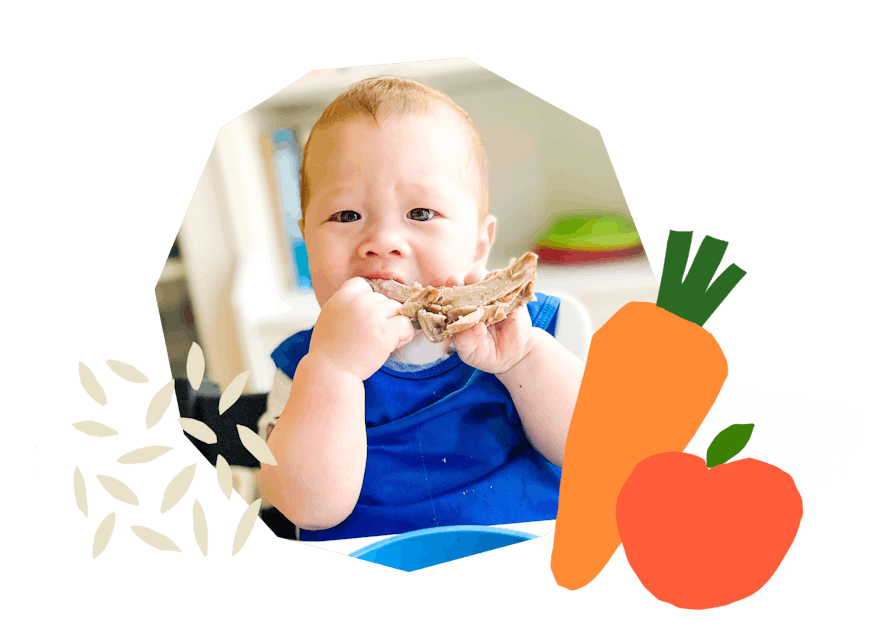
A step-by-step digital program for starting solid foods safely and navigating the original 100 FIRST FOODS™ meal plan with baby-led weaning.
 EXPERT-LED, PROVEN APPROACH TO EATING REAL FOOD
 CONCISE VIDEO TRAININGS TO MASTER BABY-LED WEANING
 100 FIRST FOODS DAILY MEAL PLAN WITH FOOD PREP VIDEOS
Baby-Led Weaning for Beginners Free Workshop
Is your baby ready to start solid foods, but you’re not sure where to start? Get ready to give your baby a solid foundation to a lifetime of loving real food…even if you’re feeling overwhelmed or confused about this next stage of infant feeding.
Get baby-led weaning recipes and tips delivered to your email inbox.