
Baby-Led Weaning Grocery Shopping: What to Buy & What to Skip
- What foods to buy for your baby’s first week of baby-led weaning without overcomplicating your grocery list
- How to spot foods that can be made safe for early eaters using the squish test and right sizing
- Why you can skip most “baby” foods at the store and focus on real foods your family already eats
LISTEN TO THIS EPISODE
Episode Description
What should you actually buy at the grocery store when your baby is getting ready to start solid foods? In this episode, I’m walking you through a simple first-week grocery list for baby-led weaning: what to buy, what to skip, and why you do not need special “baby” foods to give your baby a safe start. From produce to proteins, allergenic foods, dairy, and the baby food aisle, you’ll learn how to shop smarter without spending a ton of money or second-guessing every label.
Links from this Episode
- Download your copy of the free Baby-Led Weaning Pantry Planning Guide here https://babyledweaning.co/resources
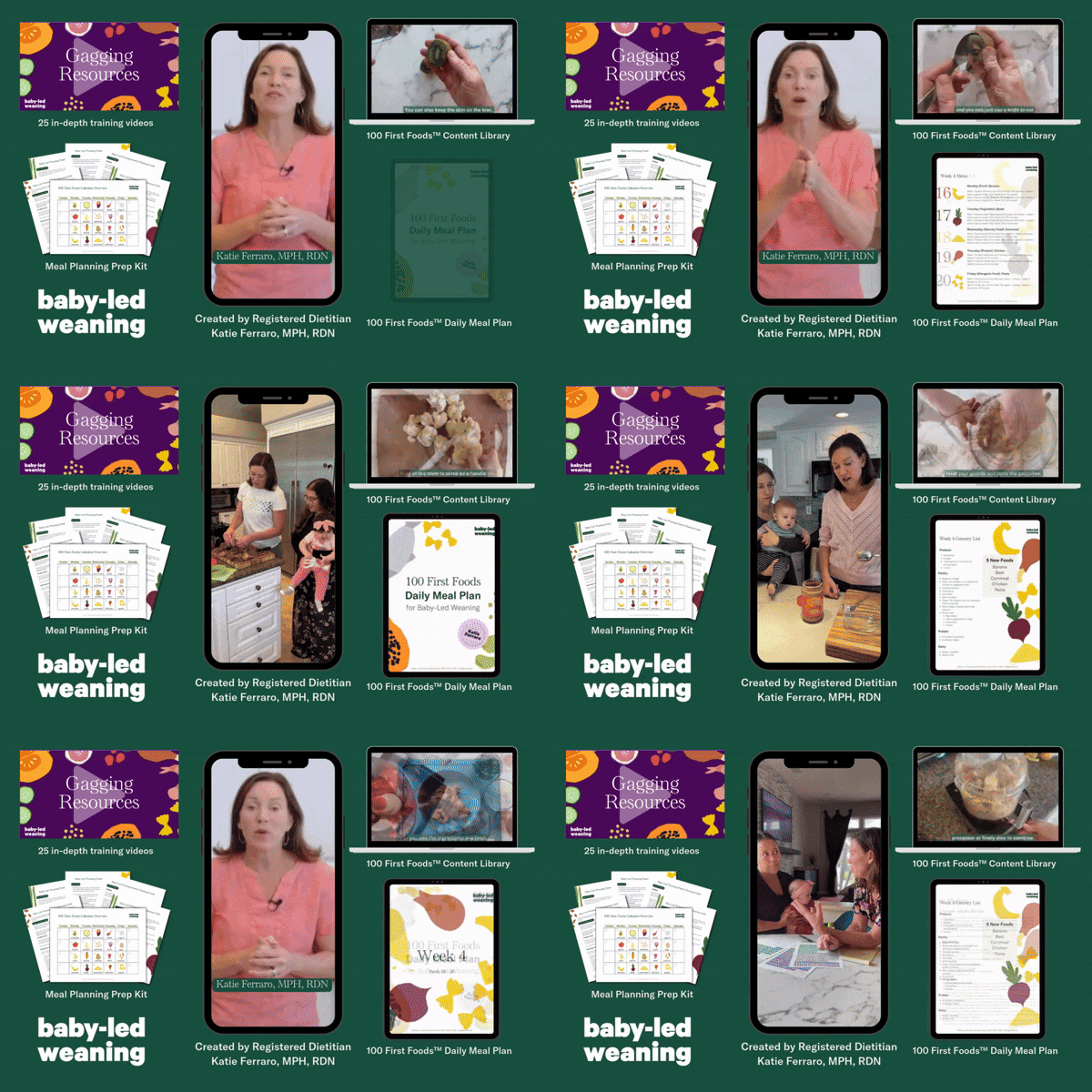
- Baby-Led Weaning with Katie Ferraro program with the 100 First Foods™ Daily Meal Plan, join here: https://babyledweaning.co/program
JOIN NOW AT $50 OFF CODE: BLWPOD50
- Baby-Led Weaning for Beginners free online workshop with 100 First Foods™ list to all attendees, register here: https://babyledweaning.co/baby-led-weaning-for-beginners
Other Episodes Related to This Topic:
- Episode 91 - Pantry Planning for Baby-Led Weaning
- Episode 317 - Trader Joe's: 10 BLW Foods to Buy from Trader Joe's

Latest Episodes


Whisker (1s):
Today's episode is sponsored by Whisker makers of the Litter Robot, the self-cleaning litter box that helps take one more household chore off your plate because as a mom of seven, I know when you're in the baby phase, you've already got so much cleanup, right? You're wiping the high chair and cleaning sweet potato off the floor, getting food out a tiny little neck folds. And when people would talk about getting a cat, the thing that always stopped me was not the cat, it was the litter, the scooping, and the smell and the whole like, wait, I have to touch this everyday situation. Because when you have a baby at home, you are already touching enough questionable things. That is why Litter Robot by Whisker makes so much sense for busy families. It automatically cycles after every use, so you're not scooping every day or handling waste the way that you would with a traditional litter box. And the big thing for me is the no contact benefit Litter Robot handles the dirty work, So you are not building your day around litter box duty. The Whisker app can also notify you about your unit, like when the litter robot has completed a clean cycle, or when the drawer or the litter level needs your attention. I love a system that's quietly doing its job in the background because as parents, like we already have enough tabs open in our brains. Whisker has an automatic litter box model for different types of cat families. So if you have like a single cat home, but it also goes for homes with up to five cats plus bundles that make it really easy to get fully set up while saving money, you can take an additional $50 off bundles with the code weaning when you shop whisker.com/weaning. So that's an additional $50 off bundles using the code weaning when you shop at whisker.com/weaning.
State Farm (1m 40s):
This episode is brought to you by State Farm. You know those friends who support your preference for podcasts over music on road trips? That's the Energy State Farm brings to insurance. With over 19,000 local agents, they help you find the coverage that fits your needs So you can spend less time worrying about insurance and more time enjoying the ride. Download the State Farm app or go online@statefarm.com. Like a good neighbor State Farm is there.
Katie Ferraro (2m 6s):
And when you're there, especially in the yogurt aisle, it can feel so overwhelming because there's tons of different options for adults. But then there's a whole section of baby food yogurt. Well, babies don't need baby food, yogurt. Some of those brands even have added sugar, but they have a lot of misleading marketing claims and they cost more. Babies can eat regular yogurt. We're gonna look for full fat, whole milk, plain yogurt, not vanilla, not strawberry. Those will all have added sugar. But again, your baby can learn how to eat regular yogurt And you don't need to go buy a specialty baby product for this introduction of the Allergen Cow's milk protein. Hey there, I'm Katie Ferraro, registered dietitian, college nutrition professor and mom of seven specializing in baby led weaning.
Katie Ferraro (2m 49s):
Here on the Baby led weaning with Katie Ferraro podcast. I help you strip out all of the noise and nonsense about feeding, giving you the confidence and knowledge you need to give your baby a safe start to solid foods using baby led weaning. Hello and welcome back. Today we're talking about grocery shopping for baby led weaning. If you're just getting ready to start solid foods, I know that the idea of going to the grocery store can feel weirdly overwhelming. But you know, you used to walk in there and think, okay, do we need eggs? Do we need bananas? Do I have coffee? And now you're gonna be standing in the produce section and staring at a rock hair and thinking like, can my baby eat this?
Katie Ferraro (3m 30s):
And how do I prepare it so it's not a choking hazard? And do I need to buy special baby food because there's this whole weird aisle of pouches and purees and what if I buy the wrong thing? And then maybe you end up with an avocado banana, some sweet potato, maybe a pouch, or you panic bought from the baby aisle. 'cause it said organic And it had a picture of a smiling baby on it. So today I wanna simplify this. This episode is not about building a perfect pantry. I did a full pantry planning episode a few weeks ago, so I'll link to that in the description. If you go, wanna check it out. If you're the pantry planning person And you love stocking up, organizing your shelves and having like backup ready, foods ready to go, go listen to the pantry planning episode. Today's a little bit more basic than that. Today we're gonna go to the grocery store and your baby's about to start solid foods.
Katie Ferraro (4m 14s):
So what do you buy and what do you skip? Because Babies can eat so many more foods than we give them credit for, but that does not mean that every food at the grocery store is automatically going to be safe for a six month old early eater. So I'm going to walk you through a very simple first grocery trip, not the whole month. We're not doing all a hundred foods today, just the first few foods to get you started. Plus the categories of foods that I want you to steer clear of, like right from the beginning. And if you want all of this written out for the pantry planner people, you can always download, I've got a free feeding guide called the Baby Led Weaning Pantry Planner. That is the resource for this episode. If you head to baby led weaning dot co slash resources, you can find the pantry planner there.
Katie Ferraro (4m 59s):
It's totally free, it's massive. It's like got a checklist you can check off and see about foods you might already have, and then the ones you don't have, you might consider picking them up the next time you are at the store. So let's hop in. I like to start each of these mini training episodes with a baby led weaning tip of the day. And today's tip is do not grocery shop or try to shop for the whole baby led weaning journey on your first trip. I just want you to shop for the first five foods, the first week of starting solid foods. That's it, five foods. And we're gonna follow my five step feeding framework to help you pick those five foods. So we do a new fruit on Monday, a new vegetable on Tuesday, a new starchy food on Wednesday, a protein food on Thursday, and an allergenic food on Friday.
Katie Ferraro (5m 43s):
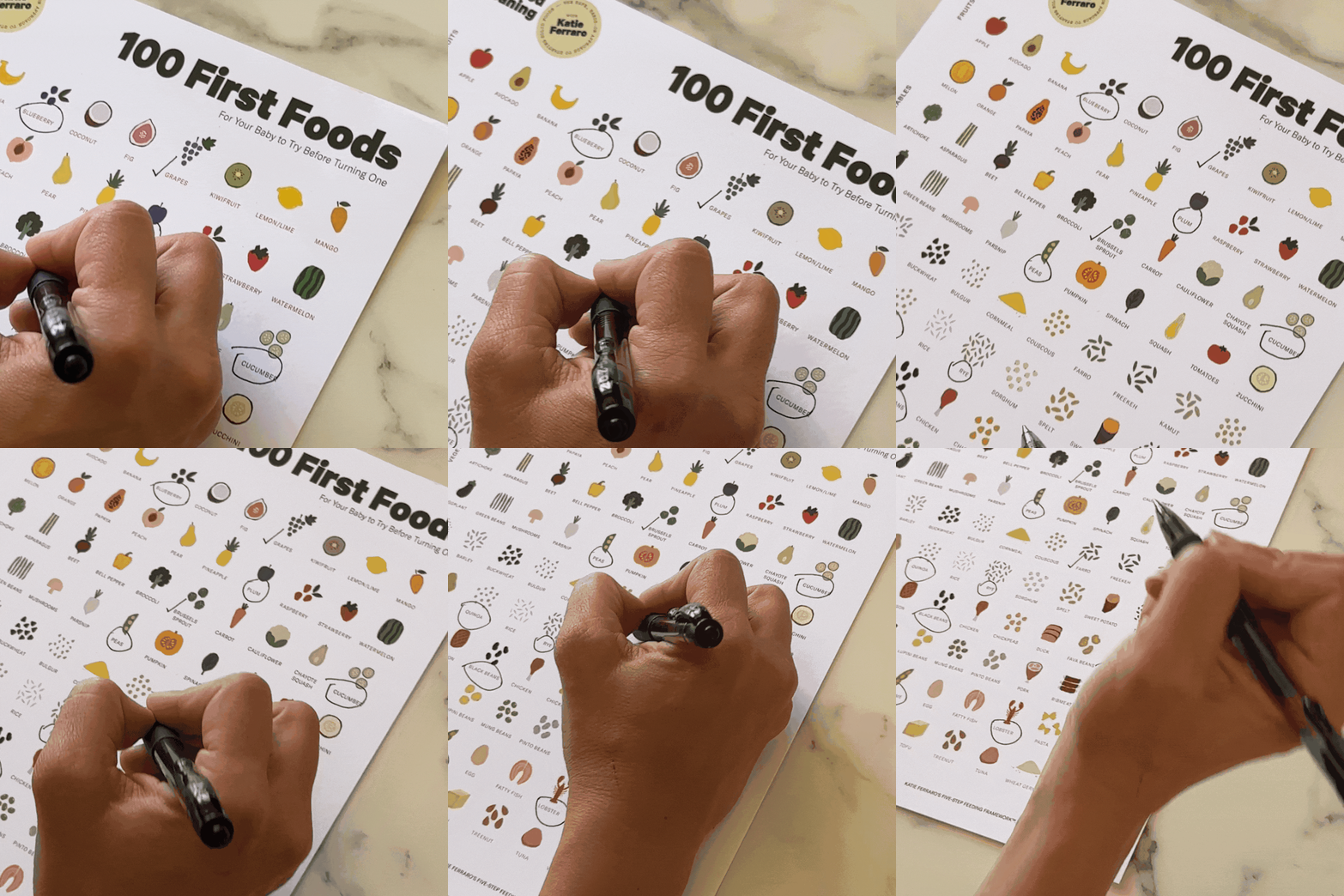
Again, those foods, that's from my five step feeding framework, this is the structure that I use for helping families work towards eating those a hundred First Foods before they turn one. So again, that's a fruit, a vegetable, a starchy food, a protein, and an allergenic food. If you need ideas of those foods, we pull them from my hundred First Foods list. And if you don't yet have a copy of that a hundred First Foods list hanging on your fridge, you can grab a copy of it on my free live masterclass that's called Baby LED WEANING FOR BEGINNERS. This is the best place to start if you're just trying to figure out baby led weaning. It's a one hour video training that shows you how to make all these foods safely. And everybody on that free masterclass gets a copy of my original hundred FIRST FOODS list.
Katie Ferraro (6m 26s):
You can sign up at baby led weaning dot co slash masterclass or click the link wherever you're listening to or watching this. So you are not gonna need 37 tiny glass containers prepped in your refrigerator, and you're not gonna have to go buy all the baby versions of regular food. Okay? We're gonna give your baby a safe, simple, systematic start. 'cause for a brand new eater, that's all you need. All right? Not, you don't need more options, okay? You don't need more ideas. We just wanna clear first step. Alright? So what do you buy? We want to start with foods that can be made soft and long. Okay? So when you're going grocery shopping for those first few baby led weaning foods, look for foods that can do two things. Number one, that they can pass the squish test. So that's if you squeeze a food between your forefinger and your thumb, there should be a little bit of give.
KiwiCo (7m 9s):
Can I be honest? That summer kind of freaks me out, and it's primarily because my kids are home from school, which I love, but also I'm still trying to work and suddenly the days seem so long. Camps are not long enough, and they're super expensive, especially with seven kids. So I'm constantly trying to figure out what can they do that's actually fun, that will keep them busy, and that will not turn into like a screen time free for all. And that is why I've been very grateful for KiwiCo and their summer adventure series. So KiwiCo provides hands-on fun educational kits that come right to your door. So when you give a KiwiCo crate or a kit or a gift set, you are not just giving a toy, you're giving kids the tools to create their own fun. And if you have little kids who are curious, you've got to check out the KiwiCo Make and Play Kit for kids Age two to three years old. I love watching toddlers get totally locked in, right? They start experimenting, they get stuck for a second, then they try again without asking for help. And when it finally works, they have that proud little I did it moment, and then they wanna keep playing. It's the best kind of busy because it feels like play. But they're learning and creating. With the KiwiCo Summer Adventure Series, kids get six ands on projects and they get these kits that come to them over six weeks. The themes are so fun. There's Ocean Games, neighborhood fun, alphabet play, little driver space search, my personal favorite kitchen play. So if you want to build the best summer ever with KiwiCo, get $10 off your summer adventure series at KiwiCo.com/summer promo code weaning. That's K-I-W-I-C o.com/summer promo code weaning for $10 off.
Katie Ferraro (8m 52s):
Okay? Number two, we want the foods to be shaped about the size of your little finger or your adult pinky finger. Okay? So that tells you that that size matters because babies who are just starting out with solid foods, they don't have their pinch or grasp yet. So they can't use their forefinger and their thumb to pick up smaller pieces of food. So we pick, make them longer pieces of food so they can use their whole hand or their Palmer grass to rake and scoop the foods up. Okay? So this is a visual that I hope will make your grocery trip much easier. I want you to look at a food. Can I cook in until it's soft? Can I cut it into a longer strip? If yes, it might be a good early food. If no, it might be a food that we wait on or modify it differently. All right? So let's talk about the fruits. We're gonna start with category one. We do a new fruit on Monday. Fruits often where families feel really comfortable beginning, and that's fine, okay?
Katie Ferraro (9m 35s):
But we're not gonna be doing any raw, hard, crunchy, crispy apple slices here, okay? We're not doing whole grapes. We're not doing little blueberries that roll around on the highchair tray for a brand new eater for your first grocery trip, buy a fruit that's already soft or that can be made easily soft. So my favorite starter fruits are things like avocado, banana, a really ripe pear, okay? You can also do things like peach if it's soft and ripe mango if it's really ripe. But if not all of these fruits, especially pears and apples and mangoes, you can poach them. So I have a whole episode on how to poach fruit that I'll link to as well. But poaching is basically just simmering just below a boil in water till it gets fork tender. So we're basically using almost boiling water to soften the fruit and then cooling it, cutting it into strips, and then letting the baby eat that.
Katie Ferraro (10m 21s):
Okay? So you would take that very ripe soft fruit, cut it into a piece about the size of your adult pinky finger, and offer those to your baby out of a suction mat or bowl. Bananas work very well. We don't cut them into coin shapes though. Rather we cut them into slices about the size again of your little finger or your adult pinky finger. So the point is, the fruit does not need to be fancy. You don't need to go buy a pouch of apple strawberry like spinach, quinoa puree. Okay? Your baby can learn how to eat real fruit. You don't need to put it in a mesh feeder bag, okay? If you're offering it soft and inappropriately, pair prepared strips, then your baby can pick it up and feed it to themselves. Alright? Let's move on to vegetables. This is where some parents sometimes freeze because a lot of vegetables are hard in their raw form, right?
Katie Ferraro (11m 1s):
Carrots are hard. Broccoli stems are hard. Zucchini is hard. That doesn't mean that your baby cannot eat vegetables, it just means that we need to cook them. Okay? So for your first trip to the grocery store, buy vegetables that are easy to soften. Things like zucchini and carrots and broccoli, cauliflower, I love squash. Okay? Green beans. The rule is not all vegetables are safe, but rather that vegetables can be prepared safely. Okay? A rock carrot stick is gonna be a choking hazard, but a cooked carrot strip that passes the squish test and is shaped about the size of your adult pinky finger, that's a totally different food experience. It's the same food, different prep. That's the part that matters. Okay? So if you're brand new And you want the easiest vegetable to start with, I love zucchini. We actually do zucchini on day two of my hundred First Foods Daily Meal Plan.
Katie Ferraro (11m 45s):
So I encourage parents to pick the five foods each week from the hundred FIRST FOODS list that they wanna feed their baby. And I did that for years. And then a lot of parents were like, yeah, but Katie, can you please just tell me exactly which foods to feed my baby? And that's when I created my hundred First Foods Daily Meal Plan. It is part of my program, which is called Baby Led Weaning with Katie Ferraro. This is my signature program that has the hundred First Foods Daily Meal Plan. It's got my content library with all the videos and instructions and recipes on how to make all these foods safe for your baby. So if you want a done for you system for getting your baby to succeed with baby led weaning, check out that program Baby Led Weaning with Katie Ferraro. There's a discount code for $50 off in the description wherever you're listening to or watching this, head to baby led weaning dot co slash program to check it out.
Katie Ferraro (12m 32s):
So as far as the seasoning goes, yes, you can certainly season your baby's vegetables. We just steer clear of added salt, added sugar, or anything that's super spicy that could possibly hurt your baby. All right, let's move on to the starchy foods. This is where a lot of parents immediately think bread. I know bread feels easy. You've got bread at home, your baby can hold it. It seems soft. But I do not love bread early on in baby led weenie. And that's because a lot of commercial breads are very high in sodium, okay? And that soft bread can get gummy in your baby's mouth. It balls up on the roof of their mouth, And it can become very difficult for that early eater to clear from the roof or the sides of their mouth. So let's skip the bread. And I'd much rather see babies learning how to eat whole grain foods like oatmeal when we've got quinoa, amran, taf, there's so many wonderful whole grains that babies can safely learn how to eat.
Katie Ferraro (13m 18s):
Not only are you providing them with carbohydrate, which is an important source of energy, but the baby's also getting a little bit of plant protein there, and they're getting a good amount of iron and dietary fiber as well. So we'll start with something that's pretty easy. A lot of parents can handle oatmeal. So for oatmeal, you do not need to buy special baby oatmeal. Skip that part of the grocery store. If you want to just use regular oatmeal, okay? And you can offer naturally pureed type foods like plain oatmeal, okay? You can cook oatmeal with whole milk if you want to, or breast milk or formula. You can make it with water, although it doesn't taste as good, but still you can honor the self-feeding principles of baby led weaning and still offer foods like that. And we do that using the preloaded spoon approach. I teach you how to do that. Again, inside of My program, BABY led weaning with Katie Ferraro.
Katie Ferraro (13m 60s):
If you wanna check it out, if you're looking at the cereal aisle, one more note, skip the sugary instant oatmeal packets. We're always looking for zero grams of added sugar when we're choosing foods from the grocery store for babies. All right, let's move on to the protein category. This is where parents tend to get a little bit nervous, okay? A lot of us were raised on the idea that babies eat fruits and vegetables and rice cereal, and then they just magically learn how to eat real food. But babies can eat protein foods early, and they should, especially iron rich foods. So by around six months of age, babies start to need outside sources of iron from food. Yes, you're continuing to offer breast milk or formula. That's an important source of nutrition. But the weaning diet can contain iron foods if you know how to make them safely.
Katie Ferraro (14m 40s):
So we've got plant-based iron protein foods, and we've also got animal-based protein foods. So if you look at my hundred First Foods list, there are 20 protein foods on there, 10 are plant protein foods, and 10 are animal foods. So if your family eats animal foods, I would really encourage you to offer meat. I know in my hundred First Foods Daily Meal Plan, we do meat as a first protein. Day four, we're doing lamb. And a lot of families are like lamb, that's so weird. It's not that weird. If your family already eats meat, I can show you how to make a leg of lamb roast safe for your baby to eat. And it gives parents so much confidence to make a variety of different types of meat, some that they eat every day. Some families are trying new types of meats, lots of families are trying different types of plant proteins as a result of this program.
Katie Ferraro (15m 22s):
But when it comes to choosing the meats, the fattier, the cut of meat, the better. Because when the you're cooking that meat, the protein strands get lubricated by the fat, and that warmed up meat what we're offering to the baby, it makes it easier for them to swallow it. So we also always offer a lot of no salt broth and no salt sauces that go along with these recipes so that the baby has additional moisture, which makes it easier for them to swallow. And you might be thinking, well, my baby doesn't have any teeth yet, so they can't eat meat. But your baby does not need teeth to eat meat. Your baby needs meat that's soft, moist, and properly prepared. So we've got a lot of plant proteins on the list. Things like lentils and beans or tofu. With the canned beans, we're always looking for no added salt or low sodium versions.
Katie Ferraro (16m 2s):
If you can't find that, remember, if you rinse your canned bean products underneath the faucet, it reduces the sodium by about 30%. Now, we're not just gonna put little black beans out on the bowl for your baby, especially your earlier eater, because again, that's a choking hazard and then can't pick them up. So we've got lots of ways to modify them and make them into fritters, into patties, into burgers that we then cut into strips that the baby can pick up and feed to themselves. Hey, we're gonna take a quick break, but I'll be right back. All right, let's move on to the fifth category of foods at the grocery store, the allergenic foods. If your baby's ready to start solid foods, you do wanna work toward offering allergenic foods early and often.
Katie Ferraro (16m 48s):
And I know that this can feel intimidating. You're not alone. If you're thinking, wait, I'm barely comfortable with avocado, and now you want me to do an egg? Yes, but we're going to do the allergenic foods in a safe and systematic way. So the top nine allergenic foods are the nine foods that account for about 90% of food allergy. That's egg and milk, peanut tree nuts, fish, shellfish, wheat, soy, and sesame. And if you're following my hundred First Foods Daily Meal Plan in the first nine weeks, we get through all of those allergenic foods. So not only is your baby having them in a manner that's developmentally appropriate for their age and stage, but then the meal plan continues to reintroduce those proteins. 'cause it's not just a one and done thing.
Katie Ferraro (17m 29s):
It's not like you do shrimp one time and you're like, oh, cool, my baby's not allergic to shellfish. You have to continually be reintroducing those proteins. So let's go back to the egg. Eggs are a very easy first allergenic food to start with. Actually start with cow's milk protein in week one of my program. But a lot of families, if the baby's had formula, cow's milk is the base of formula. So you know your baby's not allergic to cow's milk, So you might wanna start with egg. It doesn't matter which allergenic food you start with, by the way. So egg's an easy one to do. I love to do fried eggs. You break the yolk into the white. The yolk has all of the nutrition, like the B vitamins and iron and fat. But the white is where the potentially allergenic part is. So if we combine the white and the yolk together, cut it into strips, the baby's gonna hopefully be getting a little bit of the benefits from both the white and the yolk.
Katie Ferraro (18m 16s):
All righty. So when it comes to choosing dairy foods, if you're looking especially for your exclusively breastfed baby, this will be the first time they've had cow's. Milk protein. I love to do yogurt. We wanna do full fat, whole milk, plain yogurt. You don't need to go buy baby food, yogurt. It's kind of asinine because babies can eat regular yogurt. You don't need vanilla, you don't need strawberry. Those all have added sugar. Your baby doesn't need their yogurt to taste like dessert. You can offer it off of that preloaded spoon and the baby feeds themselves. All right? There's a lot of other nuances to the allergenic foods, but those are a couple easy ones.
Columbia (18m 48s):
You can't reason with the sun. Trust us, we've tried this summer, it's time to put that angry ball of fire on mute. Columbia's omni shade technology is engineered to protect you from the sun's harsh ray that can burn and damage your skin. The sun is relentless, but so is our gear. Level up your summer@columbia.com to spend more time outside and less time slathering on Allo lotion. You're welcome. Columbia engineered for whatever That you can start with.
Katie Ferraro (19m 18s):
Okay? If you wanna start with shellfish, good on you. I've got some great ideas for how to do that inside of my program, but we do find pairs just tend to start. And also, egg, milk and peanut are the three most common pediatric food allergies. So sometimes those are just the easiest ones to start with. Alright, what do we skip? Well, you don't even need to go walking down the baby food aisle because you can almost skip the entire thing, right? I mean, it is marketed beautifully. Okay? There's tiny labels, there's organic claims, there's cute little babies, sometimes animals on the pouches, and it'll say on a pouch something like spinach, pear, kale, super food, brain boost or whatever. But your baby does not need expensive pouches to learn how to eat. Okay? From a developmental standpoint, sucking purees out of a pouch doesn't teach your baby how to bite to chew, to move food around their mouth or to self feed.
Katie Ferraro (20m 6s):
And if you think about it, your baby's not even interacting with the food, right? If you make your baby a little piece of spinach quiche and cut it into strips that they can pick up and feed themselves, they're exploring with that food. They're smelling it, they're sniffing it, they're touching it, they're tasting it. That is very different from if they're squeezing a sugary liquified puree into their mouth out of a pouch with a plastic cap. Okay? And a lot of those pouches are just watered down blends of the same fruits and vegetables that your baby can certainly learn how to eat in real food form from the time they're six months of age. So no one's saying that you're a bad parent if a pouch has ever entered your house. Pouches are wonderful, especially for travel days or if you're off your schedule or in a pinch.
Katie Ferraro (20m 47s):
We're all doing our best here. But if you're asking yourself, what do I need to buy to get started with baby led weaning pouches are not on that list, skip the pouch session because your baby can learn to eat real food. Alright, let's talk about What to Skip next. Added sugar, I mentioned we're looking for zero grams of added sugar on the label for babies. You don't need to buy sweetened yogurts or cereals, teething biscuits that oftentimes have added sugar. There's all these silly toddler snacks that have added sugar, or a lot of the brands are catching on and realizing that parents are starting now to look at sugar. So they've taken added sugar out, but some of them will then have higher levels of sodium. Or if you look at it, there's just not very much nutrition in there if it's just rice flour. And by the way, most major bodies recommend against the regular use of rice foods for babies because of the potential for arsenic toxicity.
Katie Ferraro (21m 33s):
Like why are we just feeding our babies rice puffs? That's not real food. Okay? So I know label reading can feel a little overwhelming. It definitely gets easier. A couple things to look out for. Zero grams of sugar on the added sugars line is important for foods that we're feeding our baby. The American Academy of Pediatrics recommends no added sugars for children up until age two when it comes to other things to skip, try to skimp on the sodium. Now, there's no hard and fast rules about how much sodium babies can or quote unquote can't have. But my general rule of thumb is that I look for less than a hundred milligrams of sodium or less in a packaged food that I'm gonna serve my baby. And that's generally because most of the foods that you're offering from baby led weaning don't come out of a package. And if they do, the amount of sodium posted on the label is for an adult portion and your baby's certainly gonna eat less than that.
Katie Ferraro (22m 18s):
So there are sometimes food that they don't eat very much of. But a hundred milligrams of sodium or less is kind of a good rule of thumb. For example, we were talking about bread earlier. You're hard pressed to find a commercially prepared bread product that's gonna have less than a hundred milligrams of sodium. That's why we go looking for other whole grain options that have less preservatives, including less sodium. So you don't need to be perfect, but you do just need to be aware And I would say stick to looking to added sugar and sodium on the labels. A couple other things to skip at the grocery store. Anything that's hard, crunchy, small pieces of food. These are the classic choking hazards. Things like whole grapes. We can do grapes cut and quarters later on once your baby gets their penta grasp.
Katie Ferraro (22m 58s):
Blueberries we do later on when we smash them with our thumb and your baby can actually pick them up. But we don't do any raw, crunchy, crispy foods like raw apple chunks or raw carrot tricks. We don't do popcorn or whole nuts, chips, no chunks of hard cheese. We don't do thick globs of nut butter. We need to thin those out if we're gonna offer them to a baby. So these are not foods that are ideal for a brand new eater. Some of them we can modify later. But the grocery store, when you're there, the question's not like, can my baby ever eat this food? I just want you to think like, can my baby safely eat this food right now? 'cause you know your baby best And you know where they're at developmentally. A few other things to skip, especially when it comes to dairy, is we're looking for full fat dairy for children up until age two.
Katie Ferraro (23m 40s):
So babies still need fat in the weaning diet. They get a lot of fat from breast milk and formula. But as we start the weaning diet, we want to continue to offer fats so we steer clear of reduced fat, non-fat, or low fat dairy products. Remember, we don't do any fluid milk in place of formula or breast milk until after age one. But once your baby turns one, if you wanna keep breastfeeding, wonderful, do it if that works for you and baby. But if you wanna switch off of formula, and most families do, you should, at one year of age, you can switch to whole milk cow's milk, okay? But it's perfectly fine to use cow's milk as ingredients in other foods that you're making for your baby as part of the baby led weaning diet. Again, we just don't do it in place of the breast milk or the formula. Alright, so what is your first grocery list actually look like?
Katie Ferraro (24m 22s):
Let's pull this all together. If I were sending you into the grocery store for your baby's very first week of baby led weaning, here's how I would simplify it. You do not need a cart full of baby snacks. You need five foods. Get a fruit. Try avocado or banana for a vegetable. I love to do zucchini for a starchy food. Do oatmeal or sweet is an easy one for a protein. Get yourself a meat if that's what your family eats. I love a leg of lamb roast, but you can do dark meat of chicken. You can do if you're doing beef. I love beef chuck roast or beef brisket for the allergenic foods. Pick up some eggs. That's an easy one. All right, notice what's not on that list. No pouches, no baby cookies, no expensive baby yogurt. No, just add water, baby meals, no tiny puffs that are marketed as being developmentally magic.
Katie Ferraro (25m 7s):
You're buying real food, you're preparing it safely, and then you're gonna offer it to your baby in a way that supports self feeding, that is baby led leaning. Okay? So I know there are some of you that are like, I can't do this. I don't know what foods to feed. Don't forget you got access to that hundred First Foods list. Put it on your fridge and just start checking it off. The way the hundred First Foods approach works is your baby eats five new foods a week, eats 20 foods a month, and in five short months, your baby had a hundred foods. Okay? And then when you pass into toddlerhood, your baby has a hundred foods that they can eat, and all toddlers are gonna develop some degree of picky eating. If your baby only has eight or 10 foods And you lose those to picky eating, that becomes a really challenging child to feed, right?
Katie Ferraro (25m 49s):
Those are the children that end up in feeding therapy. But if your child has a hundred foods they can eat And you lose eight or 10 of them to picky eating, it's no big deal because you still have 90 or 92 foods that your baby knows how to eat. So again, if you wanna grab that a 100 First Foods list, it's on the free online masterclass called BABY LED WEANING FOR BEGINNERS. And if you're ready to get started making your baby all of these foods in a done for your program, taught by a registered dietitian me with all of the instructions on how to make the food safe for your baby's age agent stage, check out My program BABY led weaning with Katie Ferraro. The discount code is in the description that's at baby led weaning.co/program. And if you don't have the pantry planner yet, one more freebie before you head to baby led weaning dot co slash resources, And you can download the pantry planning feeding guide for baby LED weaning packed with tons of checklists So you can see what foods you already have in your house that work for your baby.
Katie Ferraro (26m 41s):
Again, that's at baby led weaning.co/resources. I'll put all of the resources from today's episode on the show notes@blwpodcast.com/111, and a special thank you to our partners at AirWave Media. If you like podcasts that feature food and science, and using your brain, check out some of the podcasts.
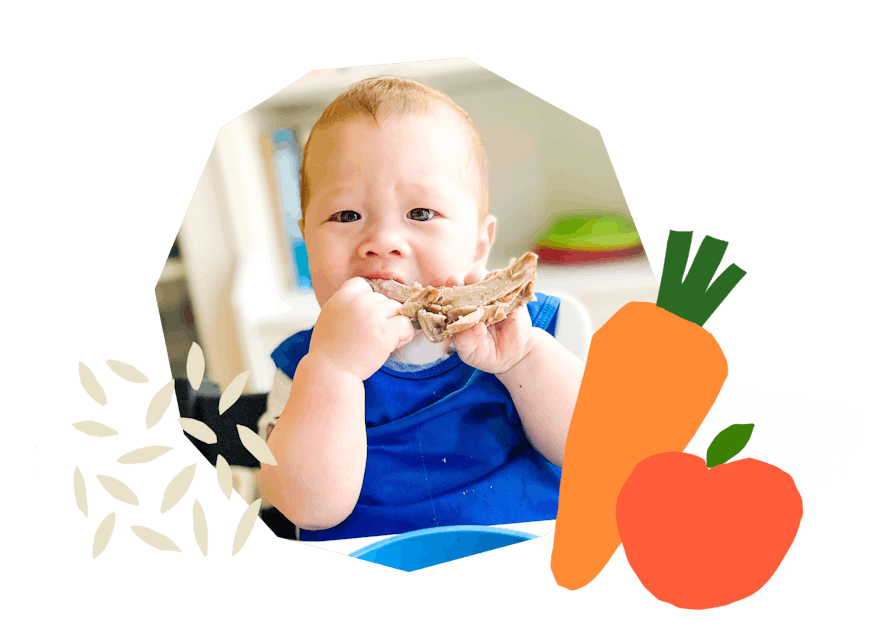
The Program Baby-Led Weaning with Katie Ferraro
A step-by-step digital program for starting solid foods safely and navigating the original 100 FIRST FOODS™ meal plan with baby-led weaning.
 EXPERT-LED, PROVEN APPROACH TO EATING REAL FOOD
 CONCISE VIDEO TRAININGS TO MASTER BABY-LED WEANING
 100 FIRST FOODS DAILY MEAL PLAN WITH FOOD PREP VIDEOS
Baby-Led Weaning for Beginners Free Workshop
Is your baby ready to start solid foods, but you’re not sure where to start? Get ready to give your baby a solid foundation to a lifetime of loving real food…even if you’re feeling overwhelmed or confused about this next stage of infant feeding.
Get baby-led weaning recipes and tips delivered to your email inbox.