
Podcast
#74: Baby Behavior at Mealtimes: What the Science Says with Tina Payne Bryson, PhD
In this episode
- Why it's basically impossible to spoil your baby...so don't worry that your doting or your preferred method for starting solid foods is going to spoil your baby. It won't!
- How to connect and redirect when our babies are playing with or dropping food. Plus Tina also covers how these behaviors change during different stages of infancy.
- How baby-led weaning helps babies develop “interoception” - or the idea of what's going on internally...so they're learning how to recognize & respond to their hunger cues.
Episode Description
What is your baby’s behavior at mealtime telling you? Is it possible to spoil a baby by feeding him too much? Can babies even exhibit “bad” behavior? In this episode author, child development and parenting specialist Tina Payne Bryson, PhD is joining me to break it ALL down when it comes to your baby’s behavior at mealtimes - diving DEEP into what the science says!
Tina is the co-author of well-known parenting books such as The Whole-Brain Child and No Drama Discipline (...aka the BIBLE when my quadruplets were toddlers and I had NO idea how to compassionately discipline!) I love Tina’s science-based approach to tackling topics and she’s covering a TON of baby behavior in her new book The Bottom Line For Baby.
Tina is walking us through a TON of positive parenting techniques, like how to react when your baby starts throwing food, responding to family members or friends who question your decision to do baby-led weaning and how to establish boundaries when baby starts pushing your buttons!
About the Guest
- Dr. Tina Payne Bryson speaks internationally to parents, educators, camps, and clinicians. She is the author of BOTTOM LINE FOR BABY and co-author (with Dan Siegel) of the two New York Times best-selling books THE WHOLE-BRAIN CHILD and NO-DRAMA DISCIPLINENO-DRAMA DISCIPLINE, along with THE YES BRAIN and THE POWER OF SHOWING UP. (Click any of the book images below to learn more and purchase.)
- Tina is a psychotherapist and the Founder/Executive Director of The Center for Connection in Pasadena, California. An LCSW, she graduated from Baylor University and earned her Ph.D. from the University of Southern California, where her research explored attachment science, childrearing theory, and the emerging field of interpersonal neurobiology. Dr. Bryson has an unusual knack for taking research and theory from various fields of science, and offering it in a way that’s clear, realistic, humorous, and immediately helpful.
Links from this Episode
- Tina Bryson’s webpage with all of the resources she mentioned in this episode is located at www.tinabryson.com.
- THE BOTTOM LINE FOR BABY - Tina’s newest book where she delves into the science and data behind common parenting questions is on Amazon here.
- THE CENTER FOR CONNECTION - Dr. Bryson’s multi-disciplinary counseling practice can be found here.
- Tina’s new podcast BABY IN THE HOUSE with Phil Boucher, MD where she covers the existing research about parenting topics to help you make the best decisions for your family and your baby. The podcast series is here.
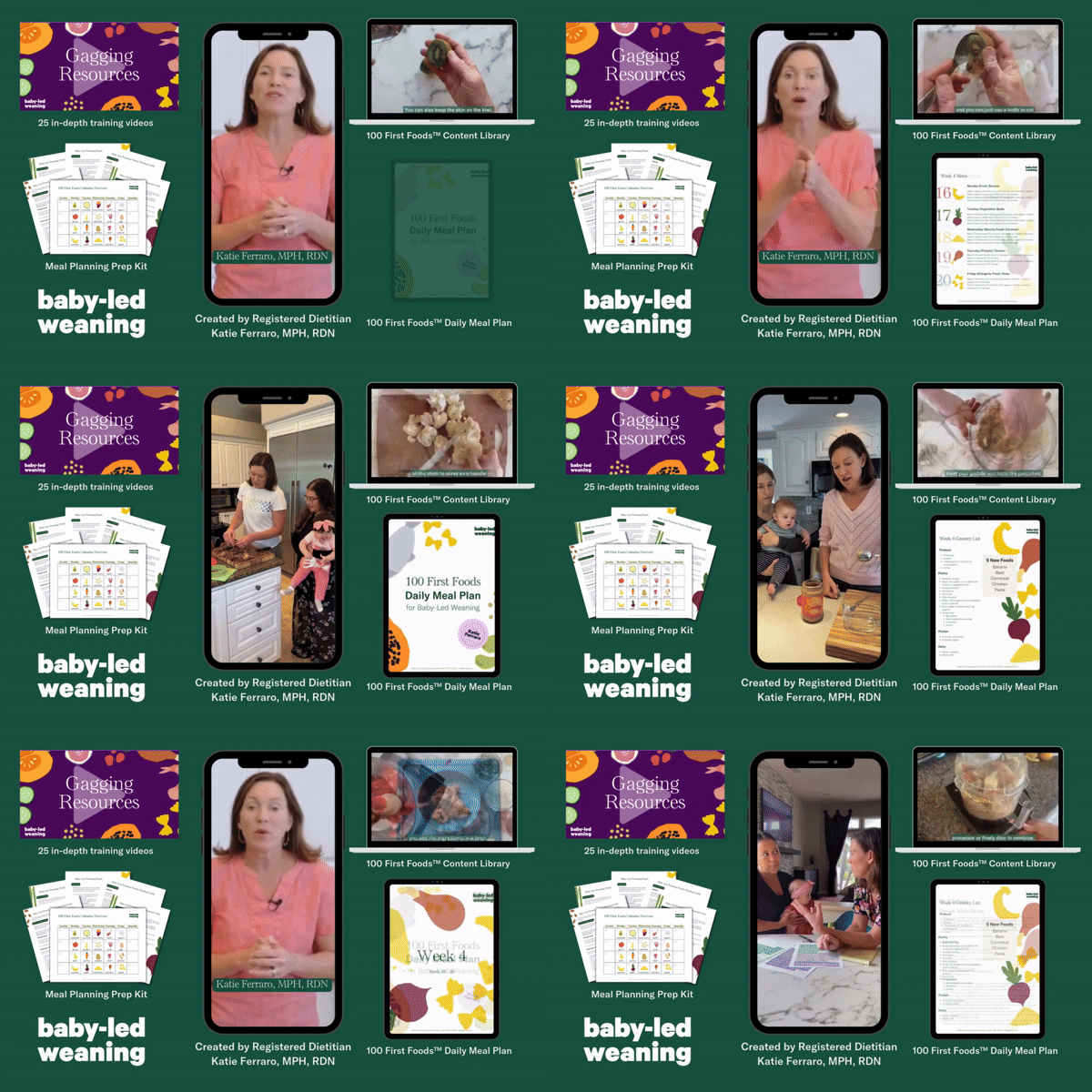
- Baby-Led Weaning with Katie Ferraro program with the 100 First Foods™ Daily Meal Plan, join here: https://babyledweaning.co/program
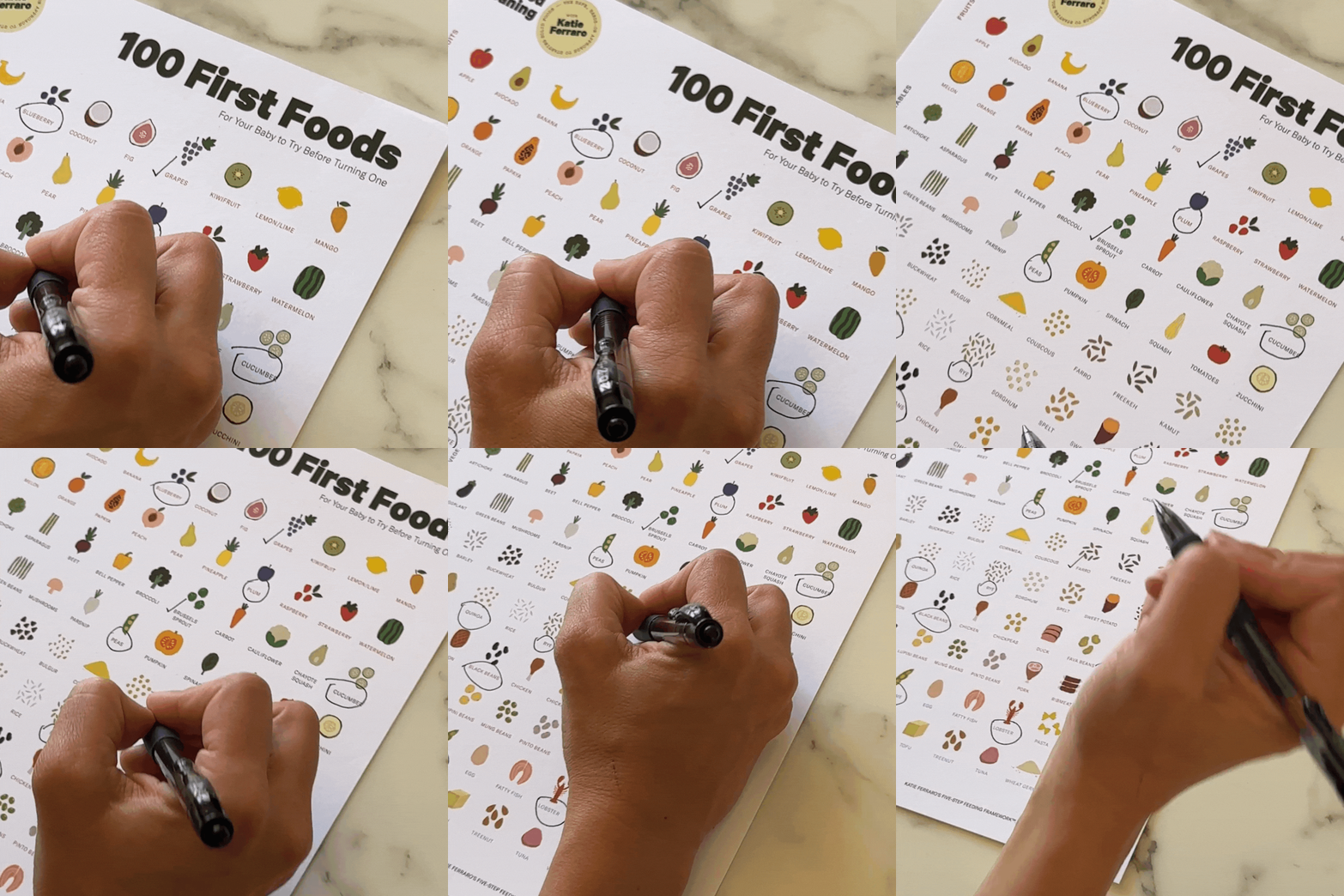
- Baby-Led Weaning for Beginners free online workshop with 100 First Foods™ list to all attendees, register here: https://babyledweaning.co/baby-led-weaning-for-beginners
Click here for episode transcript
TIna Payne Bryson (1s):
So instead of us doing something to our child, like in a punitive way so that they have a negative experience, so they stopped doing it. We really want to thinking about what we can do for our children to help them build those skills as development unfolds.
Katie Ferraro (15s):
Hey there I'm Katie Ferraro, registered dietitian, college nutrition professor and mom of seven specializing in baby-led weaning here on the Baby-Led Weaning Made Easy podcast. I help you strip out all of the noise and nonsense about feeding, leaving you with the competence and knowledge. You need to give your baby a safe start to solid foods using baby-led weaning. Welcome back to another episode of the Baby-Led Weaning Made Easy podcast today. We're talking about baby behavior at mealtimes. What does the science say today? I'm being joined by Tina Payne Bryson.
Katie Ferraro (56s):
You guys might know her because she's written a lot of amazing parenting books. So I remember the first parenting book I ever read. The whole brain child is her book. She also wrote no drama discipline, which was like my Bible when my quadruplets were toddlers. And I had no idea what to do from a developmental and discipline standpoint, but she's recently written a new book called, The Bottom Line for Baby. And she takes a science-based approach to looking at lots of different topics that we as parents wonder about things like baby-led weaning introduction of solids she talks about organic foods, extended breastfeeding. So today what had asked her to do is to come on the podcast to talk about behavior, because so often we know what to feed our babies and you guys know when and how to do that safely, but what do we do when our babies start exhibiting different behaviors that are different than they used to do or are new to us.
Katie Ferraro (1m 41s):
And we're not sure if they're good or bad and can babies have bad behaviors? Can you spoil a baby? She's going to answer all of your baby behavior questions. She gets her name is Dr. Tina Payne Bryson. She speaks internationally to parents and educators, clinicians. She runs her own clinic. She has a PhD, and then she's a licensed clinical social worker. She's got a background in child rearing and parenting. So she's a child development and parenting specialist. And today she's going to be talking all about your baby's behavior. So here we go with no further ado, Dr. Tina Payne Bryson talking all about baby behavior at mealtimes. All right, well, hi, Tina, thank you so much for joining us today on the podcast.
TIna Payne Bryson (2m 19s):
Thank you so much for having me, Katie, you have such an engaged group of people that listen. So I can't wait to visit with you about some of these ideas
Katie Ferraro (2m 27s):
Oh, I have been dying to talk to you since we scheduled this interview, because so your book, the whole brain child was the first parenting book that I read when my daughter was born six years ago. So I am familiar with your work since I myself have been a parent. And I know your background and the research that you've done in the parenting sphere is really widespread. So if you can, for audience, who's not familiar with your work, could you give us just a brief overview of your professional, possibly even your personal background and how you came to specialize in this area?
TIna Payne Bryson (2m 53s):
Yeah. So my most important part of my bio is that I'm a mom to three boys. And so obviously they have been such an important part of my work and I never thought I would ever write books that wasn't ever a plan. I wanted to teach high school English and I loved teaching. But what was happening is that once I started learning this field called interpersonal neurobiology, where we look at how the experiences we have and particularly the relational experiences, we have impact how the brain develops. And I was like really immersed in the science. I was like, oh my gosh, parents and teachers need to know about this. So I'm a clinical social worker. So I was doing clinical work with kids and I was doing a lot of parenting consulting and working in schools, doing child development stuff.
TIna Payne Bryson (3m 39s):
And as I was learning the science, I was applying it at home and it was shifting how I thought about my kids' behaviors. And as I started sharing it with other parents, I was like, oh my gosh, this stuff has to get out there. So that's how it came to be. As I was studying this interpersonal neurobiology with my coauthor, Dan Siegel, and then I was sitting in Los Angeles traffic on the way home and I had babies at home. I was like, wow, how can I apply this to their development now? And it was really, it's pretty revolutionary stuff that helps us understand development better. So that's how the books came to be. So I have an interdisciplinary clinical practice with occupational therapists and educational therapists, speech and language assessment, and mental health that I started called the center for connection to really help us chase the why to get to the source of when kids are having a hard time.
TIna Payne Bryson (4m 26s):
I feel like behavior is always communication. And so instead of trying to extinguish behavior and just make it go away, we really want to ask deeper questions and ask, why is this happening? And what is the kid telling us about what supports they need or what skills they need to build. So I started that clinical practice and then I also work part-time in schools and I do a lot of speaking and of course writing,
Katie Ferraro (4m 47s):
Okay, who sits at LA traffic and is like, how could I apply this to my parenting journey? But I love it. Oh, I just finished your book, The Bottom Line for Baby. So this is from sleep training to screens, thumb, sucking to tummy time, what the science says. And I'm so excited to speak with you because I know you have a PhD. You've done research, you're working as a practitioner, so important for parents to hear from credentialed experts in this field. And so when it comes to this particular audience, we talk a lot about feeding, but I love that your background can help us learn more about the behavior of our babies. Cause I think our parents have down like what the babies need to be eating and why from a nutritional standpoint, they need to be eating. But when it comes to like the, how we're raising our kids and behavior stuff, parents are so confused.
Katie Ferraro (5m 27s):
So I remember something I was confused about a lot when I had my first child was this notion of spoiling a baby. Like people I know in certain cultures will sometimes say things like, oh, you don't want to breastfeed a baby. Cause that actually ends up spoiling the baby. And so can we start there with regard to feeding? Is it possible to spoil a baby?
TIna Payne Bryson (5m 43s):
It is not possible to spoil a baby. And I will tell you that based on over 50 years of cross-cultural research and pretty much all current science for the last several decades, well, let's talk about this of spoiling. I actually kind of hate that word. It's an important word to use because we all know what we mean around that. That's a piece of shared language that we don't really have other better language, but maybe you and I should make something up Katie around that.
Katie Ferraro (6m 10s):
I love making up words,
TIna Payne Bryson (6m 13s):
But here's the deal. When we talk about spoiling, what we're really talking about, what parents really are fearful about is that they're going to have a child that's indulged that doesn't know how to put the brakes on that doesn't have empathy or doesn't think about others. You know, these are sort of character issues that parents are talking about. And this is over 60 years of research has shown really two main dimensions. When we think about our approach to discipline and one has to do with how warm and sensitive and nurturing and responsive we are. And the other is around boundary settings. So in the bottom line for me to talk about nurture and structure, those are sort of those two, two dimensions.
TIna Payne Bryson (6m 54s):
And the research is super, super clear that no matter how old your child is, but particularly when they are infants, there is no possible way to spoil a child by nurturing them too much by holding them or giving them physical affection by being emotionally responsive, even in giving them attention, attention, by the way is a need. If you think about the basic function of how attention between parent and child works back from our early days, if you, as a young person who is vulnerable, do not have your parents' attention, you are much more likely to get eaten by a predator.
TIna Payne Bryson (7m 34s):
So attention is a need like food and water and sleep. So when someone's like, oh, she's just trying to get your attention. Really that'd be like saying your, oh, your baby's just trying to get water sometimes. Like, it's just a really silly concept actually. So, and in fact, because it's a need and you all know this from watching your children, because it's a need. If we don't respond, if we ignore our children, they actually have to have bigger and bigger behaviors in order to get our attention. So actually, if you're like, oh, did that hurt? Or you're really wanting that, that doesn't mean you're going to give it to them. But when you acknowledge what they're saying to your communicating to you, then they don't have to keep amping it up.
TIna Payne Bryson (8m 15s):
They can really go, oh, she gets what I'm trying to do here. Okay. So you cannot spoil a baby or any child at any age by too much love, affection, attention, responsiveness, emotionally where spoiling can come into effect is around the boundary setting or structure dimension. So this is really where we set boundaries for kids. Now we know that parents that do the command and demand kind of parenting where we say, it's my way or the highway children should be seen and not heard. I don't want to hear about it. If you're going to cry, go to your room, a kind of a more rigid top down approach. That's much more about power and control. Those kids actually don't have better behavior. They just learn to hide their behavior better.
TIna Payne Bryson (8m 55s):
And they go to their peers instead of their parents, when things go wrong. The opposite of that is a more permissive approach to parenting where you're like, well, you know, the only rule is that you have to want it. And if you want it, you can have it right. Or you know, where you just really don't have any boundaries. And neither of those that I just talked about lead to great outcomes for kids. What we know from the research is that this more authoritative kind of parenting where the parent is confidently and competently saying, I've got you, you are safe. I'll figure this out. We will figure this out together, where we set boundaries, where we say, I know you don't want to get out of the bathtub and it's time to get out.
TIna Payne Bryson (9m 35s):
I will help you out. Right? Or, you know, like, I love to tell a story about my little guy who didn't want to get out of the bathtub. It was screaming and yelling. And, and I say, it's time to get out. You can either get out by yourself or I will help you. And he wouldn't get out. And so as I lift him out of the tub, so I'm holding a boundary and having boundaries helps our kids feel safe and know that we are predictable. It doesn't have to be rigid. We can change our minds. But basically most of the time we're, we're holding a boundary. So as I'm lifting him out of the tub, I'm also not only holding that boundary, but I'm also being fully, emotionally responsive and nurturing too. So I say, you're so disappointed that bath time is over. I'm right here with you. If you need to cry for a little while, that's okay, I'm right here.
TIna Payne Bryson (10m 15s):
So I'm saying no to a behavior, but I'm saying yes to his experience and his feelings letting know, I believe he can handle big feelings. I can handle his big feelings and the feelings and negative feelings. Aren't too scary. We can handle this. So we can't spoil a baby with too much. The nurture love stuff. What we want to do is as kids start pushing boundaries, we want to start thinking about developmentally appropriate ways to hold boundaries and set appropriate boundaries. Now I know I've been going on a long time and I'll pause. And just a second, I want to say one more thing about this. The key is developmentally appropriate and that has so much to do with our, the meaning that we make about our kids' behaviors.
TIna Payne Bryson (10m 58s):
So if your child is seven or eight months and throws the green bean across the room, or just starts dropping food, and the parents meaning-making of that behavior is she's defying me. She's disobeying me. I told her not to drop any more food and she dropped food. I have to nip this in the bud. And then you, you assume it's that your child is disobeying you. That is not developmentally appropriate for your child to even have the neural capacity, to be manipulative like that, or to listen and make a decision about obeying or disobeying. So I think it's really important that we understand developmentally the meaning of our children's behaviors and not take it personally or assume that it's necessarily disobedience in the baby.
Katie Ferraro (11m 44s):
Okay. So let's talk about, you said they come to an age where they start pushing your boundaries. And so our audience, a lot of times they have a six month old baby who they're just learning how to eat. And then as they get to be a little bit older, like, okay, is that baby doing things to get my attention at 10 months of age when they're dropping food? And I know they're trying to get your attention that you can't over love a baby, but you're generally not loving your baby to death when they're dropping your food on the floor at 10 months of age. So what's that age when they do start pushing those boundaries, that you should just maybe be aware that this is going to be coming down the pipe.
TIna Payne Bryson (12m 14s):
Yeah. It was funny. You know, this book is really focused on the baby years and, and my editor was like, well, why do you need to have a discipline section? Because babies really don't, we're not really disciplining babies. Are we? And I start by saying, okay, well, let's define discipline. Discipline is about teaching and building skills. So we're doing that from the very beginning. And by the time our kids are six months or so they often are testing boundaries. And I don't say that in a way where, I mean, they're like, I'm going to go against what you just said. I think they're trying to figure out how the world works. It's really pretty miraculous. So you might say, oh, that's hot, but they might reach for it anyway. They might not know what that means, or they want to see what happens because they are little scientists when they do touch it.
TIna Payne Bryson (12m 57s):
Right? So we have to protect them sometimes from things like that. But when we say, you know, let's keep our food on the table, right? We say something like that. And then your kid drops the food. This is a moment where it is it's, it's what can be seen as either oppositional behavior, or it can be seen as being an experiment and testing gravity or, you know, those kinds of things. It varies for every kid in terms of when that exactly happens. But typically by six, seven, eight months, you are seeing babies that aren't following your directions, but we have to remember, they may not be following your directions because they may not be processing what the meaning of that is, or they might, but they don't really understand in the way that we think we do, where they really are.
TIna Payne Bryson (13m 41s):
Just what will, what will happen? You know, what will happen if I drop this again? And so again, this is where we really want to tune in and understand not just the behavior, but the mind behind the behavior where we're looking at, what is the meaning of this behavior for my child at this moment in their development. So, and we can still hold a boundary. Like if you say, you know, if your child starts dropping food, like crazy, you can say, oh, it looks like you're done eating, right? And then you can take the tray away. Or you say, you know, you moved to a different kind of thing where they're not in the high chair. Maybe they want to continue to eat, but maybe they need to move their bodies a little bit. We want to do that obviously safely. We don't want kids running around with food for choking hazards, but we're talking about like a seven month old now is eating, you know, off the floor, which by the way, the research shows that you don't have to over sanitized your child's environment, that if they eat off the floor or you clean, you lick their pacifier clean.
TIna Payne Bryson (14m 34s):
It actually reduces their risk of allergy and eczema. So it's fine. It's fine. If they even eat food off the floor.
Katie Ferraro (14m 39s):
There you go, guys, you heard it here. The germ theory is real. And even there's a lot of cultures where they do eat on the floor and we try to be sensitive to that. But of course, having your baby seated in the high chair, especially when they're trying new foods, especially on when the risk of choking is higher is important. So I appreciate that clarification that sometimes people, I, don't not saying your editor, but it'd be like babies or babies. And when we're looking at, you know, a six month old baby and how they're behaving and interacting with you when they're just starting solids versus at eight months, when they really get the hang of it versus 10 months, when they really do start pushing your buttons and seeing what they could get away with, and actually start eating a little bit less than they even did a month or two earlier, it can be really confusing to parents. So I appreciate you delineating between the different ages because babies aren't all the same for the entirety of infancy.
Katie Ferraro (15m 24s):
It really does change, especially in that second six months of life.
TIna Payne Bryson (15m 27s):
And particularly if your baby was born prematurely, you know, their developmental timing may be different as well. And I think it's so important to, you know, most parents do not have a discipline philosophy. They just don't. And it's important too, to know that you and your co-parent do not have to be on the same page around these questions. It's nice to be in the same book, but it's actually really beneficial for kids when parents do things a little bit differently because they actually have to learn how to work with and navigate relationships with people who are different from each other. But also it's so important that we balance each other out. Like I tend to be much more risk averse and my husband is not much at all.
TIna Payne Bryson (16m 7s):
And so, you know, if we were both one way or the other, that wouldn't serve our kids, as well as you know, that we have different ways of thinking about things that allows us to then be more intentional and talk through those issues. So I think it's really important for parents to ask the question, what is our discipline philosophy? What is it we want the outcome to be? We want our, like for a lot of parents, that outcome is they want their kids to be self-disciplined. And so as parents, we can really think about how do I do the skill building. It requires for my child to become a self-disciplined person, which then puts our whole focus from discipline on teaching. So that even reframes those moments with our kids, for feeding, you know, if you're saying, you know, don't do this or do this, or stop this or whatever we're doing, if your child continues behavior is communication and your kid is telling you, I don't have skills in putting on the brakes yet, or I don't have skills yet.
TIna Payne Bryson (17m 0s):
And restraining that impulse, or I don't have skills yet. And taking what you said and translating it to what I do with my body. So behaviors, communication. So your children's behaviors are really communicating to you. These are the skills I don't yet have. So instead of us doing something to our child, like in a punitive way so that they have a negative experience, so they stopped doing it. We really want to be thinking about what we can do for our children to help them build those skills as development unfolds.
Katie Ferraro (17m 29s):
And I love it. I hear you say that I've never heard that analogy, that it's okay if you're not on the same page, but as long as you're reading from the same book, I think like a lot of parents out there just breathe a collective sigh of relief, especially first-time parents, because personally, I never had a discipline approach when I had one child, but then I had quadruplets 18 months later. And then when they were 18 months old was pregnant with twins. I mean, they were wild. And if it was my own mom who I'm one of six and my mom knows nothing about formal parenting strategy was like, here, I got you a few books that I think might be helpful for you because your quads are out of control. And you're a book, no drama, discipline was one of those books. And I learned so much from that because we don't get formal education in parenting theories and techniques, or even know that these like little simple tweaks are out there that I was feeling like such a failure with regard to the whole like behavior side, people be like, oh my gosh, your kids eat so well.
Katie Ferraro (18m 20s):
I was like, yeah, but they're terrorists in real life. Like they have one aspect down which is feeding, but then the discipline side was different. So I love your book, The Bottom Line for Baby, because you do weave in the science to a lot of these behavior based things that we're going through with our kids. And so when it comes to milestones, I wanted to ask your opinion or your feedback on this. Like our parents understand that babies are not developing their feeding abilities in a vacuum like these milestones that they're working on achieving, for example, they're also teething at the same time, they're starting to become more mobile. They're developing their gross and their fine motor skills. Even their speech milestones are starting to develop. So we talk a lot about, okay, for the bottle, we are aiming to get babies off of the bottle, somewhere between 12 and 15 months of age.
Katie Ferraro (19m 5s):
And again, goals are different for different families. I was curious if you could speak about pacifiers because I saw that in your book. And it was curious if there's a similar goal for weaning children off of pacifiers or what the science says about that transition.
TIna Payne Bryson (19m 18s):
Yeah. I think I want to say first that idea of it not being in a vacuum and we can come back and talk about this later too, but it's not just not in a vacuum because of all the other developmental things that are happening. And I'm sure you've talked about this in your podcast before that we know too, that there are like, there are periods of disorganization before reorganization, right? And so our kids may even regress in certain areas as they're progressing and others because the brain is reorganizing during this time, but it's also not in a vacuum because feeding and eating is so relational and it's so key for those early experiences. And that first year, two years, three years are really crucial in terms of how the brain gets wired regarding what am I like as a person who eats and what does feeding and eating mean?
TIna Payne Bryson (20m 10s):
Like does the brain associate that with pleasantness and connection and joining, or does the brain associate that with battle and punitive and negative, and this doesn't feel good? So there's also a lot, even relationally contextually that's really important in terms of pacifiers. There was some really interesting research about this. And you saw in the section about where I, I worked really hard Katie to just report the science accurately, which was interesting because some of the ways that the science came out is not really what my opinion is or how I did it, or even would continue to do it, even knowing the science. And so I also put some, some notes from me, like, I would just say, here's what the science says, here's the bottom line.
TIna Payne Bryson (20m 53s):
And then some of the entries have on a personal note and on the pacifier one, I start by talking about how my first born was such a Passy connoisseur, that when he would sleep, he would have one in his mouth and one in each hand, like he needed a backup for his backup. You know, he just loved them so much. So really what we want to be thinking about with pacifiers is ideally based on the research, we want to wait if we can three to four weeks before we introduce the pacifier, just so that there is, you know, not as much possibility for nipple confusion, but the nipple confusion is actually pretty unlikely for most babies. So if you, like, I gave pacifiers to mine in the hospital, you know, first day and all that was perfectly fine.
TIna Payne Bryson (21m 36s):
But what was really interesting is that first of all, the science is really clear. There's no compelling research that says you need to actively discourage pacifier use, particularly through the first six months of life. It's very beneficial in terms of soothing, but then some experts begin to warn that the risks can start out, weighing the benefits around six to 10 months, and then especially after two to three years. So I would say three years should be kind of your outside date in terms of that. One of the issues around this that I found fascinating was that there's some research that shows that for boys, not for girls who used their pacifier over three years, that they actually had less emotional intelligence and they don't know exactly why, but the thinking is, and I agree with this theory is that when the pacifiers in the mouth, they have less range of those micro facial muscles to mimic and copy different facial expressions.
TIna Payne Bryson (22m 39s):
And so the pacifier actually restricts them from doing the micro facial movements that connect with people's emotions and faces. So that gets less connected for them. Why boys and not girls, again, theory and speculation about why, but the belief is that people have more conversations and more language with girls around emotions and feelings than they do with boys. And so that may be compensated for, so really what the science recommends is trying to use other kinds of soothing things. But if we really can get them off of it, you know, ideally between 10 months and two is kind of like the window that the science was suggesting is helpful.
TIna Payne Bryson (23m 24s):
Some people even say between six months and 10 months, so anywhere between six months and three years are the outside windows to wean them off of those, it really depends on the individual child as always. We really, one of my big goals in this book was to lay out the science so people can be armed with it. But then to say, trust yourself, trust your baby and do what works for your family. The biggest issue around pacifiers has to do with dental stuff, but most dentists say by the time they're two or three, we're pulling it, that's fine. But if babies and toddlers are using them for soothing, it can be a really helpful tool, but it doesn't always have to be an all or nothing either. So what I did when my kid turned 12 months was the Passy stayed in the bed or in the car seat.
TIna Payne Bryson (24m 9s):
So basically he would wake up from his nap and we would say night, night passing now pass, he's going to take a nap. And so passing would stay in the bed. And then when it was time for bed, again, he could get the passing. So it wasn't all day. And then we would restrict it then just to certain parts of the day. So we kind of did like a weening kind of version of that.
Katie Ferraro (24m 27s):
It works for everything. So I love in your book too, that you do, there's like a brief research summary of everything. Cause like I really wish I had time to sit down and read all of the peer review, published research about the topic of nipple confusion, but thank you for doing it for us and summarizing it. And so you guys, if you are interested, Tina's new book is called The Bottom Line for Baby and I'll link to it in the show notes for this episode, as well as her other books, The Whole Brain Child, and no drama discipline, but this newest book, The Bottom Line for Baby, she does a research summary of a lot of the topics that we wonder about as parents. Like, is it good? Is it bad? And what does the science say? So she does a section on baby-led weaning. There's about the timing of the introduction of solid foods. There's a couple of other things that were feeding related, a lot of breastfeeding stuff, but our audience is kind of like a little bit beyond that.
Katie Ferraro (25m 11s):
I wanted to ask you though, if you could talk about the benefits or what the research says about extended breastfeeding, because we have a lot of moms in our audience who are confused or conflicted or not sure how they're going to continue breastfeeding as they're introducing solid foods. If that's something that both mom and baby wants. So what does the science say about extended breastfeeding?
TIna Payne Bryson (25m 29s):
Yes. And just like every entry in the book, each entry, you don't have to read the book cover to cover. You can flip to E extended breastfeeding at the book, open on my table right now, extended breastfeeding. And each entry is laid out. Like here are the two main perspectives or opinions on this. What does the science say? And then you get a bottom line. And then sometimes, like I said, I add a personal note. So extended breastfeeding. I was so glad to see this. I breastfed my kids longer with each of them. And really most of the medical organizations in the world, including the world health organization really support breastfeeding up until age two or three, even it can be frequent and on demand up till about age three.
TIna Payne Bryson (26m 11s):
So there's obviously tons of health benefits for babies. There's a ton of health benefits for parents, for moms, you know, high blood pressure, heart disease, type two diabetes, rheumatoid arthritis, and on and on you lower your risk when you do that. So basically it's such a good, you know, it's such a good thing to do if you want to do it. So the former us surgeon general said, it's the lucky baby who gets to nursing until he's two large groups of pediatricians and researchers do all of this research. So that's what I was able to do is to pull it together. We want to say that any number of months breastfeeding really beneficial. So if you only did it for a small period of time, that's great. You've given your kid those advantages. But if you have the opportunity and the inclination to nurse into those toddler years, go for it, just make sure you supplement making sure that they're also getting enough food like fruits and vegetables and grains and all the things that you guys talk about with high iron and vitamin D and all of those things that, that breastfeeding can maybe not provide as much, but yeah, if you want to do it and it's worked for your family and you have the opportunity and go for it.
Katie Ferraro (27m 17s):
I think that's a great point that if you look globally, you know, it's very unusual to see a child to being breastfed at two or three, or it's not the norm in north America, but in the rest of the world, it's the oftentimes the healthiest food that child will eat. I teach a cultural foods course at San Diego State University. And we do a whole section on extended breastfeeding. And for so many of the students, especially those who have not traveled extensively, dare it like blows their mind to think that a two or three-year-old could breastfeed. Like it's the strangest thing to them. Because as a cultural norm, it's not something they saw in their own families perhaps growing up. But it certainly from a global standpoint is perfectly fine and even incredibly nutritious. So
TIna Payne Bryson (27m 55s):
There's a lot of criticism around it. There's a lot of like, well, despoiling like you said, exactly. Yeah. I just saw a friend of mine, just, I saw on her Instagram stories today, her nursing, her eight month old. And she said, people can't believe I'm still nursing him. And you know, and I'm like, wait a minute, where have we gone wrong here? We have to remember too. It doesn't mean you're doing it all day every day. And they're going to be like, you know, nursing, you know, when they're in kindergarten or anything like that, it can be just a really lovely way to connect right before you do your bedtime routine. Or it can be a first thing in the morning or, you know, whatever I think too, this is also where, you know, if you decide you want to do extended breastfeeding, and you don't want your kid to come up and pull your shirt up at age two or whatever, this is where we can also start setting boundaries of boundaries.
TIna Payne Bryson (28m 40s):
Yeah. So it can be that as well. And then one other thing I want to say, and I know this is not the direction we're were going to go, so forgive me. But I think one thing to keep in mind is we are going to get criticized. I mean, I think like when I taught my kids baby sign language, my grandparents were like, you're going to turn them into cocoa that gorilla. And he's never going to talk
Katie Ferraro (28m 57s):
Tina. I teach baby-led weaning. I know a lot about getting criticized. Don't worry. So bring it on.
TIna Payne Bryson (29m 2s):
Right. And they're like why, you know, and you get a lot of criticism. And so I just want to say, first of all, that was one of my goals for this book was that you can have the entry on baby-led weaning to your in-laws and say, well, your pediatrician or your pediatrician. Yes. And by the way, pediatricians find a good one that you trust that's in line with you, because they're going, gonna be times that your baby is so sick and you're so tired that you can't really think through the decisions carefully. So make sure you find someone who's in line with you, but also a lot of pediatricians are still giving really crappy old information. So that's why this book is so important, I think is to update you. But here's what I want to say. When people criticize you one really good way begin your response is right from strategy.
TIna Payne Bryson (29m 45s):
Number one in the whole brain child connect and redirect, it works not just on kids, but on adults too. And I think a lot of times, particularly if it's our parents or our in-laws, they think if we do it a different way, it means that we're criticizing their parenting, or we do it differently from our friend or whatever. And they're really like dogmatic about their approach. And that's only the right way to do it. And that's really much more about them defending their decisions so that they don't feel like a bad parent, but here's something we can say. We can say, I love that you love our babies so much that you just cared this much. I just, I just love that. Right? So you start with that. You start with appreciation and love and connection.
TIna Payne Bryson (30m 25s):
Thank you so much for sharing your ideas on this. And I've been reading a lot about this, and this is the way we're doing it, or I've made a decision about this, or we've decided we're going to try this for a while. So you really just kind of, it's sort of that same thing I was talking about, about high nurture and high structure. We want to be high on both. We can be really like, yes, thank you for loving our baby and giving us your thoughts. And we're setting a boundary. This is the way we're doing it.
Katie Ferraro (30m 49s):
So that's the connected redirect where you're, because I want like, like play. This is what happens all the time. Mother-in-law or mom says to new mom, I spoon-fed you or your husband or whoever it is. And you turned out fine. I don't understand why the baby needs to feed themselves. How would you connect and redirect for that?
TIna Payne Bryson (31m 4s):
I would say, oh, thank you so much for sharing your thoughts on this with me. I just love that you want to give input and that you love our baby so much. Right. I would start there. And then I would say, you know, it's so interesting how things keep changing. I mean, even like a year ago, things are changing. The science is continuing to emerge and there are just so many new ways to think about how babies eat. And it's, isn't it exciting? Like you just kind of go with like that kind of thing. You can also stop and really shift the dynamic so that it's not like, mom, I know, like that's not helpful. Or if you say I'm not criticizing you, that's typically how it goes, right. Is to instead say, oh my gosh, I know I have so many good memories.
TIna Payne Bryson (31m 44s):
And you know, that's great that you loved, you know, feeding us that way. And this is a super cool new way to do it. And parents are just trying different things. Now I love
Katie Ferraro (31m 54s):
That you have a, you do that positive language off the top of your head. Like it's second nature. That is not second nature. And I don't even consider myself a negative person, but I love speaking to you because the positive response, it doesn't sound condescending or fake. It's so genuine. Like I love that you love my baby so much. Any pushback that you get about parenting. If you started it with that sentence, that would like immediately disarm the hater. I feel like. So I love the connect and redirect approach because that's a lot of our parents are dealing with some pushback about this. So wonderful skills. We're getting lessons in positive language as well. And I wanted to ask you next, if you could give our parents some more, you know, really practical ways that they can help encourage and reinforce positive behaviors.
Katie Ferraro (32m 35s):
And I don't even know if we call it discouraged negative behaviors, because I've also heard that babies can't even exhibit bad, but as we move into, toddlerhood like a lot of parents they're in that honeymoon feeding phase of eight months of age, where the babies are starting to like and eat everything. But you know that just over that hill, especially if you have older children, that there is some degree of picky eating that sets in with all children. And then we start to have these conflicts. So what can we remember at meal times when you're frustrated at the end of the day, you spend a lot of time making this food and now the kid doesn't want to eat it. Like how can we remain positive when we're stressed and tired and frustrated that our kids aren't eating the foods that we want them to.
TIna Payne Bryson (33m 6s):
We have to remember first that the brain develops what it gets practiced doing. So I think first and foremost, and I see this, you know, the occupational therapists that are part of my clinic are trained in feeding and swallowing. And they have a lot of super, super picky kid picky eaters who come into our practice. And one of the big things that they always talk about is, you know, it's really, again, back to that relationship with food. And if we're turning those mealtimes into battles, our children will make neural associations with discomfort, anxiety, avoidance, around all of that, because they know it's a big battle and the parents are stressed and that's not fun for the kid. So we have to remember too, that if you've ever tried, and I know you have Katie, cause you have seven of them.
TIna Payne Bryson (33m 51s):
If you've ever tried to force a child to eat, sleep, or go to the bathroom, eliminate you realize you're truly not in control of another human being. You're just not. And you know, from the moment we have our like, you know, birthing plan and very rarely does it ever go according to plan, these are the first early lessons of like humility, but they're also are early first lessons in. We can be intentional, but we can't control everything. And every child is super different. And so one of the things we really want to focus on is what kinds of neural associations am I creating for my child in the way that I'm responding when this is going on? So I think that's really, really important. I forgot what your question was.
TIna Payne Bryson (34m 31s):
I just totally got off on a tangent there,
Katie Ferraro (34m 33s):
Reinforcing positive behavior. Like it's such a tendency, like when they throw stuff and there seven of them, I say, no, like I know I shouldn't, but it's like, I forget to be positive. So how could I remember to be positive?
TIna Payne Bryson (34m 43s):
So that's where I was going is the brain develops when it gets practice doing so, you know, and as our kids get older, we want to give them, instead of like doing something punitive, we want to say, you know what, let's try that again. Let's practice doing it a different way. And so, you know, when my kid might say something to me, like in a disrespectful tone of voice, I can say, I know you can say that in a kinder way. Let's try that again. Because what I want to do is give them lots of just like when you lift weights, right? You do reps, your muscle gets stronger. Brain is the same way. So we want to give them lots of reps of doing things in the way we want them to do them. So what we want to do is, you know, I truly believe that kids do well when they can. And when they're not doing well, either developmentally, they're not ready or we're creating an environment that is not making it possible for them to succeed easily.
TIna Payne Bryson (35m 29s):
So I think that what we want to do in those moments is remember, we're making neural associations and we want them practice doing things well. So when your child throws food on the floor, it's fine to set a boundary. It's fine to say, let's keep food on the table. So instead of saying what not to do, you say what you want them to do, right. Get that rep in there. And then if they do it again, you can say, you must be done eating right now and you can take the tray away. And if they begin to cry or kick and scream, that's okay. We remember, we want our kids also to have a positive associations with, we can handle big feelings. We can say no to a behavior, but we always want to say yes to them sharing themselves with us.
TIna Payne Bryson (36m 10s):
Because if we say, I don't want to hear it or stop crying, they internalize that. And they stop coming to us. It doesn't mean they don't have those feelings. It just means they stopped sharing them with us. And they realize they're alone in those feelings. So if your kid begins, if you take the tray away and they begin to cry, you can say, oh, you're really sad that I took the tray away. Is that right? I'm right here with you. I know that's really hard. Isn't it? Betty. We'll try again in a little while, right? You just are, are being nurturing while you're setting that boundary. So you're saying things like, you must be done eating now, your child might not be, but you're also giving you're building skills and creating an association between throwing food and the food goes away.
TIna Payne Bryson (36m 50s):
So that's one of the ways we can think about encouraging positive behaviors. We also want to keep from being in that kind of controlling place, where we're, where we think we can control all of it. I remember a family member. I won't say who, because this is public. I'll tell you later, Katie, but I remember a family member who was feeding. They're probably, I'm trying to guess. The infant was probably about 14 months at the time. And there were cucumbers on the tray and the kid. He didn't want them. And the parent was like, you know, no, you have to, you have to keep them on the tray. And the kid kept pushing them off the tray. He wasn't throwing them on the floor. He just kept pushing them further away. And he's like, no, you need to keep them on there. And it became a control battle.
TIna Payne Bryson (37m 31s):
And it didn't matter who cares if the cucumbers got taken off of the tray, right? Like it didn't matter. But it became a control thing that was a lose, lose. It was a lose for the parent. And it was a lose for the kid. Kids really do love to please us. And so we want to light up when they do things well, when you know, reinforcing positive behavior, but not so much that the kid feels like everything is about your reaction. So I would say, don't be over like, like, you know, yay. You ate the such and such and you become hugely animated. Then the kid's like, well, what's the opposite of that, right? Yeah. So it's really about not making it a control thing, not making it into a huge deal.
TIna Payne Bryson (38m 11s):
I mean, this is what happens sometimes with potty training too, is that parents make it into such an ordeal as opposed to just being kind of chill about it and being like, this is what we do, and this is how we eat. And if you're done, that's fine. I'd take your tray. And if you're sad, that's okay. I'm here with you while you're sadly just kind of trying to be even keel. And one of my, one of my favorite ways to talk about this is that we want our children in 50 years. Cross-cultural research talks about how one of the best predictors for how well kids turn out is that they have secure attachment with at least one parent, which by the way, is totally different from attachment parenting. I'm not talking about attachment parenting. I'm talking about what mammals do and how we need to be close to our caregivers to ensure our survival. But what's so interesting about this is that what that is about, what that secure attachment is about is about showing up.
TIna Payne Bryson (38m 58s):
This is all from the book, The Power of Showing Up. We want our kids to feel safe and seen and soothed. So that repeatedly not perfectly, they have experiences where we show up for them, particularly when they're having a hard time. So what's so important about this is that we give our kid these repeated experiences that no matter what happens to count, lose our love and that we're going to be there and show up for them when they're having a hard time and really to have moments of shared delight with them. But we don't. And we, and we don't have to be perfect, but it's so important that we really, so here's where I was going. What I love to say is that we want to be the safe harbor for our children, so that no matter what happens in the world, no matter what, big feelings they have, no matter what kind of adversity they have, whatever struggles or challenges they're having, we are always the safe harbor that they can come to.
TIna Payne Bryson (39m 48s):
But if we want to be the safe Harbor, we cannot be the storm. So what that means is that we've really got to take care of ourselves when we are the storm, we make a repair with our kids, so that we're at least predictable and always making a repair after those a rupture. So when it comes to even these feeding moments and we want to be positive, one of the biggest things is just to avoid being dramatic and being negative and not being a storm.
Katie Ferraro (40m 14s):
And parents do that with feeding too, to like the bean dramatically makes such a big deal about it. And we always try to circle them back to Ellyn Satter's division of responsibility and feeding theory, which is as parents, it's our job to determine what and when and where our children eat. But ultimately it's up to the baby and the child to determine how much or even whether they eat. And so we think the visual of the cucumber fight not to mention that, you know, there's absolutely no nutritional value in cucumber. So yeah. Why are you pushing cucumbers? But the point there it's like the parents pushing the child to do something that's ultimately the child's decision. And you're stepping out of your realm. That's not your job to make your kid eat. And so I think it helps parents chill out to some degree when they realize it's not our job to make your children eat or to make them eat X amount. And once we realized, whoa, that's not my job, I need to do my own job and stay in my lane.
Katie Ferraro (40m 58s):
I think it kind of ties into what you're saying about potty training. Like the drama level comes down a major notch, which a lot of parents need,
TIna Payne Bryson (41m 4s):
If we get into that place where we're like, I'm going to make my kid eat and I'm going to make them eat this way and I'm going to make them eat this food.
Katie Ferraro (41m 9s):
You won the battle, but you're going to lose the war.
TIna Payne Bryson (41m 12s):
Absolutely. And you're probably not even going to win the battle. I mean, ultimately, unless you're willing to shut out.
Katie Ferraro (41m 17s):
Or you do like big deal, it was a cucumber who cares.
TIna Payne Bryson (41m 20s):
Exactly. And I think, and, and your kid got a rep or an experience of, you know, gosh, eating my dad's like, he's not really very fun. Or, you know, he doesn't, it's not it's, I don't enjoy this. I'm not enjoying eating and being at this table. Right. And I think too, that we just, we've got to remember that our kids are changing all the time. Right. So if something's not working, give it a minute, like wait a couple of weeks and then try it again. But one of the things I love about baby-led weaning, and I wish it was a thing back when mine were little, I would have absolutely done it is that, you know, there's this really fancy word called "interoception" and interoception is like a perception of our interior.
TIna Payne Bryson (42m 1s):
So it's really about taking cues. So things that our interoception is like noticing when you're hungry, noticing when you need to go to the bathroom, you know, that your bladder is a little bit full noticing that your heart's racing and our culture. We don't often spend a lot of time tuning into our interior world, whether that's our emotions or even the cues from our own bodies. What I love about baby-led weaning is that we begin from those earliest times where our children are creating these neural associations about feeding and who they are as eaters and who they are as feeders. What does this mean for them? And that they are really having some agency or some autonomy in tuning into their own bodies.
TIna Payne Bryson (42m 44s):
You know, their taste buds are so much better than ours are as adults. So they feel, you know, they get a lot more flavor than we do. And for babies, sometimes it's a massive, like, you know, taste explosion on all of those, you know, really sensitive taste buds, but not only are they getting the sensory experience of what those foods feel like in their mouth and different temperatures and different consistencies and all of those things. But then as they're eating and they're noticing the sensation of hungry and full, like it's really giving them some ownership, but it's also implicitly communicating. I trust you that you know what your body needs, and that's such an important message that we can start laying the groundwork for even those early months.
Katie Ferraro (43m 28s):
That was perfect. That is a fabulous way to end the interview. This has been so I could talk to you for hours and then I would love for you to come to my house and like do timeout. They coach me on how I should be positive at mealtime, because really this is so helpful for parents with where can everyone go to learn more about your work and your books and you in general?
TIna Payne Bryson (43m 46s):
Well, thank you, Katie. So my website is tinabryson.com and there's tons of free content on there. So lots of, you know, like little videos I'm making and things like that. And then you can also find me all over social media. But right now I'm posting the most current stuff on Instagram. And my handle, there is Tina Payne Bryson,
Katie Ferraro (44m 2s):
And her new book is called The Bottom Line for Baby it's from sleep training to screens, thumb sucking to tummy time. What the science says. If you guys are looking for scientific basis for some of these different topics, she covers things like organic food. She goes into the Amber teething necklaces looks at baby-led, weaning, extended breastfeeding. A lot of the topics that you guys are not only dealing with right now, but we'll continue to, as your child continues to develop, check out her book, the bottom line for baby. Again, our website is tinabryson.com and I'll also link everything up that we talked in the episode today and more of her resources at the show notes for this episode on blwpodcasts.com. Thank you so much Tina,
TIna Payne Bryson (44m 38s):
Thank you, Katie.
Katie Ferraro (44m 40s):
Awesome. all right. Well, I don't know about you guys, but I am totally inspired to rethink by positive language approach. It's so hard for me. Like I love listening to experts like her. I mean the connected redirect. I don't know when I do it, I feel like it sounds so fake. Like thank you so much for caring about my baby. Put the way she does it. I'm like, wait a minute. I could do that whenever anyone's giving you some pushback. So she's got a lot of great resources on her website. Again, that's at tinabryson.com, but if you go to the show notes for this episode, I'll also link up a bunch of her other stuff, including her most recent book, The Bottom Line for Baby, some of her other books. So she wrote The Whole Brain Child, which was fabulous. If you're at all interested in child development, I love no drama discipline. That was again like a Bible for me when my quadruplets were toddlers.
Katie Ferraro (45m 24s):
I feel like if you're struggling with anything related to discipline, she's kind of got a nice non-judgmental approach because there are a lot of parenting quote, unquote experts who you might notice are not on the podcast, because I don't think that they do the best job of making us feel supported as we're moving through these different areas of life. Tina is not like that. Again. Check her out. tinabryson.com or blwpodcast.com/74. Thanks for listening. Hope you learned a little bit about your baby's behavior. Yeah.


THE PROGRAM
Baby-Led Weaning with Katie Ferraro
Stop guessing and get confident with the step-by-step digital guide and community that makes starting solid foods fun!
 Expert-Led, Proven Approach to Eating Real Food
 Concise Video Trainings to Master Baby-Led Weaning
 100 First Foods™ Daily Meal Plan + Food Prep Videos


FREE MASTERCLASS
Baby-Led Weaning for Beginners
Ditch adult-led spoon-feeding and raise an independent, adventurous eater...who actually loves to eat real food!
Free 1 Hour Video Training
 Taught by Katie Ferraro, Registered Dietitian
Free 100 First Foods™ List Given to All Attendees
Taught by Katie Ferraro, Registered Dietitian
Free 100 First Foods™ List Given to All Attendees