
Temperature: Should I Serve My Baby's Food Hot, Cold, Room Temp...Does it Matter?
- How you can (but don't have to) modify the temperature of foods you offer baby when your baby is actively teething
- Tips for safely preparing protein foods to their proper internal cooking temperature and how to safely reheat leftovers
- Ideas for modifying the temperature of certain foods to offer your baby a variety of different eating opportunities
LISTEN TO THIS EPISODE
Episode Description
Ever wonder if there is a right (or wrong) temperature that the food you offer your baby should be? In this episode, we’re looking at which foods babies can have frozen, cold, room temperature and warm. We’ll also cover some basic food safety precautions regarding temperature for preparing protein foods and storing foods safely.
Links from this Episode
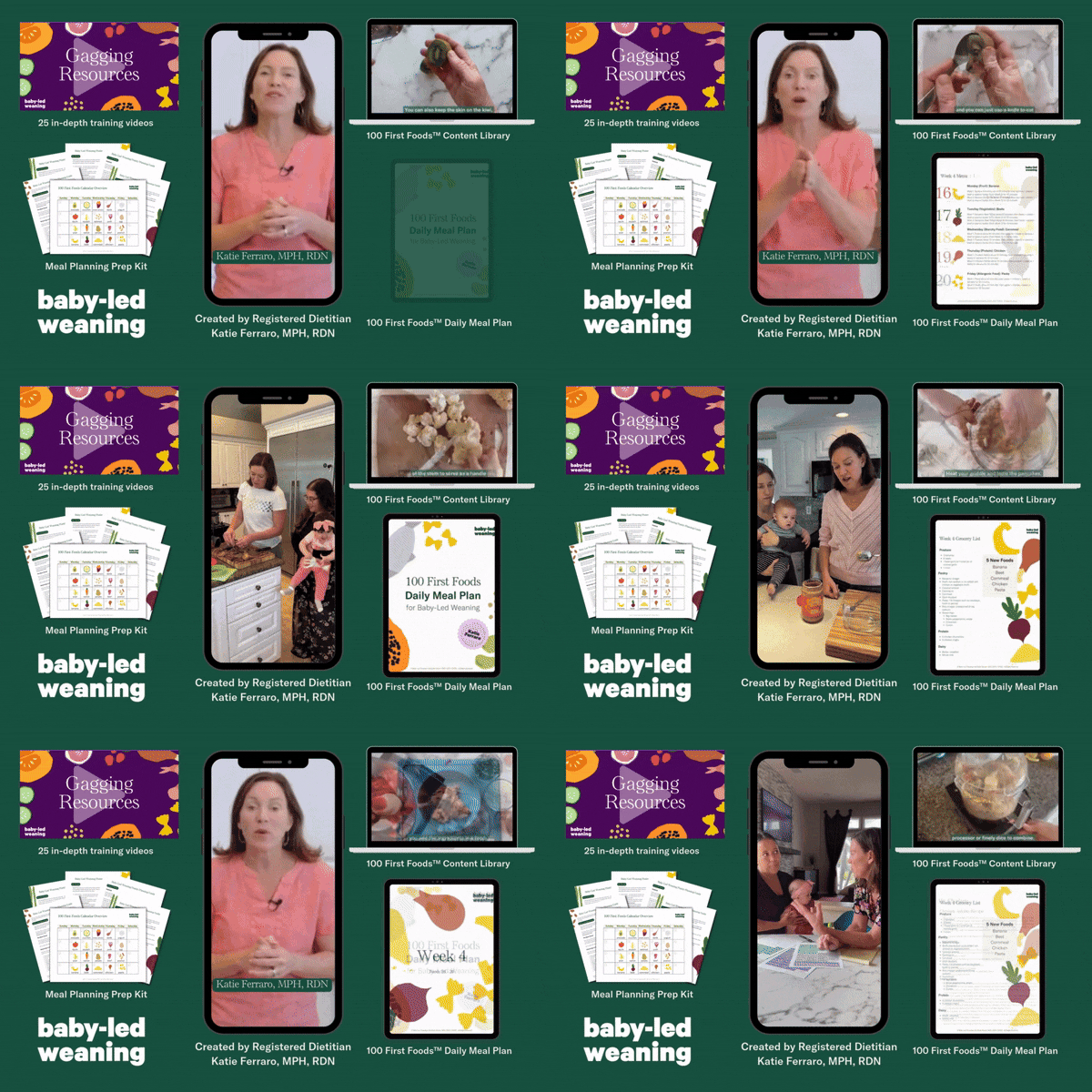
- Baby-Led Weaning with Katie Ferraro program with the 100 First Foods™ Daily Meal Plan, join here: https://babyledweaning.co/program and get $50 off when you sign up using the code BLWPOD50
JOIN NOW AT $50 OFF CODE: BLWPOD50
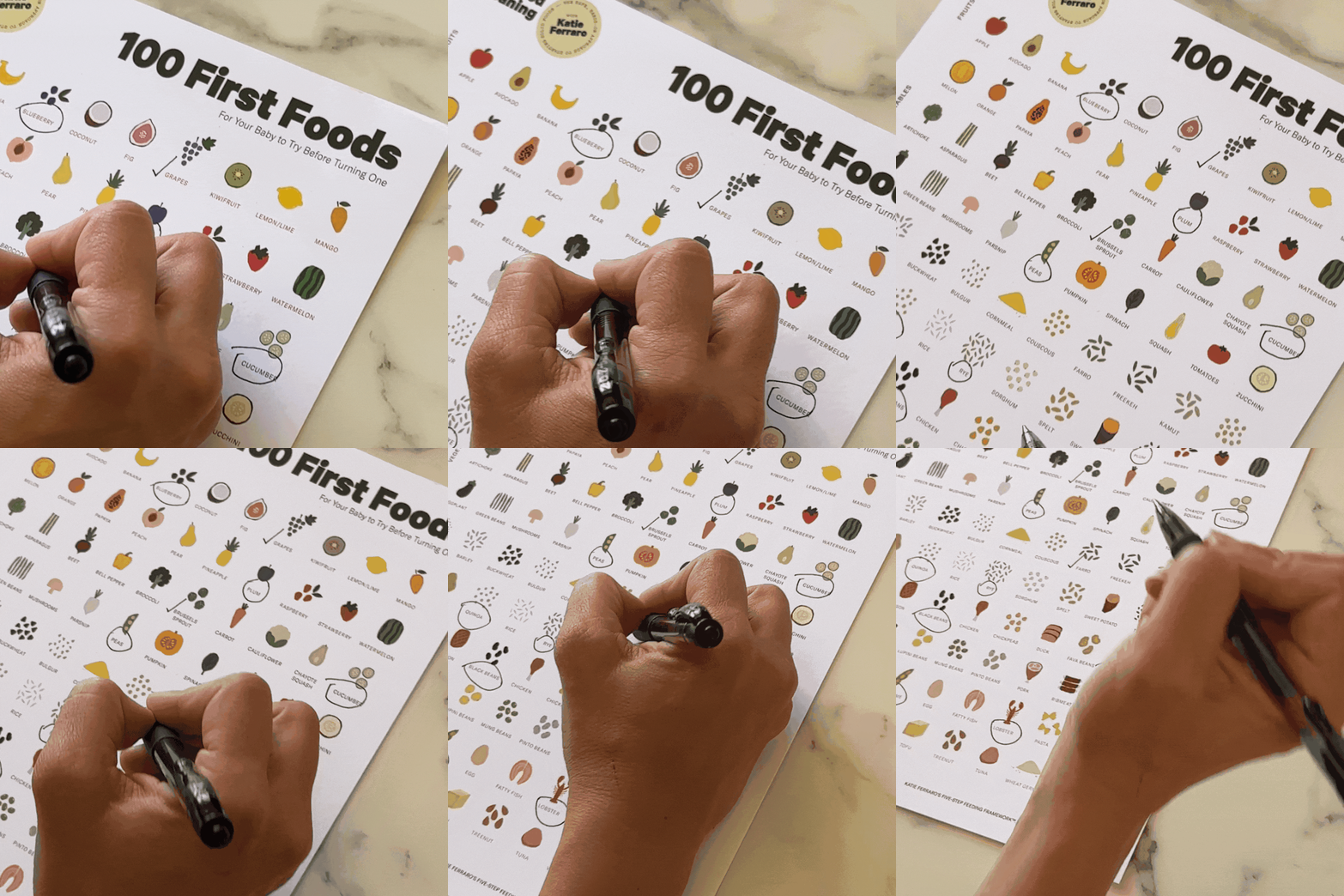
- Baby-Led Weaning for Beginners free online workshop with 100 First Foods™ list to all attendees, register here: https://babyledweaning.co/baby-led-weaning-for-beginners
Other Episodes Related to this Topic
- Episode 89 - Freezer Aisle Finds for Baby-Led Weaning
- Episode 397 - Hard Facts on Soft Yolks: Are Runny Egg Yolks OK for Babies?
- Episode 405 - Are Produce Washes Helpful or Hogwash for Food Safety?

Latest Episodes


Hungry Root (1s):
You know that feeling when it's five o'clock and your baby's hungry and you've got bigger kids and they're melting down and you still have absolutely no clue what even the big people in the house are gonna be eating for dinner. That was literally my life every night until I found Hungry Root. So Hungry Root takes the stress out of mealtime by doing the planning and the shopping for you. So it's not just another meal kit, but Hungry Root is a personalized grocery and recipe service that actually gets smarter the more you use it. So you take a quick quiz and then you tell 'em what you like. So what you're avoiding, maybe you're gluten-free or you're dairy free, or what you're trying to do more of, like you're high protein or you're gut friendly, you name it. And then their Smart Cart Tech fills your cart with meals and groceries that are tailored to your family's needs. So it's literally like having your own personal shopper and chef. So we have seven kids, and trust me when I say this has totally been saving me time, sanity, and money. No more impulse grocery runs, no more wasted food. And best of all, most of the meals are ready in 15 minutes or less. And I absolutely love just the variety of foods that I've been kind of like sneakily been forced to make with my Hungry Root Box. I love opening my Hungry Root box, and I'm not just seeing dinners, I'm seeing snacks and smoothies and salad kits, even sweets. They're all made with high quality ingredients, no artificial sweeteners, no preservatives, no weird additives. They work with brands that as a dietician I already trust, like Vital Farms and Harmless Harvest Ithaca. It's like all of the good stuff. I'd love if you could take advantage of this exclusive offer. You can get 40% off your first box plus a free item in every box for life If you go to hungry root.com/ weaning and use the code weaning, that's hungry root.com/ weaning code weaning for 40% off your first box and a free item of your choice for life.
Katie Ferraro (2m 4s):
So with the meat, If you think about it, when you reheat meat, what you're doing is the fat, and we pick the fatty cuts of meat for babies, right? The fat is going to liquefy, and that liquified fat is then coating the protein strands, which in turn is going to make it safer and easier for the baby to swallow compared to If you were just like offering your baby some cold, cold pork right outta the fridge, which as you can imagine, is not going to be a safe or desirable texture experience for anybody in the family. Hey there, I'm Katie Ferraro, registered dietitian, college nutrition professor and mom of seven specializing in baby-led weaning here on the Baby-Led Weaning with Katie Ferraro podcast.
Katie Ferraro (2m 44s):
I help you strip out all of the noise and nonsense about feeding, giving you the confidence and knowledge you need to give your baby a safe start to solid foods using baby Led Weaning. Hello and welcome back. Today we're talking about temperature and should you be offering your baby food when it's hot, when it's cold room temperature, does it even really matter? Now, I like to start out each of these mini Baby-Led weaning solo episodes with a Baby-Led weaning tip of the day. And today's tip is, for most foods, the temperature honestly does not matter, and we'll go through some specific foods where it does matter.
Katie Ferraro (3m 27s):
But the one I wanna start out with today, where it does kind of matter is meat. Okay? The temperature of your baby's meat does matter for the most part, I do not offer babies cold meat right out of the refrigerator. Think about it. Let's say you had like a steak salad. First of all, I don't even offer a baby steak, and we'll talk a little bit about that today. But let's say you had a pulled pork sandwich, okay, and you put it back in the fridge after you went out to lunch with one of your friends. Are you going to eat that pulled pork cold right out of the fridge? No, probably not. From a texture and a safe swallow standpoint, that is not going to be a good idea for your baby. We're going to want to reheat meat So that it's at least room temperature when it comes to a safe swallow situation for your baby.
Katie Ferraro (4m 15s):
And the reason why is because when you heat that meat, what you're going to be doing is you're going to be heating the protein, you're heating the fat So that the fat actually liquefies and it coats that protein strand of the meat and it makes it safer and easier for your baby to swallow. We'll talk a little bit about preferred reheating methods in today's episode. Don't forget to hit subscribe or wherever you're listening or watching this. I put out two new episodes each week, a mini solo training episode on Monday, and a longer interview style episode with another feeding expert on Thursday. All of the information from each episode, it's always on the show notes that you can find@blwpodcast.com.
Katie Ferraro (4m 56s):
If you need a copy of my original 100 First Foods list so you'll never run out of ideas of foods your baby can eat, I give a copy of that 100 First Foods list away to everybody on my free online workshop, which is called Baby-Led LED WEANING FOR BEGINNERS. You can sign up for this free workshop at Baby-Led Weaning.co/workshop. If you already have the list and you're ready to get Kraken in the kitchen, make it all the foods on the 100 First Foods list, safe for your baby's age and stage. Then I would love if you could join me inside of my signature Baby-Led weaning program that's called Baby-Led Weaning with Katie Ferraro. There's over a 100 different foods inside of the 100 First Foods content library.
Katie Ferraro (5m 38s):
I've got videos and recipes and instructions on how to make all those foods safe for your babies age and stage. I also have my 100 First Foods daily food plan in case you don't even wanna like figure out which food to feed your baby next. That's all inside of the program at Baby-Led Weaning.co/Program. So with no further ado, let's get started looking at temperature and whether or not you should serve your baby's food hot cold Room Temp, or Does it even matter? So let's get started with an overview of a temperature. Okay, the general guideline, general rule of thumb is that room temperature is going to be great for most foods. Now, a lot of parents are going to be working without a lot of time, right?
Katie Ferraro (6m 20s):
You're waking up in the morning, you've got your routine, you're gonna be maybe dealing with leftovers, okay? Maybe your baby had, if you're following the 100 First Foods Daily Meal Plan and you're in week one, you might have done zucchini and sweet potato and lamb in week one, and you've got those leftover foods in your refrigerator. And the coolest thing about babies is they don't care what's for breakfast, right? You can use those foods that you did for dinner yesterday and do them for breakfast today, but you are probably gonna wanna bring those back up to room temperature. So If you have a microwave, microwaves are perfectly safe for reheating your baby's food. I do want to remind you, however, that microwaves reheat food irregularly right there will be hot spots in your microwave. So if you're dealing with puree foods, you always wanna stir them either before or after you heat.
Katie Ferraro (7m 4s):
I personally will always taste whatever it is that I'm reheating to make sure that it's either warmed all the way through. If there's cold spots in there, that's fine, but we don't want hotspot to burn the baby's mouth. And then I'll always give it a little bit of time to cool down. So what I'll probably do is pull the food out, reheat it to a temperature that I think is maybe even a little bit warmer than where I would like it ultimately for the baby to have. Then put it out on the silicone suction mat at the table in front of the high chair, and then go get the baby, get the baby changed, get do their little morning routine and get them ready So that the food is then cooling down to room temperature, such that when I bring the baby out to the table, that food is already ready for them to go. Right? Because when we talk about timing, a lot of times by the time your baby hits phase two of Baby-Led Weaning, that's the second eight weeks.
Katie Ferraro (7m 49s):
So once they've been doing solid foods for about eight weeks, this is generally when most babies are around eight months of age, you are going to be wanting to start the day with food, get that baby up, get them changed, and bring them right to the table for their breakfast food. And the breakfast food again, can be lamb and sweet potato and zucchini, okay? But if that baby's hungry, you don't wanna be feeding all around getting the food all reheated. You want them to come right to the table and be able to eat because they're at a phase now where they're going to be able to start using food to help alleviate that feeling of hunger. That doesn't happen right in the beginning and phase one, but you'll know after about eight weeks, Hey, my baby is ready to eat, and you're gonna wanna have that food reheated and ready to go.
Katie Ferraro (8m 31s):
Now, what about frozen foods are frozen foods and Option four babies? Absolutely. Actually did an entire episode all about frozen foods because If you take a gander down the frozen foods aisle at your grocery store, there are actually really, really wonderful options for babies there provided that you're just looking for the frozen foods that are those that have no added sugar and no added salt. So If you go to episode 89, it's called Freezer Aisle Finds for Baby Lead weaning. I share a lot of ideas in that episode about foods from the freezer aisle that work, but if you're working with frozen foods, maybe either leftovers that you froze, or foods that are frozen from scratch, you are gonna of course not offer those foods directly from the freezer for the most part.
Katie Ferraro (9m 15s):
Now, there's a caveat there that there are some foods that we will offer directly frozen to babies. I love to do breast milk or formula popsicles, especially even in the pre feeding phase for babies. Some babies who are teething, they do like that feeling of a cold or frozen food on their little gum line.
Ezpz (9m 32s):
I use the EZPZ tiny pops for breast milk and formula pops. They're a very, very small portion with a little short fat round handle. They're the perfect portion size for pre feeding and early eaters. And If you want to check out the EZPZ Tiny Pops, If you head to ezpzfun.com/BabyLed, you can get 15% off the tiny Pops with the code BABYLED. That is an affiliate code BABYLED at EZPZfun.com/BabyLed. Personally, my babies never liked frozen foods, but I work with lots of babies who do love those tiny pops and they work great for some teething.
Katie Ferraro (10m 8s):
Babies can also, as your baby starts progressing with solid foods, I know If you have any pureed foods leftover that you're using or I know we do a lot of pureed meats in the first few weeks of Baby-Led weaning for families that are really just fearful about meats as finger foods. If you have any of the leftover pureed meat juice or the the meats that you've been offering as chunky purees, you can put them into those tiny Popsicle molds and offer meat popsicles. Babies love those as well. It's a great way for them to try out that taste a little bit of a different texture to transfer some of that iron and the zinc. So don't be shy to try popsicles. They freeze very quickly. And I love the ezpz tiny pops for trying out frozen foods.
Katie Ferraro (10m 50s):
Now, what about cold foods? I don't do any raw celery. I don't do raw crunchy vegetables. I don't do chilled cucumber strips, certainly for early eaters because any raw, hard or crunchy foods can be a choking hazard for early eaters. But if we have finger foods that were soft foods that pass the squish test, so if we have, you know, soft pieces of zucchini that we already took the skin off of for early eaters in phase one or sweet potato or any of the other finger foods that we're making, or the cold fritters, in many cases, I feel perfectly fine offering those directly out of the refrigerator. As I mentioned earlier, I always try a bite of the foods that I'm offering to my baby. You can make the call on whether or not you think it's a food that your baby can eat cold out of the fridge or that you think should be reheated or you're gonna bring it back up to room temperature, or you might even warm it a little bit in the case of me.
KiwiCo (11m 43s):
Hey, we're gonna take a quick break, but I'll be right back. School is out and our family has been road tripping pretty hardcore this summer. And when it comes to getting seven kids ready for a long road trip, I am pretty judicious about which sort of toys and activities that we're gonna pack to bring on trips. We recently drove to Montana and I took along a few of the Kiwi co kits from the Kiwi Co Summer Adventure Series. So Kiwi co develops hands, hands-on projects and activities for kids of all ages that get delivered to your door on a regular basis. With the Kiwi Co Summer Adventure Series, Kiwi Co delivers six hands-on projects over six weeks, and I can honestly say that the archery set could not have arrived at a better time for our family. So we had some downtime at our campsite in Montana. The kids put the archery kit together all by themselves, and major bonus points for any project that promotes independence and that I do not have to help build. I love that the Kiwi co crate keep my kids engaged and challenged even in their time off from school. So If you are down for a little gentle summer structure with projects that your kids can tackle while still learning, check out Kiwi Co. You can get started building the best summer ever with Kiwi Co and get $15 off your summer adventure series@kiwico.com/weaning. That's $15 off your summer adventure at kiwico.com/weaning.
Katie Ferraro (13m 21s):
Now, what about hot foods? Okay, we don't wanna serve babies food that are going to be injurious or harmful to their health, right? Warm foods are fine, especially for meats. Those fattier cuts of meat are the meat that we always recommend making for your baby, especially at an earlier stage. Liquified fat that coats that protein strand of the meat is going to make it safer and be a lower choking risk. So we wanna avoid any dry cold meats for babies. Think about If you just took like a a cold hamburger outta the refrigerator, you got a leftovers. I know we had a huge party recently and we had all these leftover hamburgers and my kids are like, please stop feeding me hamburgers, mom. I was reheating them, but I kept thinking like plates of dried cold hamburgers in the fridge.
Katie Ferraro (14m 3s):
That is not gonna be a fun eating experience for anyone in your family, including the baby, but you reheat that, okay? It becomes an entirely different situation. Now when it comes to food safety, temperature does matter. Okay? I would encourage you, I you don't need a lot of fancy gear to get a safe start to solid foods, but having a meat thermometer on hand is a good idea. You don't need a fancy one. I get the cheapy little like five, $6 ones. I like the Oxo brand, not sponsored by any means. It's just the brand that I use a lot that I think is the most durable. I get 'em off of Amazon. I have a couple of them in my house, I calibrate them on occasion. Safe internal cooking temperatures for protein foods is important.
Katie Ferraro (14m 43s):
I don't care how good of a cook you are, you can't internally recognize if a protein food is done. You cannot eyeball it. You need to tempt the inside of the meat, especially when we're cooking for babies that have still developing immune systems. We want our ground meat products. Ground beef in particular cooked to 160. I say ground beef in particular 'cause most families are starting with ground beef, but all ground meat products should be cooked to an internal temperature of 160 degrees Fahrenheit when you're cooking with poultry products. So if you're doing from the 100 First Foods list, Turkey or duck or chicken, you want to cook those foods to 165 degrees Fahrenheit. And then if you're cooking solid cuts of meat, which we turn into soft shreddable strips of meat from the 100 FIRST FOODS list, beef, pork, or lamb, or cooking those to 145 degrees Fahrenheit.
Katie Ferraro (15m 28s):
If you're inside of my program, there's the internal cooking temperatures for all of these meats located inside each of the recipes. And again, you can check that program out at Baby-Led weaning.co/program. When it comes to eggs, I encourage parents to cook the yolk and cook the white fully, okay? We don't want any runny eggs from foods that we cook at home, okay? The egg products that you are tending to buy from the grocery store are not going to be pasteurized. Ironically, when you're eating at a restaurant, the restaurant product, the eggs that they're buying because they are at higher risk for food safety concerns than you are at home cooking, they're gonna be buying pasteurized eggs. So I'll sometimes let babies eat runny egg yolks at a restaurant because I know that that's a pasteurized egg product, whereas at home, it's not pasteurized, so you are gonna want to cook it entirely.
Katie Ferraro (16m 17s):
I actually did an entire episode about runny egg yolks for babies. If you go to episode 397, I'm really proud of this episode title, Hard Facts on Soft Yolks Are Runny Egg Yolks OK for Babies, there's a lot more info in there, but for the most part at home cook that egg yolk all the way just from a food safety standpoint for your baby. When it comes to milk temperature, I get a lot of questions from parents like, Hey, we're starting to practice with our open cup training like you recommend inside of your program. We're doing five minutes a day, starting with thicker liquids like breast milk or formula that the baby is familiar with. Again, because we don't do thin liquids like water until a little bit later inside of the program.
Katie Ferraro (16m 57s):
Can babies drink cold breast milk or formula? Okay? Especially if your goal is to transition to cold cow's milk when they turn one, right? You don't wanna be taking cow's milk outta the fridge for a 1-year-old and having to heat it up. What I've always done anecdotally is I'm going, if I want the child to ultimately drink cold cow's milk, starting at age one, I'm gonna train them then on drinking, not heated up infant milk, okay? So when we practice outta the open cup, I'm not gonna be heating up the breast milk or the formula, okay? It's your call as to whether or not you do that. You know about safe storage of your own breast milk or infant formula. You don't need to be heating that milk for the child If you don't want to. Alright, a couple more tips regarding temperature. And this one, it doesn't have to do exactly with food, but it regards the temperature of your baby.
Katie Ferraro (17m 41s):
Parents share pictures of their babies eating all of the time, and I know a lot of you guys are super, super uptight about the mess as it pertains to Baby-Led weaning. And hopefully if you've done enough training, you know that preventing the mess is not the point. Your baby getting messy is part of the full sensory experience that is learning how to eat. And while yes, we can do things to minimize the mess, preventing the mess is not our goal. And so feeding your baby entirely naked, and I get pictures of, and I never share these, but like people send me pictures of their babies without clothes on, and I feel a little weird about it and I never re-share those, but I'm surprised how many people are feeding their babies without clothes on, and I don't always know exactly what sort of environment they're living in.
Katie Ferraro (18m 21s):
Hey, I don't know. It could be super duper hot where everyone in the family's eating naked, but like if you're not eating naked, your baby probably doesn't need to be eating naked as well. If it's cold, if it's drafty, if it's uncomfortable, that's gonna be a negative sensory experience for the baby. I get it. There are some foods, there's one food in particular that comes to mind if I'm thinking about the whole 100 First Foods list, where I will always feed a baby without clothes on, and that one is beets, because beets do stain close to the point where you cannot get the beets stain out. I will go naked for a baby with beets. I do wanna encourage you though that having a bib that protects the baby's clothes is important when it comes to starting solid foods. The bibs that I like and I don't like full coverage bibs, those ones that like restrict the baby's range of motion.
Katie Ferraro (19m 6s):
There's these ridiculous bibs that go all over their whole body. There's one I saw the other day that goes over their head that goes over the entirety of the tray. I mean, we do not need to go that extreme.
Vain Baby (19m 15s):
The bib that I like is called a bapron and bib. A bapron is a hybrid bib. It's from a company called Bapron Baby. It's a small mom run business. Kelsey is the founder. She's out of Arizona. She's been on the podcast a number of times. She created this beautiful bib. It's a hybrid between an apron and a bib. The Bapron baby bib material is made outta this really amazing waterproof material. Her bibs cost a little bit more than your standard bib, but you only need one. So instead of buying a bunch of crappy bibs that are gonna disintegrate, you buy one bapron and baby bib. You can after every meal, rinse it out underneath the faucet and hang it on your drain board. So I did this, starting with my quadruplets, was when bapron and hit the market, instead of doing four bibs times, three meals a day, and 12 bib washing on top of everything else, I had four bibs with the quads. I washed it out after every meal, hung it on the drain board and could reuse them for every meal genius. I also use the bapron baby splash mats. They're made out of the same material as the bibs. I put them underneath the high chair So that when the babies drop the food on the floor, it drops onto the clean splash mat. I recycle it back up onto the table or the height share tray. If you're using that, I'll do that three times because after the third time, I'm like, I don't work for you baby. You know? But at the beginning, babies are gonna drop the food because they don't know what to do with it, and I don't wanna waste that food. The bapron baby splash mats are wonderful for helping to minimize the mess. If you go to bapron baby.com, my code Katie 10 works for 10% off. But If you go to ezpzfun.com/babyled, there are some bapron products on there, and you can get all of those at 15% off with the code Baby-Led. So ezpzfun.com/babyled for some of the best vain products at a 15% off discount.
Katie Ferraro (21m 1s):
So to wrap everything up the temperature for the most part, doesn't matter most of the time except for meat. And when it comes to food safety for the internal cooking temperatures, If you want to check out some more of the resources, I'll also share some of the USDA food safety guidelines, especially if your child has any sort of a health situation where they are immunocompromised. You need to pay particular attention to those internal cook temps. I'll put all of those links as well as the other episodes related to food safety that I've done. Those will all be on the show notes@blwpodcast.com/51. A special thank you to our partners at Airwave Media.
Katie Ferraro (21m 43s):
If you like podcasts that feature food and science and using your brain, check out some of the podcasts from Airwave Media or online@blwpodcast.com. Thank you so much for listening, and I'll see you next time.
History Tea Time with Lindsay Holiday (22m 3s):
Have you ever wondered how inbred the Habsburgs really were? What women in the past used for birth control or what Queen Victoria's nine children got up to on the history tee Time podcast? I profile remarkable queens and LGBTQ plus royals, explore royal family trees and delve into women's medical history and other fascinating topics. Join me every Tuesday for history tea time, wherever fine podcasts are enjoyed.
The Program Baby-Led Weaning with Katie Ferraro
A step-by-step digital program for starting solid foods safely and navigating the original 100 FIRST FOODS™ meal plan with baby-led weaning.
 EXPERT-LED, PROVEN APPROACH TO EATING REAL FOOD
 CONCISE VIDEO TRAININGS TO MASTER BABY-LED WEANING
 100 FIRST FOODS DAILY MEAL PLAN WITH FOOD PREP VIDEOS
Baby-Led Weaning for Beginners Free Workshop
Is your baby ready to start solid foods, but you’re not sure where to start? Get ready to give your baby a solid foundation to a lifetime of loving real food…even if you’re feeling overwhelmed or confused about this next stage of infant feeding.
Get baby-led weaning recipes and tips delivered to your email inbox.